
The complete guide
How to Choose a Wooden Science Kit That Actually Gets Built
The problem with most science gifts
You buy a science set with a bright box and a long list of experiments. It gets opened on a Saturday morning, the first activity takes nine minutes, and by lunchtime the box is back on the shelf. A month later half the pieces are in the bottom of a toy crate.
The reason is usually the same. The kit is built around demonstrations rather than construction. A demonstration ends. A build does not end until the thing works, and then there is a thing to play with.
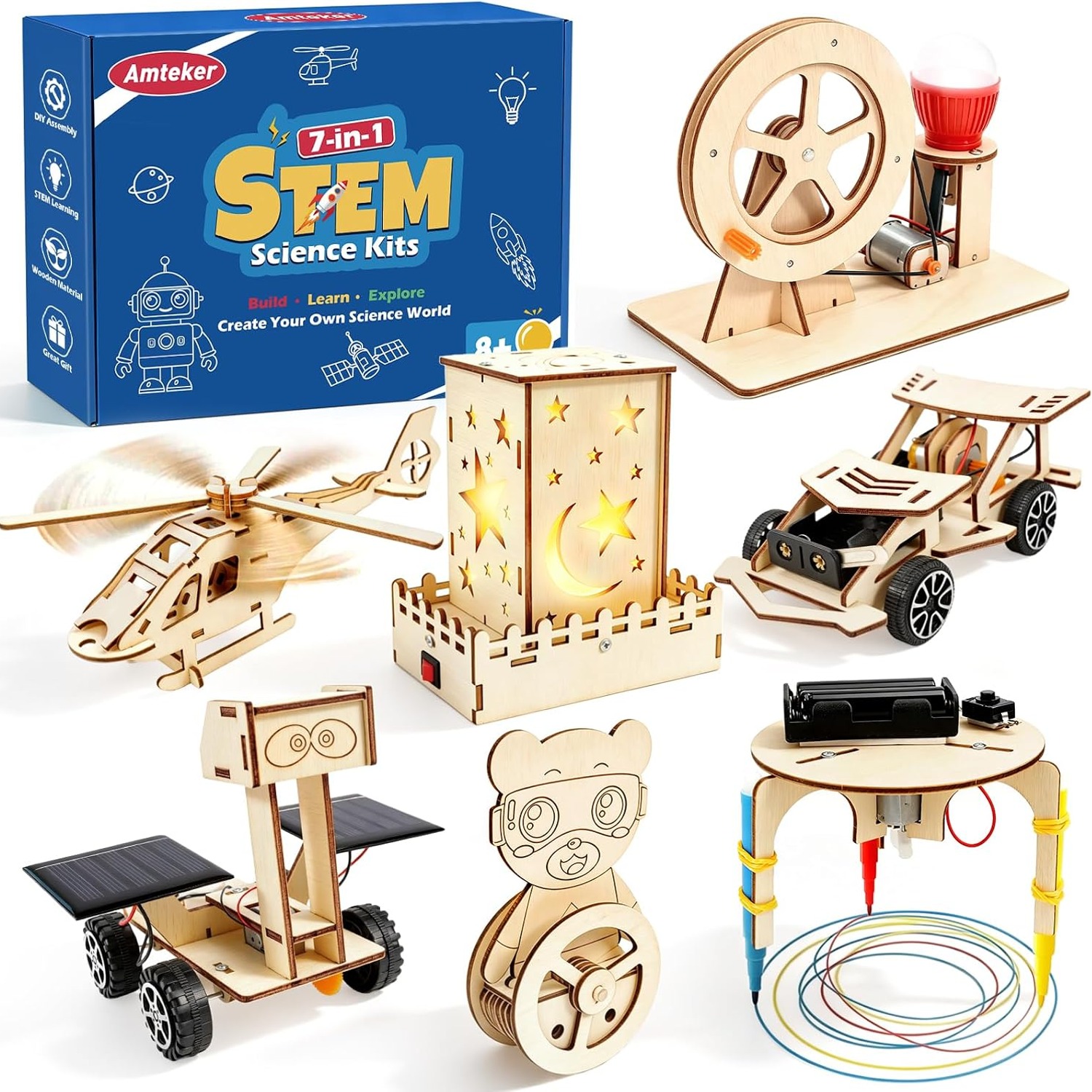
A wooden science kit 7 in 1 sits in the second camp. It arrives as parts, not as finished models. The child does the work, and the work is the activity.
What this kit actually is
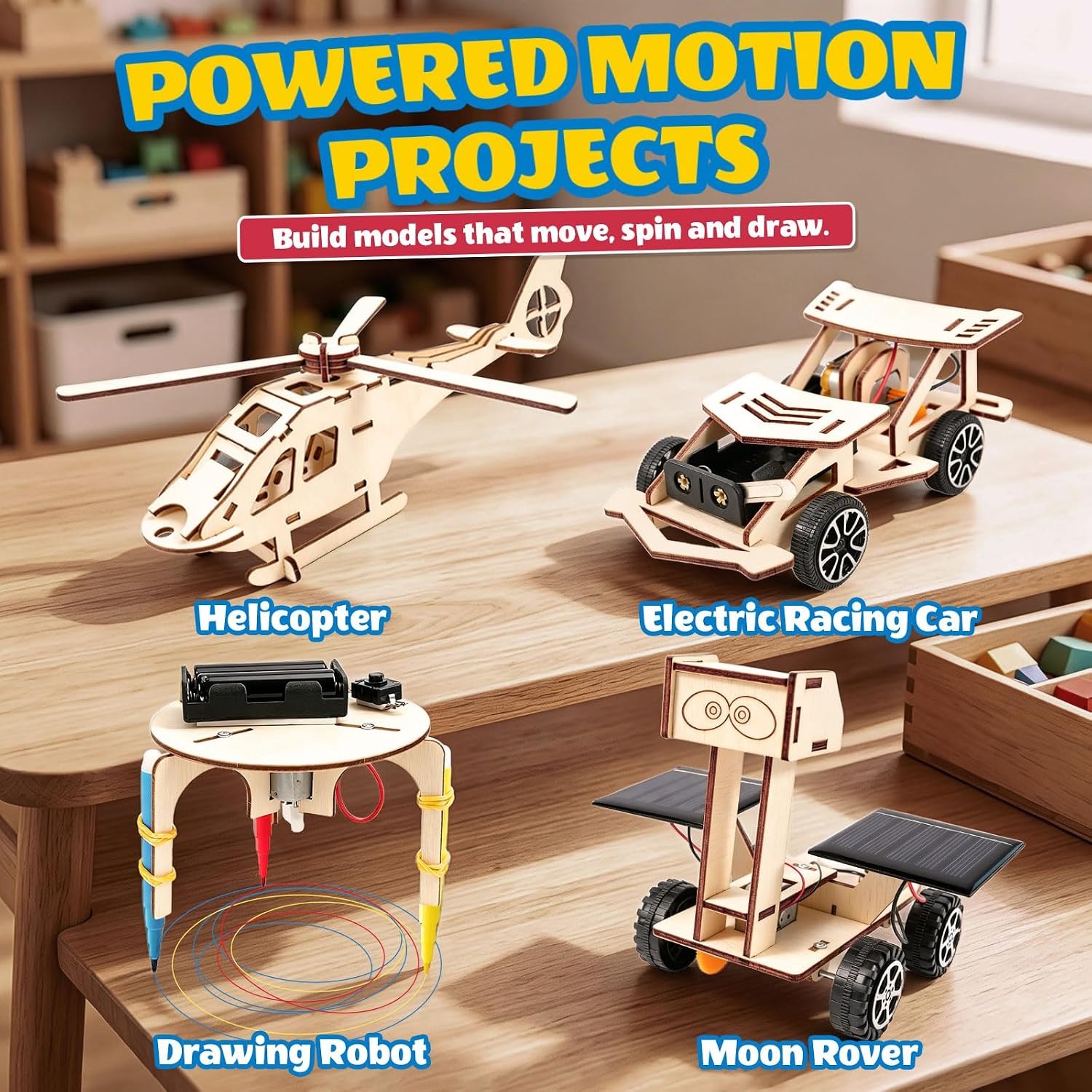
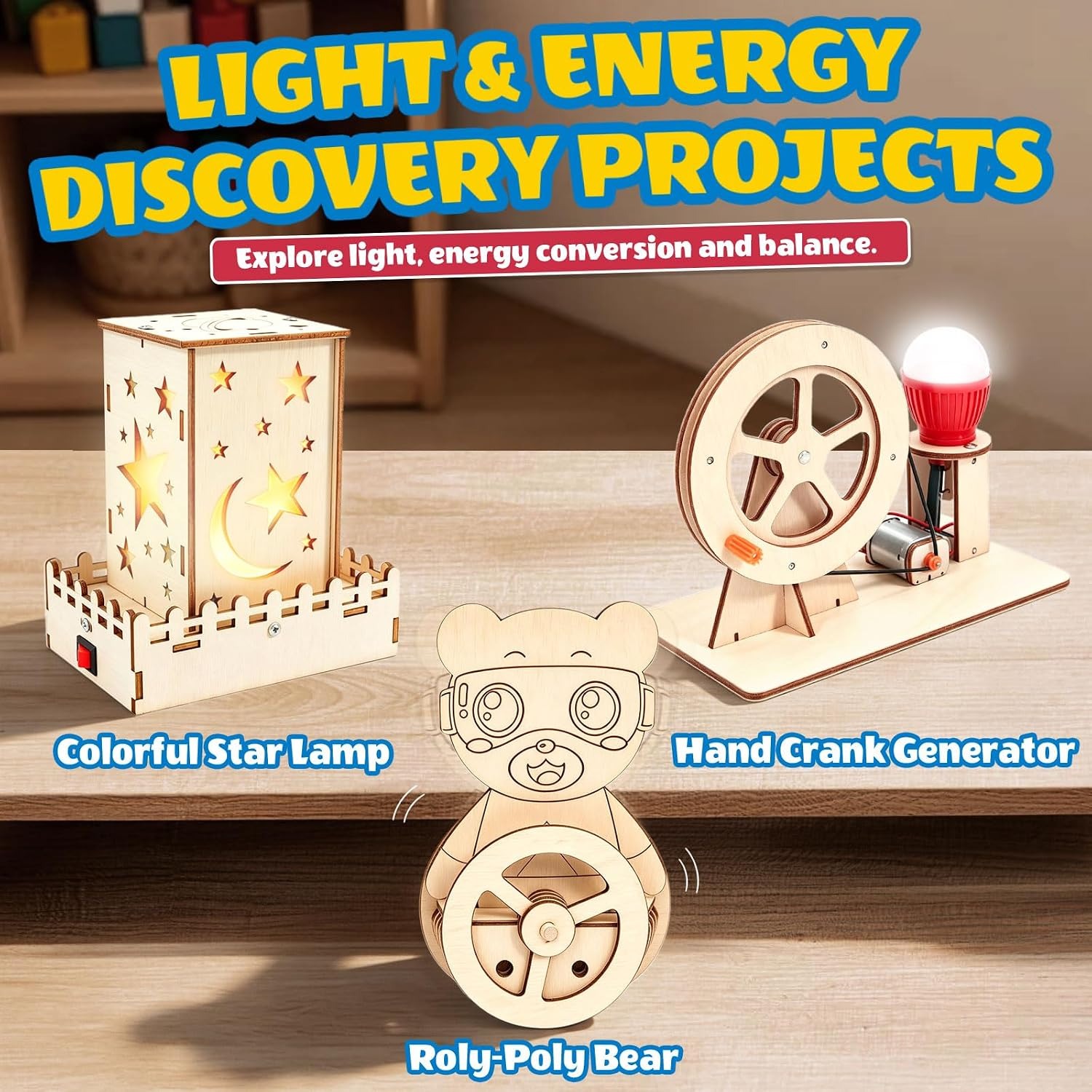
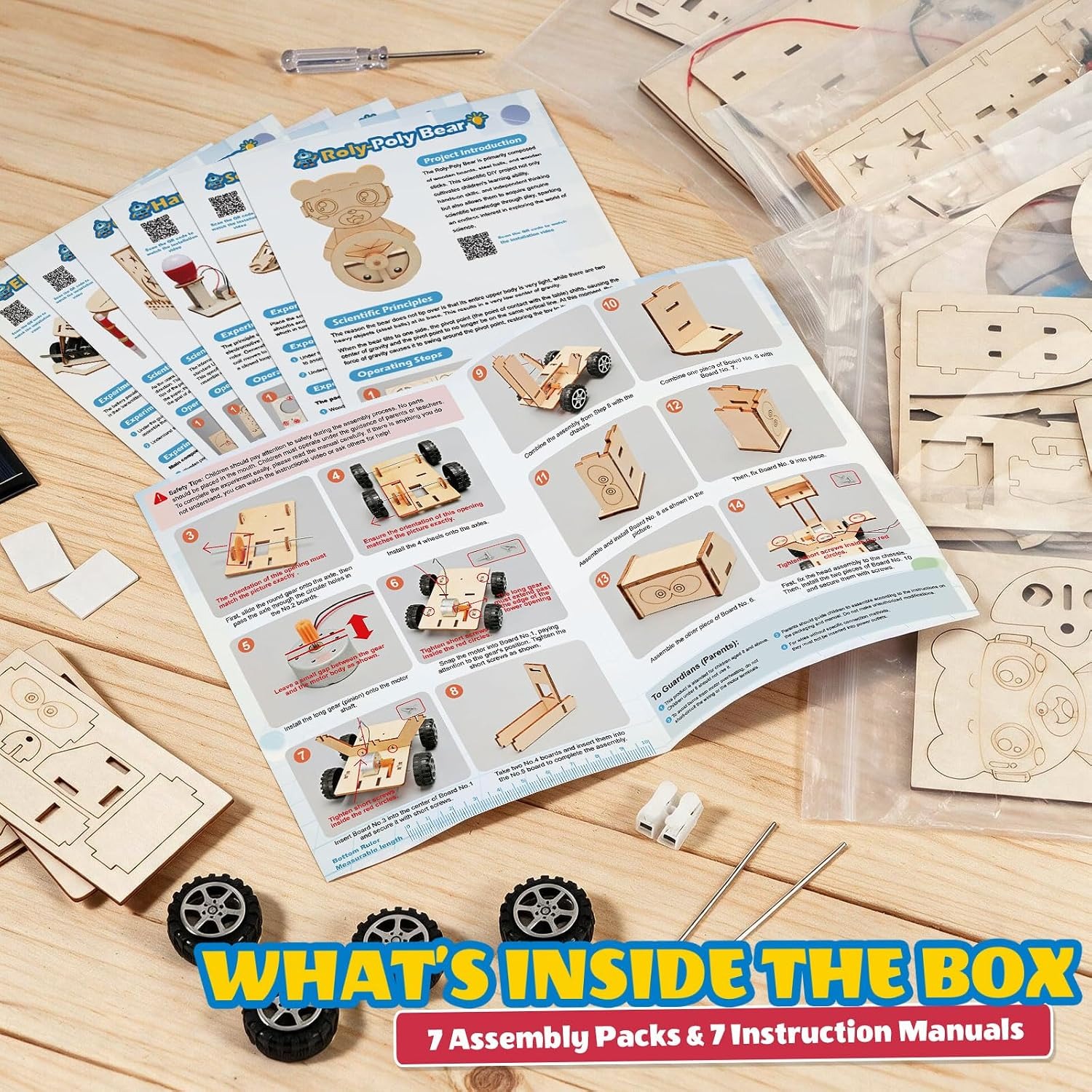
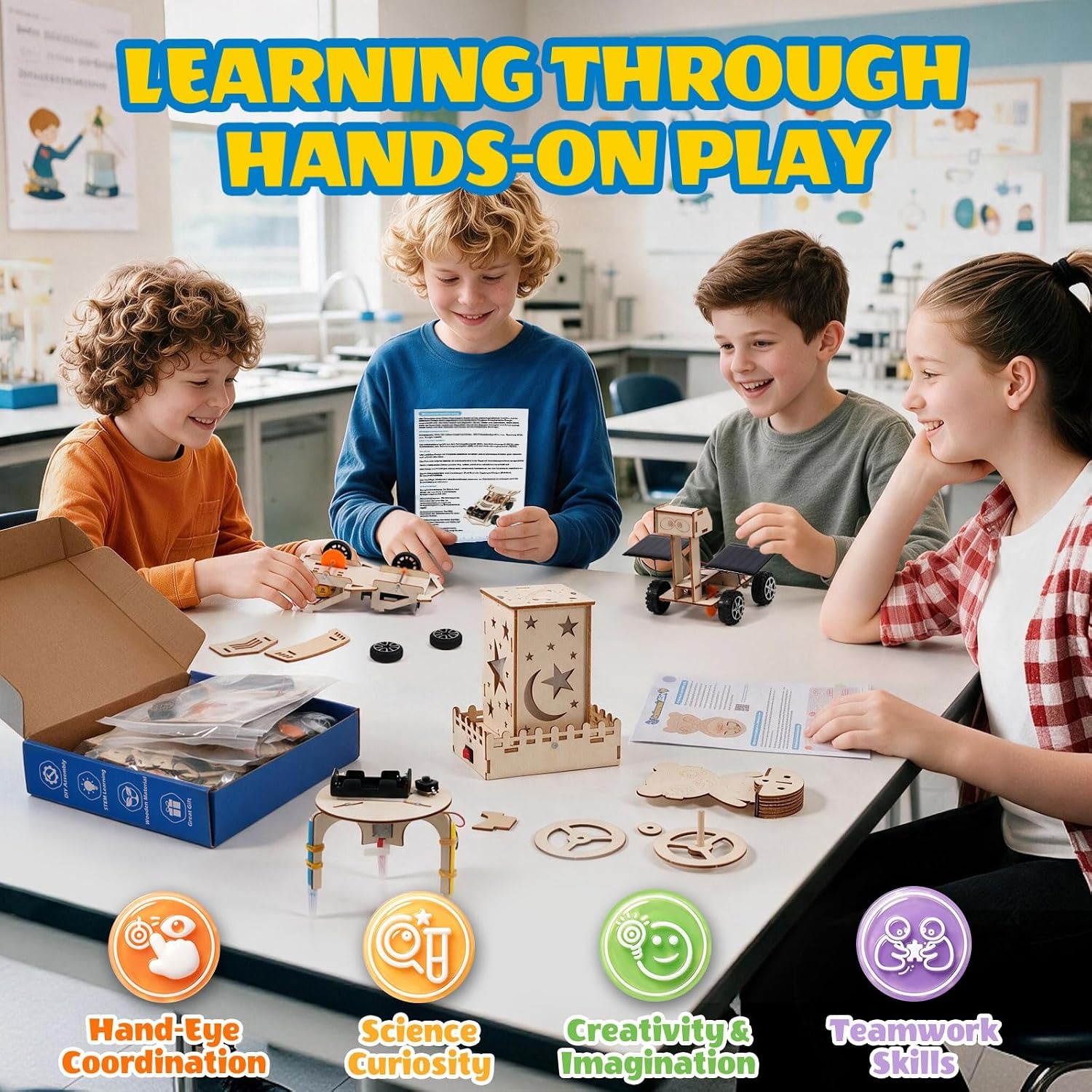
The box contains wooden parts, electronic components, assembly accessories and an instruction manual. From those parts, seven separate models can be built. The maker lists the themes as mechanics, physics and vehicles, which tells you the models involve motion and moving parts rather than chemistry or mixing.
Assembly is required for every project. There is no shortcut version where the model comes half built. That matters because it is the sorting, fitting and adjusting that keeps a child at the table.
The recommended age is 8 to 14 years. The packed box measures 17 x 17 x 5 cm, so it is compact. Material type is listed as wood.
How a build-and-play kit works in practice
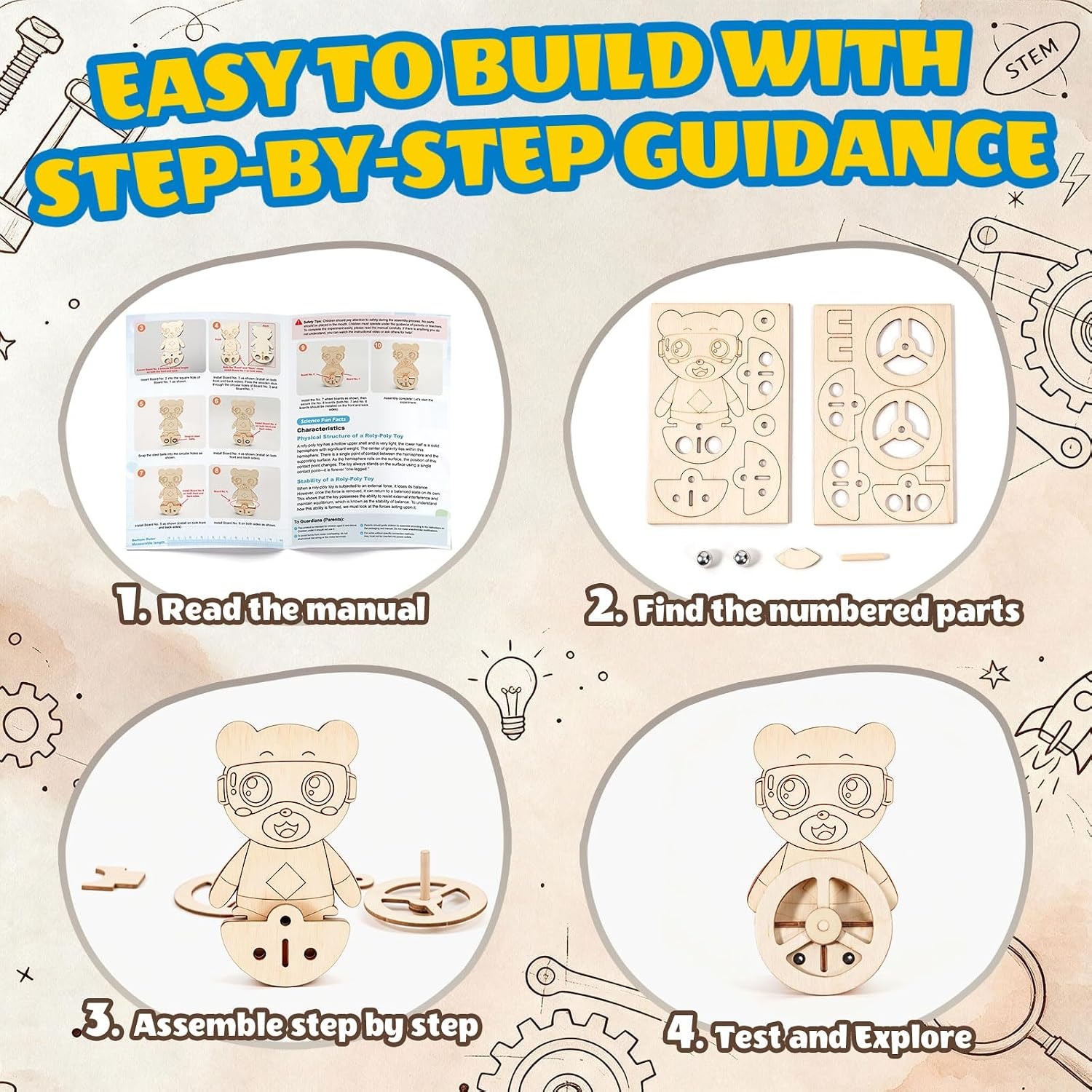
The rhythm is simple. Open the manual, find the model, lay out the parts for that project, and work through the steps. When the last piece goes on, the model does something.
That last part is what separates a good wooden engineering kit from a wooden puzzle. A puzzle rewards you with a picture. A working model rewards you with movement, and movement invites questions. Why does it go faster that way round? What happens if I hold that part still?
You do not have to answer every question. Half the value is the child asking it at all.
The other practical thing is pacing. Seven models is a lot for one day. Most families get better results treating it as seven short projects across a few weekends. The box stores flat, the parts stay sorted, and each session starts fresh.
Who it suits
It suits a child who likes making things. If your eight year old already takes the back off remote controls and lines up the screws, this will land well. If they are more interested in finished toys and immediate play, they will need you sitting next to them for the first build.
It suits the 8 to 14 range unevenly, which is normal. At the younger end it is a guided project. At the older end it becomes something closer to an independent hobby, and the questions get sharper. An eleven or twelve year old is often the sweet spot for a science experiments kit for kids like this one, old enough to work alone and still young enough to be delighted when the model moves.
It also suits households trying to reduce screen time without announcing it. Nobody wants a lecture about screens. A box of parts on the kitchen table does the job quietly.
Classroom and club use works too, with the obvious limit. One box builds one set of models at a time. For a group you either rotate or buy a few.
How to choose between kits like this one
A few things actually matter when you are comparing building sets.
Does it include instructions you can follow? An illustrated manual is listed here, and that is not a given across the category. Without clear steps, a parts box becomes a frustration box.
How many separate projects does it hold? Seven is generous. A single-model kit is done in an afternoon. More projects means more sittings, and more chances for a child who stalled on one build to succeed on the next.
Is assembly genuinely required? Some sets advertise building but ship most of the work pre-done. If assembly is required from the start, as it is here, you know the child is doing the thinking.
Does the age range match your child honestly? Buying above the range in the hope they will grow into it usually leads to a sulk. Buying below it leads to boredom. The 8 to 14 band here is wide, but the bottom of it assumes a child who can follow written steps.
Is anything unclear in the listing? Colour, product weight and exact part counts per model are not specified by the maker, and it is better to know that than to assume. Ask before buying if a detail matters to you.
Setting up a good first session
Clear a table. A hard surface stops small parts rolling off, and a tray or shallow box stops them escaping entirely. Good light matters more than people expect, especially for small fittings.
Lay out the parts for one model only. Sorting the whole box at once looks impressive and causes chaos by step four.
Read the first three steps aloud together, then hand over. Most children only need help getting started. Once they have the pattern of the instructions, they are away.
If frustration arrives, and it sometimes does around the halfway point, stop. Leave the half-built model where it is and come back tomorrow. A broken session is better than a broken model.
Looking after the kit
Wood and water do not get on. Wipe parts with a slightly damp cloth if they get dusty and dry them straight away. Nothing in this kit goes in a sink or a dishwasher.
Store it indoors, away from damp and away from a sunny windowsill. Heat and moisture both warp wood over time.
Keep the small hardware together. A zip bag or a small pot inside the box saves a great deal of grief when a model gets rebuilt six months later. If you use batteries in any model, take them out before long storage.
Finished models are best kept on a shelf rather than in a general toy box. They have moving parts and they do better out of the scrum.
Gifting it well
This is an easy gift to wrap given the 17 x 17 x 5 cm box. It fits birthdays, Christmas and end-of-term presents without much thought.
One small tip. If you are giving it to a child who is new to building, plan to do the first model with them rather than handing it over and walking away. A gift that gets opened and then abandoned helps nobody. Twenty minutes of company at the start usually sets the tone for the other six builds.
For grandparents looking for something that is not another plastic toy, the wooden element tends to go down well with the parents too.
The short version
Seven models, wooden parts, electronic components and a manual, in a box that measures 17 x 17 x 5 cm. Assembly is required for all of it, which is the reason it holds attention longer than a one-shot experiment set.
Recommended for ages 8 to 14, with the younger end needing a hand and the older end usually not. Themes are mechanics, physics and vehicles, so expect movement rather than mixing.
Keep it dry, keep the small parts together, and spread the builds out. Done that way, one box covers a lot of weekends.