
The complete guide
How to Choose a Dinosaur Figure Set That Actually Gets Played With
The problem with most dinosaur toys
Walk down any toy aisle and you will find dinosaurs. Tubs of them. Bags of twenty tiny figures for a few pounds, all roughly the same size, all roughly the same dull green. They look like good value until you get them home.
Here is what usually happens. The child tips them out, plays for ten minutes, then loses interest because every figure feels the same in the hand. The detail is too soft to tell a stegosaurus from an ankylosaurus. Within a fortnight half of them are under the sofa, in the car, or vacuumed up. The tub goes to the back of the cupboard.
Size is the quiet reason this happens. Small figures are hard for young hands to hold properly, hard to see from across a room, and hard to care about. A figure a child can wrap a whole hand around feels like a character. A figure the size of a grape feels like a counter.
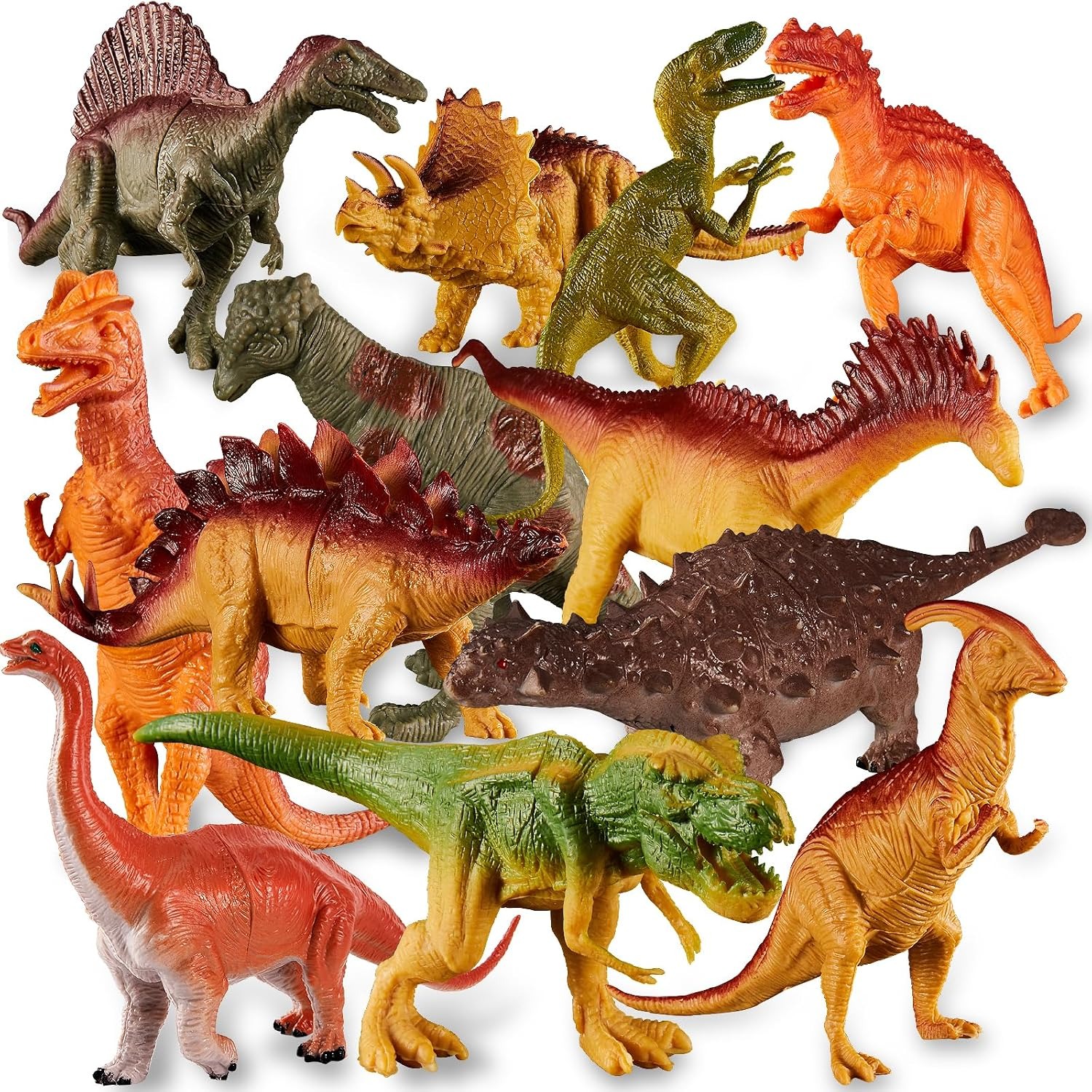
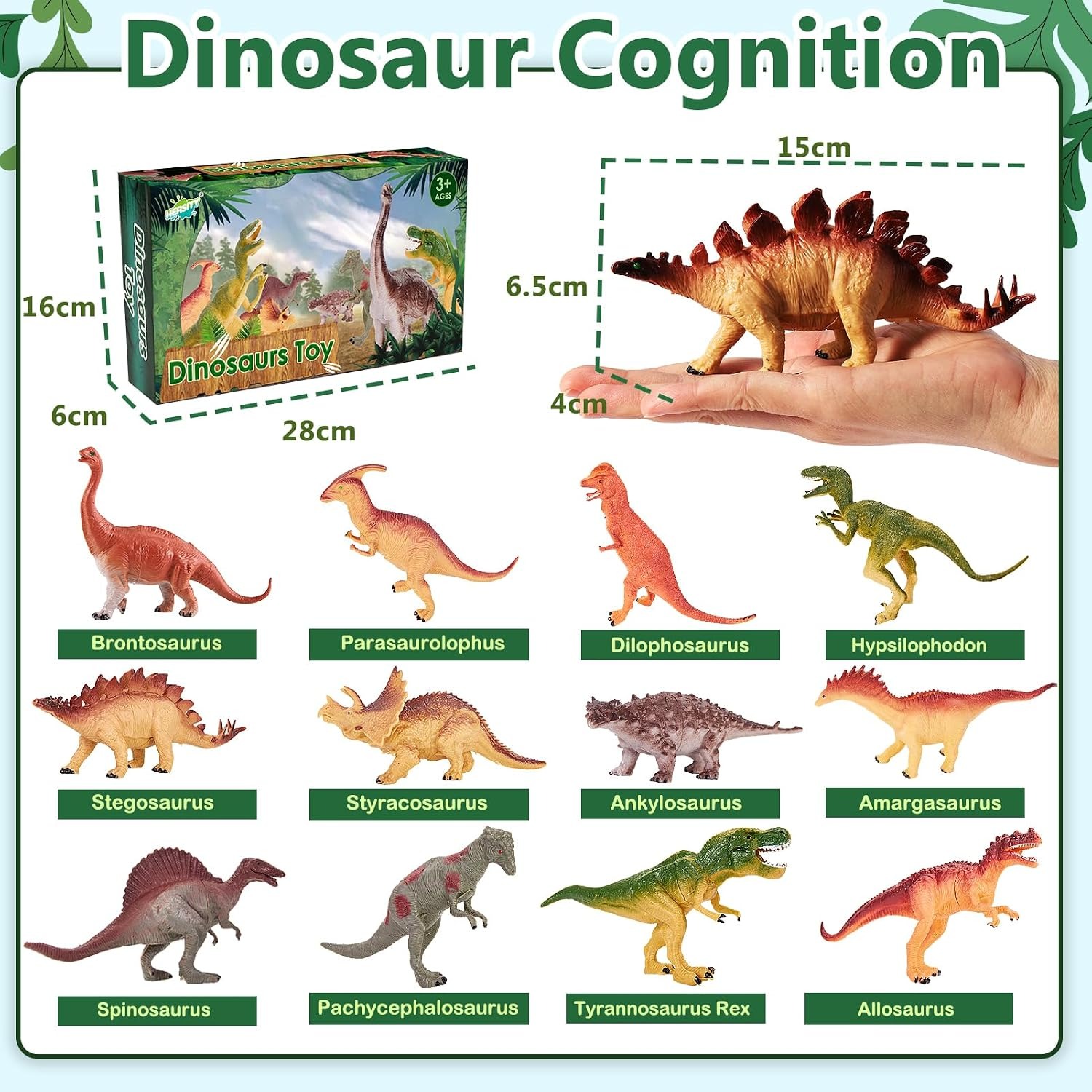
This set takes the other approach. Twelve figures, each roughly 6 to 7 inches, with moulded detail and painted colouring you can actually see. Fewer pieces, bigger pieces, more play.
How a set like this works in practice
There is nothing clever going on here, and that is the point. No batteries, no switches, no sounds, no app to download. Operation is manual, which is a formal way of saying the child does the roaring.
Toys that do everything themselves tend to have a short life. The child watches the toy perform, the novelty fades, and the batteries die in a drawer. Toys that do nothing by themselves last much longer, because the child has to supply the story. That is the whole reason simple figures have outlived decades of electronic fads.
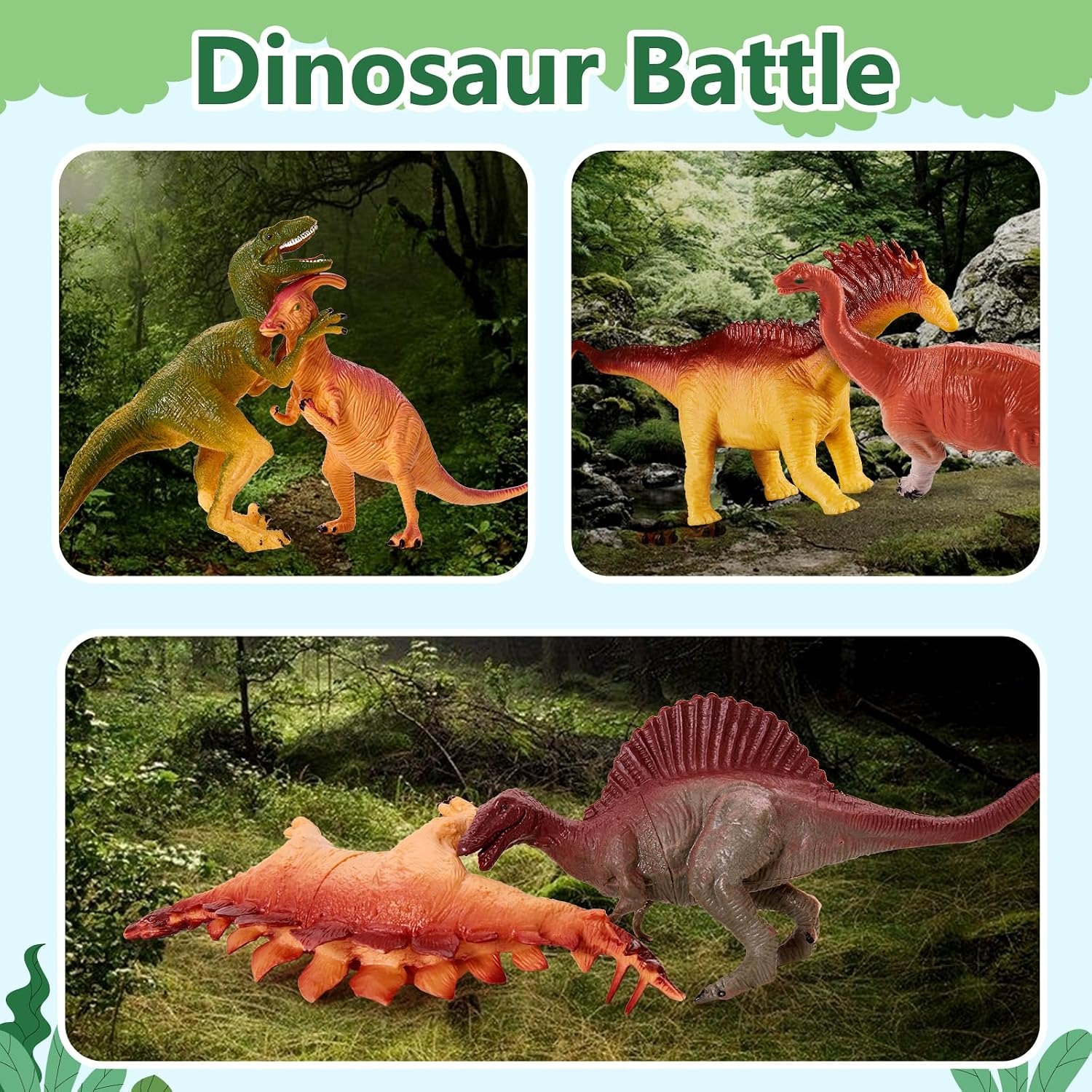
Twelve is a useful number. It is enough for a herd, a pair of rival predators and a couple of stragglers. A child can split them into teams, line them up by size, sort the plant eaters from the meat eaters, or stage one long running battle across the coffee table. Nothing in the box tells them which to do.
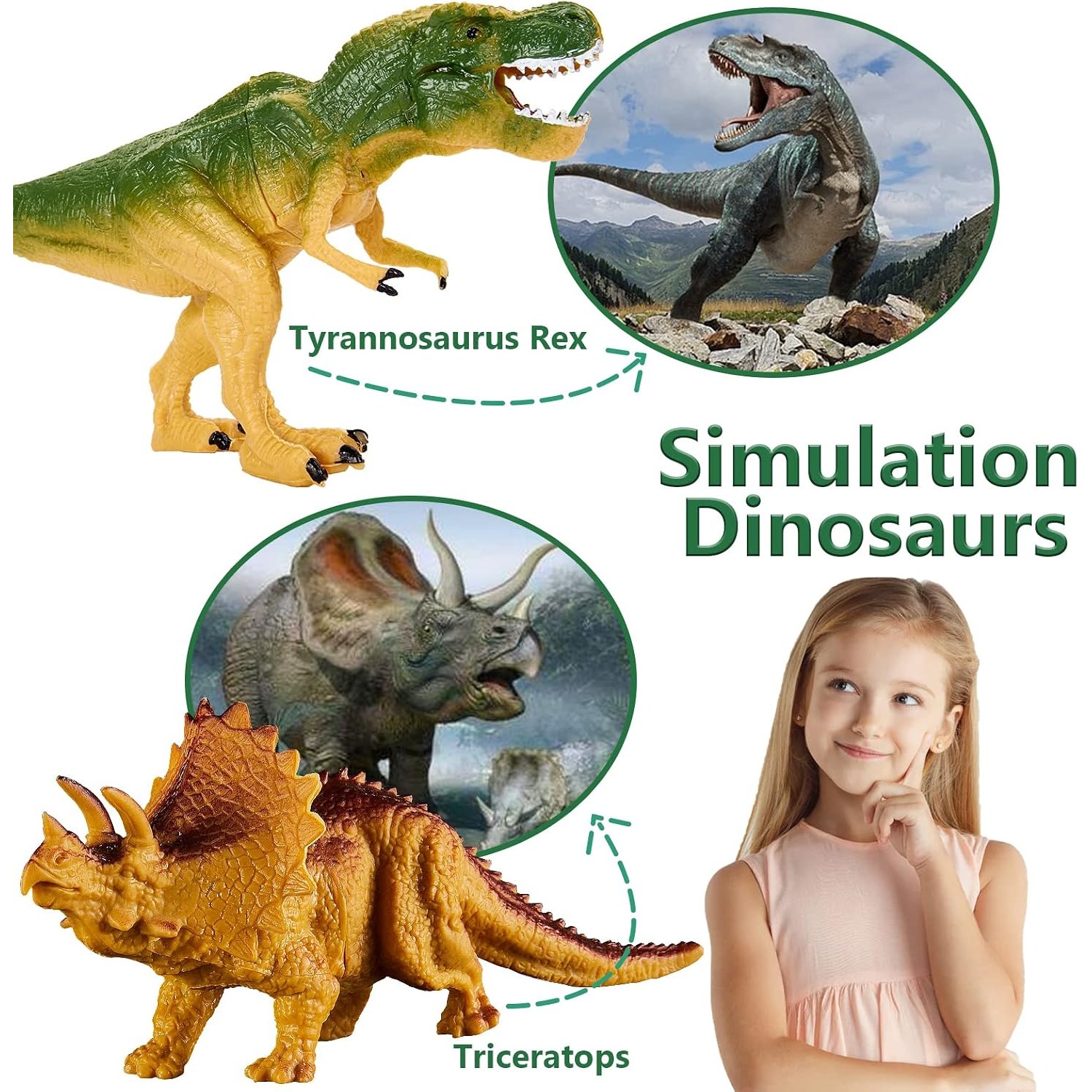
The species mix matters as much as the count. The set includes recognisable favourites such as T-rex, triceratops and parasaurolophus. A horned charger, a long-crested plant eater and a big-jawed predator are three completely different silhouettes, and different silhouettes give a child different roles to play. If every figure looked like a lizard with legs, the set would stall fast.
Who this suits
The manufacturer recommends ages 36 months to 10 years, which is a wide window, and the way the set gets used changes a lot across it.
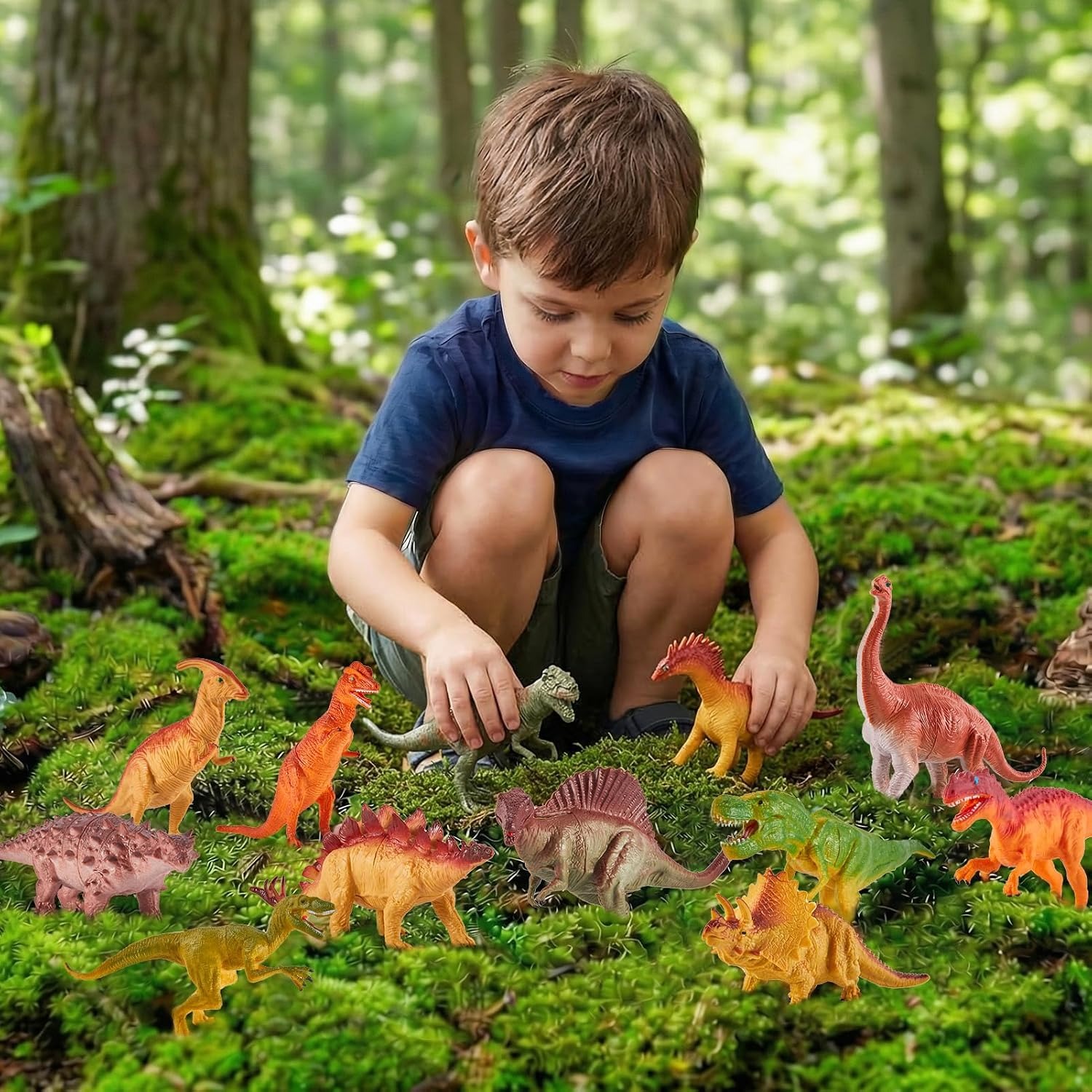
Three and four year olds mostly handle and name. They carry one dinosaur everywhere, line them up, knock them over, and learn a surprising number of multi-syllable names along the way. The large size suits this stage because grip is still developing.
Five to seven year olds build scenes. The rug becomes a swamp, cushions become cliffs, and the triceratops defends something. This is when sets like this earn their keep, because a child at this age wants enough characters to run a plot. One or two figures is not enough.
Eight to ten year olds tend to get more factual. They want to know which ones were real, which period they came from, and whether the T-rex really could have beaten the triceratops. The stated educational objective of learning about dinosaurs and their characteristics lands squarely here. Pair the set with a library book and you have an afternoon.
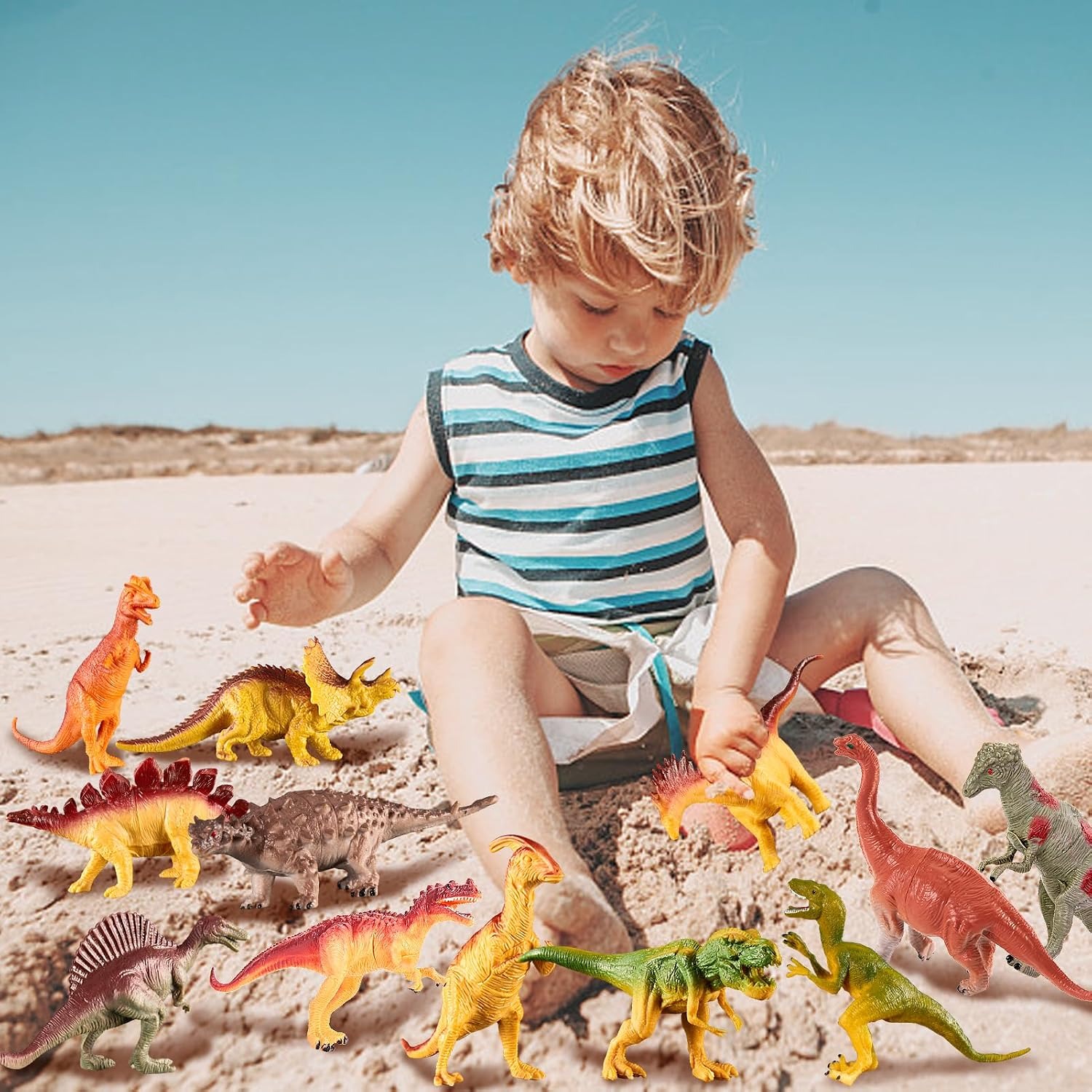
Then there are the non-child uses. People buy sets like this for birthday tables, classroom corners, small world play trays, sandpits, and party favour bags. If you are after the best dinosaur party favours, splitting one set across a handful of guests is usually better value than individual bagged toys, and the gifts feel more substantial.
How to choose between dinosaur sets
A few things are worth checking before you buy any set, not just this one.
Figure size. This is the single biggest factor in whether a set gets played with. Anything under three inches tends to disappear. Figures in the 6 to 7 inch range are visible across a room and hard to lose in a lawn.
Piece count versus quality. A tub of fifty small figures and a box of twelve large ones can cost about the same. The tub looks generous. The box gets played with. Ten good characters beat fifty filler ones.
Battery dependence. Walking, roaring, light-up dinosaurs are fun for a week. Then the batteries go, the screwdriver is missing, and that is the end of it. Battery free sets sidestep all of it.
Species variety. Check that you are not getting six near-identical shapes. Look for a mix of horned, crested, armoured and predatory types.
Where it will be used. If the answer includes the garden, the beach or a sandpit, you want plastic that can be rinsed and wiped. If the answer is a display shelf, detail and finish matter more than durability.
Packaging. If it is a gift, a box saves you a job.
Looking after them
Plastic figures are easy, which is most of the appeal. A damp cloth and a little mild soap handles everyday grime. Dry them fully before they go back in the box, particularly if they have been in a sandpit, because trapped moisture and grit are what dull the detail over time.
Do not put them in the dishwasher. The heat can warp plastic and strip painted colour, and the figures are too light to stay put in a rack anyway. Skip harsh solvents and scouring pads for the same reason.
Keep them out of direct, prolonged sun on a windowsill. Any painted plastic will fade eventually if it bakes for months.
Storage is simple. The original gift box works fine, or a shallow basket under the bed. Because these figures are large, tidy-up is quick, which is a bigger daily benefit than it sounds.
If a figure gets scuffed from outdoor use on concrete, that is normal wear. Many children prefer their dinosaurs looking a bit battle-worn anyway.
A few ways to extend the play
Bury them in a sand tray and hand over a paintbrush for a dig. Add a bowl of water and some pebbles for a watering hole. Tape a sheet of paper to the floor and let the child draw a map of the island before the dinosaurs arrive. Hide all twelve around the house and call out species names as clues.
None of this needs extra purchases. That is the quiet strength of a simple figure set. It plugs into whatever else is already in the house, from building blocks to a cardboard box.
The short version
Twelve dinosaur figures, each around 6 to 7 inches, in plastic with a glossy painted finish. No batteries, no assembly, no screens. Recommended for ages 36 months to 10 years, weighing 0.45 kg for the set, made in China by HERSITY under model 929-69 with a 30 day limited manufacturer warranty.
It is big enough to hold properly, varied enough to build stories with, and tough enough for the garden. It arrives in a gift box, so it is ready to give. If you want a dinosaur set that is still in use next year rather than under the sofa by Friday, size and simplicity are what you are paying for here.