

The complete guide
How to Choose a Kids Wooden Tool Set That Actually Gets Played With
The problem with most toys bought for three year olds
A lot of toys for this age are designed to impress the adult in the shop. They light up, they talk, they have a button for every finger. Then they get played with hard for four days and quietly slide under the bed.
The toys that survive tend to have one thing in common. They give the child something to do rather than something to watch. A kids wooden tool set sits firmly in that camp. There is no sound effect to wait for and no screen telling anyone what to do next. There is a hammer, a screwdriver, a pile of wooden parts and a problem to solve.
There is also the copying instinct to consider. Around age three, children start paying close attention to what grown-ups do with their hands. They want the real drill, the real spanner, the real saw. Handing them a wooden version of those tools is a way of saying yes to the interest without saying yes to the hardware drawer.
What is in this set and how it works
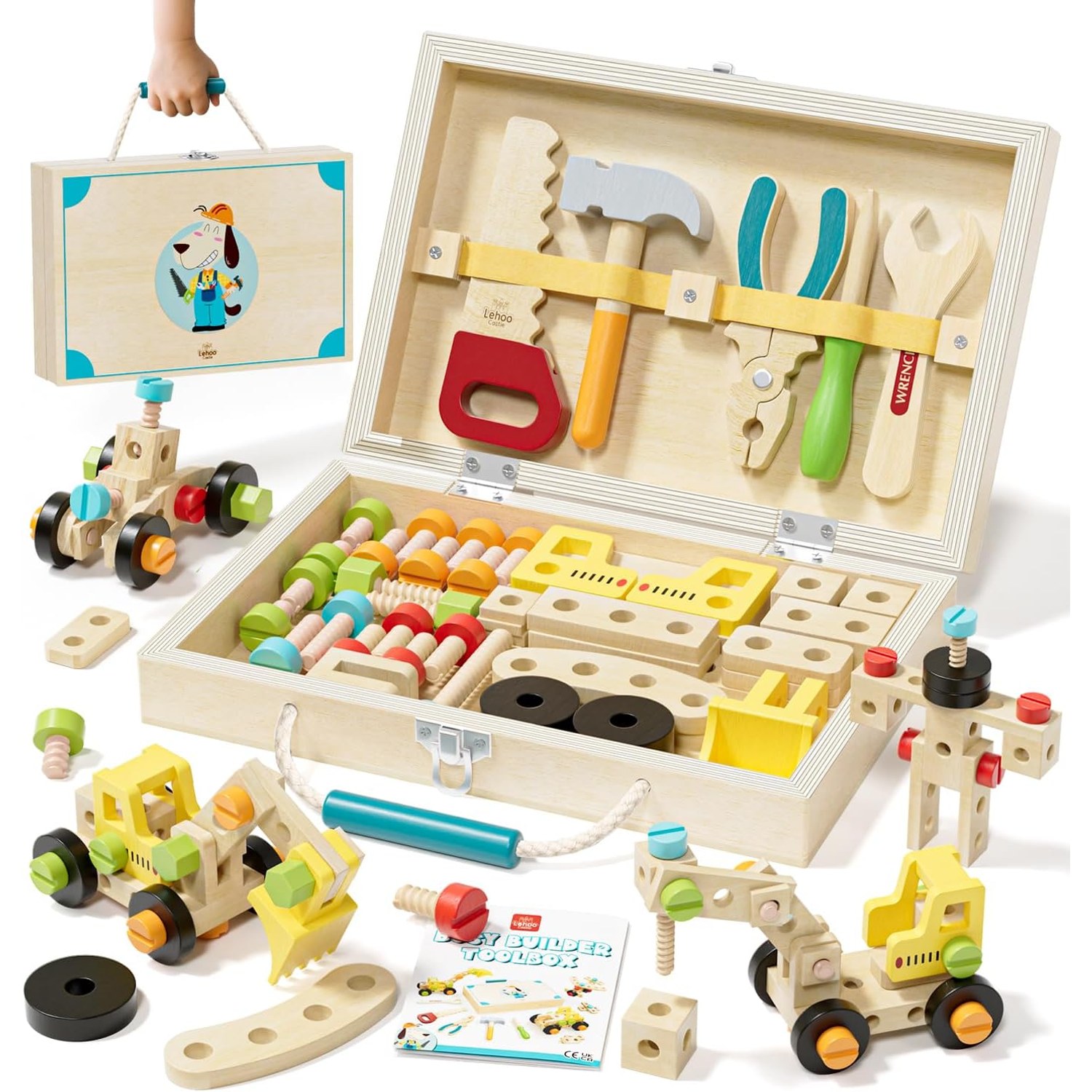
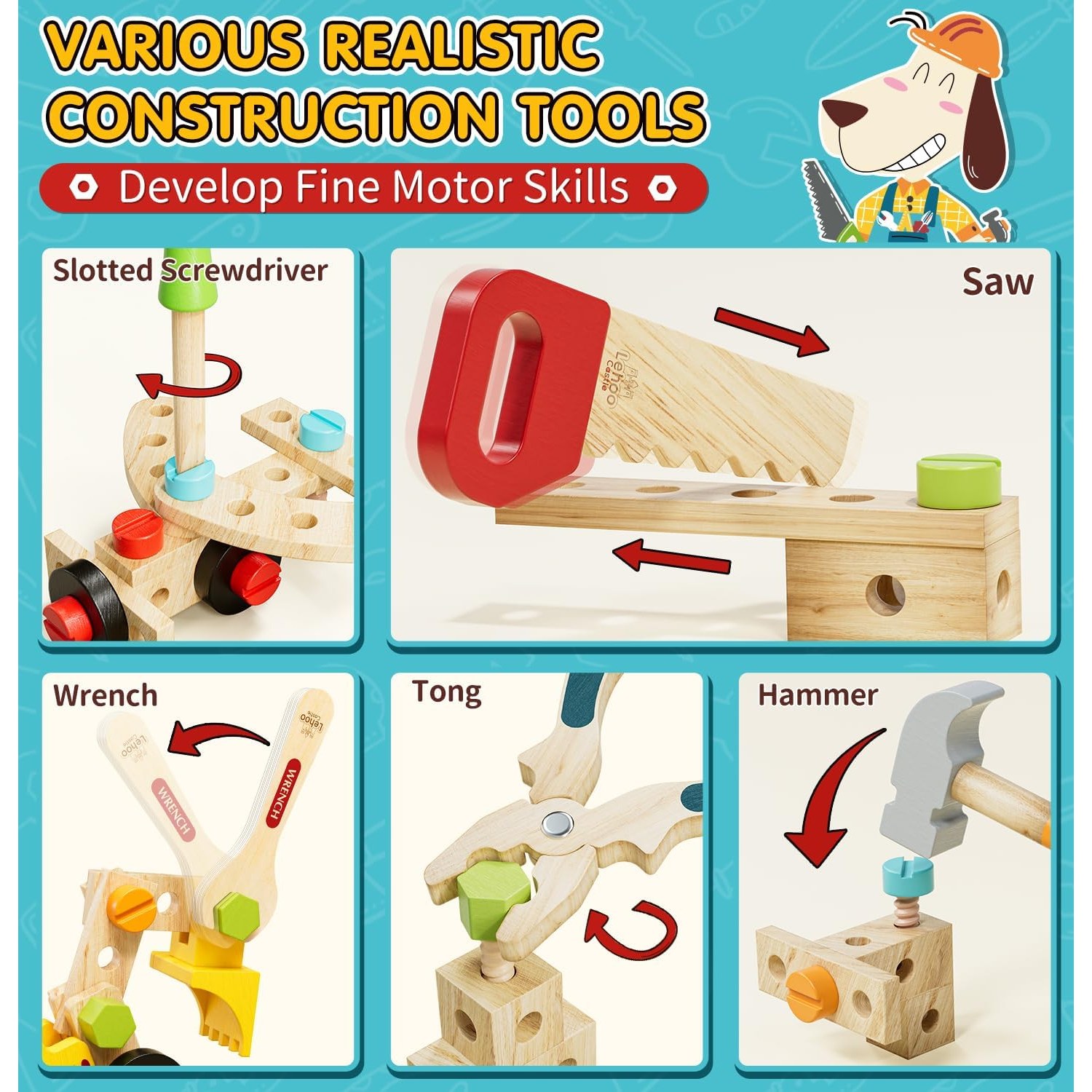
The kit includes five tools: a hammer, a slotted screwdriver, a pair of tongs, a wrench and a saw. Alongside those sit the wooden accessories, the nuts, screws and shaped parts that the tools actually work on. An instruction sheet shows how to combine them.
The screwdriver fits slotted wooden screws, so turning the handle genuinely drives the screw into a hole. The wrench grips nuts. The hammer taps pegs home. The tongs are for picking up and placing small parts, which is a sneaky bit of pincer-grip practice dressed up as construction work.
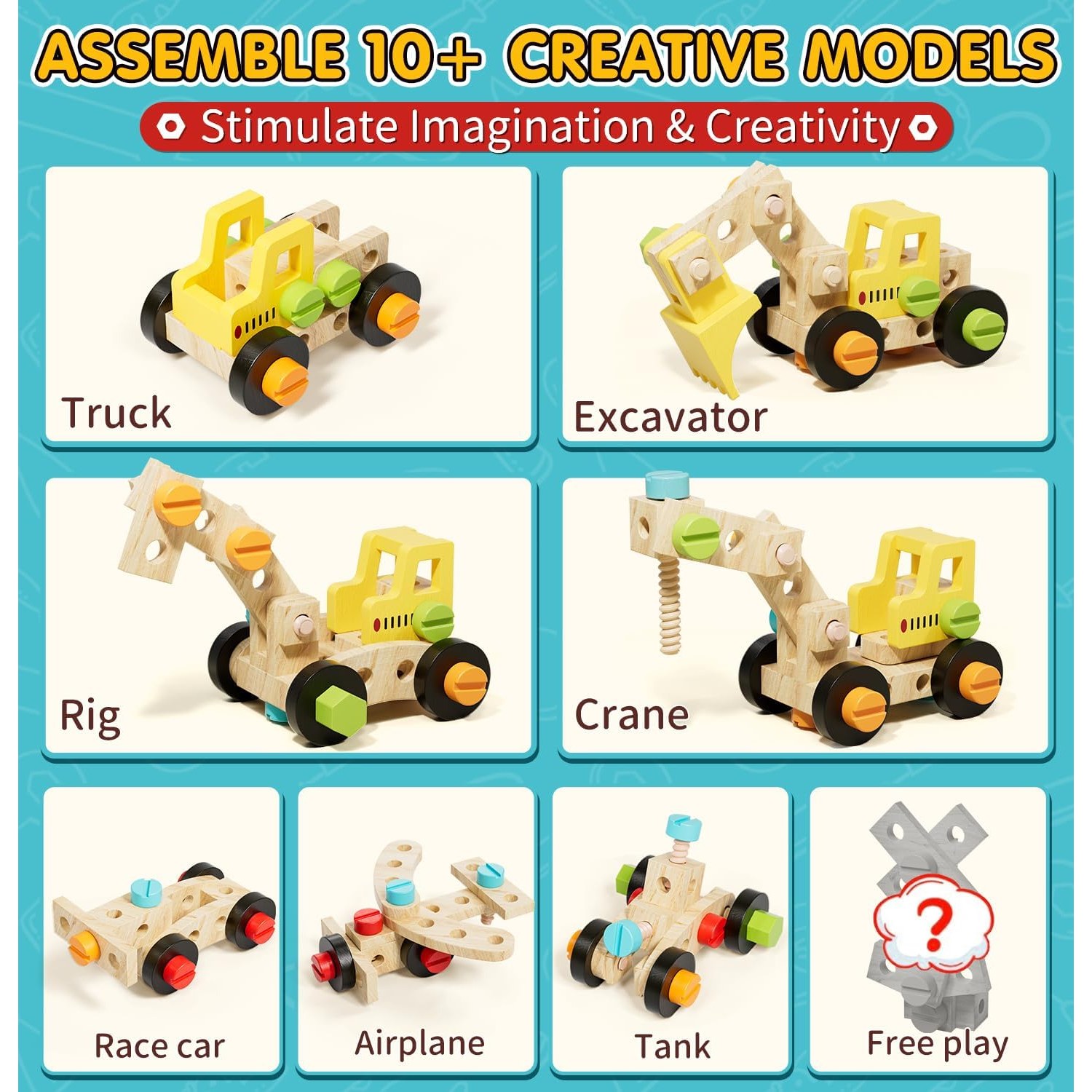
From those parts a child can build more than ten models. A truck, an excavator, a crane, a rig, a race car and so on. The instructions get them started, and then the pieces get used for whatever the child has in mind. That second stage matters more than the first. A best wooden toy tool kit is one where the printed models are a starting point, not the ceiling.
Everything is manual. No batteries, no charging, nothing to replace. That also means it works on a plane, in a car, at a grandparent's house and on a camping table.
Who it suits
The age guidance is 3 years and up, with 36 months to 5 years as the recommended window. That is a sensible range. Below three, the small screws and nuts are a choking risk and the hand strength is not really there for twisting. Above five, many children keep using it, but they use it as free-build material rather than following models.
It suits a child who is already interested in how things come apart. If your three year old has unscrewed a cupboard handle or tried to open the back of the remote, this set is pointed straight at them.
It also suits households tired of noise. A wooden set makes a soft knocking sound and nothing else. Parents who have lived with a talking toy toolbench tend to appreciate that quickly.
Finally, it works for siblings of different ages. A five year old can run the build while a three year old is in charge of handing over parts. That division of labour is one of the reasons sets like this show up on lists of the best construction toys for preschoolers.
What to look for when you are comparing sets
A few things separate a set that lasts from one that frustrates.
Check that the tools actually do something. Plenty of toy tool sets include a screwdriver that does not fit any screw in the box. Here the slotted screwdriver and the wooden screws are made as a pair, so turning produces a result. Children lose interest fast when a tool is decorative.
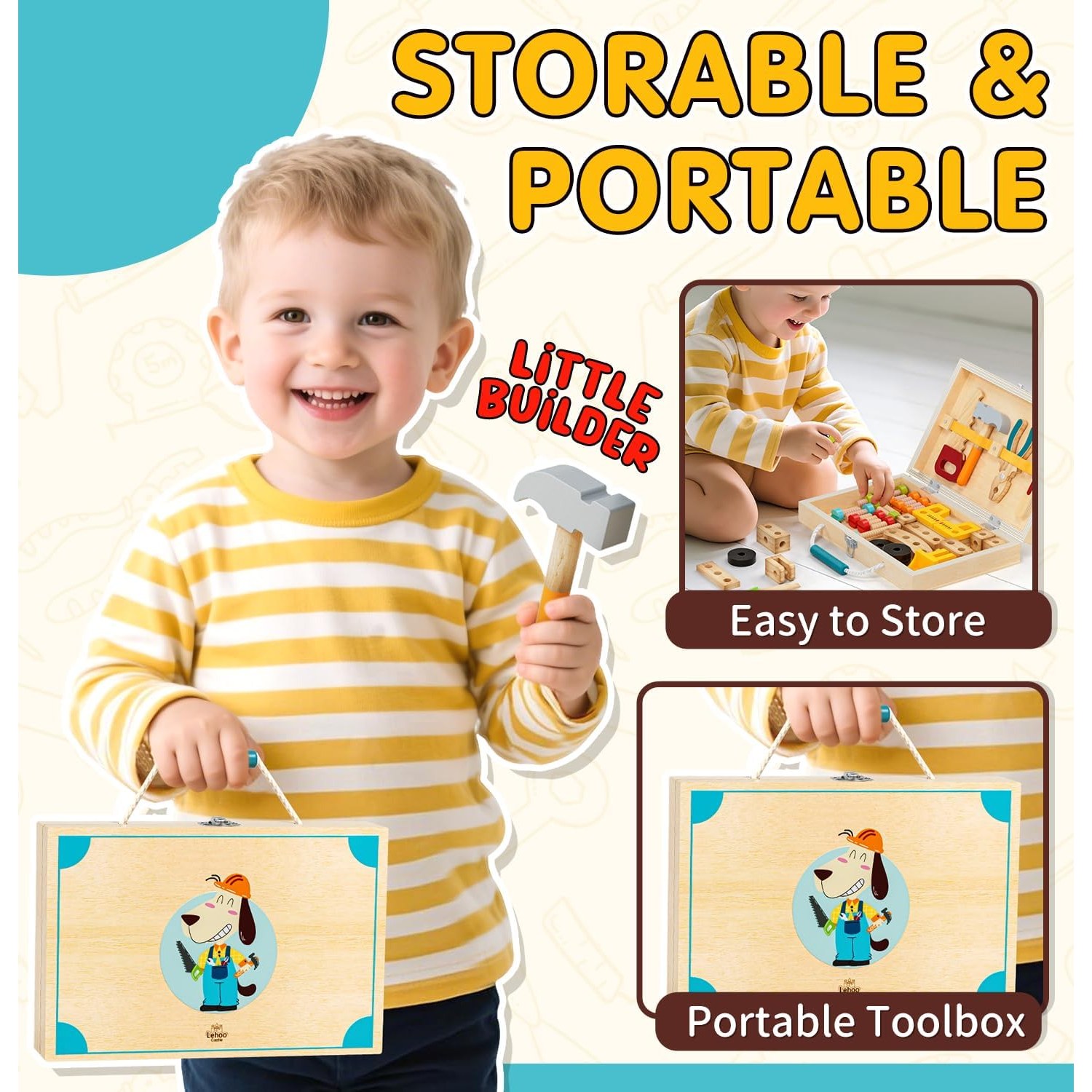
Look at the storage. If the set arrives in a cardboard box, that box will be ruined inside a month and the parts will scatter. This one uses a wooden tool box that doubles as storage and a carry case, with a place for each item. That single design choice is often the difference between a set that gets used weekly and one that gets abandoned because half of it is missing.
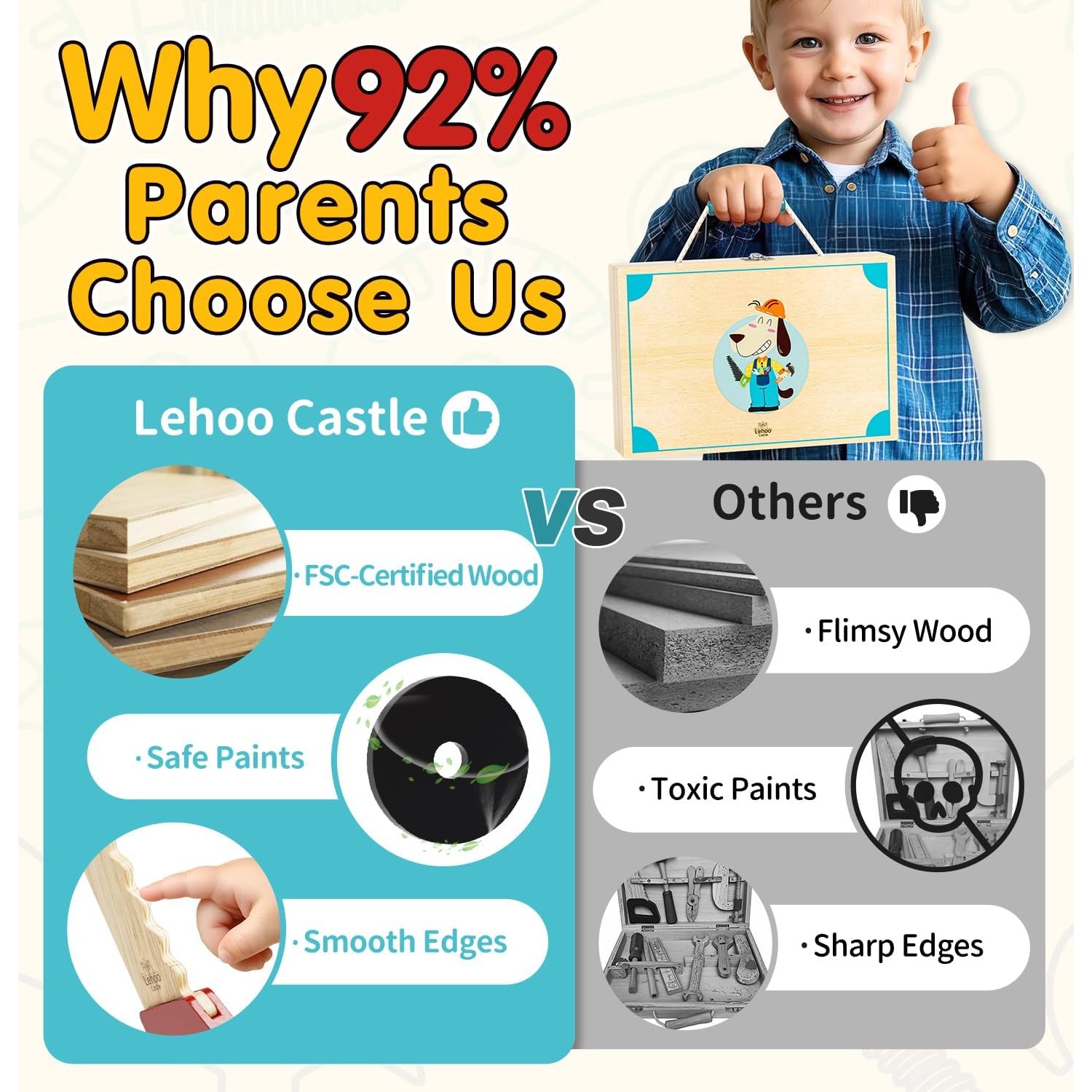
Think about the material and finish. Wood gives weight and feedback, and smoothed edges matter when small hands are gripping hard. The maker describes the paint as non-toxic.
Consider open-endedness. Count how many different things the parts can become. A set with ten-plus models and interchangeable pieces will outlast a set that builds one fixed vehicle. The best fine motor skills toys are usually the ones with the most recombination.
And check size. This set is 28.5 x 21 x 5.8 cm and 680 g. It is slim enough to shelve and light enough for a child to carry, which sounds minor until you are the one hauling toys to the car.
Getting the most out of it at home
Start by building one model together, slowly, while the child does the tool work. Resist the urge to speed things up by doing the fiddly bit yourself. The fiddly bit is the point.
After the first couple of models, leave the instruction sheet in the box and ask an open question instead. What could we make that carries things? What would a digger need? The answers are usually better than the printed designs.
Set up a routine for packing away. Tip everything out at the start, then make the last five minutes about matching parts back to their slots. Children are surprisingly good at this because the box gives them a visual target. It builds a tidy-up habit that transfers to other toys.
Keep the set in one place so pieces do not migrate. A low shelf the child can reach works better than a high cupboard, because a toy they can fetch themselves is a toy they will choose.
Caring for wooden toys
Wood is forgiving as long as it stays dry. Wipe the tools and the box with a barely damp cloth, then dry them right away. Do not soak anything, do not run pieces under the tap and never put wooden toys in the dishwasher. Water swells the grain and lifts paint.
Store it away from radiators, sunny windowsills and damp corners. Swings between wet and dry are what cause warping and splitting.
Every few months, run your fingers over the pieces and check for rough spots, splinters or chipped paint. Retire anything damaged rather than sanding it yourself, since you do not know what the finish is underneath. The set carries a 1 year warranty against manufacturer defects, so if something is wrong out of the box, get in touch rather than patching it.
The short version
This is a wooden pretend play tool box with five working tools, a stack of interchangeable parts and more than ten models to build, all stored in a wooden carry case. It is aimed at children aged three to five, needs no batteries and no assembly, and works indoors or out.
It earns its keep because the play changes over time. Hammering at three, following models at four, inventing at five. If you want one toy that covers imaginative play, hand skills and early problem solving without adding another beeping device to the living room, this is a solid pick.