Toy Warehouse
Company
Shop By Category
T&Cs
Shop Online
  • Box contents listed
  • Free tracked delivery across the UK over £75
  • 14-day returns

Building Blocks 156 Piece | STEM building blocks | Construction set for kids

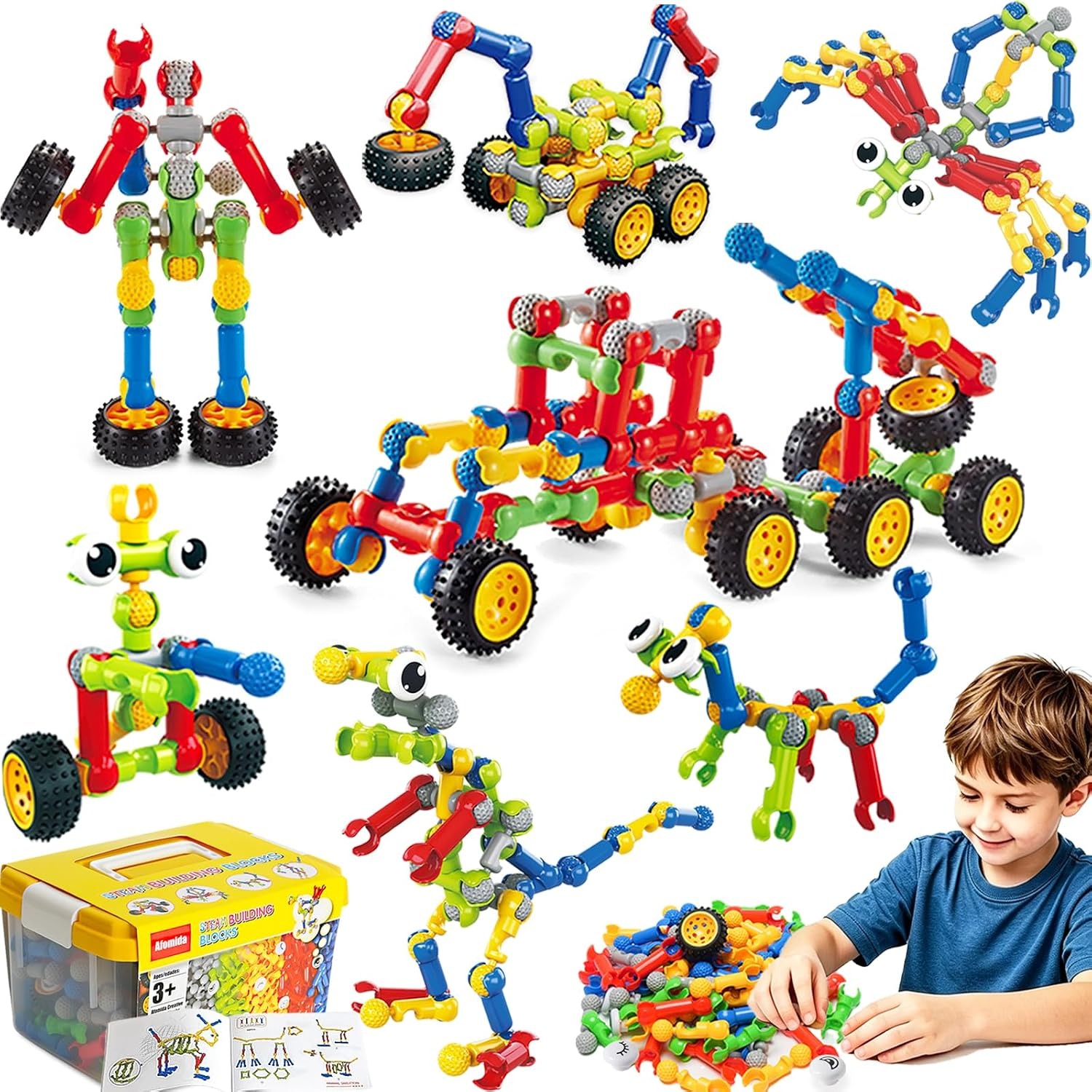
156 Piece STEM Building Blocks Construction Set

£51.99 £61.99 Save £10
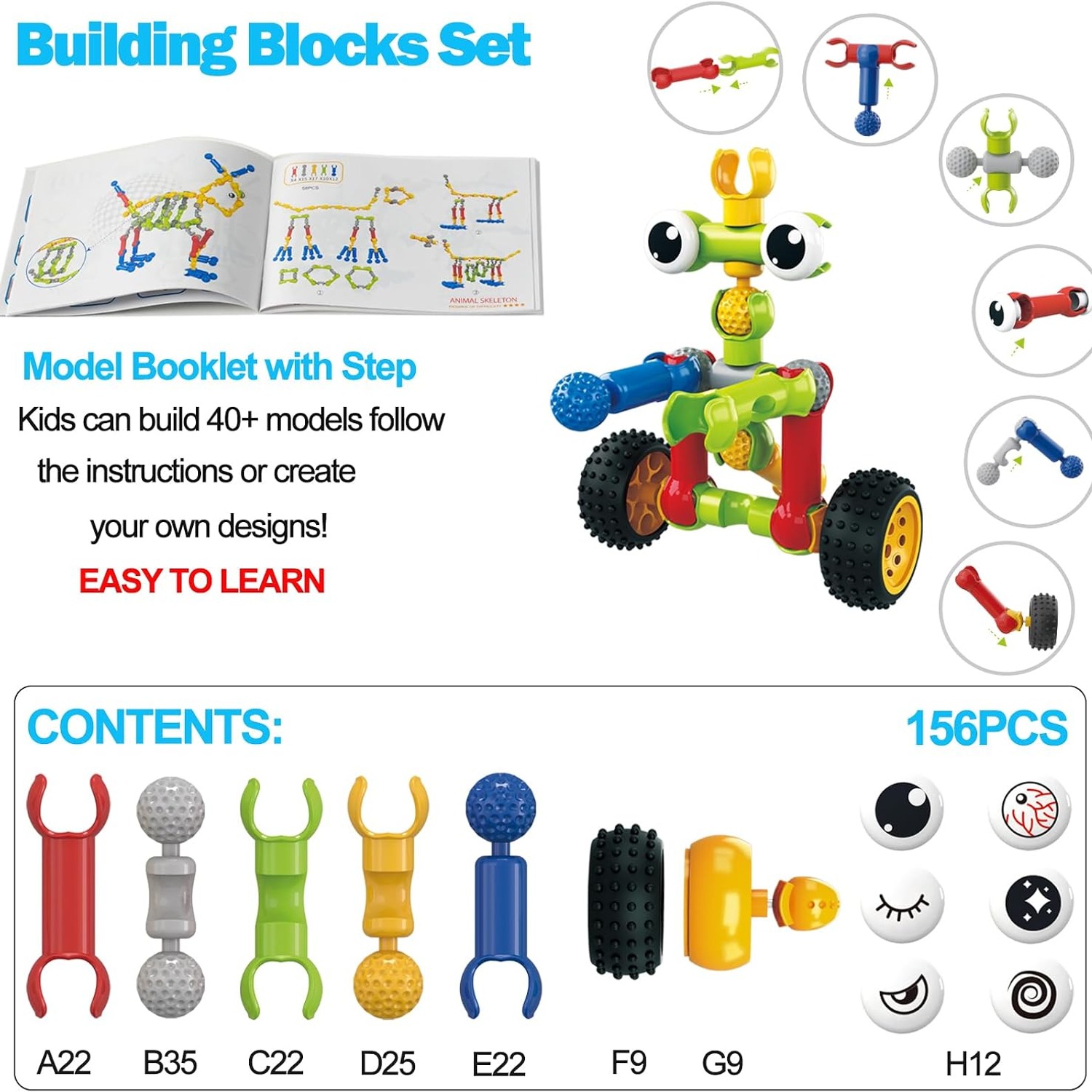
  • 156 Pieces
  • Illustrated Manual
  • Fine Motor Practice
  • Ages 3 And Up

Price: £51.99 £61.99

  • Free tracked delivery across the UK on orders £75+, otherwise a flat £10
  • Pay by card or PayPal, handled by the payment provider
  • 14 days to change your mind, plus your statutory rights
Product specifications
BrandAfomida
Set NameSTEM Building Blocks Toy Set
Model NameFYD1940
Model NumberFYD1941
Manufacturer Part NumberFYD1940
ManufacturerAfomida
MaterialPlastic
Block TypeInterlocking building blocks
ThemeArchitecture, Construction, Education, Engineering, STEM
Educational ObjectiveCreative thinking
Special FeaturesCompatible pieces, creative play, develops fine motor skills, educational, STEM learning
Recommended Age3 years and up (36 months)
Target AudienceKids aged 3 to 7, preschoolers, preschoolers
Number Of Players1 player
Operation ModeManual
Assembly RequiredYes
Indoor Or OutdoorIndoor
Included ComponentsInstruction manual
Item Weight0.9 kg
Item Dimensions10 x 10 x 10 cm
Country Of OriginChina
Weight0.9 kg
Shipping & returns

Tracked delivery anywhere in the UK. It is free on orders of £75 or more, and a flat £10 below that.

Under the Consumer Contracts Regulations 2013 you have 14 days from delivery to cancel for any reason, and a further 14 days to send it back in resaleable condition. We refund the price you paid, including standard delivery. You cover the cost of returning it unless the item is faulty.

If it arrives faulty, damaged or not as described, we put it right at no cost to you under the Consumer Rights Act 2015, return postage included.

Shipping details · Refunds and returns

156 PiecesEnough parts for one child to build, pull apart and start again.
Illustrated ManualAn instruction manual is included so beginners have a clear starting point.
Fine Motor PracticeConnecting and separating pieces builds hand strength and control.
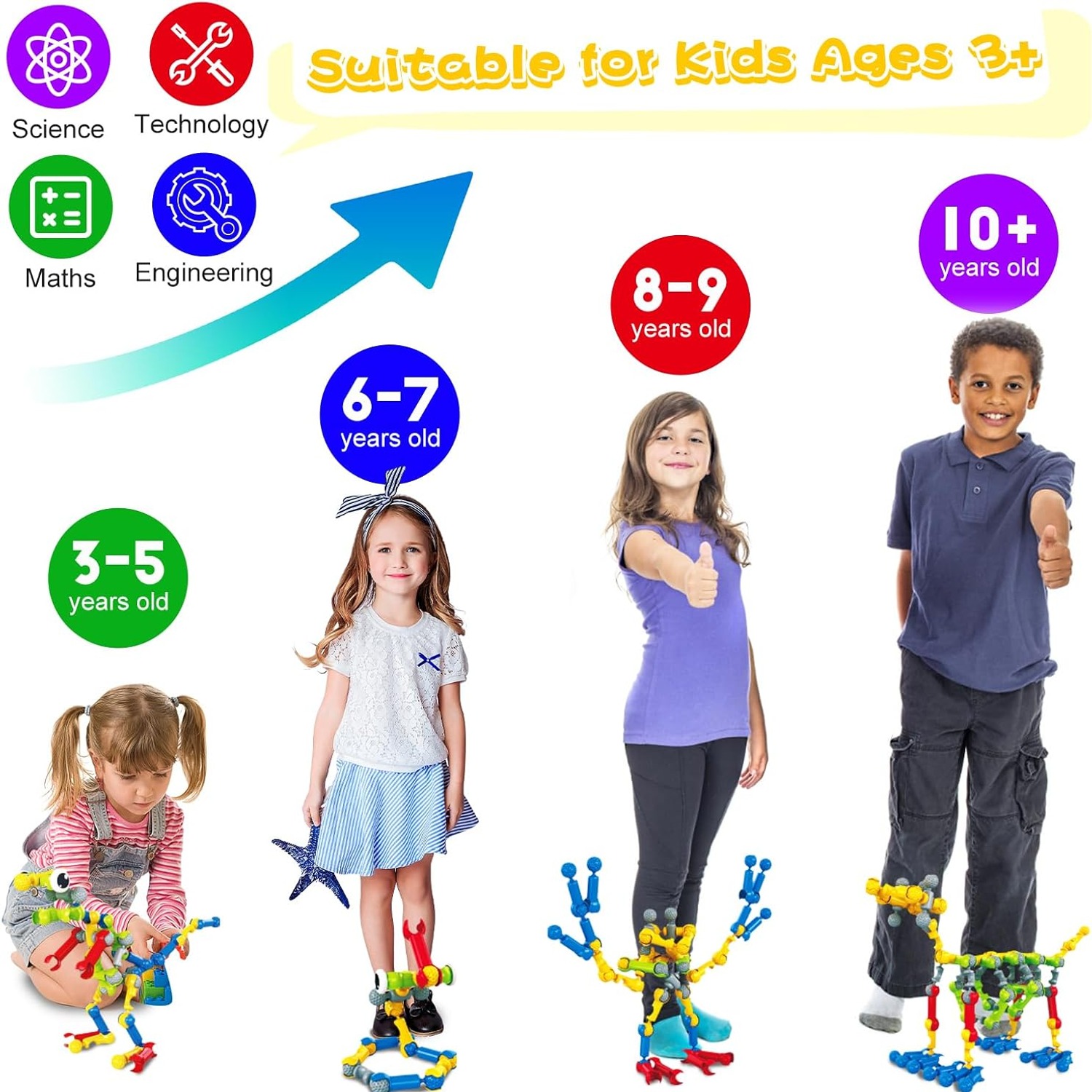
Ages 3 And UpManufacturer recommended age is 3 years and up, so it suits preschoolers through early school years.

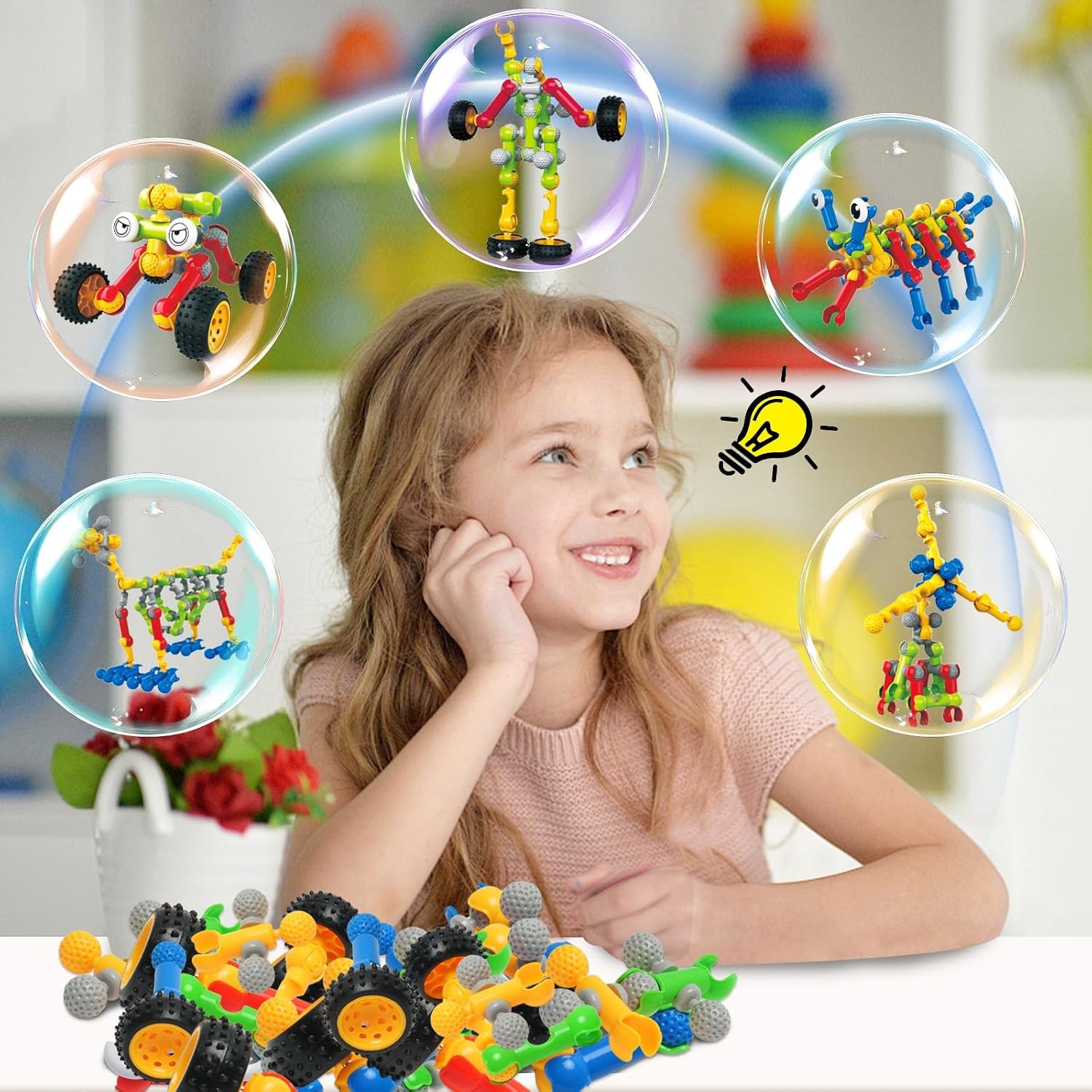
A 156 piece building blocks set that turns a rainy afternoon into a workshop full of ideas.

Interlocking plastic pieces, an illustrated instruction manual and a retail box of parts that help children aged 3 and up build, rebuild and practise fine motor skills.

A 156 piece interlocking building block set made from plastic, designed for hands-on construction play.

The included instruction manual gives children a guided route in, then free building takes over once they are confident.

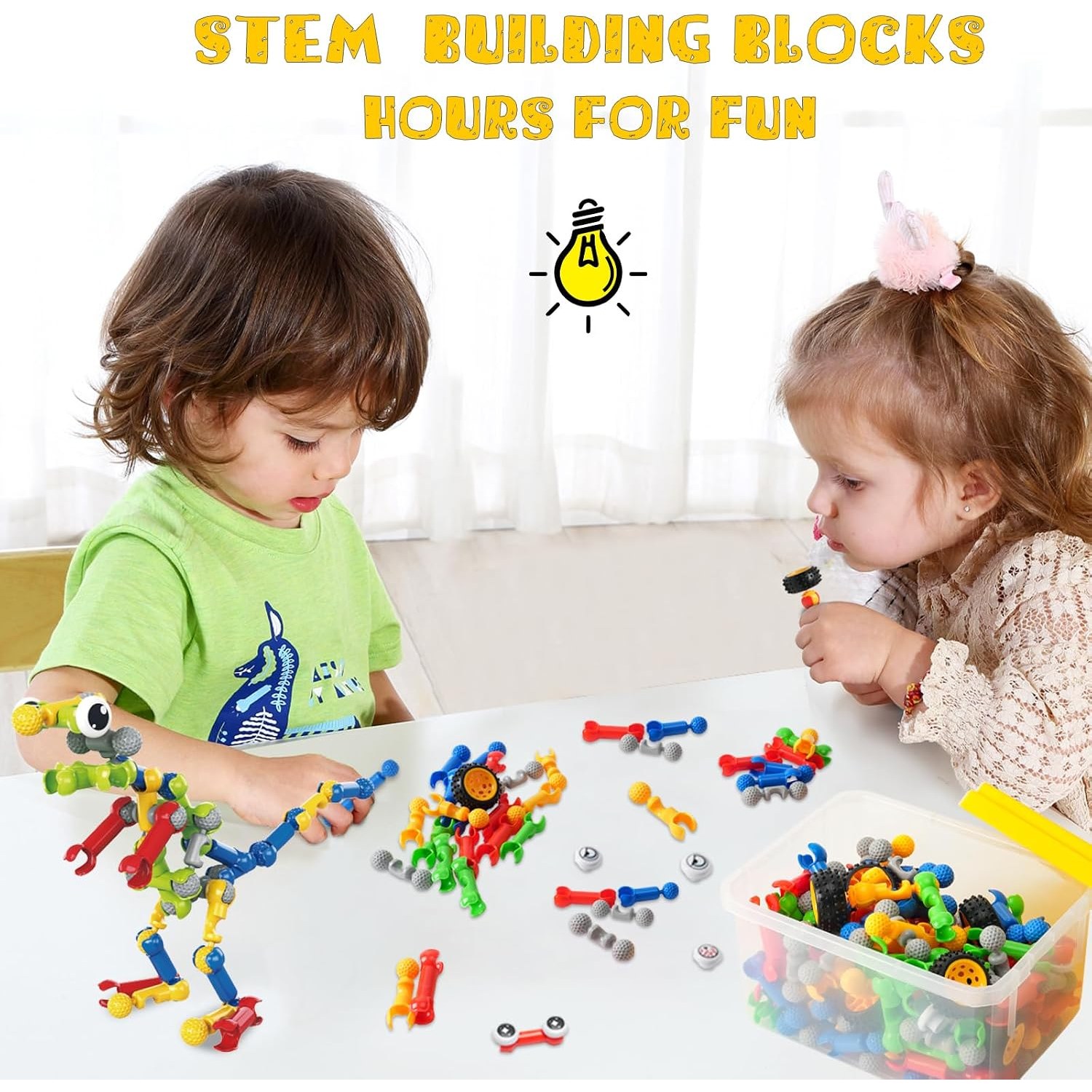
Sorting, gripping and clicking pieces together gives steady practice in fine motor control and spatial thinking.

Manufacturer recommended age is 3 years and up, which covers preschoolers and early primary school builders.

Comes in a retail box, so it stores and travels as one tidy package.

156 Piece STEM Building Blocks Construction Set

This is a 156 piece construction set built around interlocking plastic blocks. The idea is simple. Give a child a pile of parts that fit together in lots of ways, add a guide to get them started, and let the building take its own direction. There is no screen, no battery and no sound. The only moving parts are the ones the child puts together.

156 Piece STEM Building Blocks Construction Set

The set arrives in a retail box with an instruction manual inside. For a younger builder, the manual matters more than you might expect. Following a picture sequence from first piece to finished model teaches a child to read a diagram, work in order and check their own work. Once that clicks, most children stop looking at the book and start inventing. That shift from copying to creating is the whole point of a good construction set for kids.

156 Piece STEM Building Blocks Construction Set

Fine motor work happens without anyone calling it that. Pinching a small block, lining it up, pressing until it clicks and later prising it free all ask for controlled finger movement and a bit of patience. Those are the same muscles and habits that help with pencil grip, buttons and cutlery. Because the activity is fun, children repeat it far more often than they would repeat a drill.

156 Piece STEM Building Blocks Construction Set

The manufacturer recommends ages 3 and up, and the target audience listed is preschoolers through about age seven. In practice, a three year old will build simple shapes with help, a five year old will work through the manual, and a seven year old will ignore the manual entirely and design their own thing. That spread is useful if you have more than one child, or if you want a toy that still gets picked up a year after the birthday.

156 Piece STEM Building Blocks Construction Set

Weight is 0.9 kg and the packaged item measures 10 x 10 x 10 cm. The material is listed as plastic and the country of origin is China. Colour is not specified by the maker, and we have not listed a certification or safety standard here because the maker's details we hold does not confirm one. If you need that detail before buying, ask us and we will check the packaging information.

Not sure yet? That is fine.

A toy has to suit the child it is for, and you cannot always judge that from a photograph. Under the Consumer Contracts Regulations 2013 you have 14 days from delivery to cancel for any reason, and a further 14 days to send it back in resaleable condition. We refund the price you paid, including standard delivery.

If it turns up faulty, damaged or not as described, that is on us. The Consumer Rights Act 2015 covers you, and we pay the return postage. Read the full detail on our refunds and returns page, or ask us anything before you order.

Frequently Asked Questions

What exactly is in the box?

The set contains 156 interlocking plastic building pieces and an illustrated instruction manual, supplied in a retail box. The packaging listing shows one pack per order. Nothing else is listed as included in the maker's details.

What age is this set for?

The manufacturer recommended age is 3 years and up, which is 36 months. The listed target audience is preschoolers and children roughly aged 3 to 7. Older children often still enjoy it because free building has no upper limit.

Is it suitable for a three year old on their own?

A three year old can usually handle the pieces, but most will want an adult nearby for the first few builds. Start with simple shapes rather than a full model from the manual. As always with small parts, supervise young children at play.

What are the blocks made of?

The material listed in the maker's details is plastic, and the block type is interlocking. The maker does not specify a resin grade or finish beyond that, so we have not claimed one.

Does it come with instructions?

Yes. An instruction manual is listed as an included component. It gives children a guided way into the set before they move on to their own designs.

How many models can be built?

The number of possible builds depends on imagination more than anything else, since the pieces are reusable and recombine freely. The manual provides worked examples to follow. We have not quoted a specific model count because our record does not confirm one.

Is this one of the best STEM toys for preschoolers?

It covers the ground that preschool STEM play usually aims at, including sorting, sequencing, balance and spatial reasoning. The themes listed for the set are architecture, construction, education, engineering and STEM. Whether it is the right fit depends on whether your child enjoys hands-on building.

Will it keep a child busy for long?

Construction sets tend to hold attention in bursts rather than one long sitting, which is normal for this age group. Many children return to the same set repeatedly over weeks. Having a manual to work through helps on days when inspiration is low.

Can two children play with it together?

The maker lists it as a single player toy, meaning it is designed for one builder. Two children can of course share a pile of blocks, though with 156 pieces you may find a second set reduces arguments. Shared building is good practice for taking turns.

Is this a good screen free toy for children?

Yes, it is fully manual with no batteries, lights or sound. The operation mode is listed as manual and indoor use. That makes it a straightforward option when you want quiet, hands-on play.

Does it help with fine motor skills?

Connecting, separating and positioning small pieces all require controlled finger movement, which is listed among the set's special features. That kind of repeated, low-pressure practice supports grip strength and coordination. It is one of the reasons building blocks stay popular in early years settings.

Is assembly required?

Yes, the maker lists assembly as required, which simply means the child builds the models from loose pieces. There is nothing for an adult to construct before play begins. Opening the box and sorting the pieces is the only setup.

Can it be used indoors and outdoors?

The maker lists it as an indoor toy. Small plastic pieces are easy to lose in grass or sand, so a table or floor mat indoors works best. If you do take it outside, use a tray to corral the parts.

How big is the packaged item?

The listed item dimensions are 10 x 10 x 10 cm and the weight is 0.9 kg. That is a compact box that fits easily on a shelf or in a bag.

What colour are the blocks?

Colour is not specified by the maker, so we have not stated one. Building sets of this type generally use a mix of bright colours. If exact colours matter to you, contact us before ordering.

Is this a good birthday gift for a 5 year old?

Five sits right in the middle of the recommended range, so it usually lands well. The manual gives a child something achievable on the day, and free building takes over afterwards. It also ships in a retail box, so it presents nicely without extra packaging.

Can it be used in a classroom?

Plenty of preschool and early primary settings use interlocking block sets for building and sorting activities. The listed educational objective is creative thinking, and the themes include engineering and education. For a whole class you would want several sets rather than one.

Is it compatible with other building block brands?

The special features list includes compatible pieces, but it does not name specific brands, so we cannot promise a match with any particular system. Within this set, all pieces are designed to work together. Treat it as a standalone set unless you can test compatibility yourself.

How do I clean the blocks?

Wipe them with a damp cloth and a little mild soap, then dry fully before storing. Avoid dishwashers, washing machines and microwaves, since heat can warp plastic. A quick wipe every few months is usually enough.

How should I store the pieces?

Keep them in the retail box they arrive in, or decant them into a lidded tub if you prefer. Keeping all 156 pieces in one place is the difference between a set that gets used and one that slowly disappears under the sofa. A quick count after each session helps.

Are small parts a choking risk?

Any set with small building pieces should be kept away from children under three and from pets. The manufacturer recommended age starts at 36 months for that reason. Supervise younger siblings if they are in the same room.

Does it need batteries?

No. The operation mode is listed as manual, so there are no batteries, charging or electronics involved. Nothing can run flat midway through a build.

Is it a good travel toy?

The box is compact at 10 x 10 x 10 cm and the set weighs 0.9 kg, which makes it easy to pack. Loose small pieces can scatter in a car or on a plane, so a zip pouch or tray helps. It works well for holidays and visits to relatives.

What skills does it actually teach?

The listed educational objective is creative thinking, with features covering STEM learning and fine motor development. In practice children also pick up planning, sequencing, patience and the habit of fixing something that falls apart. None of it feels like schoolwork.

Is this set better for boys or girls?

It works equally well for either. The listed audience is simply kids aged 3 to 7, preschoolers and preschoolers. Construction play has no gender requirement attached to it.

What happens if a piece breaks?

Remove and discard any cracked piece, since broken plastic can have sharp edges. With 156 pieces, losing one or two rarely affects play. If a set arrives with a damaged part, get in touch and we will sort it out.

Can I buy replacement pieces?

Individual replacement pieces are not offered as a separate item in our catalogue. Most families simply build around a missing part or add a second set. Contact us if you need advice on this.

How long does delivery take?

Delivery is by tracked courier to any UK address. Allow 3 to 7 working days from the order date, and a little longer for the Highlands, islands and Northern Ireland. Orders of £75 or more are delivered free, and smaller orders pay a flat £10.

Can I return it if it is not what I expected?

You have 14 days from delivery to return it for a change of mind, provided it is unused, complete and in its original packaging. Return postage is yours to pay. If it arrives faulty or damaged, tell us and we will put it right at no cost to you.

What if it is not right for my child?

Some children prefer drawing, puzzles or role play to construction, and that is fine. Get in touch and we will help with a return or suggest something from another category that fits better. We would rather point you somewhere else than have a box sit unopened in a cupboard.

Buying A 156 Piece Building Blocks Set, A Parent's Guide

6 min read Toy Warehouse

The problem with most toys bought for children aged three to seven

A lot of toys do one thing. A truck is a truck. A singing bear sings. The child learns the trick in about ten minutes, and after that the toy sits in the corner of the room looking slightly accusing. Parents end up buying more toys to chase the same first-day excitement, and the pile grows.

Building blocks work differently because the toy is never finished. A 156 piece set does not have a correct final state. It has a pile of parts and whatever the child decides to do with them on a given Tuesday. That is why construction sets have outlasted almost every other toy category and why they still turn up in nurseries, classrooms and living rooms decades after they first appeared.

This set contains 156 interlocking plastic pieces, an illustrated instruction manual, and a retail box to keep everything together. The manufacturer recommends it for ages 3 and up, with the listed audience being preschoolers and children roughly aged 3 to 7.

How a construction set like this actually works

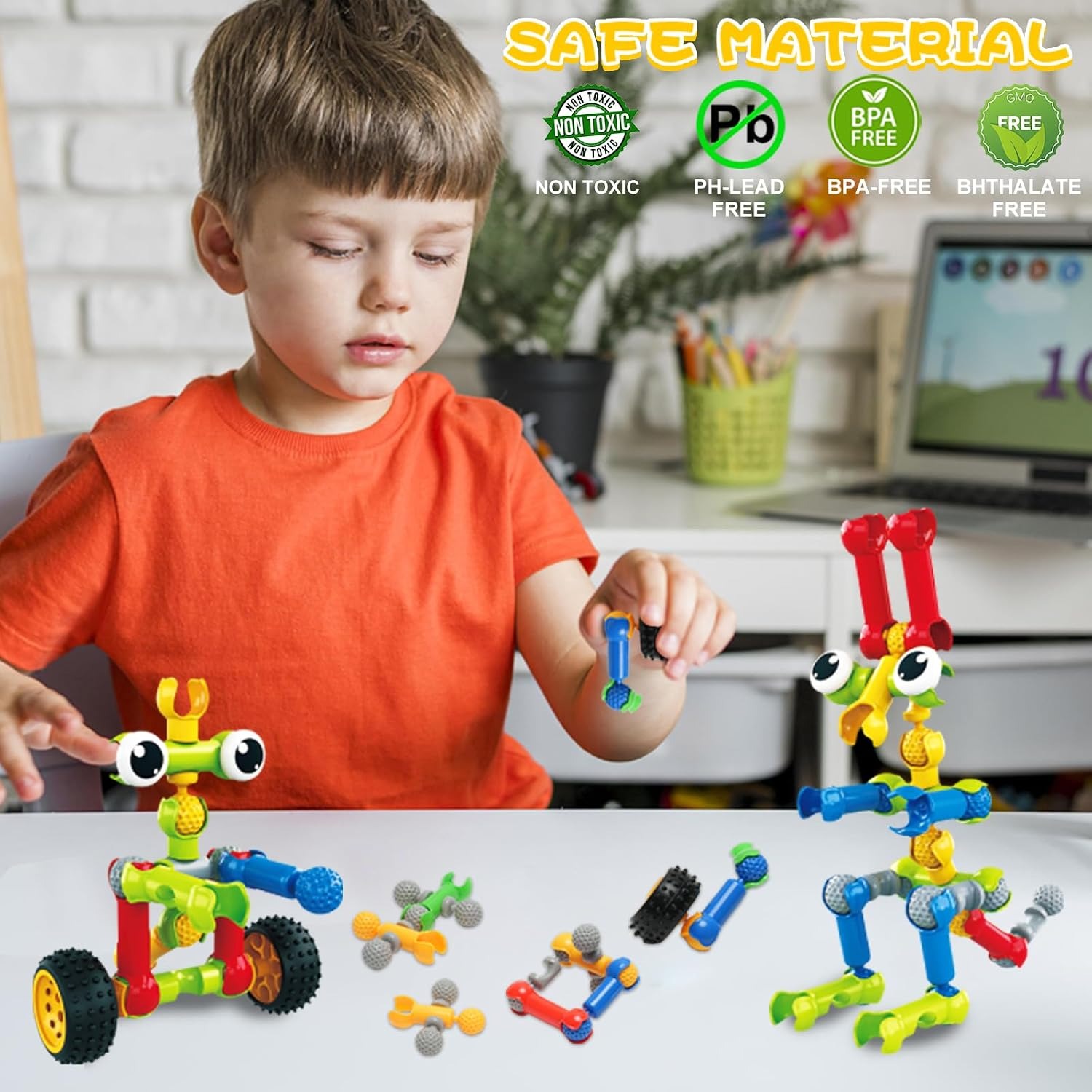
The pieces interlock, meaning they press together and hold, then come apart again with a bit of effort. That is the entire mechanism. There are no batteries, no app and no electronics. The operation mode is listed as manual, which is a dry way of saying the child does all the work.

The manual is the part people underestimate. For a child who has never built from a diagram, following a picture sequence is a real skill. They have to find the right piece, work out which way round it goes, place it, and then check what they have against the picture. That is reading, matching, spatial rotation and self-correction all happening while the child thinks they are just playing.

Once a child has worked through a few guided builds, something usually shifts. They close the book. They start making a thing they saw on the way to school, or a vehicle that does not exist. This is the point of the whole exercise, and it is why the listed educational objective for the set is creative thinking rather than any specific subject.

Who this set suits

Three year olds can manage the pieces but tend to build low, simple shapes and need an adult nearby. That is fine. At this age the win is handling the pieces at all, not producing a recognisable model. Expect towers, walls and a lot of knocking things down on purpose.

Four and five year olds are usually the sweet spot. They have enough finger strength to click pieces firmly and enough patience to follow several steps in a row. The manual becomes genuinely useful here, and this is the age where you see the most visible progress week to week. If you are looking for the best educational toy for 4 year olds, a guided-then-free building set is a solid category to be shopping in.

Six and seven year olds typically skip the manual. They will tip the box out, sort by shape, and start designing. At this age the value is less about following instructions and more about planning, testing and fixing. A model that collapses is not a failure, it is information, and children of this age start to understand that on their own.

Beyond seven, interest varies. Some children carry on building for years. Others move to more complex kits. Neither is a problem, and a set like this often gets handed down to a younger sibling.

What to look for when choosing a building block set

Piece count versus piece variety. A huge piece count sounds impressive, but a set with 156 well-varied pieces often beats a set with 400 near-identical ones. Variety is what lets a child build different things rather than bigger versions of the same thing.

Whether a guide is included. Open-ended play is the goal, but most children need a route in. A set with an instruction manual gives them a first success, and first success is what makes them come back. This set includes one.

Piece size against the child's age. Smaller pieces allow finer detail but ask more of small hands. The age recommendation here starts at 36 months, which is the usual floor for sets with small parts. Keep any set like this away from children under three.

Storage. This matters more than people expect. A set that lives in a box gets played with. A set that lives scattered across three rooms gets vacuumed up. This one arrives in a retail box and the whole thing weighs 0.9 kg, so it is easy to put away on a shelf.

Whether it needs power. Manual toys do not run out of charge, do not need a cable, and do not stop working when a plastic battery door snaps off. For the best screen free toy for children, this category is hard to beat.

Setting it up well at home

Give the set a home. A low shelf the child can reach themselves means they can start a session without asking, which matters more than you would think for independent play.

Build on a surface with edges if you can manage it. A tray, a shallow box lid or a baking sheet keeps pieces from rolling off a table and under furniture. This is the single most useful trick for keeping a set complete.

Resist the urge to build it for them. It is tempting, especially when a child is frustrated and you can see exactly which piece they need. Sit with them, point at the picture, ask what they think goes next. A build they finished themselves gets shown to everyone in the house. A build you finished gets ignored.

Sorting helps older children. Tipping 156 pieces into a pile and then grouping them by shape before starting is a calm, satisfying activity in itself, and it makes the actual build faster.

Looking after the blocks

Plastic building pieces are low maintenance. Wipe them with a damp cloth and a small amount of mild soap when they get grubby, then dry them properly before they go back in the box. Damp plastic stored in a sealed container can get musty.

Keep them out of the dishwasher, the washing machine and the microwave. Heat can warp or weaken plastic, and a warped piece will not click properly afterwards. Direct sun on a windowsill for months is also worth avoiding.

Every so often, run a quick check for cracks or sharp edges and bin anything damaged. With 156 pieces, losing a couple over the years will not noticeably affect what can be built.

If the set is heading to a new child or a charity shop, a wipe-down and a quick count is a kindness to whoever gets it next.

A few honest limitations

This is listed as an indoor toy, and that is sensible advice. Small plastic pieces vanish instantly in grass, sand and gravel.

It is also listed as a single player set. Two children can share, but 156 pieces split two ways is a fairly small pile each, and sharing disputes are a feature of childhood rather than a flaw in the product. If you have two builders, consider two sets.

Colour is not specified by the maker, so we are not going to tell you what shade the pieces are. If that detail matters for a gift, ask us before ordering and we will check.

The short version

If you want one toy that lasts longer than a weekend, a construction set is a reliable bet. This one has 156 interlocking plastic pieces, an instruction manual to get a child started, and an age recommendation from 3 years up that covers the whole preschool and early school stretch. It needs no batteries, works indoors on any flat surface, and packs back into its own box at 0.9 kg.

The real value is not in any single model. It is in the fact that the same box of parts becomes a different toy every time it comes out. That is unusual, and it is worth the shelf space.

Browse the shop

Not sure if it suits your child?

Tell us their age and what they already play with, and we will give you a straight answer on whether this set is a good match.

Ask us a question

Page summary

The 156 Piece STEM Building Blocks Construction Set is an interlocking plastic building toy from Afomida, model name FYD1940 and model number FYD1941. It contains 156 pieces and includes an illustrated instruction manual, supplied in a retail box. Listed themes are architecture, construction, education, engineering and STEM, with a stated educational objective of creative thinking. Manufacturer recommended age is 3 years and up (36 months), aimed at preschoolers and children roughly aged 3 to 7. It is a single player, manual, indoor toy requiring assembly. Material is plastic and country of origin is China. Item weight is 0.9 kg and packaged dimensions are 10 x 10 x 10 cm. Colour and GTIN are not specified by the maker.