

The complete guide
Choosing a Wooden Farm Train Set That Actually Gets Played With
The toy that gets played with twice and then forgotten
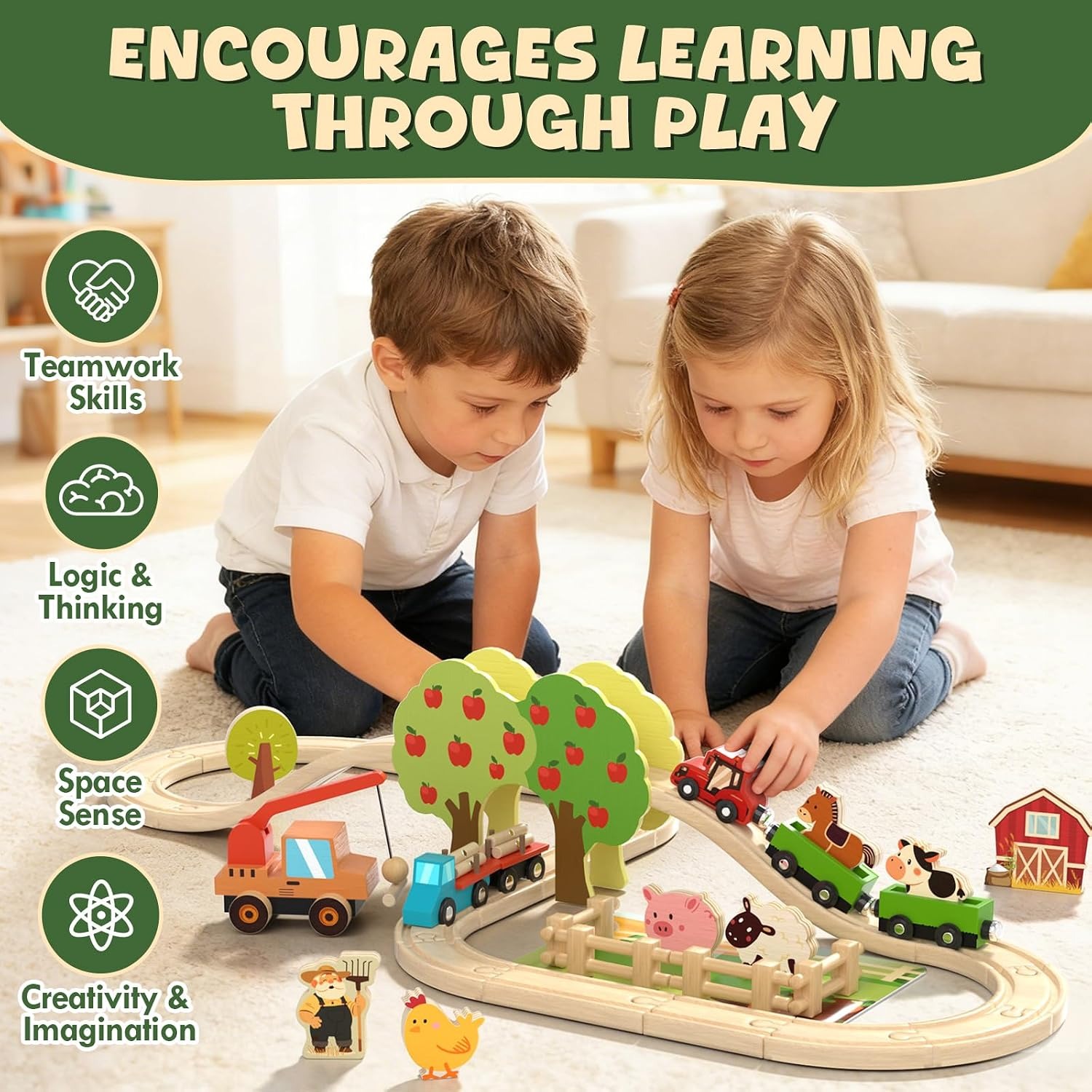
Most parents know the pattern. A big, bright toy arrives, it gets twenty minutes of attention, then it goes under the bed. The toys that survive tend to be the ones a child can change. A wooden train set is in that second group, because the track is never the same twice. One day it is a figure of eight, the next day it runs under a chair and round a laundry basket.
The problem with plain track is that once it is built, there is not much to do except push. Children do that for a while, then they lose interest. What keeps them going is having a reason for the train to move, something to carry and somewhere to take it. That is the gap a farm themed set fills.
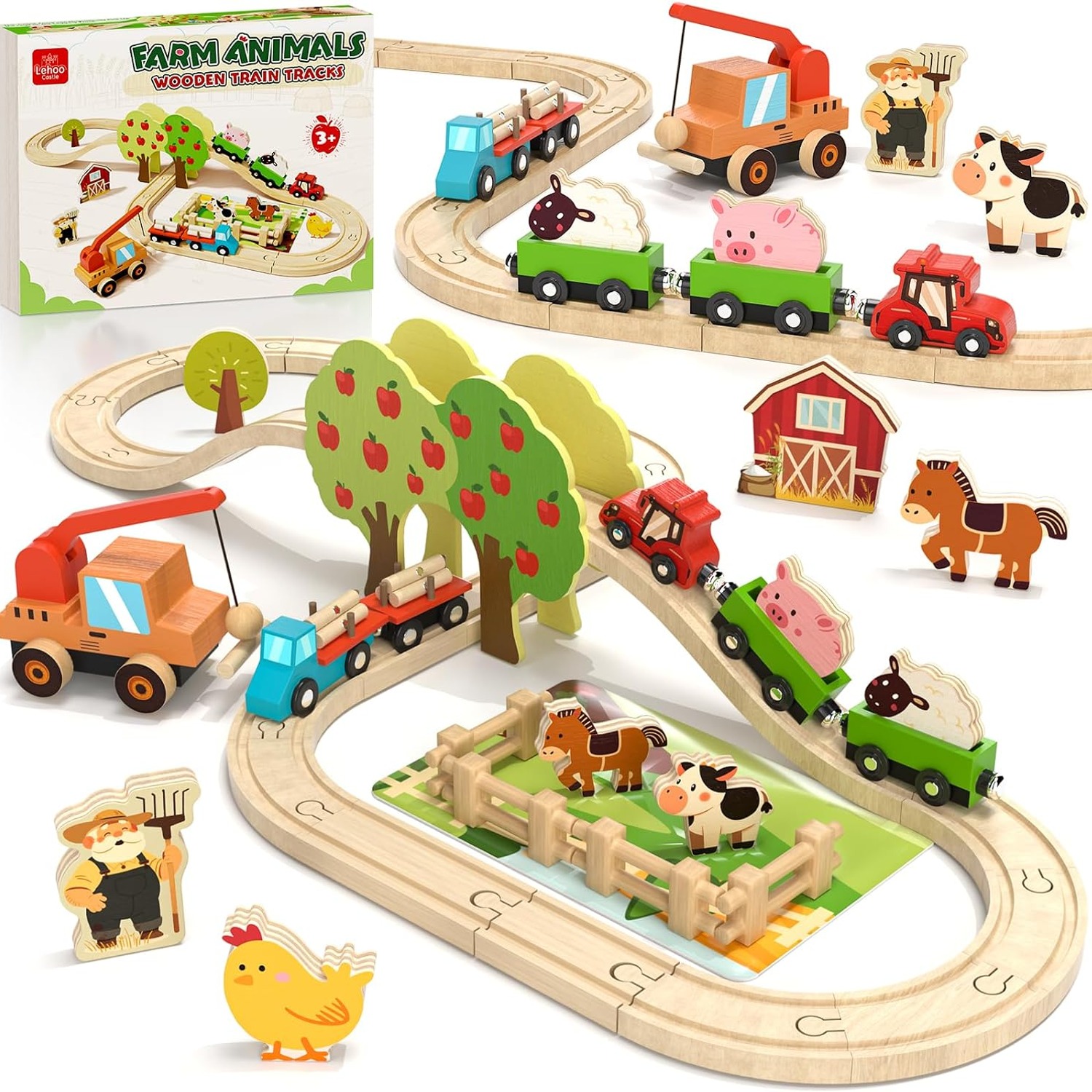
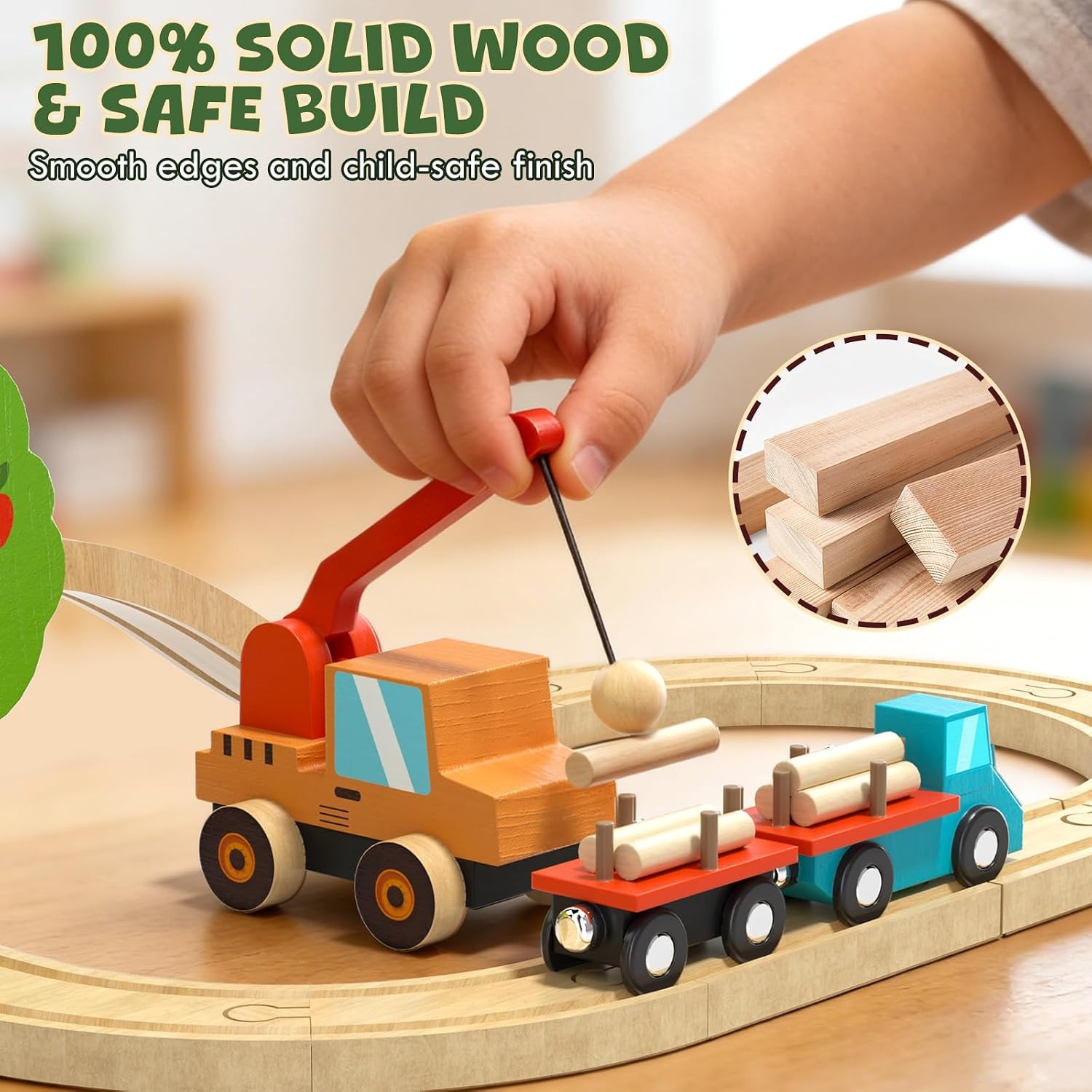
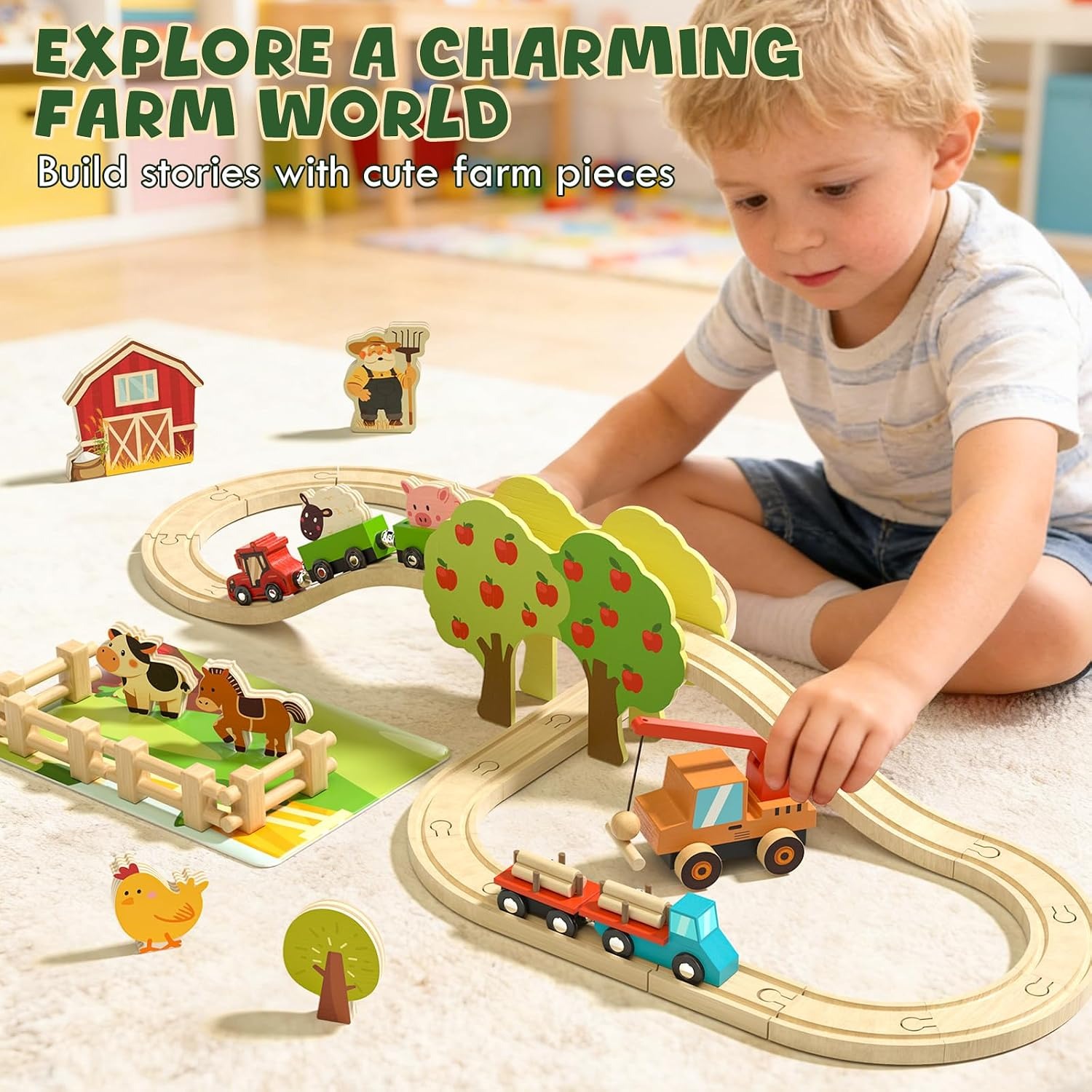
This set puts 47 wooden pieces in the box, covering track, the train, a barn, a magnetic crane and farm animal figures. The crane is the piece that does the heavy lifting in terms of play value. A child can stop the train, lift cargo, drop it into a carriage and set off again. Suddenly there is a job to finish, and finishing jobs is what makes a child come back to a toy tomorrow.
How it works
Everything is manual. There is no motor, no battery compartment, no plug and no remote. The child pushes the train and works the crane by hand, which sounds basic but is the point. When the toy does nothing on its own, the child has to supply the story, and that is where the thinking happens.
The track pieces join together the usual way, with shaped connectors at each end. Assembly takes around five minutes and printed instructions are included. In reality most of that five minutes is deciding where the loop goes, which children generally want to do themselves after the first time.
The set is listed as shock resistant and the construction is wood for the base and frame. A dropped wooden train usually bounces and keeps going. The weight is 1.36 kg for the whole set, so a child can carry the box from room to room without help.
One detail worth noticing: it runs best on a hard flat surface. Wooden floors, a kitchen table or a firm play mat all work. Thick carpet is the enemy, because the track joins sit slightly proud and the train catches on them. If you only have carpet, a cheap hardboard sheet or a large placemat under the layout fixes it.
Who it suits
The recommended age is 3 years and up, with a minimum age of 36 months listed. The age range description is preschooler and the skill level is beginner, so this is aimed at a child making their first serious go at building a layout rather than an older kid who wants complicated junctions.
There are small detachable wooden pegs and figures in the set, which is the reason for the age guidance. If you have a baby or a two-year-old in the house too, the sensible approach is to keep play to a table or a defined area and tidy the small parts away afterwards.
It suits children who are already drawn to either trains or animals, and especially both. A child who likes lining up animal figures will use the barn and the farm scene. A child who likes building will spend longer on the track than on the train. The set works for either, which makes it a safer gift than something more specialised.
It is also a good pick for households trying to cut screen time. There is nothing to charge and no sound chip, so the toy makes no demands on anyone.
How to choose between wooden train sets
A few things separate the sets that last from the ones that disappoint.
Piece count versus usefulness. Big numbers look good on a box, but what matters is the mix. A set of 47 pieces that includes buildings, a crane, figures and varied track is more playable than a hundred pieces of identical straight rail. Look at what the pieces actually do.
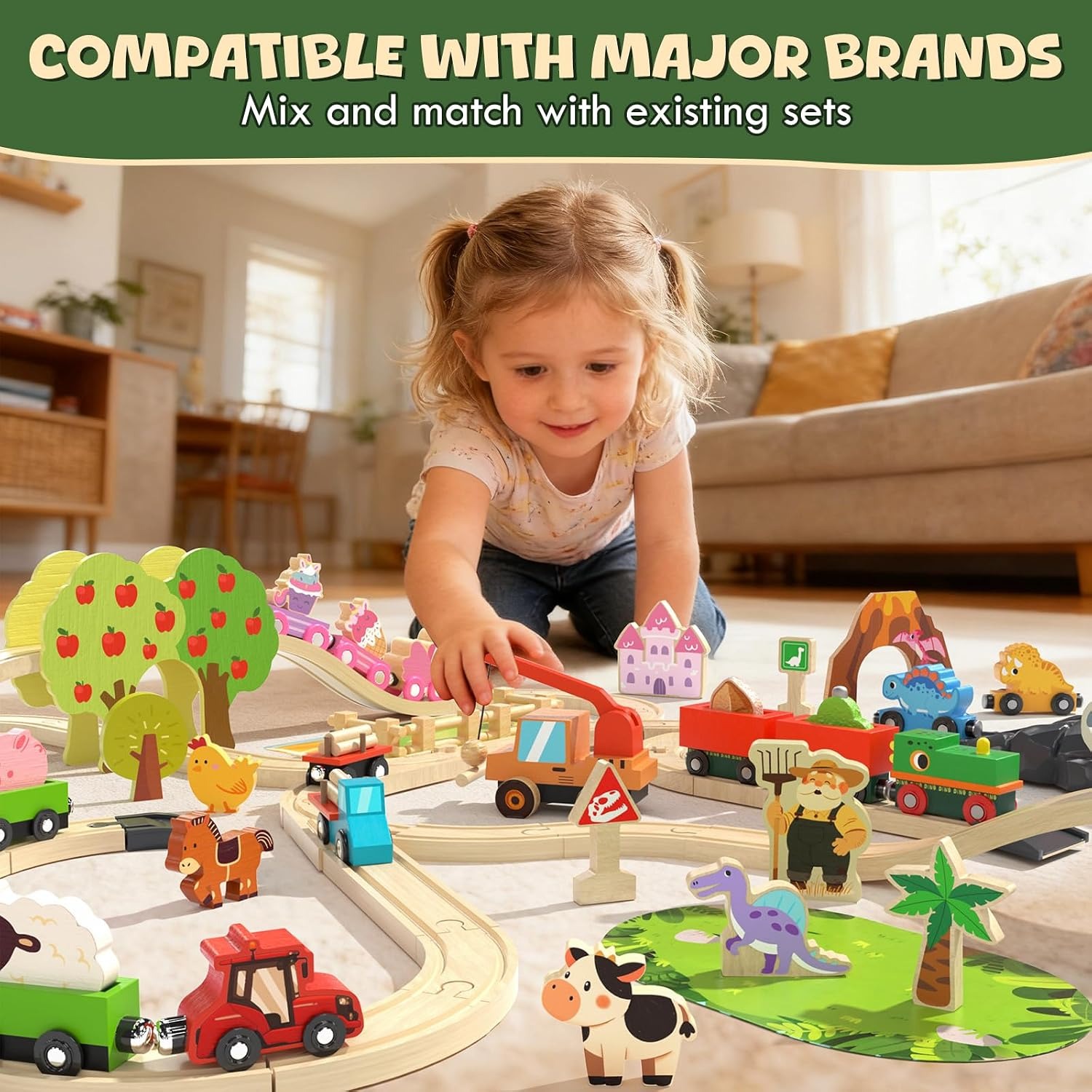
Compatibility. This is the one most people overlook. If the track joins onto other standard wooden railway systems, the set grows with the child instead of being a closed box. This one is listed as compatible with most standard wooden track and specifically with Brio. If there is already a bag of track in your house, that single fact changes how much use the new set gets.
Material and finish. Solid wood with rounded edges handles years of being dropped, stepped on and dragged around. It also feels better in the hand than hollow plastic, which children notice even if they cannot say why. The base material, frame material and overall colour here are all listed simply as wood.
A reason to play. This is the crane argument again. Features that create a task, loading, unloading, driving somewhere, beat features that just look nice. The best wooden train track set for preschoolers is usually the one with the most jobs to do.
Where it will live. A layout needs floor space, and layouts get left up. Decide in advance whether it lives on a table, in a corner or on a mat that can be rolled away, because a set that has to be dismantled every evening gets built less often.
Setting it up well
Give the first build plenty of time and let your child lead it, even if the result makes no sense. A track that goes nowhere is still a track they made. You can suggest closing the loop later.
Start simple. A basic oval with the barn on one side and the crane on the other gives a child two destinations, which is enough structure for hours of play. Add complexity once the simple version is boring.
If you have other track, mix it in from the start. Nothing teaches a child that toys connect like watching two sets become one bigger railway. Expanding later with a few curved pieces or a bridge costs little and refreshes the whole thing.
Keep the small figures in a separate small container inside the main storage box. They are the pieces most likely to vanish under furniture, and a child who can find the cow will play with the cow.
Looking after it
Wood is easy to care for as long as it stays dry. Wipe pieces with a slightly damp cloth and dry them straight away. Never soak the track and never put anything in a dishwasher, because water swells the grain and ruins the fit of the connectors.
Store it indoors somewhere dry and away from radiators or direct sun. Damp air and strong heat both move wood, and a warped track piece will not sit flat.
Every so often, check the pegs and joins for splinters or loose parts, particularly if the set has been through a few enthusiastic months. A light sand on a rough edge keeps it comfortable to handle.
The original packaging has limited room once everything is out, so a shallow plastic tub or a fabric basket is a better long-term home. Shallow beats deep, because children can see what is in it.
The manufacturer warranty period is listed as 3 Month.
The short version
This is a 47-piece wooden farm railway for children aged 3 and up. It includes track, a train, a barn, a magnetic crane and farm animal figures, all in wood, with no batteries and nothing to charge. Assembly takes about five minutes.
Two things make it worth the money. The crane gives children a job to do rather than just a loop to push around, and the track joins onto most standard wooden railway systems including Brio, so it adds to what you already own instead of competing with it.
It is indoor play, it wants a hard flat surface, and it packs down to 23.9 x 5.8 x 32 cm at 1.36 kg. If you are buying a first train set for a child, or topping up a railway that has gone a bit stale, this is a straightforward choice.