
The complete guide
Choosing Wooden Construction Vehicle Puzzles - A Parent's Buying Guide
The gap every toy box has
There is a stretch between about three and five where nothing in the house quite fits. The baby toys are boring. The board games have rules that end in tears. The tablet is always an option, and that is exactly the problem. What most parents want in that window is something a child can do with their hands, on their own, for more than four minutes.
Jigsaw puzzles fill that gap better than almost anything else. They have a clear goal. They have an obvious finish. And a child can see their own progress building up in front of them, which keeps them going when a piece will not go in.
The trouble is that most puzzles at this age are made of thin card. They look fine in the shop. Three weeks later the tabs are furred, two pieces have a bend in them, and one has gone missing entirely. Wooden puzzles for 3 year olds solve the durability half of that problem, and a set with a storage box solves the other half.
What makes a wooden puzzle different
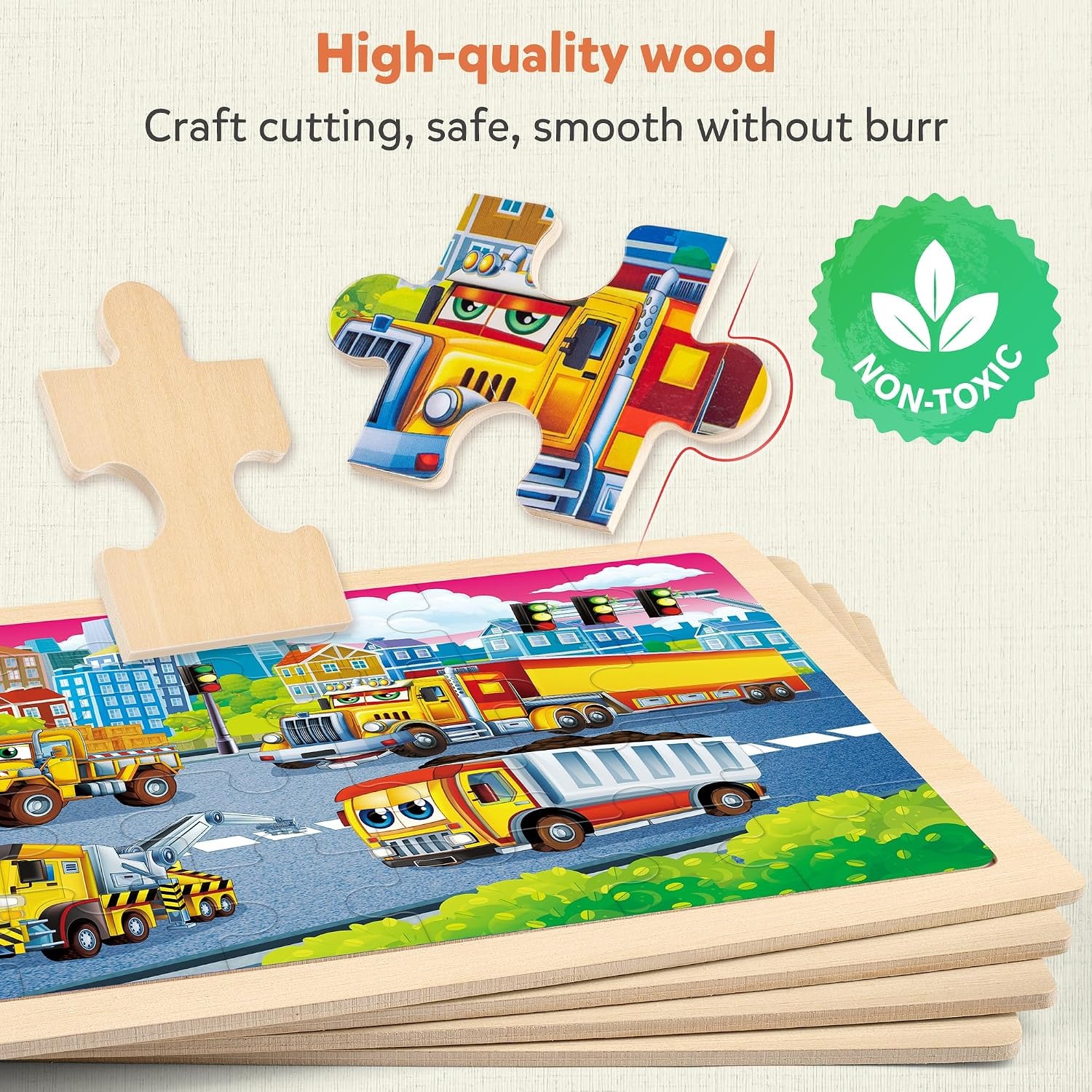
Wood holds an edge. That sounds like a small thing until you watch a four year old push a piece in sideways because they are convinced it fits. Card gives way and furs up. Wood either goes in or it does not, which is actually a better teacher.
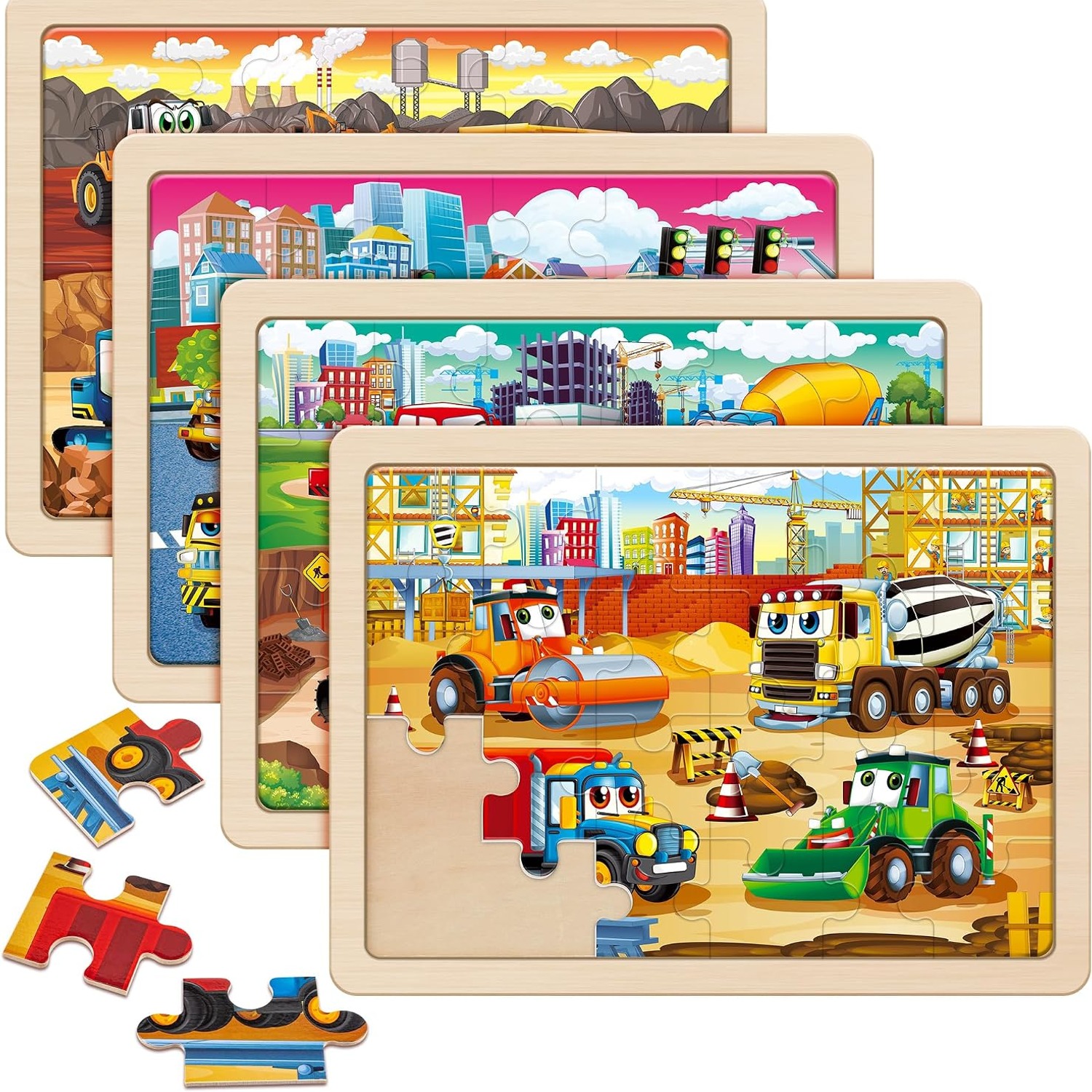
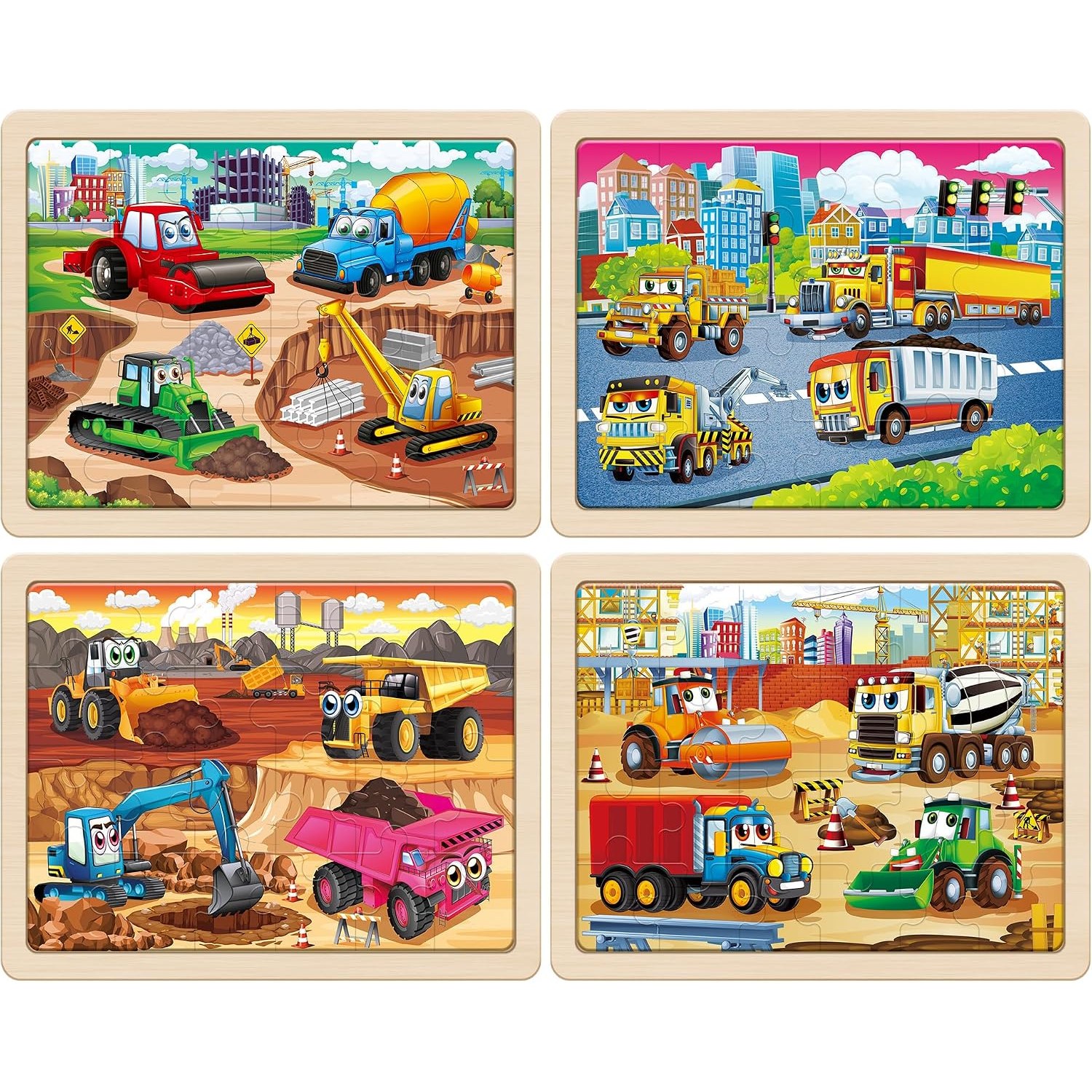
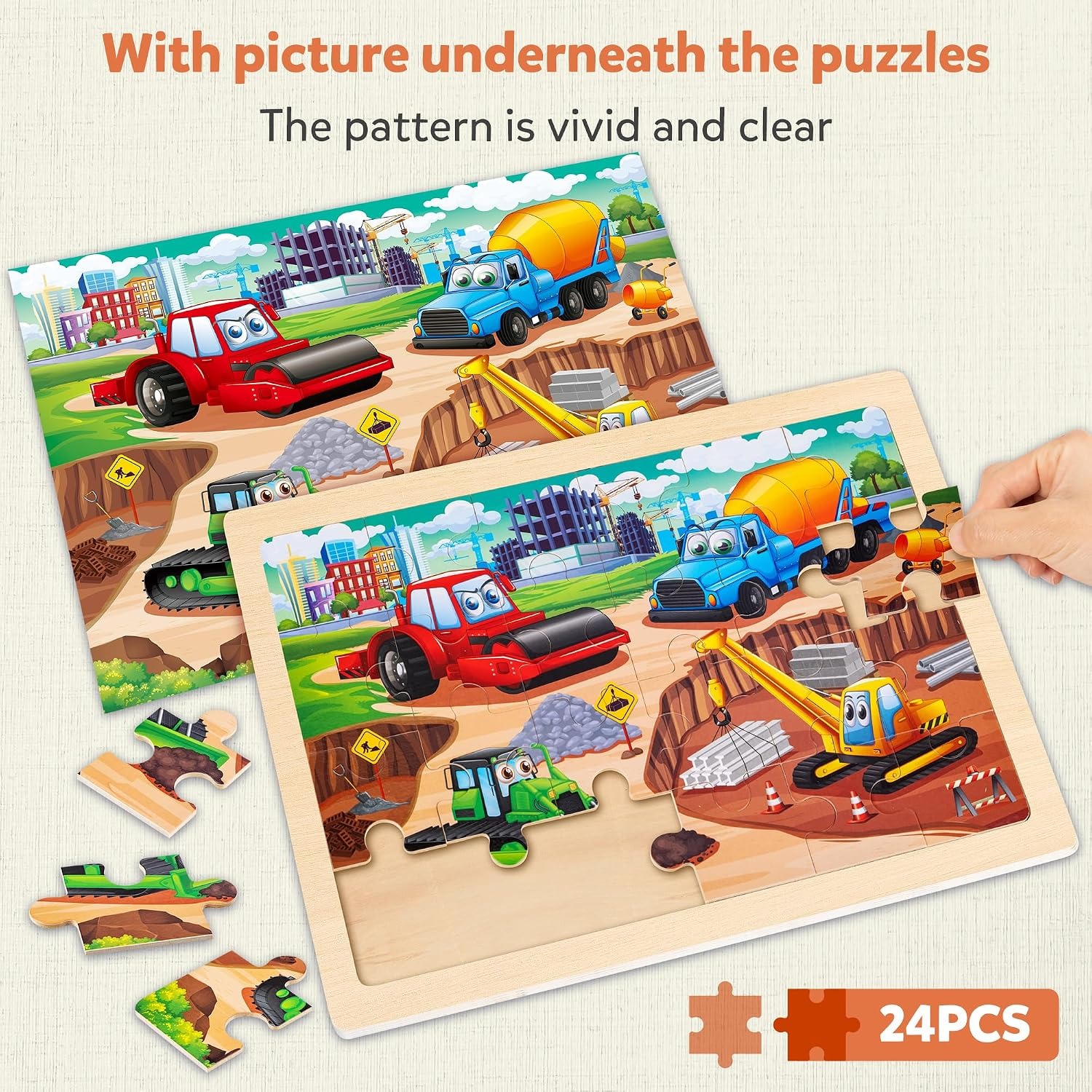
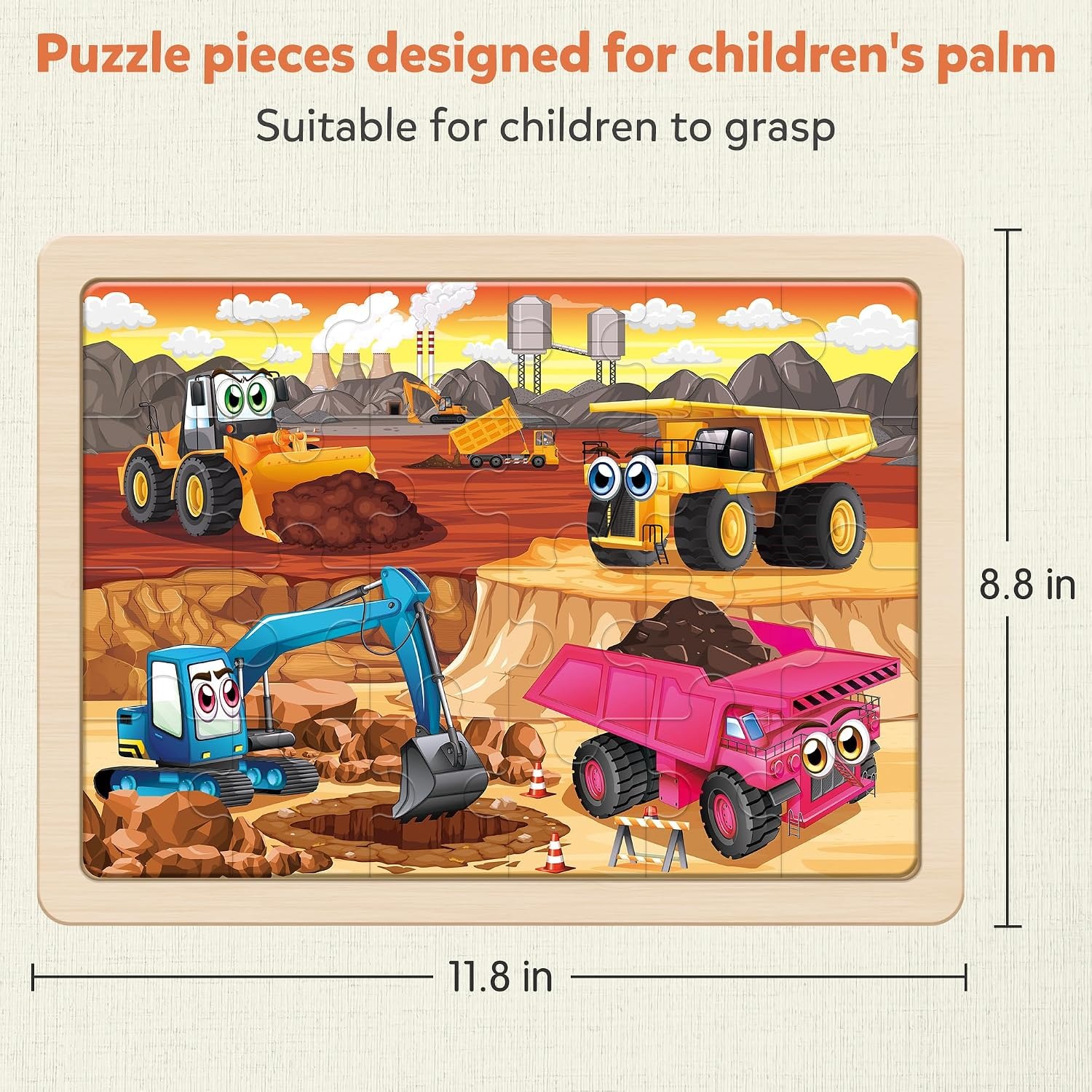
This set is made of wood with pieces that are 0.1 cm thick. Each of the four puzzles has 24 pieces, and each finished picture measures 31.3 cm by 23.8 cm. The whole set weighs 0.72 kg, which tells you these are substantial pieces rather than thin veneer.
There is a second benefit people notice later. Wooden pieces have weight. A child can feel the piece land in place, and that bit of physical feedback helps them trust their own decision. Card just flops.
Why construction vehicles work so well
Theme matters more than most people expect when choosing a preschooler puzzle gift set. A child who is indifferent to the picture will walk away at piece eight. A child who has been pointing at diggers out of the car window for six months will sit there until the digger appears.
These four puzzles all follow a construction vehicle theme, with building trucks, machines and a tractor across the scenes. For a child in a vehicle phase, that is instant buy-in. You get the first five minutes free, and after five minutes most children are hooked by the puzzle itself rather than the picture.
It also gives you something to talk about while you sit together. Naming the machines, working out what each one does, guessing which part of the scene a piece belongs to. That conversation is doing as much work as the puzzle.
Is 24 pieces the right number?
Twenty-four is a deliberate middle ground. Chunky inset puzzles with six or eight pieces are for preschoolers finding their feet. Hundred-piece puzzles need reading-age patience. Twenty-four sits between the two, which is why the skill level here is described as intermediate.
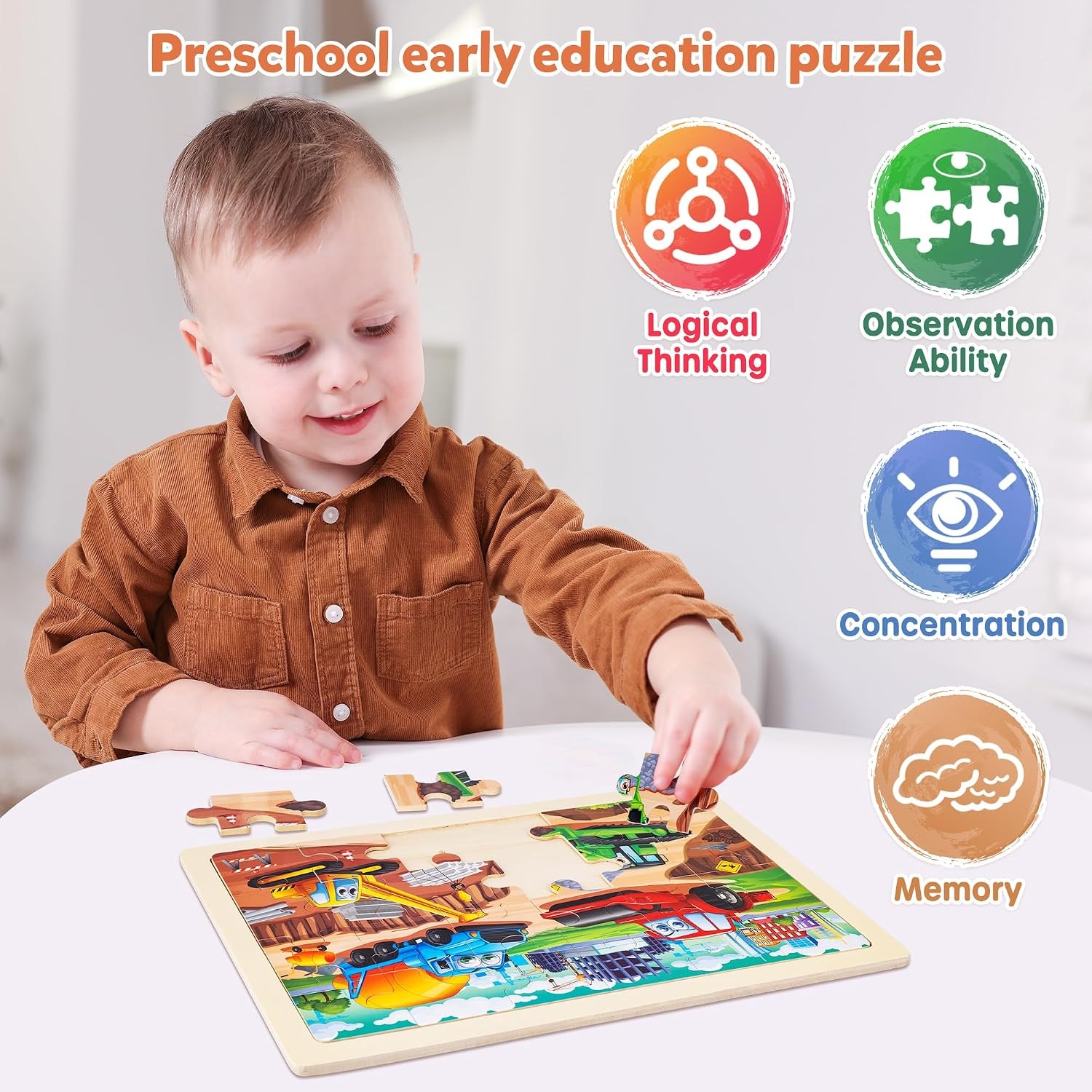
For a three year old, expect to help. Sort the straight edges out first, build the frame together, then let them fill the middle. That structure turns an overwhelming pile into four smaller problems, and children pick the method up fast.
For a five or six year old, 24 pieces is comfortable solo work. They will finish one picture in ten or fifteen minutes and immediately ask for the next, which is where having four puzzles earns its keep. The manufacturer recommends ages 36 months to 8 years, so the set grows with a child for a long stretch.
Four puzzles, one box
The storage box is not a throwaway feature. Anybody who has lost one piece knows the feeling of staring at a 95 percent finished picture and quietly deciding the puzzle is dead. A box gives the set a home and gives you a tidy-up routine that takes thirty seconds.
A simple habit helps. Do one puzzle at a time, and put it away before the next one comes out. If pieces do start mingling, a small coloured dot on the back of each puzzle's pieces makes sorting trivial. Four colours, done in two minutes, and you never have to sort by picture again.
Four separate puzzles also means two children can work side by side. Siblings who argue over everything will happily sit at opposite ends of a table with their own picture each. For a nursery or a classroom, the same logic applies with a small group.
Who this set suits
It suits a child who has outgrown simple shape-fitting toys and is ready for something they have to think about. It suits a household that wants a screen free option that does not need batteries, an app or supervision after the first few goes. And it suits anyone shopping for a gift for a child who loves diggers, because the theme does half the work before the box is even open.
It is less suited to a child under three. The recommended minimum age is 36 months, and children below that should not have the set. If you are buying for a two year old, hold onto it for a birthday or two.
It is also not a quiet-time-forever toy. Four 24-piece puzzles will eventually become easy, probably around age six or seven for most children. By then they are usually ready for a bigger puzzle anyway, and this set makes a good hand-me-down to a younger sibling because wood survives the first owner.
Looking after wooden puzzles
Wood needs very little, but it does need the right little. Wipe pieces with a barely damp cloth and dry them straight away. Water is the one real enemy, because it swells wood and lifts printed surfaces. Never soak the pieces and never put them anywhere near a dishwasher.
Store the set indoors somewhere dry. Garages and sheds cycle between damp and hot, which is hard on wood over a season or two. A toy cupboard or a shelf in the house is all it takes.
If a piece does get sticky from juice or crumbs, deal with it quickly. A quick wipe, a quick dry, and leave it flat until it is completely dry before putting it back in the box. A damp piece sitting against the others is how marks spread.
How to get the most out of them
Start with the edges. Pulling out all the straight-sided pieces and building the frame first gives a child a visible structure to work inside, and it is a method they will use on every puzzle for the rest of their life.
Sort by colour next. If one corner of the picture is mostly yellow digger, gathering the yellow pieces into a little pile makes the middle section far less daunting.
Take a photo of each finished puzzle on your phone. It becomes the reference picture, which is useful if the box artwork is not to hand or gets tatty.
And resist the urge to help too fast. The pause before a child gets it right is where the learning happens. Hand over a piece only when frustration is genuinely building, not at the first sigh.
The short version
Four wooden puzzles, 24 pieces each, 96 in total, all on a construction vehicle theme that most preschoolers love on sight. Finished size of 31.3 cm by 23.8 cm fits any small table. Wood instead of card, so the pieces keep their edges through daily handling. A storage box so you are not hunting under the sofa at bedtime.
Recommended for ages 3 to 8, best with a bit of adult help at the younger end and completely independent by five or six. If your child points at every excavator they pass, this is an easy gift to get right.