
The complete guide
How to Choose a Flexible Construction Race Track Your Child Will Actually Keep Playing With
The toy that gets ignored by week two
Every family has one. A bright plastic track that came in a big box, got built once by a parent on Christmas morning, went round and round, and then sat in the corner. The problem is almost never the quality of the plastic. It is that the toy only does one thing. Once a child has watched a car complete the loop a dozen times, there is nothing left to discover.
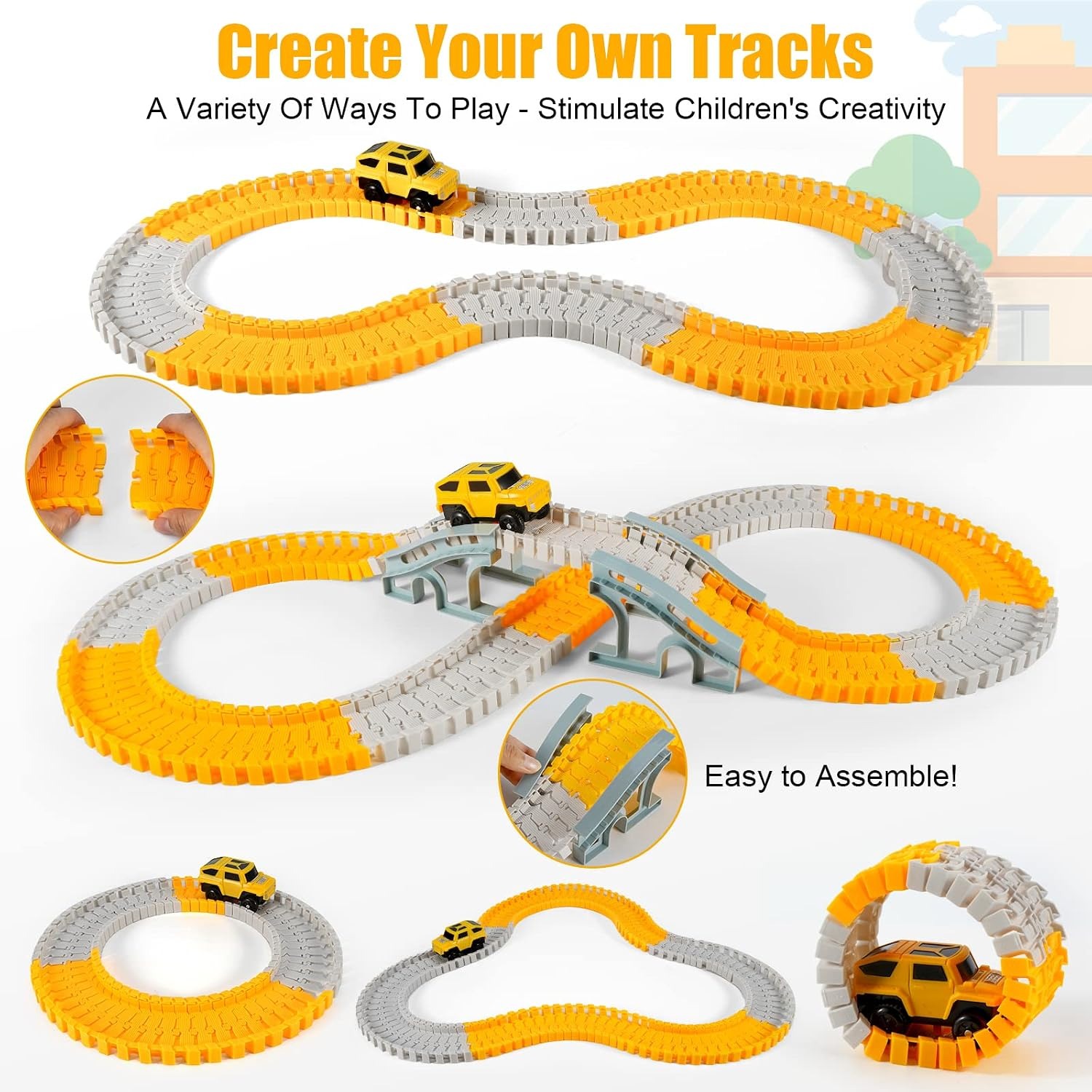
A flexible track set solves this by handing the design job to the child. The pieces bend and interlock, so there is no "correct" shape. The road can curve around a coffee table leg, split in two directions, climb over a bridge and come back down again. Every build is a small puzzle, and every puzzle has a different answer. That is why these sets tend to survive the week-two slump that kills rigid tracks.
The second thing that keeps children coming back is having more than one kind of play in the box. Racing is fast and exciting but shallow. Pretend work is slower and much richer. Put two electric racing cars and four mini construction trucks in the same set and children naturally invent a story. The road is being repaired. The roadblock is up. The digger has to clear the site before the cars can pass. You will hear the narration from the next room.
How a bendable track set actually works
The mechanics are simple, which is exactly what you want for a three year old. Each track component has a connector on either end. Push two together and they click. The plastic has enough give that a straight piece can be eased into a curve, so a handful of identical components can make a sweeping bend, a tight hairpin or a long straight run.
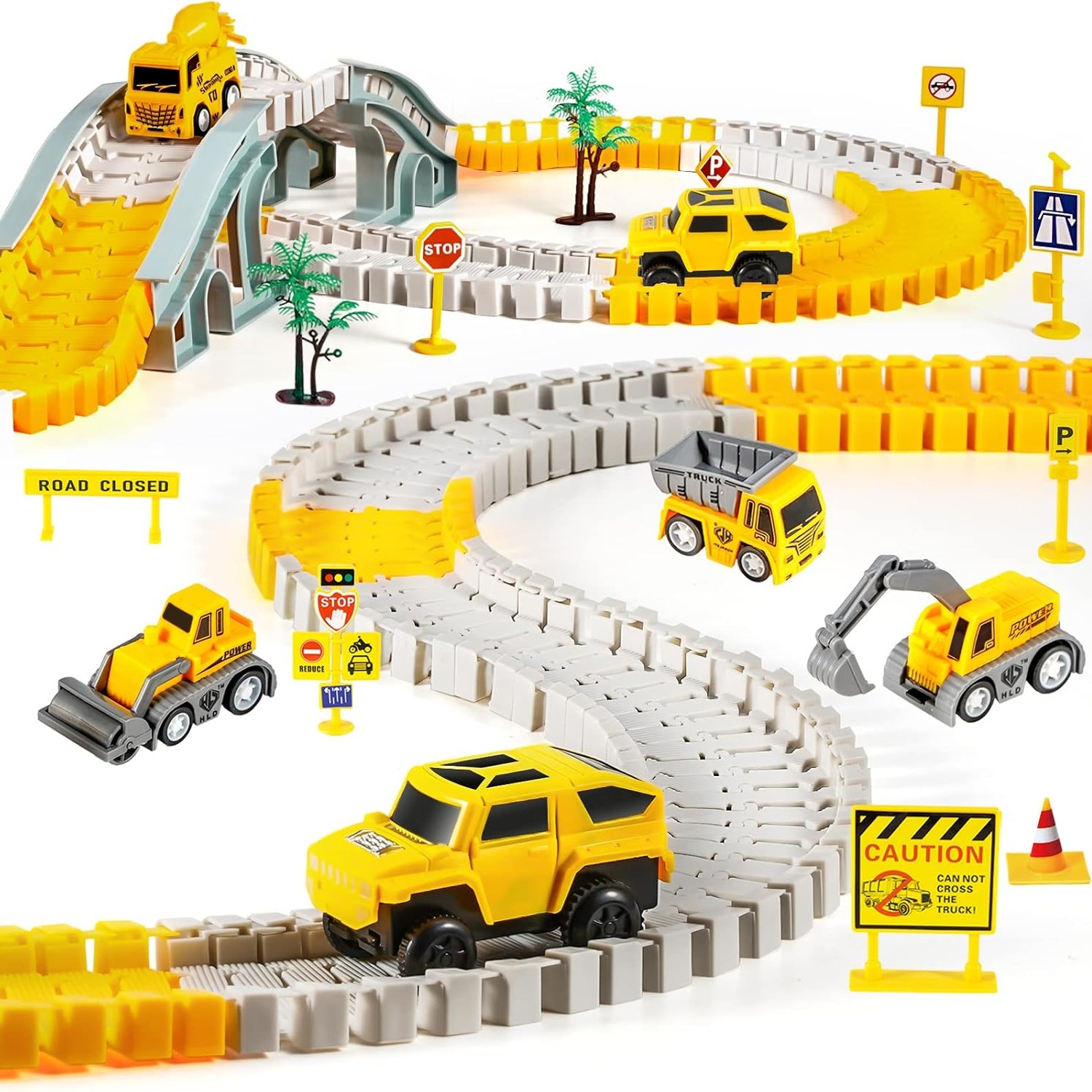
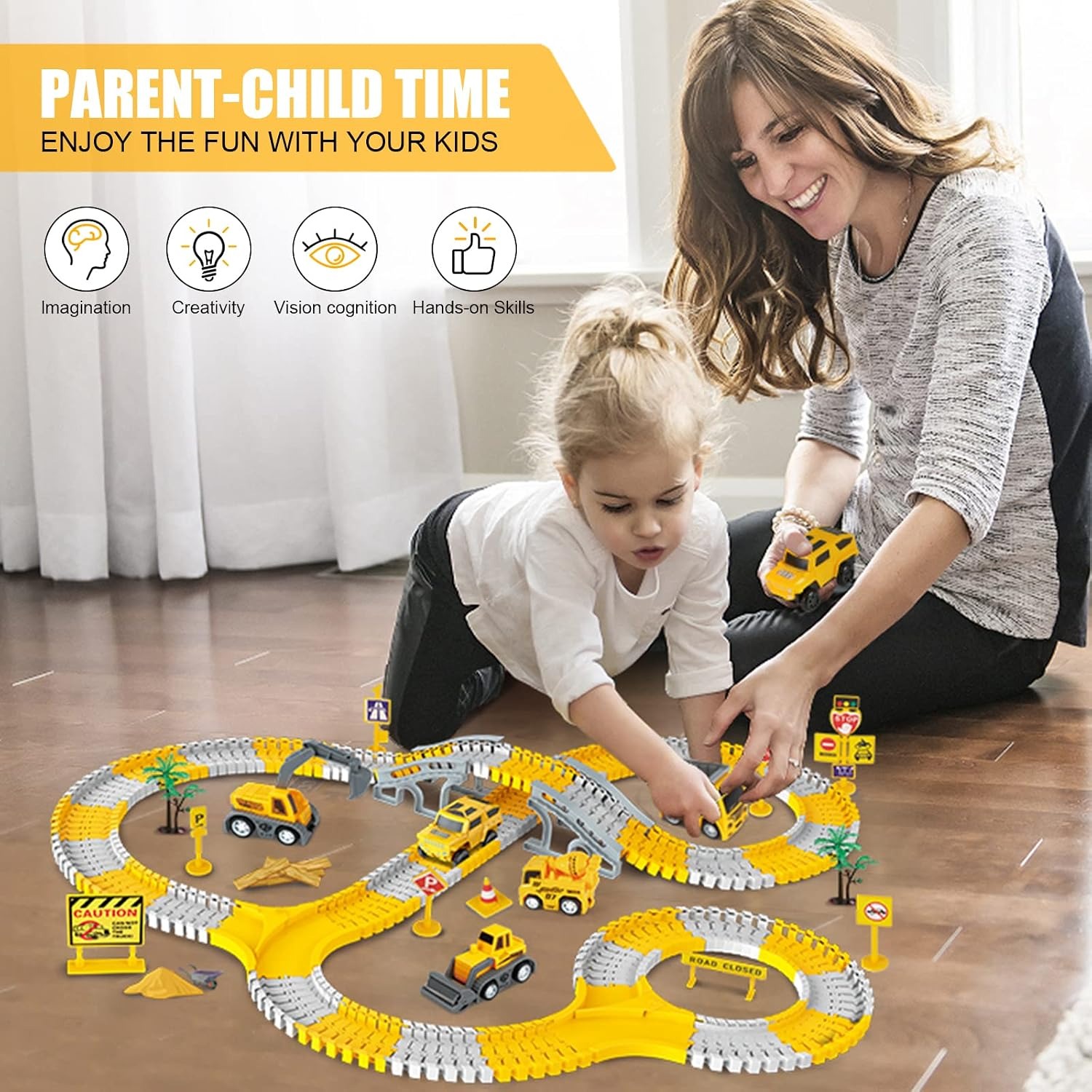
Special pieces add variety. Y-shaped sections create junctions where a child has to choose a route. Bridges lift one length of track over another, which adds height and makes the layout feel like a real road network instead of a flat drawing. A roadblock gives a reason to build a detour. Trees and traffic signs are pure scenery, but scenery matters more than adults expect, because arranging it is a game in itself.
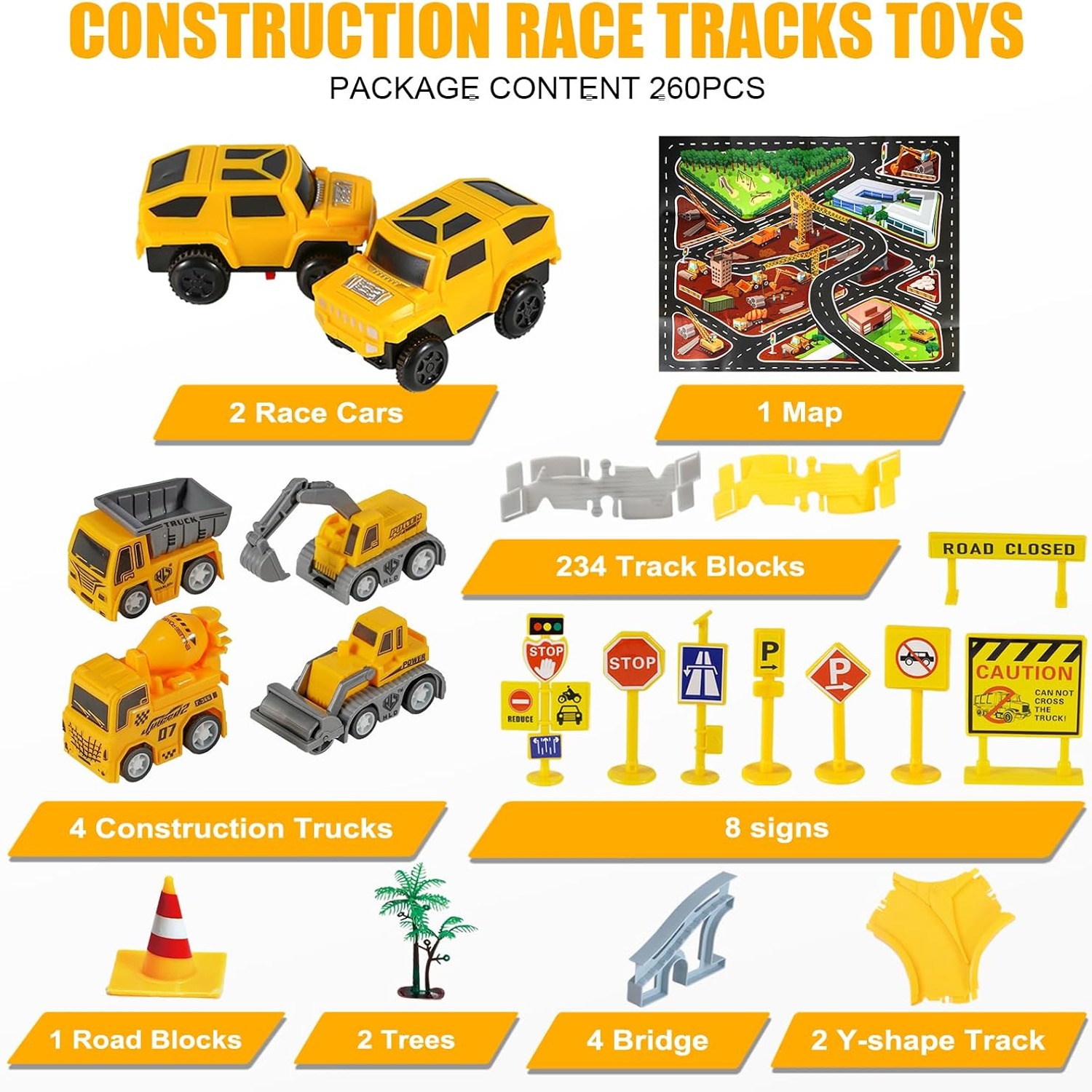
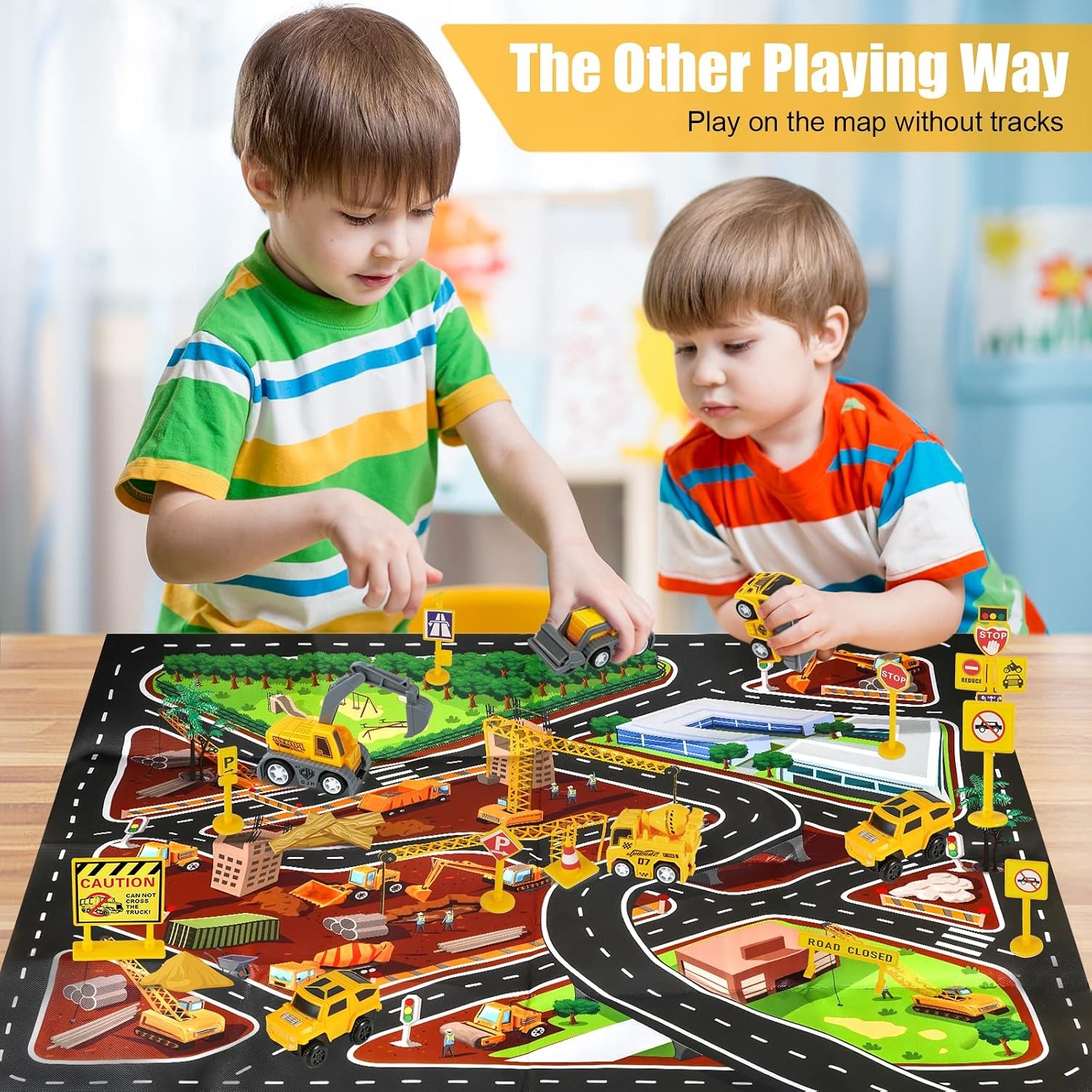
In this particular set the manufacturer lists 234 track components plus 2 Y-shape tracks, 4 bridges, 2 trees, 1 roadblock, traffic signs, 2 racing cars, 4 mini construction trucks and an oversized map, for 260 pieces in total. The map sits under or beside the build and gives the whole thing a backdrop.
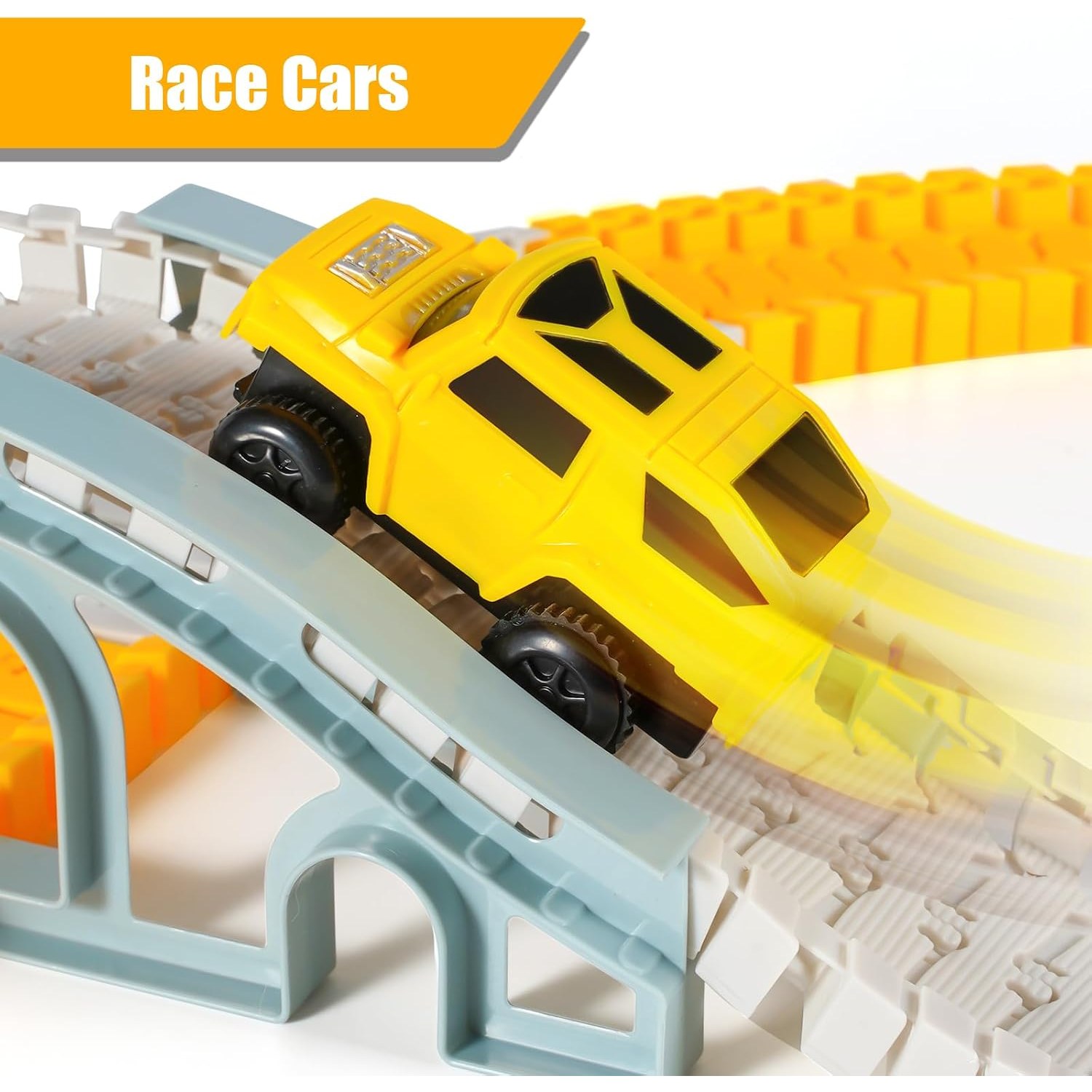
The two racing cars are electric and battery powered. They drive themselves along the track, which is a big deal for little hands that get tired of pushing. No remote is included, and the operation mode is manual, so the child is not steering. They are shaping the world the car drives through. The product details specify C batteries are required and that rechargeable batteries are not included, so buy a pack in advance.
Who this suits, and who it does not
The manufacturer recommends ages 36 months to 5 years. That band is worth taking seriously in both directions.
Below three, it is a no. The set carries a small-parts choking hazard statement, and a preschooler who is still putting things in their mouth should not be left alone with it. If you have a one year old in the house, the realistic options are table-top play or play only while an adult is in the room.
Three year olds get the most immediate joy out of the vehicles. They will build short loops, drive the digger around, and happily knock things down. The complexity of the layout is low, and that is fine.
Four and five year olds are the sweet spot. This is when children start planning before they build, testing whether a car can handle a tight curve, and giving the trucks proper jobs. The Y junctions and bridges suddenly become interesting rather than decorative.
Six and over will still enjoy a big build, especially with a younger sibling, but it is outside the stated age guidance and a confident older child may want something with more engineering to it.
Choosing between sets: what to look at
Piece count versus useful pieces. A headline number looks great on a box, but check what makes it up. Here the bulk is the 234 track components, which is genuinely useful because track is the thing you run out of first. Some sets pad their count with dozens of tiny signs.
Does it bend, or just connect? Flexible components are the difference between a toy and a construction kit. If the track only clicks into fixed angles, your child's choices shrink fast.
Vehicles that do something. Four construction trucks with movable working arms give children a reason to play beyond racing. Arms that lift, tip and swivel invite pretend work.
Power and batteries. Electric cars are more fun for small children, but they need batteries and they need checking. Confirm what size before gift-giving day. This set lists C batteries, not included.
Storage reality. Two hundred and sixty pieces will go everywhere. A lidded tub is not optional. The good news is the packed set is only 0.82 kg with a box around 10 x 6 x 30 cm, so it travels well.
Floor surface. Hard floors and thin rugs give the smoothest run. Deep pile carpet can make electric cars struggle and leave the track sitting unevenly.
Setting it up well the first time
Do the first build together, on the floor, with the box lid as a parts tray. Sort the track components into one pile and the extras into another before you start. Children lose interest if the adult disappears into an instruction sheet, so keep it quick: a simple oval, one bridge, both cars running. Success first, complexity later.
Once that works, hand it over. Ask where the road should go next and let the answer be odd. Hairpins that the cars cannot take are a useful lesson, not a failure. Over a few sessions you will see the builds get smarter on their own.
Give the set a home. A tub that lives on a low shelf means a child can start playing without asking, and tidying becomes part of the game. Counting the six vehicles and the signs back in at the end saves a lot of hunting under the sofa.
Care and keeping it going
Plastic is forgiving. A slightly damp cloth takes care of dust and sticky fingers, and everything should be dried before it goes back in the tub. Keep the electric cars well away from water, since the battery compartment is not designed for it. No dishwashers, no washing machines, no bleach.
Take the batteries out if the set is going into storage for a season. Leaking cells ruin the one part of the set you cannot easily replace. Check pieces occasionally for cracks or sharp edges and bin anything damaged, especially with a younger child around.
The set has no stated manufacturer warranty in the maker's details, but your normal consumer rights still apply. If something arrives broken or short, tell us with a photo and we will fix it.
The short version
If you want a toy that a preschooler keeps returning to, buy one that lets them make the decisions. This 260-piece set does that twice over: the track bends into whatever shape they imagine, and the mix of racing cars and construction trucks gives them something to do once the road is built.
It is aimed at ages three to five, it needs C batteries for the two electric cars, it requires a simple clip-together assembly, and it will test your storage discipline. In exchange you get a floor-sized building site that looks different every time, with no screen involved. For a birthday or Christmas gift in that age range, that is a good trade.