


The complete guide
Choosing a Pirate Treasure Dig Kit, A Buyer's Guide
The problem with most "educational" toys
A lot of toys sold as educational do all the thinking for the child. Press the button, hear the fact, move on. Twenty minutes later the thing is on a shelf and nobody has learned much beyond where the button is.
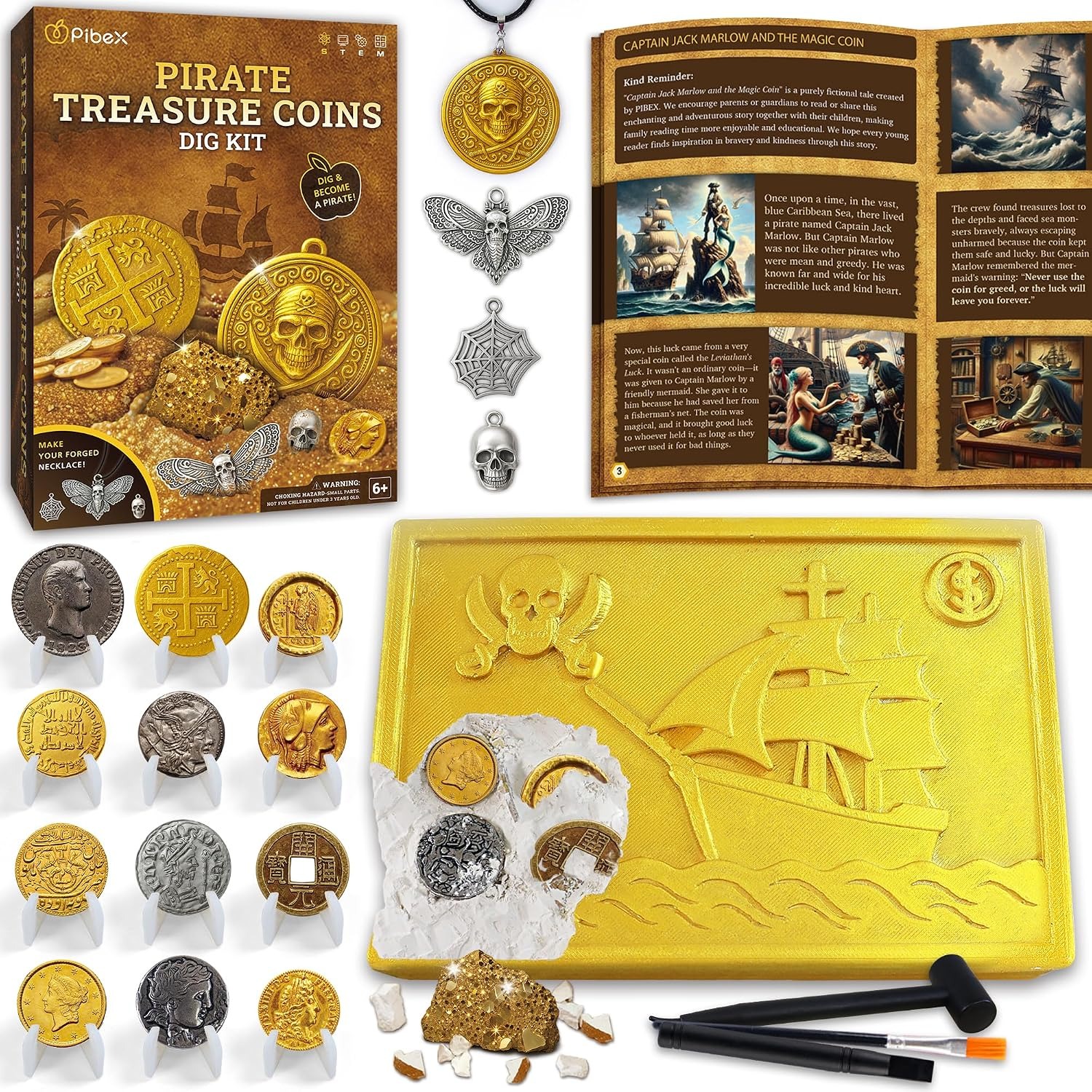
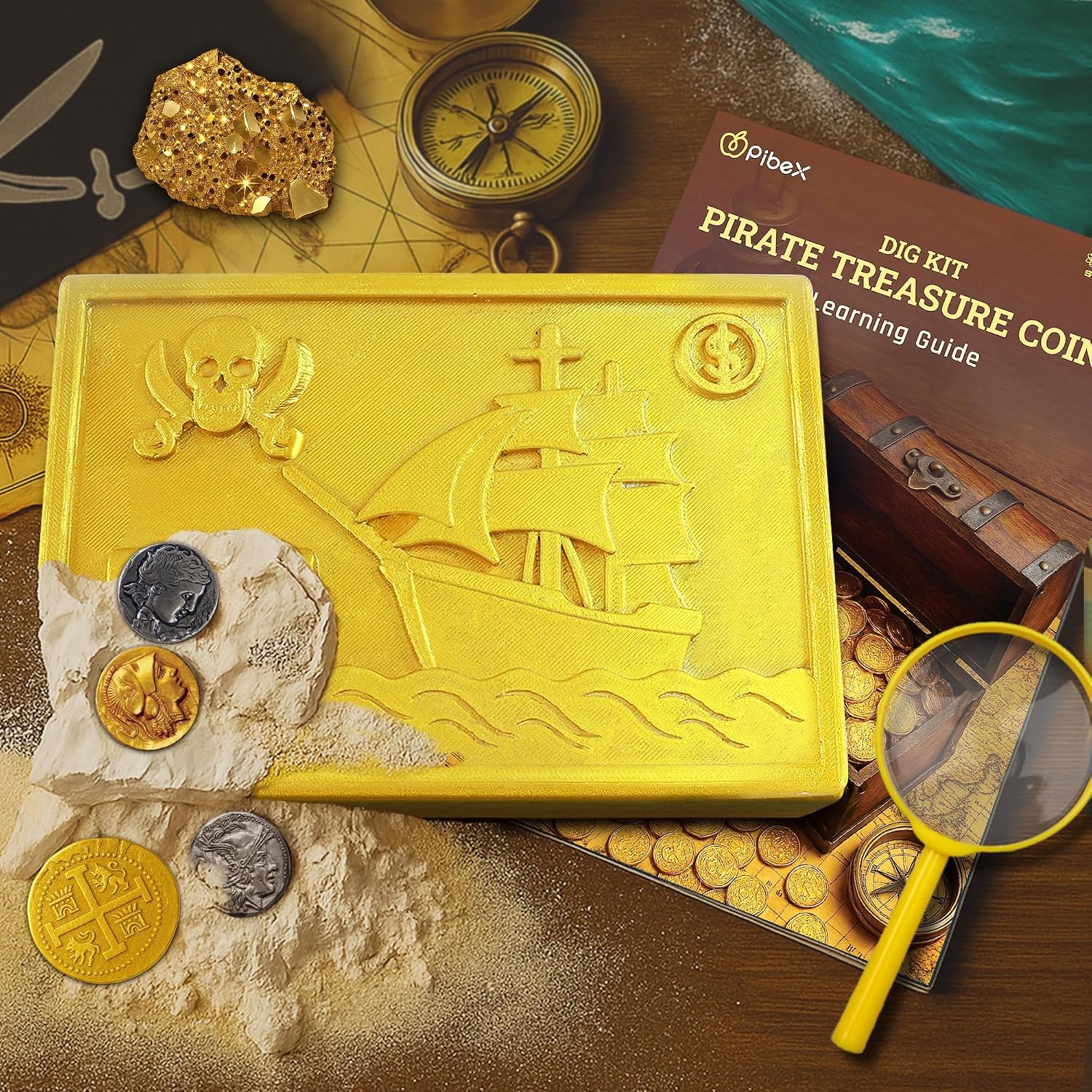
Dig kits work differently because they put effort first. Nothing happens until the child does something, and what they do is slow, physical and slightly frustrating in a useful way. The PIBEX Pirate Treasure Coins Dig Kit buries twelve metal coin replicas in a solid gypsum block and leaves it to the child to get them out. There is no shortcut and no reset button, which is precisely why it holds attention.
That friction is the teaching mechanism. A child who spends twenty minutes freeing a single coin cares about that coin in a way they never would if it had simply fallen out of a packet.
How the dig actually works
The block is made from gypsum, a soft plaster-type material that breaks apart under gentle, repeated pressure rather than brute force. Children chip at one area at a time, watching for the first glint of metal, then work carefully around the edges to free the piece without damaging it.
The block in this set carries a Caribbean theme, which gives the activity a story. Children are not just breaking up a lump of plaster. They are working a treasure site, and that framing matters more than adults expect. It gets kids to stick with it past the first boring patch.
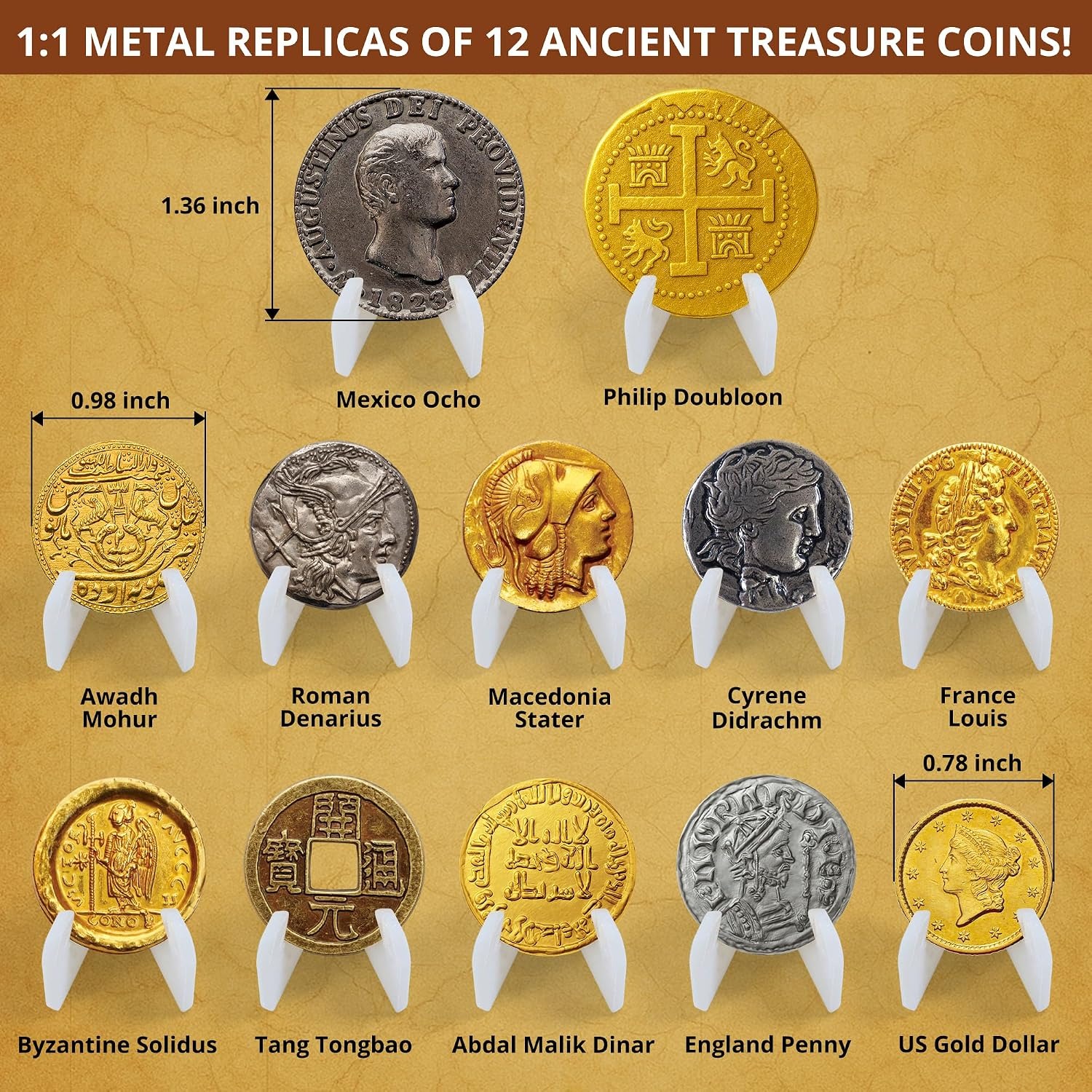
Inside are twelve coin replicas in gold, silver and bronze styles, plus Captain Jack Marlow's Magic Coin, which PIBEX makes only for this kit. Three silver-tone pirate charms are in there too, shaped as a skull, a spider and a butterfly.
Expect dust. Gypsum crumbles into a fine powder as it breaks, so set the kit up on a tray, an old towel or an outdoor table. A few minutes of preparation saves a lot of sweeping later. Never rinse the debris down a sink, because wet gypsum sets and can block a drain.
Who this suits
The manufacturer recommends ages 6 and up, and that number is about right. Below six, most children do not have the fine motor control or the patience for careful excavation, and they get frustrated when a coin chips instead of coming free.
Between six and roughly twelve is where it lands best. Children in that range enjoy the physical work, understand the idea of a collection and can read the booklet themselves. Older children sometimes treat it as a craft project and focus on the necklace side instead, which is a perfectly good outcome.
It works especially well for a child who already likes pirates, treasure maps or anything to do with digging things up. If you are hunting for the best pirate dig kit for a particular child, the giveaway is whether they already ask questions about how old things are. That child will get far more out of this than a child who just wants quick wins.
Teachers and homeschool parents use dig kits as a bridge between doing and reading. The listed educational objectives here are concentration, exploratory skills, matching skill, observation skills and STEM, which maps reasonably onto primary school activity planning.
What makes this set different
Plenty of dig kits stop at the dig. You break the block, you find the thing, and that is the end of the afternoon.
This one keeps going in two directions. First, there is a collecting angle. Twelve coin stands come with the set, one per coin, so the finds can be stood up and displayed rather than scattered across a bedroom floor. For some children this is their first real collection, and a coin collecting kit for kids that gives them somewhere to put the pieces tends to last far longer than one that does not.
Second, there is a craft angle. The three charms and the included necklace chain let a child turn a find into something wearable within minutes of pulling it out of the block. That gives the whole activity a finish line, which is useful when a child needs a clear sense of having completed something.
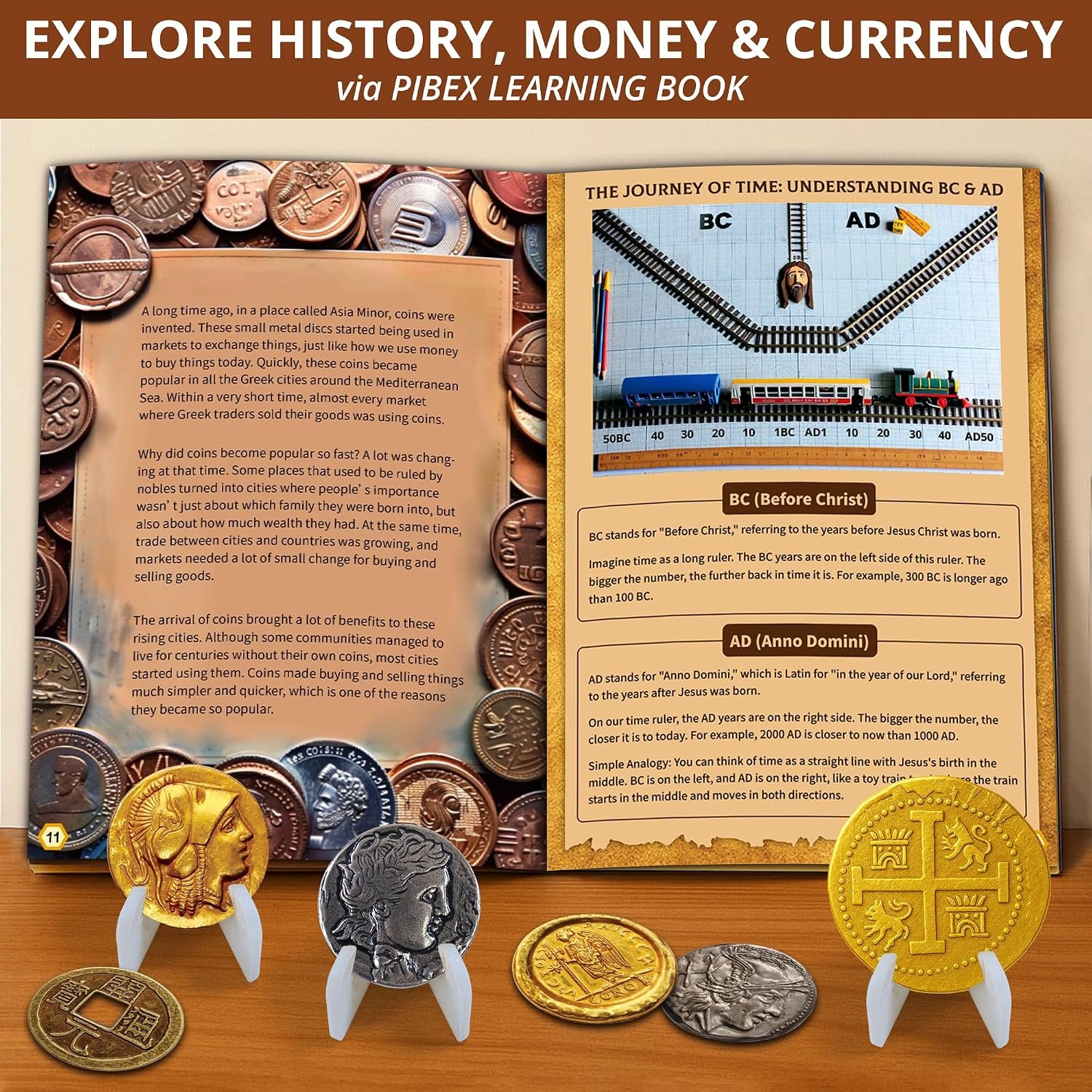
Then there is the booklet. A full-colour learning booklet with historical coin facts comes in the box, and it exists to answer the question every child asks after the first coin appears, which is "what is this one?" Without that, a dig kit is just a sensory activity. With it, there is somewhere for the curiosity to go.
How to choose between dig kits
If you are comparing a few options, a handful of things actually matter.
Start with how many finds are inside. A block with one item is over quickly. Twelve coins plus charms spreads the activity across more than one sitting, which is better value and better for attention span.
Next, look at what happens after the dig. Stands, chains and booklets are the difference between a toy that lasts an afternoon and one that stays in use for weeks. A kit that leaves a child holding loose plastic bits has not finished the job.
Check the age guidance and be honest about the child. A kit rated 6 and up handed to a four year old usually ends in tears and a broken find.
Consider mess tolerance too. All gypsum dig kits make dust. If you have no outdoor space and no tolerance for sweeping, plan to run it over a large tray with a sheet underneath.
Finally, check the physical size if you are posting it. This set measures 20.1 by 7.3 by 27.4 cm and weighs 780 g, which is easy to wrap and cheap to send.
Getting the best out of it
Do not let a child race through it. The temptation is to smash the block and grab everything at once, and that chips the coins and ends the fun in five minutes. Suggest working one corner at a time.
Break it into sessions. Finding four coins on Saturday and the rest on Sunday is more satisfying than finishing in a rush. Keep the partly dug block somewhere dry between sittings.
Use the booklet while the coin is still in hand. Interest is highest in the first minute after a find appears, so read the relevant page there and then rather than saving it for later.
Set up the display as you go. Putting each coin into a stand as it comes out builds a visible sense of progress, and progress is what keeps a child at the table.
If two children are sharing, split the block into halves before anyone starts. Agreeing who gets what afterwards is much harder than agreeing beforehand.
Care and storage
Keep the dig block dry and in its packaging until digging day. Damp gypsum behaves badly.
Clean finds with a dry soft cloth or brush rather than water. Store the coins in their stands or a small lidded box so edges do not get scratched, and keep the chain separate or loosely coiled so it does not knot. Put the booklet in with everything else, since it is the part most likely to go missing.
Adult supervision is sensible while digging. Small parts should stay away from children under three.
The dig block itself is single use. Once it has been broken open there is no putting it back, but everything that came out of it stays usable indefinitely.
The short version
The PIBEX Pirate Treasure Coins Dig Kit gives a child twelve metal coin replicas, a PIBEX-exclusive magic coin, three pirate charms, a necklace chain, twelve coin stands and a full-colour learning booklet, all locked inside a single Caribbean-themed gypsum block they have to work through themselves.
It suits ages 6 and up, needs no assembly, weighs 780 g and makes a straightforward gift for a child who likes pirates, treasure or digging. The combination of excavation, collecting and craft is what keeps it going past the first afternoon.
Lay down a tray, hand over the block and let them get on with it.