
The complete guide
Buying a Giant Elephant Plush, What to Check Before You Order
The problem with buying a soft toy you cannot pick up
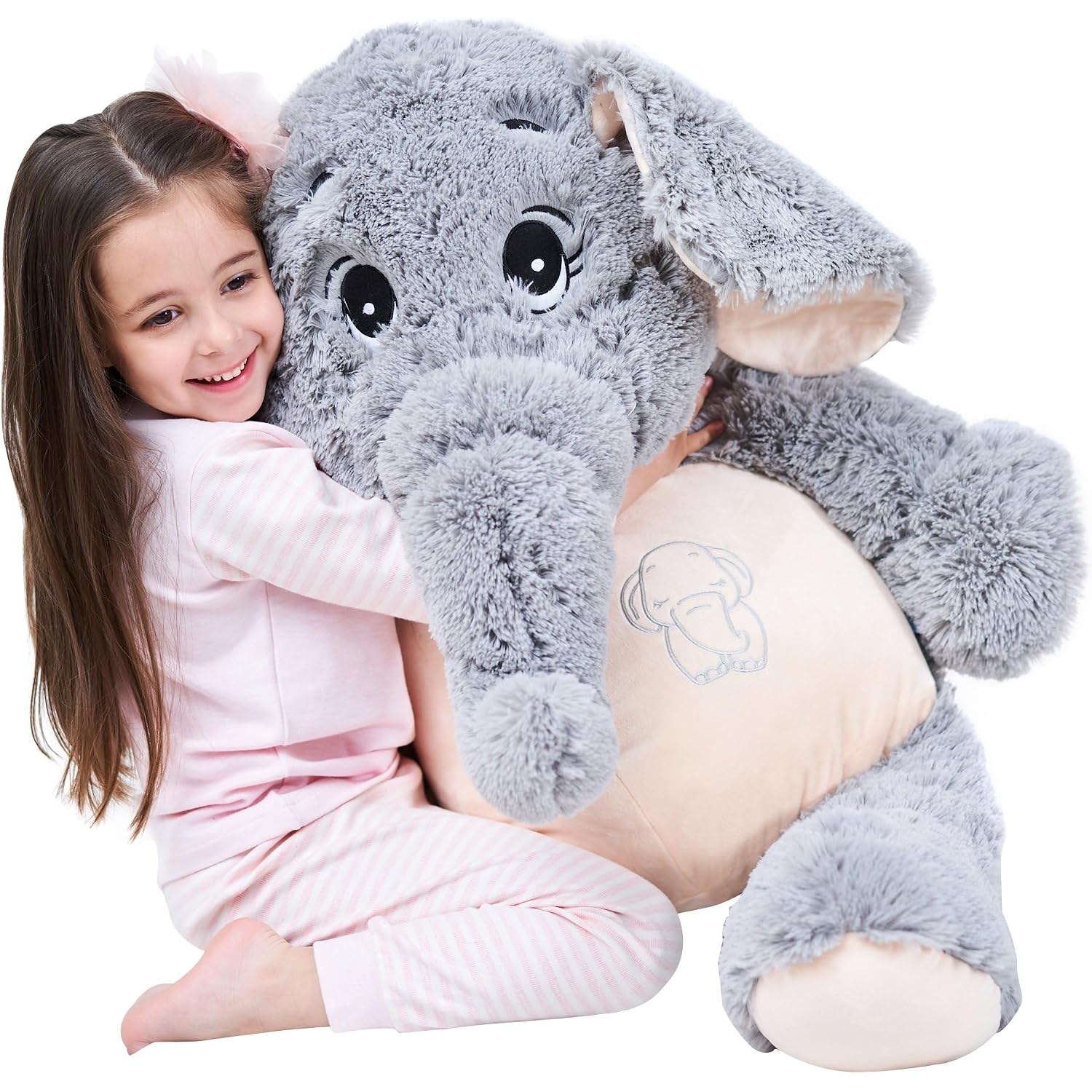
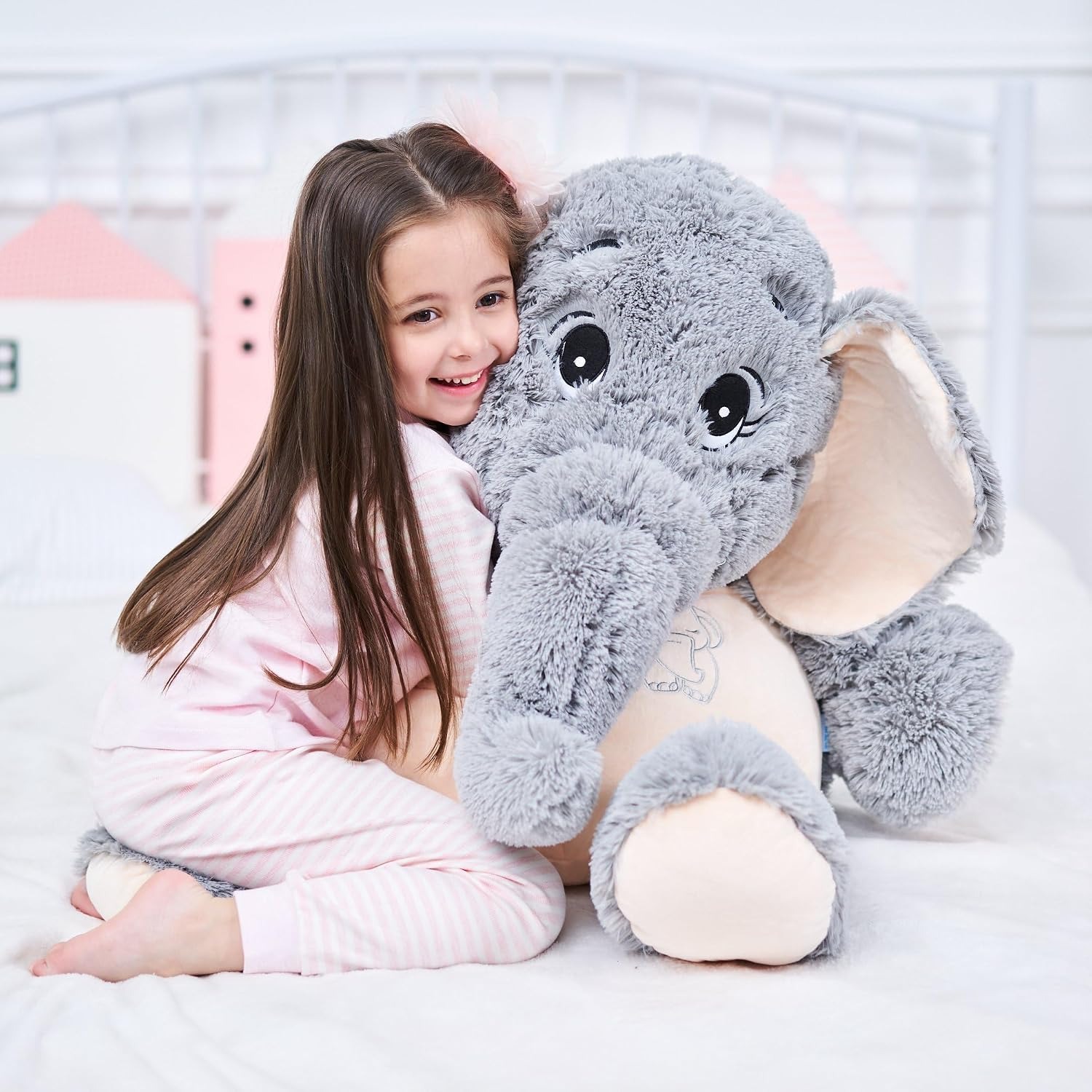
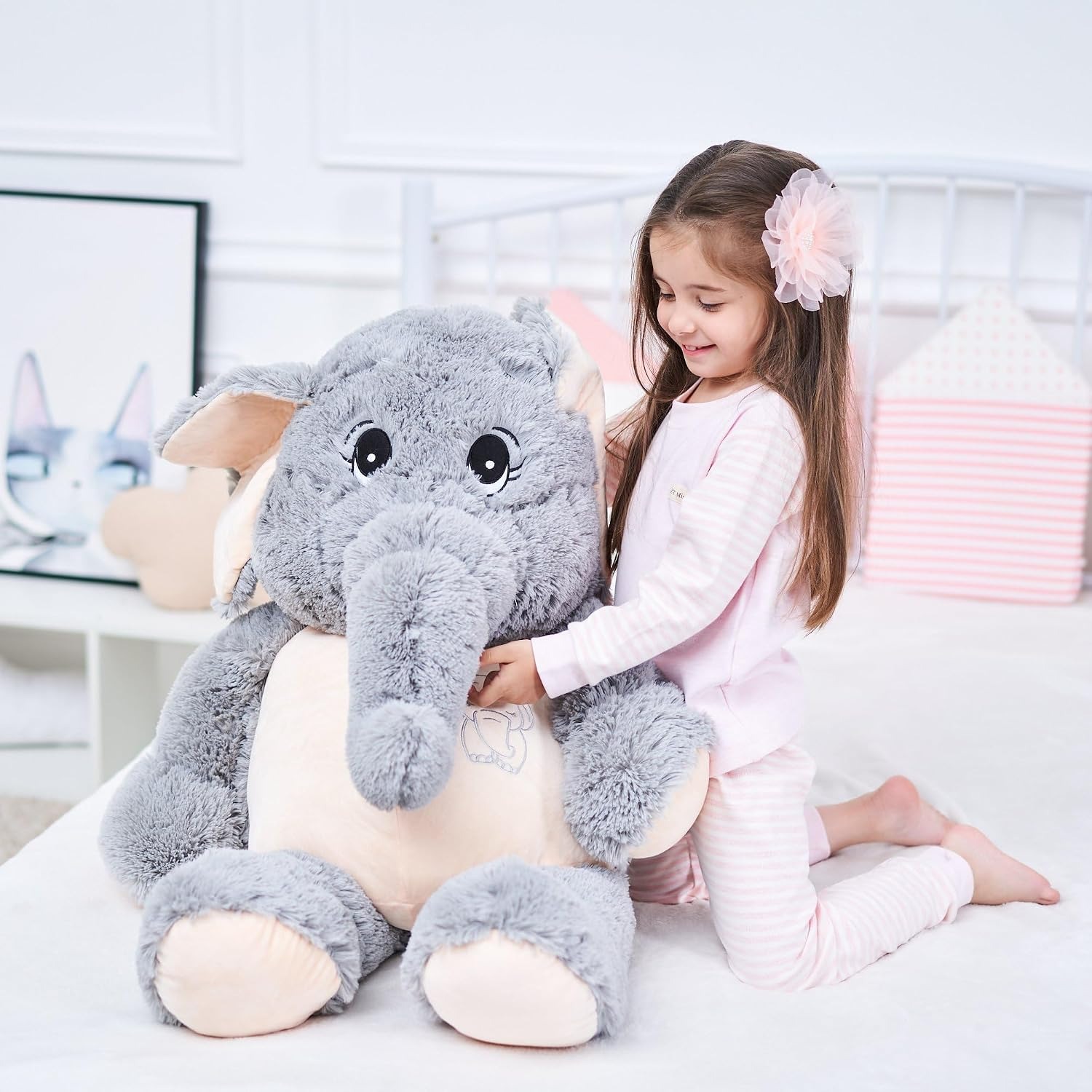
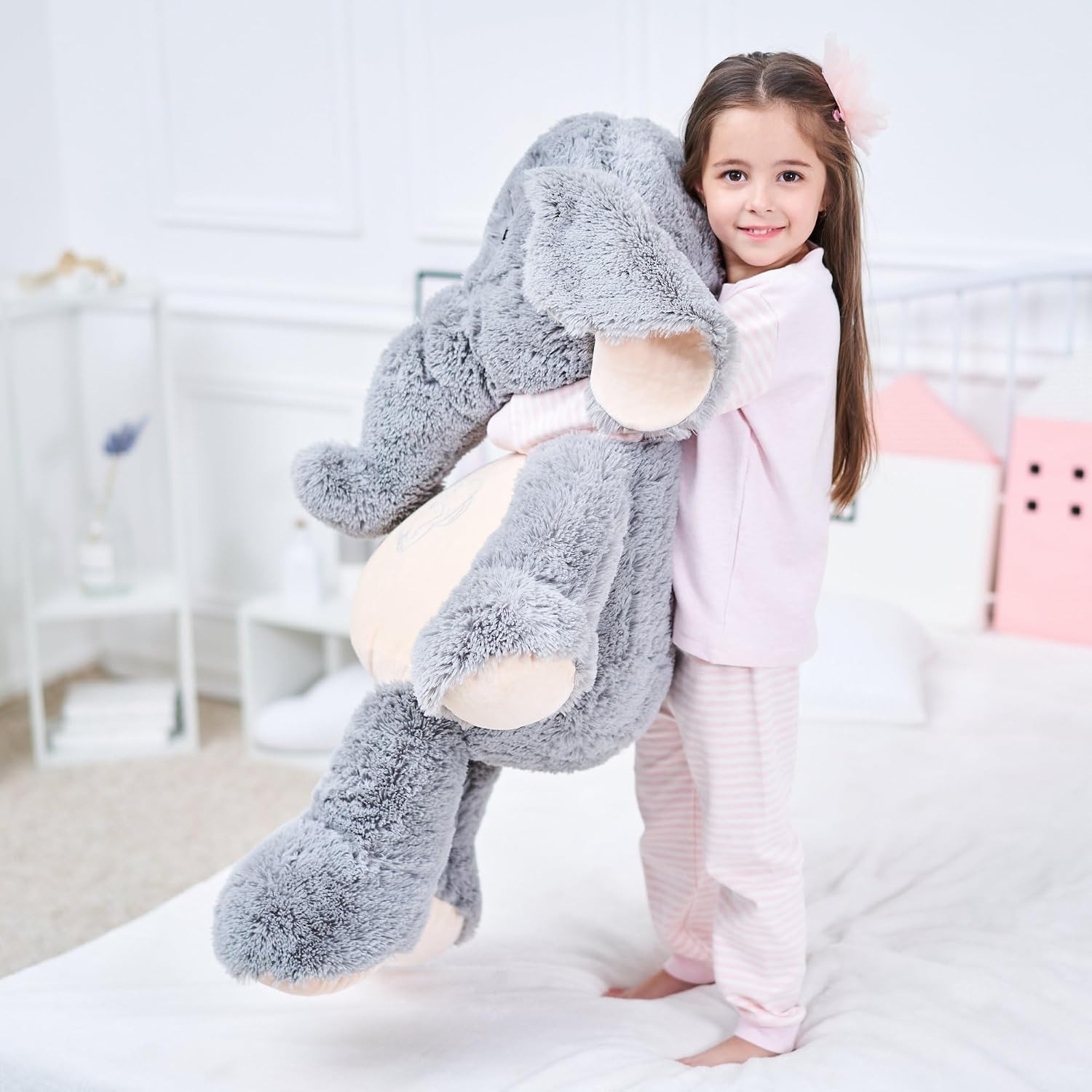
Most soft toy purchases are easy. You see it, you judge the size from the photo, you buy it. A giant elephant plush 100cm long does not work like that. Online, scale disappears. A photo of a huge plush on a bed and a photo of a small plush on a doll's bed can look almost identical, and people are regularly surprised in both directions. Some expected something bigger. Plenty more unpack a parcel and realise a metre of elephant is a lot of elephant.
So the first job of this guide is simple. Give you the real numbers, explain what they mean in a room, and help you decide if this is the right size and the right kind of toy before it turns up at the door.
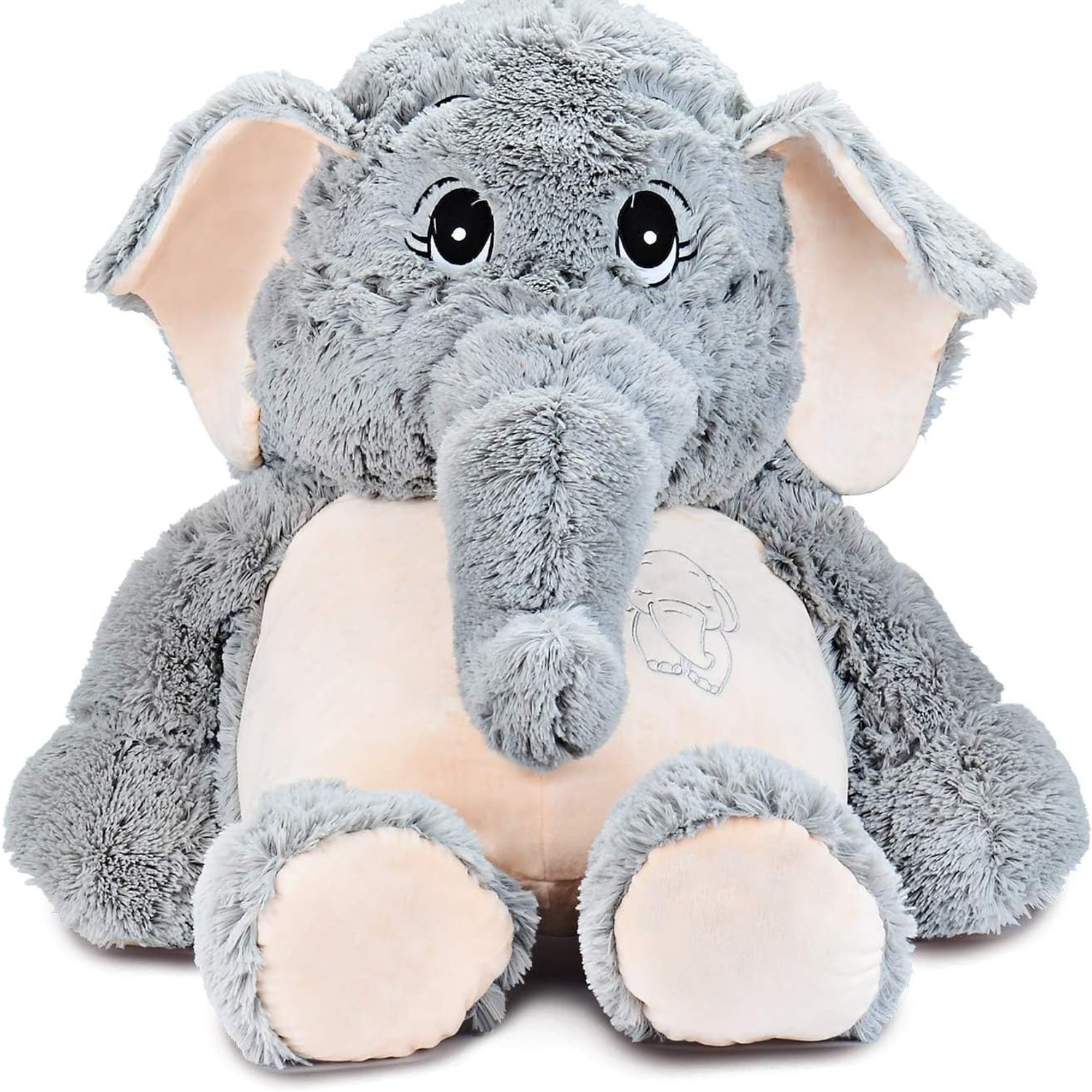
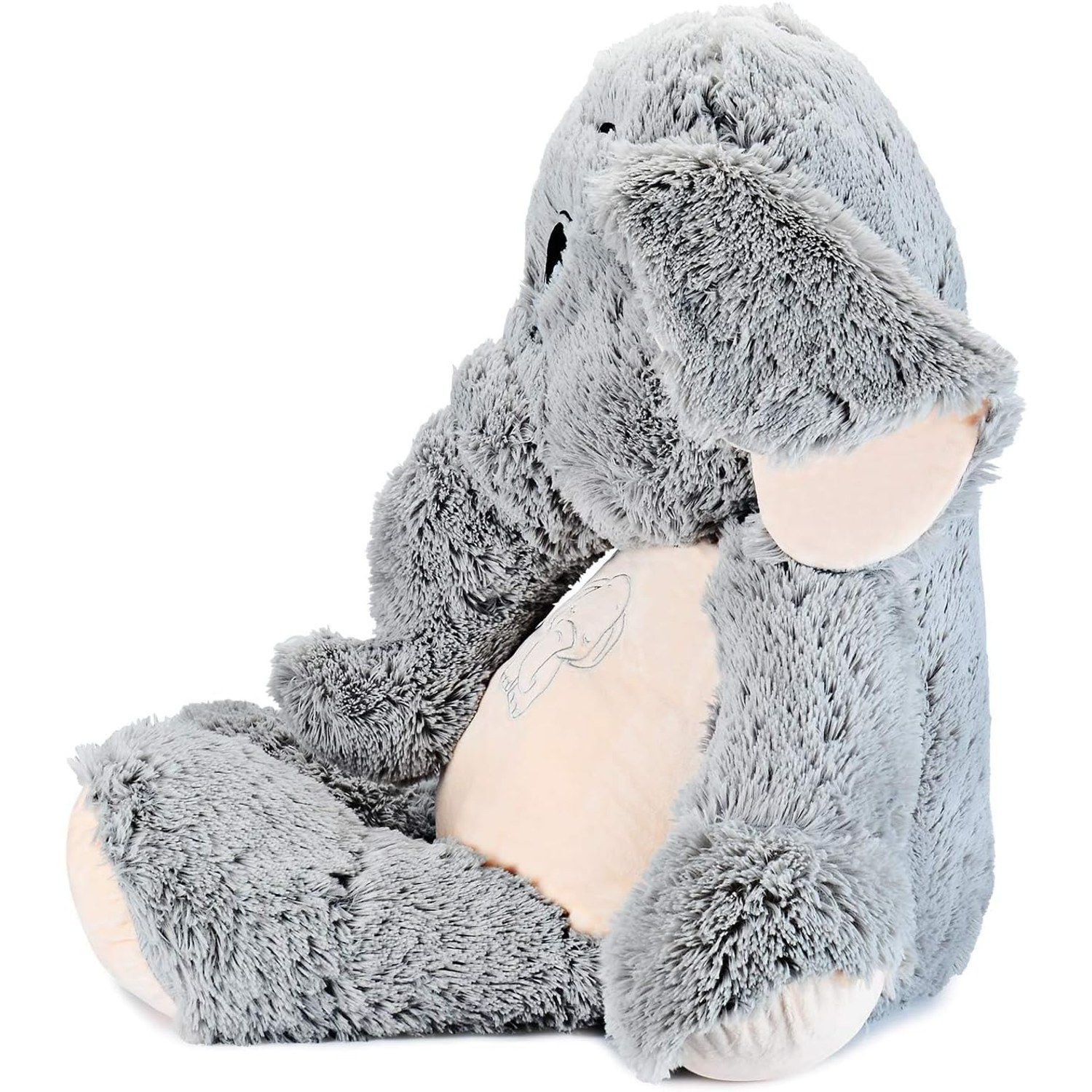
The numbers are 100cm long, 60cm wide and 35cm high, and 2kg in weight. Picture a large suitcase lying flat and you are in the right territory. On a single bed it takes up most of the mattress. On the floor beside the bed it fills a corner. In a car boot it is going to need the back seat as well.
How a plush this size is actually built
There is nothing complicated going on inside, and that is a good thing. The outer fabric is polyester and the filling is polyester too. It is one piece, with no battery compartment, no sound box, no detachable accessories and no assembly. You take it out of the packaging and it is finished.
Big plush toys that rely on gimmicks tend to break at the gimmick. A speaker stops working, a zip fails, a plastic eye loosens. A plain stuffed body has far fewer places to go wrong. It also means there is no setup. Nobody is hunting for a screwdriver on a birthday morning.
The weight matters more than people expect. Two kilograms across a metre of body gives the toy density. Lean on it and it pushes back a little rather than collapsing flat. Very light giant plush feels hollow and papery, and children work that out immediately. This one has enough filling to behave like a cushion as well as a toy, which is why so many of them end up on the floor in front of a television rather than on a shelf.
What happens in the first 48 hours
This is the part that catches people out. Plush of this size is compressed for shipping. It has to be, or the parcel would be enormous and the shipping cost would double the price. So when the box opens, the elephant looks thinner than the photos. Flat ears. A slightly sad trunk. One leg narrower than the other.
That is normal, and it fixes itself. Shake the body out firmly to break up the compressed filling. Work the trunk, ears and legs between your hands to redistribute it. Then leave the toy somewhere with air moving around it for a day or two. Polyester filling recovers as it breathes, and the shape fills out on its own. If the fur still looks matted in patches, a soft brush lifts the pile.
Do not panic and start pulling at seams, and do not try to speed things up with a radiator or a hairdryer. Heat is not your friend with polyester pile. Time and air do the job.
Who this suits, and who it does not
The manufacturer recommended age is 36 months to 6 years, which is a useful signal about how the toy is intended to be used. It is a floor toy and a cuddle toy for children who are past the stage of putting everything in their mouths and old enough to move something of this size around safely.
It works well for a child who wants company in a bedroom, a reading corner in a playroom, or a nursery that an older sibling also uses. Many people shopping for the best cuddly elephant gift are buying for the moment of unwrapping as much as for the toy itself, and a metre-long parcel delivers that.
It is less suited to a few situations. Do not put a large plush in a cot with a baby. Do not buy it for a tiny bedroom with no free floor space, because it will end up shoved behind a door. And if you need something that can go through a washing machine every week, this is not the right choice, which brings us to care.
Cleaning without wrecking it
Surface clean only. That is the short answer and it is worth taking seriously. A one-piece plush with loose polyester filling does not survive a washing machine well. The drum pulls the filling into lumps and puts strain on seams that were never built for that kind of tumbling. People try it, and the results are not good.
The method that works is boring and effective. Dampen a soft brush or cloth with lukewarm water, add a small amount of mild detergent, and work on the stain in gentle circles. Keep the water on the surface rather than soaking through to the filling. Blot with a clean damp cloth to lift the detergent, then let the toy air dry completely somewhere ventilated. Brush the pile up once it is dry.
For general freshness rather than stains, an hour outside on a dry, shaded day does a lot. Bring it back in before evening damp settles. The usage guidance is indoor, so outdoor time should be airing, not playing.
Between cleans, a quick vacuum with an upholstery attachment on low suction pulls out dust from the pile. Hold the nozzle slightly away from the fabric rather than pressing it in.
Choosing between sizes and styles
If you are weighing this against other options, there are three questions worth answering first.
How much floor space is genuinely free? Not space you could clear, space that is free now. A 100 x 60cm footprint is real estate. If the honest answer is nothing, a smaller plush will get more use.
Who is it for, and will they move it? A child who likes dragging a favourite toy around the house will enjoy the 2kg weight. A child who wants something to carry to nursery in a bag will not.
Is it a daily toy or a room feature? Both are valid. Some giant plush lives on the bed and gets hugged nightly. Some sits in a corner as part of the room and gets used as a seat. This one handles both, but knowing which you want helps you pick the spot before it arrives.
One more practical note. If you are giving it as a gift, think about wrapping. A metre-long plush does not fit standard gift bags. A large bin bag with a ribbon, or wrapping it while still compressed in the shipping packaging, are the two approaches that work.
The short version
This is a 100 x 60 x 35cm grey elephant plush weighing 2kg, polyester outside and in, with no batteries and no assembly. It comes from IKASA, model 6636529, made in China.
Expect it to arrive compressed and give it a day or two to fill out. Keep it indoors, clean it on the surface only, and air dry it away from heat. Check your floor space before you order, because the size is the whole point and also the only thing people get wrong.
Get those bits right and you have a soft toy that doubles as seating, survives years of hugging, and makes a genuinely memorable gift on the day it is opened.