
The complete guide
Choosing a Kids Tool Set, A Practical Buyer's Guide
The thing children actually want
Watch a three year old when you put up a shelf. They do not wander off. They hover. They want the screwdriver, they want to hold the drill, they want to press the button. Then you hand them a plastic hammer with nothing to hit and the interest drains away in about forty seconds.
That gap is what a decent kids tool box with vest fills. It is not about the tools looking real. It is about giving a child a job with a beginning, a middle and an end, plus the gear to look like the person who does that job. Children do not want toys that imitate work. They want the work.
How a pretend play tool kit actually works
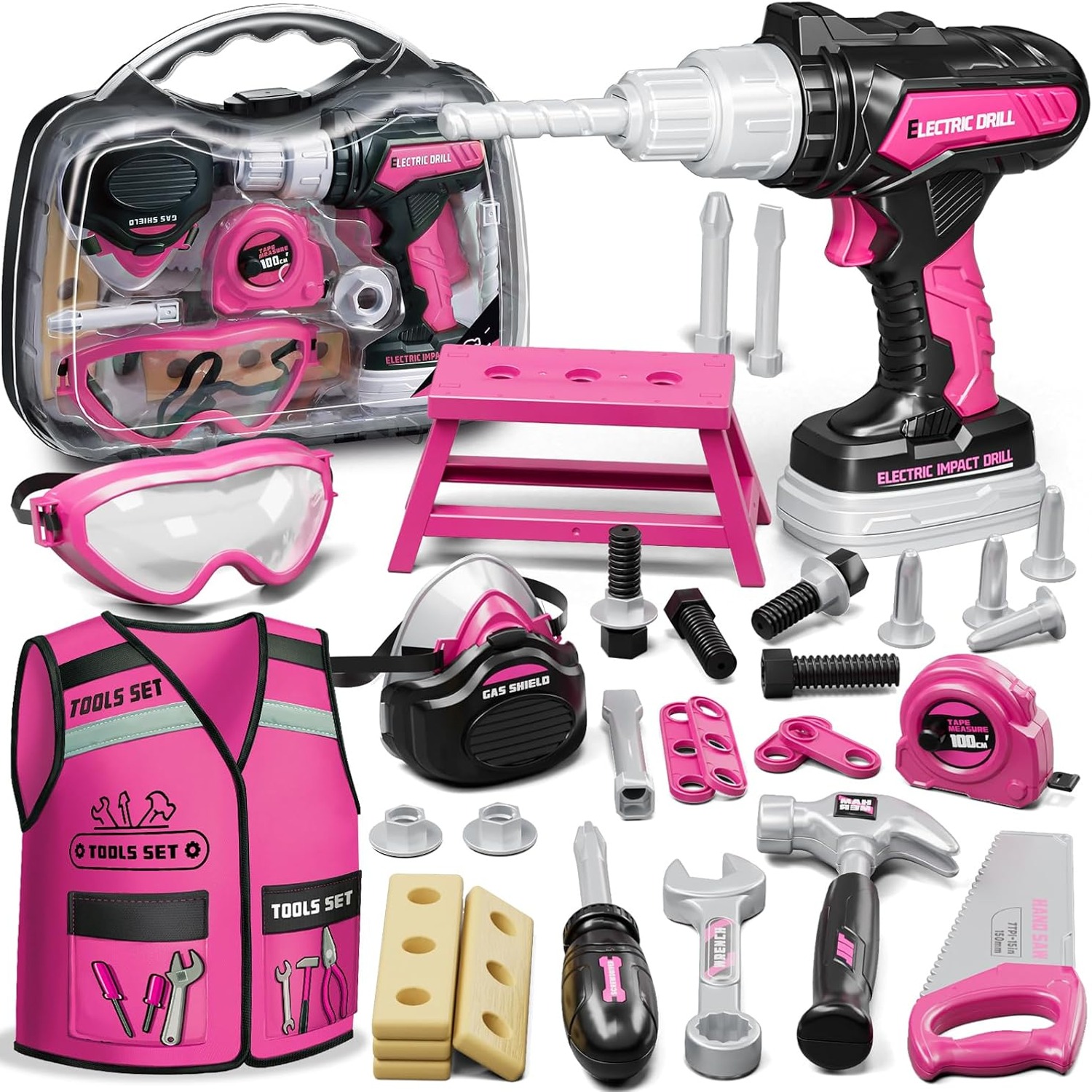
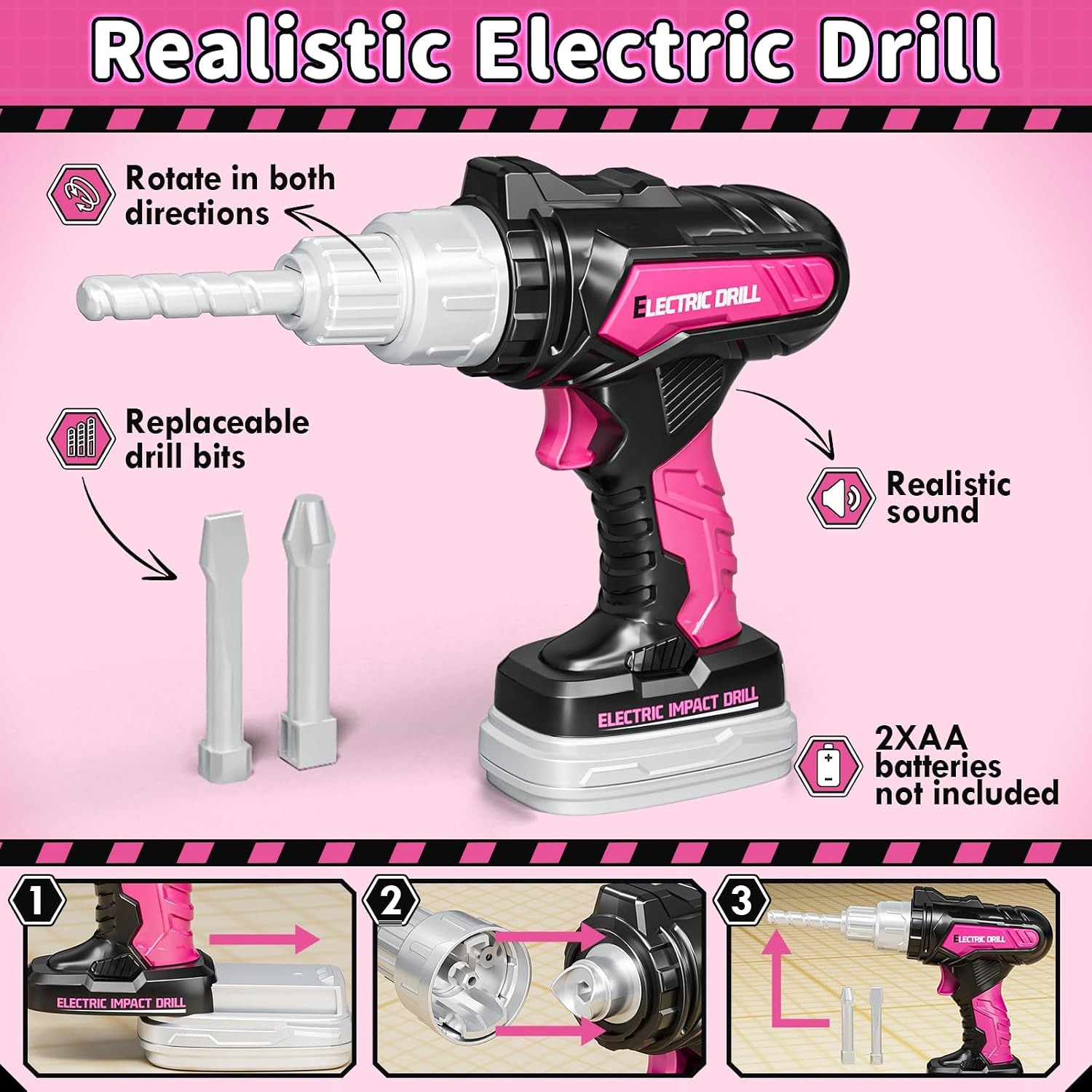
The engine of this set is the battery-powered drill. It rotates in both directions, which sounds like a small spec until you watch a child figure out what that means. One way the screw goes in. The other way it comes out. That is cause and effect you can feel through your hands, and it is the reason the drill usually gets picked up first and put down last.
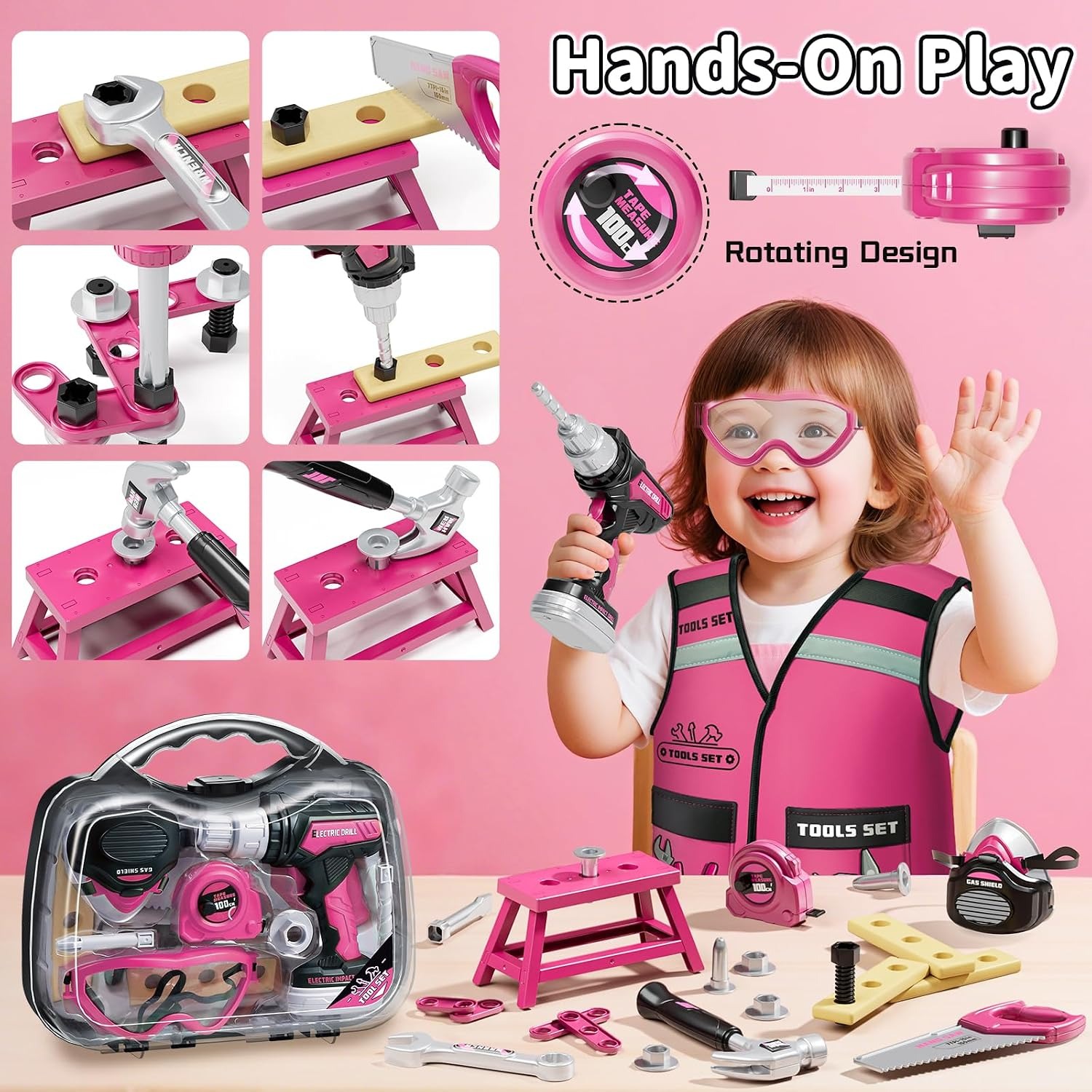
Around the drill sit the manual tools. A hand saw, a hammer, a screwdriver, a wrench and a tape measure. These are slower and quieter, and they get used differently. The saw becomes a sawing action on a cardboard box. The tape measure gets dragged across the carpet to measure the dog. The hammer taps everything in the room that is allowed to be tapped.
Then come the fasteners. Screws, bolts, nails and the other DIY accessories give the tools something to act on. Without them you have props. With them you have a task. A child lining a screw up with a hole is doing serious fine motor work, even though it looks like they are just fiddling.
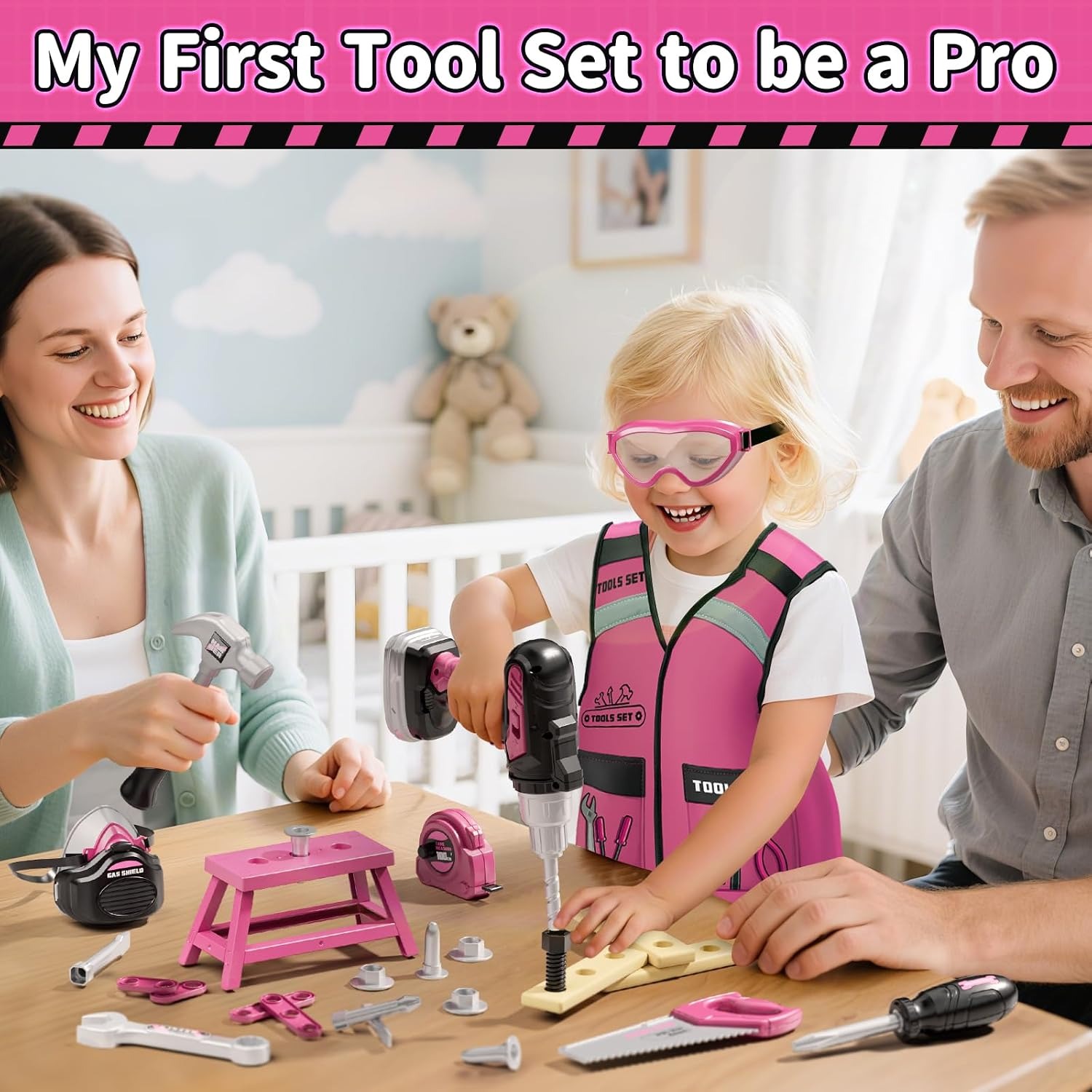
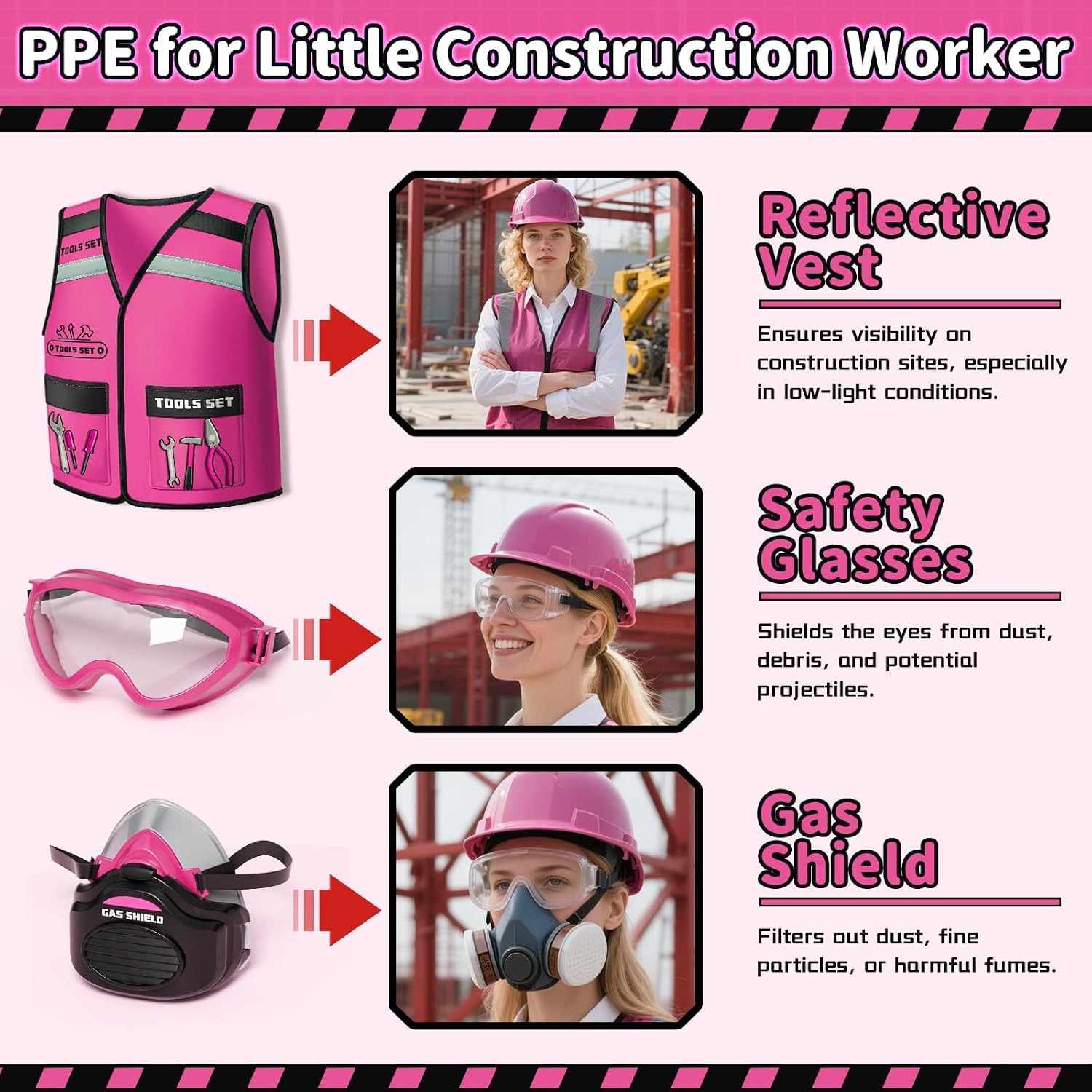
The dress-up layer finishes it off. The high-visibility vest with pockets, the safety goggles and the gas shield are what convert a child from someone holding tools into someone being a builder. Quieter children often need that costume cue before they commit to a role, and once the vest is on the talking starts.
Who it suits
The recommended age is three and up. That is a sensible floor. Below three, the smaller screws and bolts are too fiddly and the mouthing risk is real. From three onwards the hand control catches up and the pretend play gets more ambitious.
The sweet spot tends to be three to six. Younger children in that band mostly enjoy the actions, the spinning, the tapping, the dressing up. Older ones start inventing projects. They will decide the toy kitchen needs repairing and spend half an hour on it with a serious expression.
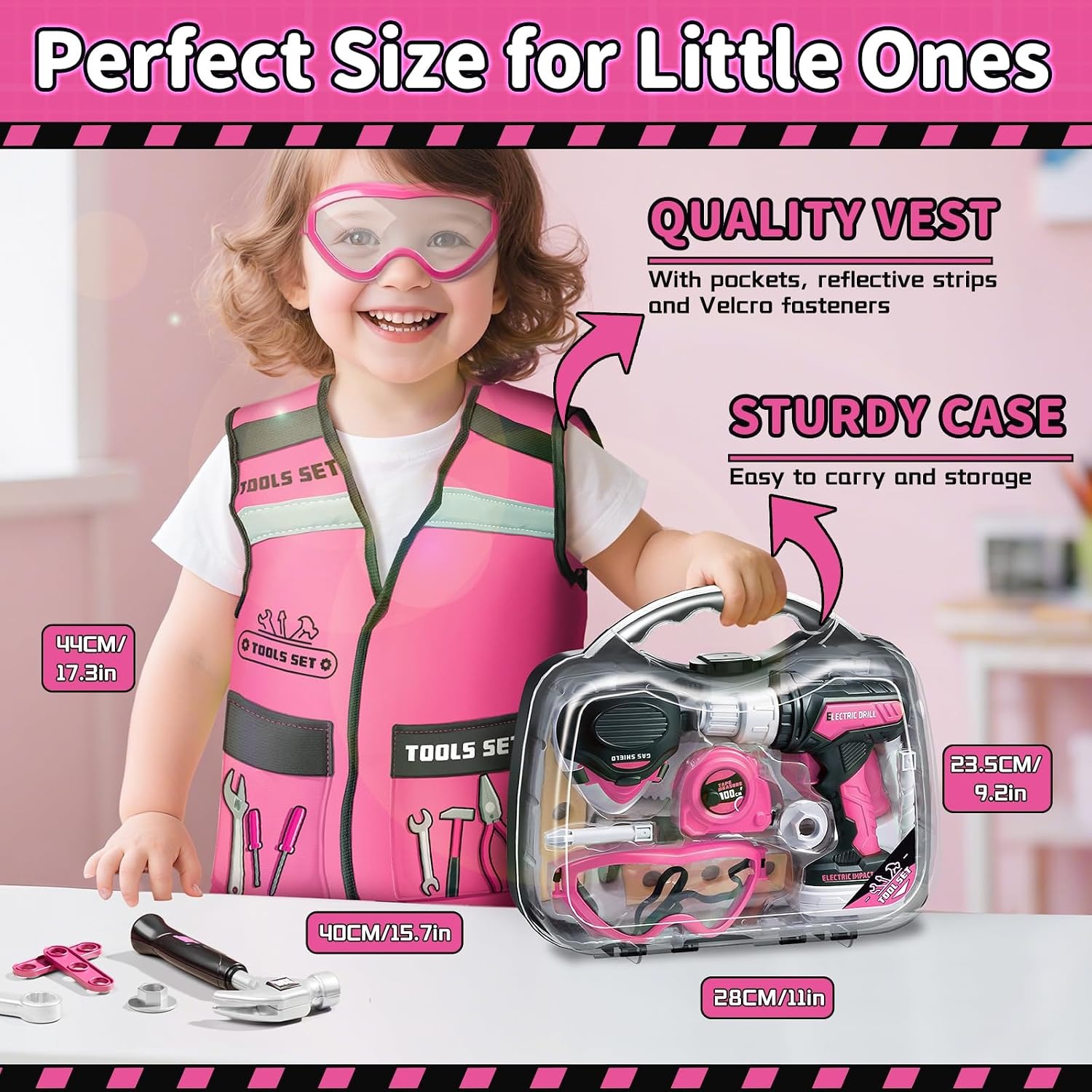
It suits children who like to carry their play around, too. Some kids want a fixed station they stand at. Others want a kit they can take to the garden, to a sibling's room, to the car. This is firmly the second type, because everything lives in one case with a handle.
How to choose between tool sets
A few things separate a toy tool set that lasts from one that ends up at the back of a cupboard.
Storage, first. This is the one most people underestimate. A set of loose tools with no home becomes clutter inside a week, and clutter gets thrown out. A case that a child can open and close on their own changes the whole pattern, because tidying becomes part of the play rather than a fight afterwards. At 27.5 x 8.5 x 23.5 cm this one is small enough to shelve and light enough at 400 g to carry.
Something to work on. Tools alone are boring. Screws, bolts and nails give the tools a purpose. Check that any set you consider includes fasteners, not just the tools themselves.
A powered element. A drill that genuinely spins is the difference between mild interest and sustained interest for most under-fives. Just check the battery requirement. This one takes two AA batteries and they are not in the box, which catches out plenty of gift givers on the morning of a birthday.
Dress-up gear. Vests, goggles and shields do a lot of work for very little cost. They also teach something useful, that you put your gear on before you start. That habit transfers.
Build and edges. The parts here are plastic, listed as ABS, with rounded edges. Hold a set in your hand if you can, or read what the manufacturer actually states rather than what the photos imply.
Playing with it, not just owning it
The biggest difference in how long a set like this lasts is whether an adult joins in now and then. Not supervising, joining in. Sit on the floor, hold a bolt steady and ask your child to tighten it. Give them a job, like fixing the wobbly leg on the toy table. Describe what you are doing as you do it, because that is where the vocabulary comes from.
Cardboard boxes are the best partner for this kit and they are free. A delivery box becomes a house, a rocket or a dog kennel, and suddenly there is a reason to use the saw and the tape measure. Two children with one case works well too, because somebody has to hold while somebody else turns.
Looking after it
Care is simple. Wipe the tools and case with a damp cloth and dry them before packing away. Nothing goes in the dishwasher, and the drill in particular should be kept away from water because of the battery compartment.
Hand wash the vest in cool water and dry it flat. Hot washes and tumble dryers are unkind to light fabrics and printed details.
If the set is going into storage for a while, take the AA batteries out of the drill. Batteries left in toys for months can leak and that usually ends the motor. It takes seconds to remove them and it is the single best thing you can do for the life of the set.
Every so often, run your eye over the small parts. Anything cracked or chipped should come out. Keep everything else in the case and you will still have a full kit a year later, which is rarer than it should be.
The short version
This is a 14-piece kit built around a drill that really spins, with hand tools, fasteners, a vest, goggles and a shield, all packed in a case a small child can manage alone. It is made for ages three and up, weighs about 400 g, and is made from plastic with rounded edges. It comes with a one year limited warranty.
Buy it if your child hovers whenever you pick up a screwdriver. Buy the AA batteries at the same time. Then hand it over, find a cardboard box, and get out of the way.