
The complete guide
Choosing a Giant Capybara Plush, A Practical Buyer's Guide
The problem with most big plush toys
Buying a large soft toy online is a gamble more often than it should be. The photo looks generous, the price looks fair, and then a parcel arrives containing something the size of a loaf of bread with a hollow middle and a shiny fabric that squeaks when you touch it. Within a week it has lost its shape, the fill has shifted to the ends, and it ends up on top of a wardrobe.
The frustration is understandable. A big plush is supposed to be the one you actually hug, the one that stays on the bed and gets dragged to the sofa. If it cannot hold its shape under a real squeeze, it has failed at the only job it had.
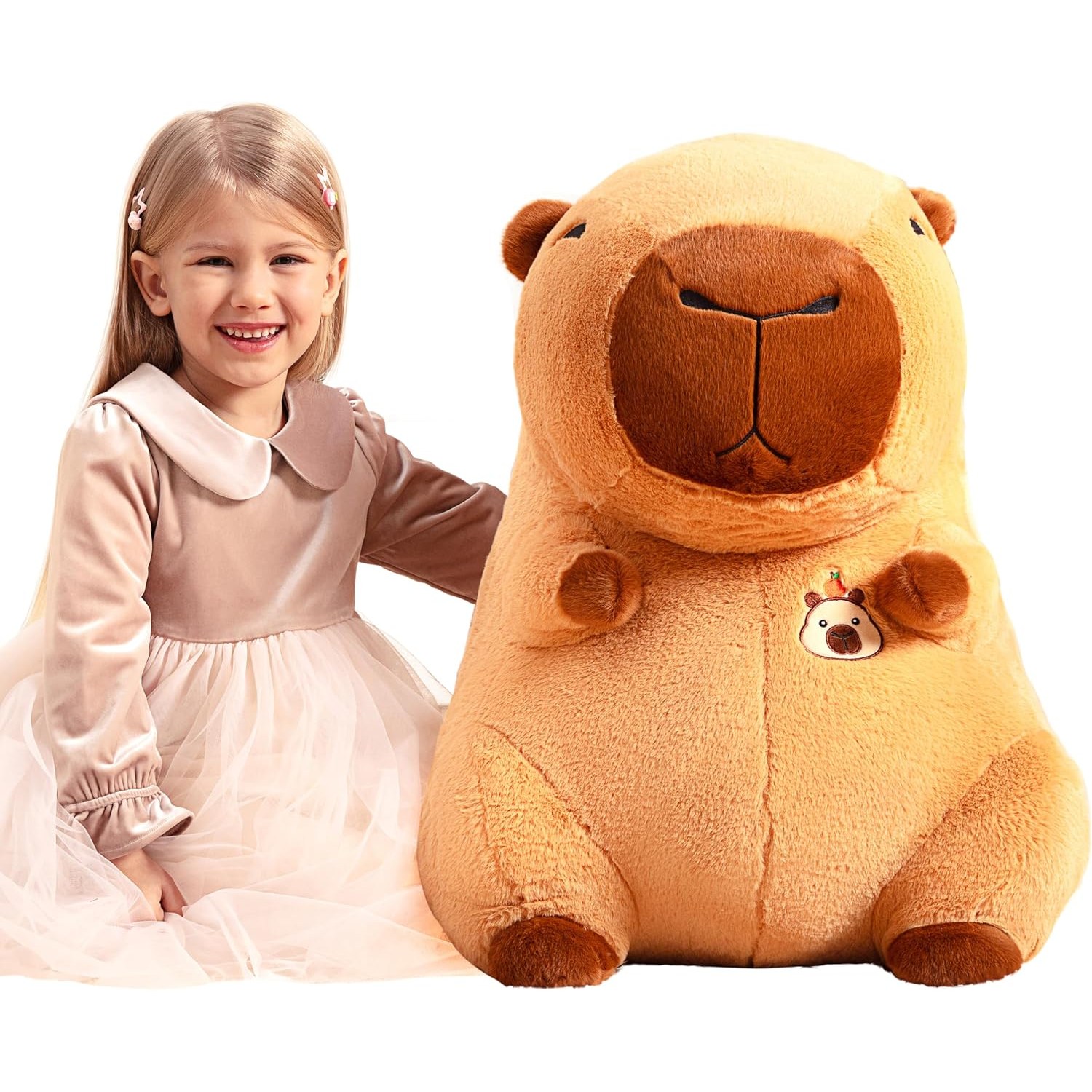
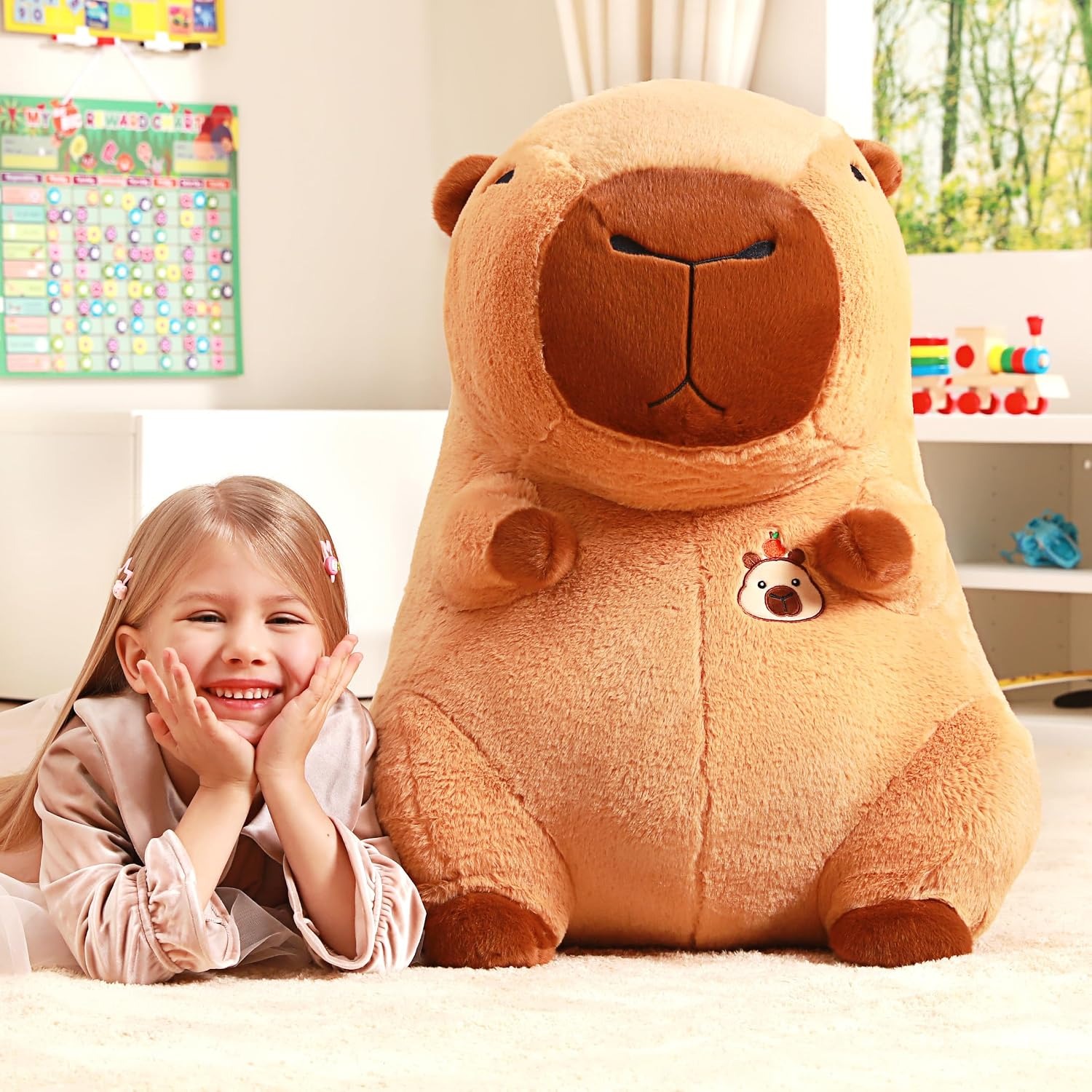
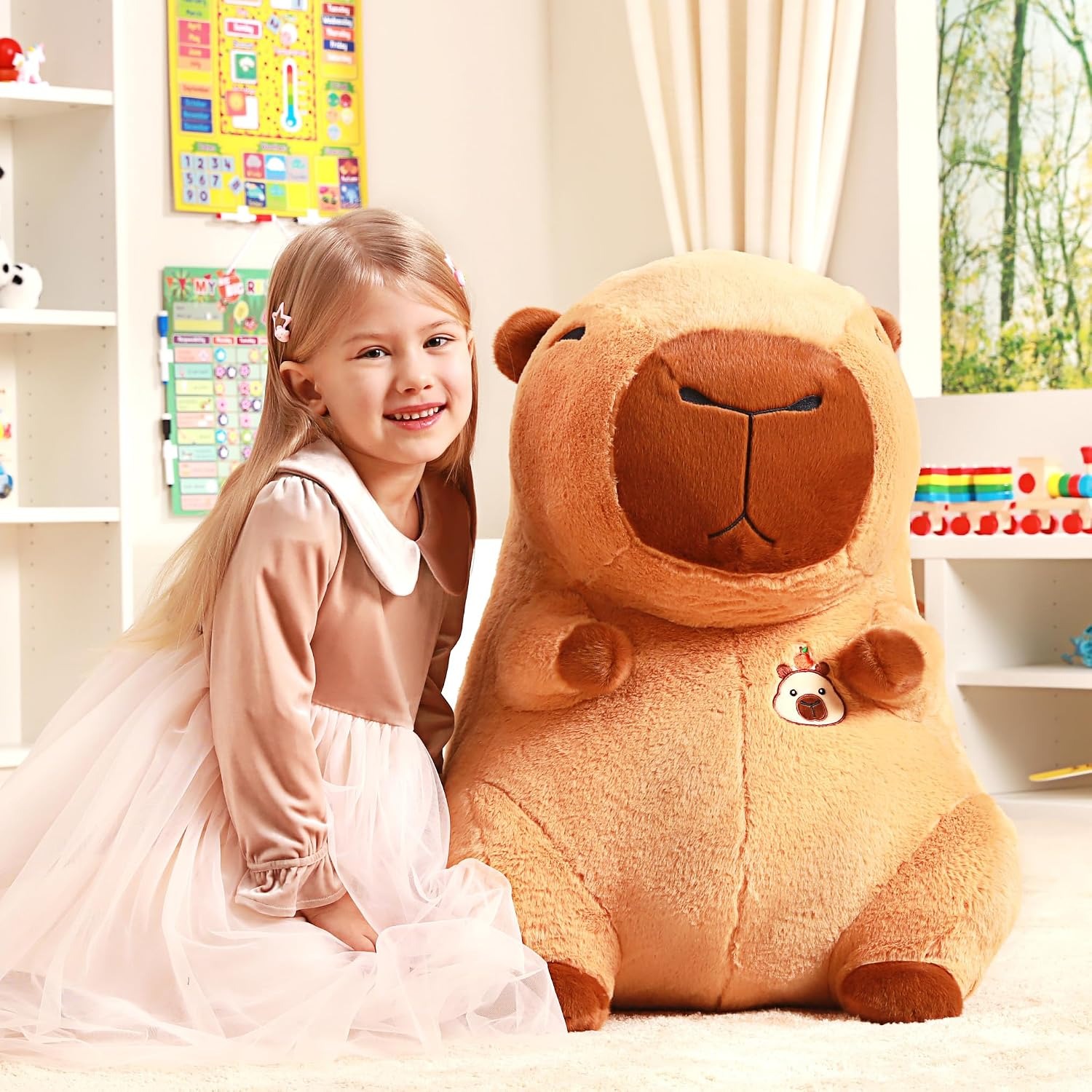
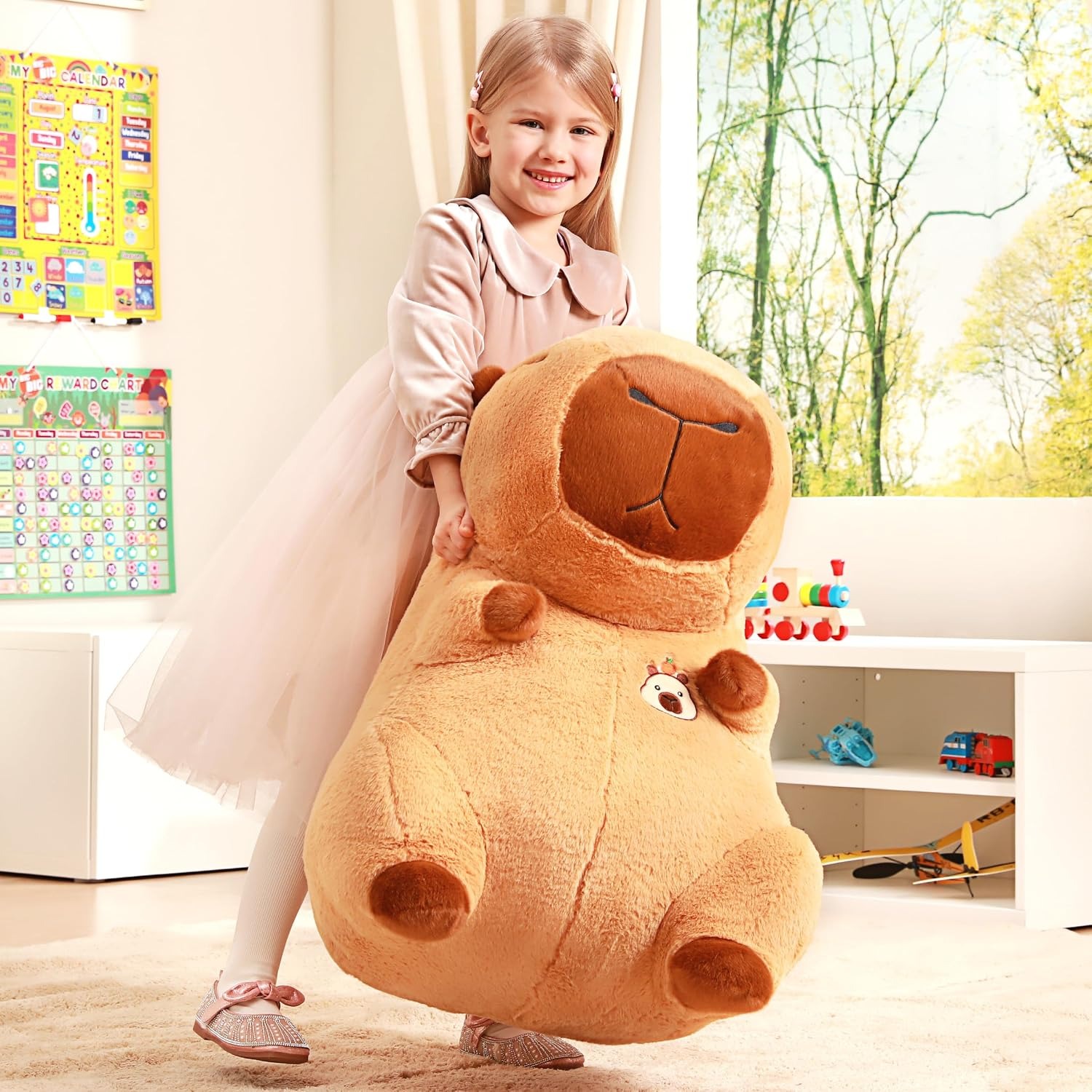
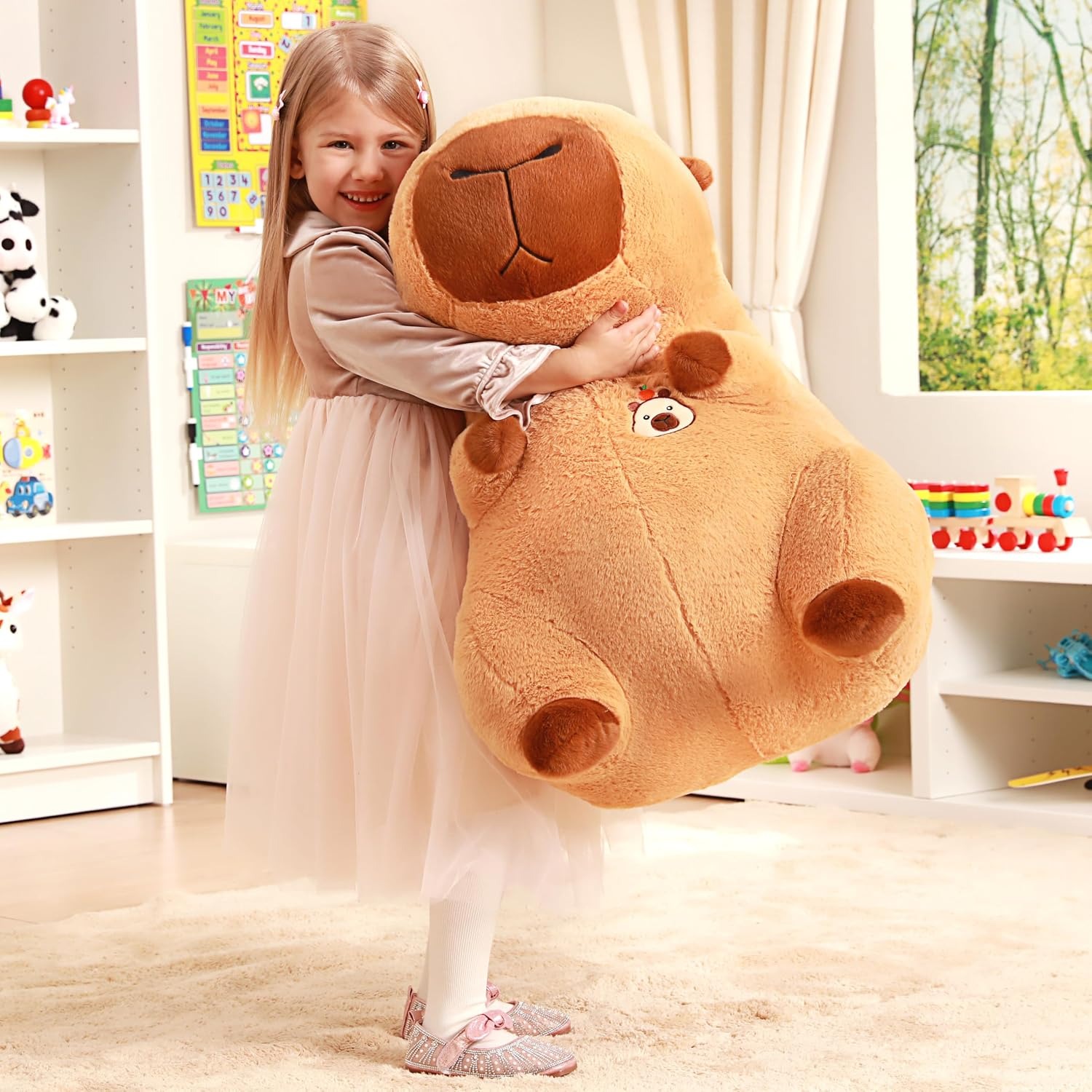
That is the gap a properly stuffed, properly sized capybara fills. At 60cm long, 45cm wide and 40cm high, this one is genuinely large. It weighs just under two kilograms, which tells you more about the build quality than the dimensions do. A plush that size with half the weight would be mostly air.
Why capybaras became the plush animal of choice
Capybaras have an unusual reputation online. They are the world's largest rodent, they are semi-aquatic, and they are famous for sitting calmly while birds, monkeys and even cats perch on their backs. That calmness became the whole point. The capybara turned into shorthand for being unbothered.
That carries over surprisingly well into a soft toy. Where a teddy bear looks alert and a plush dog looks eager, a capybara looks settled. The low body, the short ears, the slightly unimpressed expression. It is a shape that reads as relaxed, which is a useful quality in something you keep on a bed.
The design here follows the real animal reasonably closely. Brown colouring, a broad low body and the rounded snout you would recognise from a photo. It is not a cartoon version with oversized eyes, which is partly why it suits adults as well as children and partly why it works as room decor rather than just a toy.
How the build actually works
Three things decide whether a large plush holds up, and all three are worth checking before you buy anything.
The first is the outer fabric. This one uses a cotton outer, which gives a softer, more matte surface than synthetic alternatives. If you have ever touched a cheap plush and felt that slightly plasticky slide under your fingers, you know the difference. Fabric matters more on big toys because more of it touches your face and arms.
The second is the filling, and this is where most oversized plushies fall down. The description for this one specifies extra plump full-body filling, meaning the stuffing runs consistently through the body rather than concentrating in the middle. That is what stops a big plush from developing flat limbs and a saggy belly after a month. When you press it, it should resist and spring back rather than fold.
The third is the construction. This uses a soft one-piece design. The body is sewn as a single unit without clip-on accessories or decorative add-ons that can be pulled loose. For anyone buying for a child, that removes a whole category of worry. The recommended age is 36 months and up.
There are no batteries and no assembly. It arrives finished.
Who this actually suits
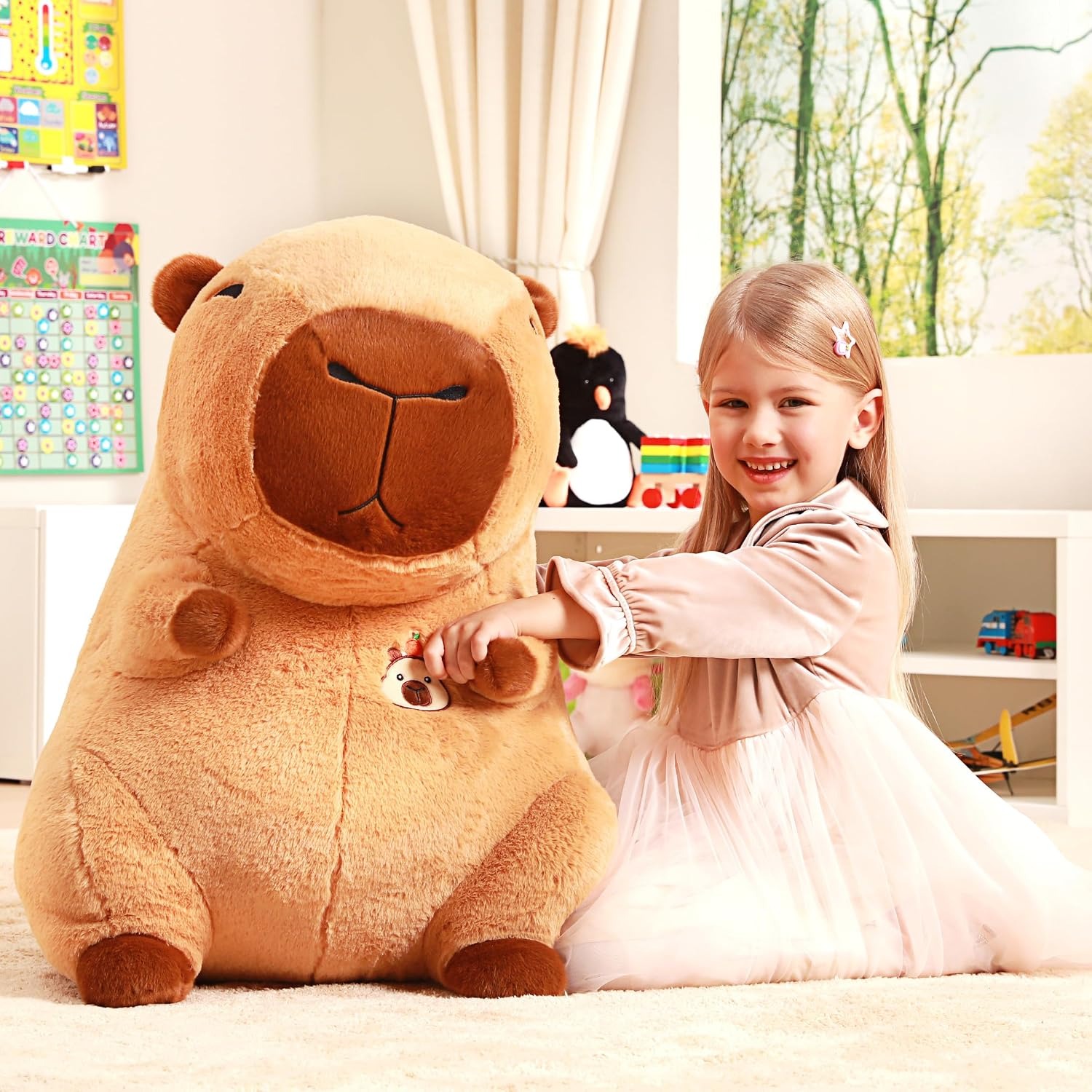
Children from about three upwards are the obvious audience, and a plush this size tends to become the one toy that survives every clear-out. It is big enough to sit against while reading, soft enough to sleep with, and sturdy enough to be dragged room to room.
Teenagers and adults are a bigger market than most people assume. A large capybara soft toy works as a sofa cushion, a backrest for gaming or a lap weight while watching something. The muted brown colouring means it does not clash with adult furniture the way a bright pink unicorn might.
It also works well for people who want something with presence in a room without buying furniture. A window seat, a reading nook, the foot of a bed. At 60cm it changes how a corner feels.
As a gift it is hard to beat for immediate reaction. There is no instruction manual, no charging cable, nothing to explain. You hand it over and it does its job in the first second.
How to choose the right size
Sizing on plush toys is confusing because brands measure differently. Some give you the height of the toy sitting up, some give you nose-to-tail length, and some quietly measure the flat fabric before stuffing.
The dimensions here are given as a full set: 60cm long, 45cm wide, 40cm high. That three-figure measurement is useful because it tells you about volume, not just one flattering number. A toy listed as "60cm" with no other dimensions could easily be narrow and thin.
For context, 60cm is roughly the length of a standard bed pillow. The 45cm width is where this one differs from a pillow, giving it a broad, stable base that sits upright on a floor or sofa rather than tipping over.
If you are buying for a small bedroom or a child who prefers a toy they can carry one-handed, this is at the larger end. If you want something that makes an impact as a gift or a decorative piece, this size is well judged.
Looking after it
Resist the urge to put a plush this big in a washing machine. The filling soaks up a lot of water, and getting the centre properly dry afterwards is genuinely difficult. Damp filling can develop a musty smell that is very hard to get rid of.
Spot cleaning handles almost everything. Dampen a cloth with water and a touch of mild detergent, dab the mark rather than rubbing it, then blot with a dry cloth. Work from the outside of the stain towards the middle so you do not spread it. Let it dry naturally, away from radiators and direct sunlight.
For general freshening, a light vacuum with an upholstery attachment on low suction lifts dust from the surface. Airing it outside on a dry, shaded day also helps.
Once it is dry, give it a good hand-fluff. Pat the body, work your fingers through the pile and reshape the limbs. A couple of minutes of this every few months keeps a big plush looking full rather than tired.
Keep it indoors. It is listed for indoor use, and sunlight will fade the brown colouring over time.
Common questions before buying
People often ask whether the toy will arrive flat. Large plush items are usually compressed to keep shipping practical, so some squashing is normal. Shake it out, pat it into shape and give it a day. It recovers.
Another common concern is whether the weight makes it hard for a child to handle. At 1.98 kg it is light enough for a school-age child to carry, though a three-year-old will probably drag it rather than lift it. That is fine, and arguably part of the charm.
People also ask about fill material and safety certifications. Those details are not specified by the maker, so we will not claim them. What we can confirm is the one-piece construction, the cotton outer, the 36 months and up age guidance and the absence of batteries or small detachable parts.
The short version
If you want a soft toy that genuinely earns its space, the numbers here are the ones to look at. Sixty centimetres long, forty-five wide, forty high, just under two kilograms. That combination means a real armful rather than a photo trick.
The cotton outer feels right against skin. The full-body filling holds the shape under daily hugging. The one-piece build keeps it sensible for children from three upwards, while the natural brown colouring keeps it acceptable in an adult living room.
It needs no batteries, no assembly and no explanation. Spot clean it, keep it indoors, fluff it occasionally, and it will still look good years from now. For a gift that lands the moment it is unwrapped, or a cushion-sized companion for your own sofa, a jumbo stuffed capybara is a straightforward thing to get right.