


The complete guide
Choosing a Light Up RC Car for Kids, A Practical Buyer's Guide
The problem with most first RC cars
Nearly every parent has the same story. A remote control car comes out of a box at a birthday party, looks brilliant for eleven minutes, then meets the edge of a rug or a patch of lawn and stops dead. The wheels spin, the child pushes the stick harder, and the toy ends up on a shelf by the following Tuesday.
Two things usually cause that. The first is ground clearance and grip. Cheap toy cars are built with thin plastic tyres and a low body, which is fine on a kitchen floor and useless anywhere else. The second is battery life. A single pack that lasts twelve minutes and then needs two hours of charging kills the fun just as it starts.
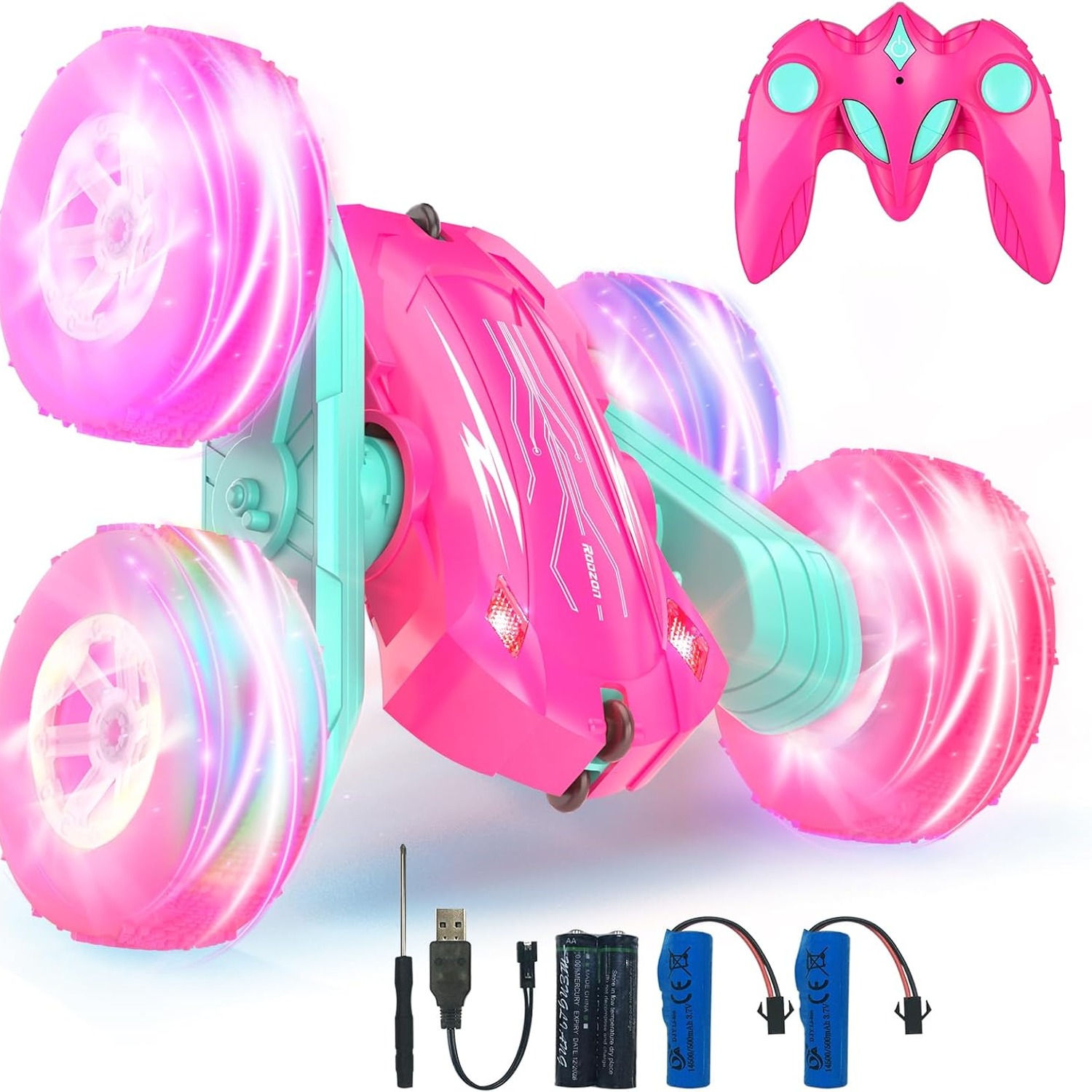
A crawler-style car like the Rodzon 3300 is built to dodge both of those traps. The tyres are chunky and wear-resistant. There are small guide wheels at the front and rear so the car rides over an obstacle rather than burying its nose into it. And two rechargeable batteries come in the box, so one can be charging while the other is in use.
How the lights actually change things
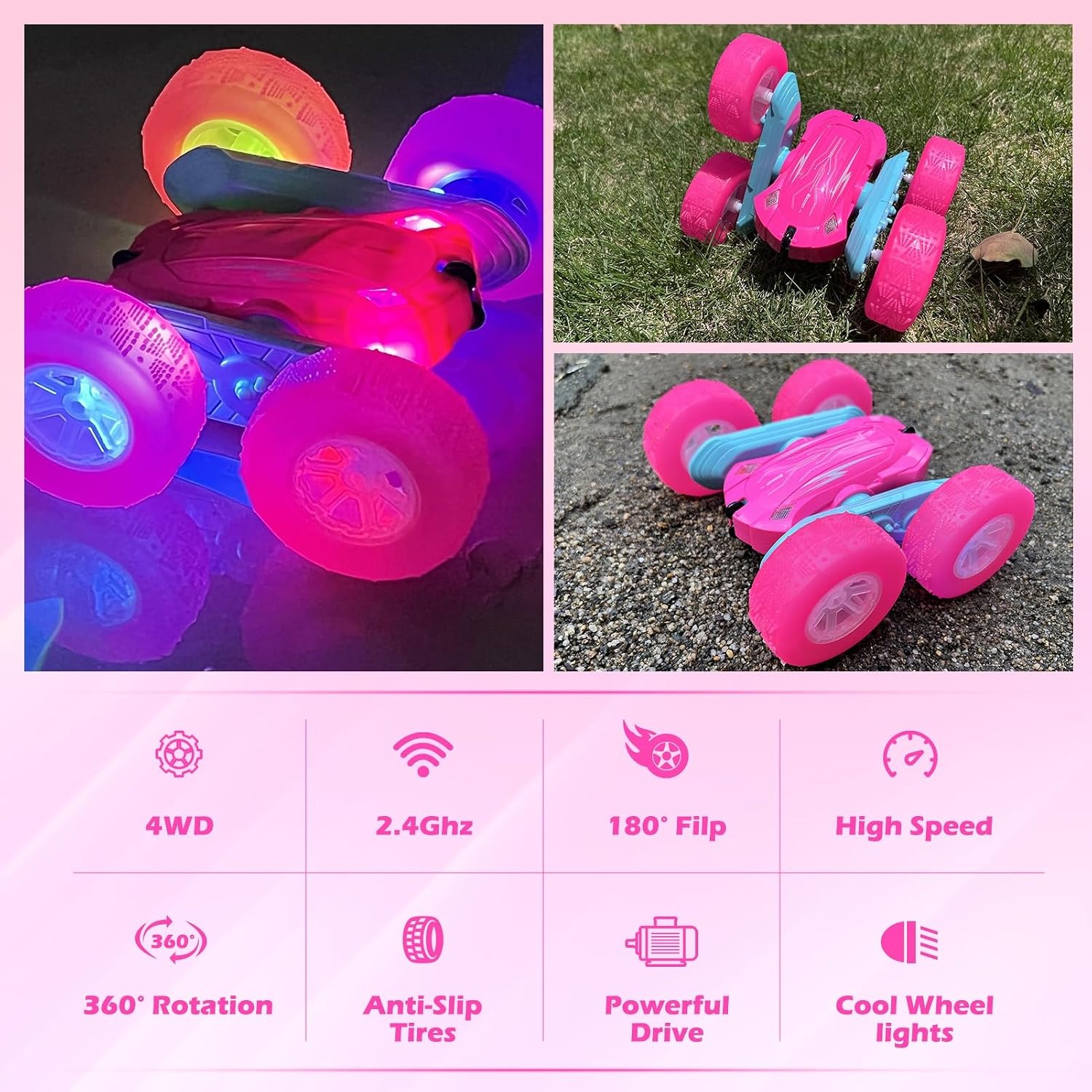
The lighting is not just decoration, though it certainly sells the toy. Four LED headlights sit across the front and the wheels carry their own lit rings that glow as the car moves.
In practice that does three useful things. It makes the car visible on a dim lawn at six in the evening, which stretches play through autumn and winter afternoons. It makes it much harder to lose, because a glowing object under a hedge is far easier to spot than a dark one. And it gives a visual hook that holds a younger child's attention long after the novelty of simply driving has worn off.
Parents looking for the best light up rc car often find the lights are what makes the toy stick. A car that only looks exciting in bright sunshine gets a narrow window of use. One that looks better as the light drops gets played with far more often.
How the controls work
The car runs on 2.4GHz radio, which is now the standard for decent RC toys. The old 27MHz and 49MHz systems used fixed channels, so two cars near each other would fight for signal and both would misbehave. A 2.4GHz system pairs each remote to its own car and hops around interference.
That matters more than it sounds. It means several of these can run together at a party or in a park without a single twitchy steering wheel between them. Control range is quoted at up to about 40 metres, which is more open garden than most families have. Walls, fences and large metal objects will cut that distance, so expect less range indoors than out.
Steering and throttle are direct rather than proportional, which suits children. Push forward, the car goes. Push left, it turns. There is no learning curve to speak of, and a three or four year old will be driving within a couple of minutes.
The stunt side
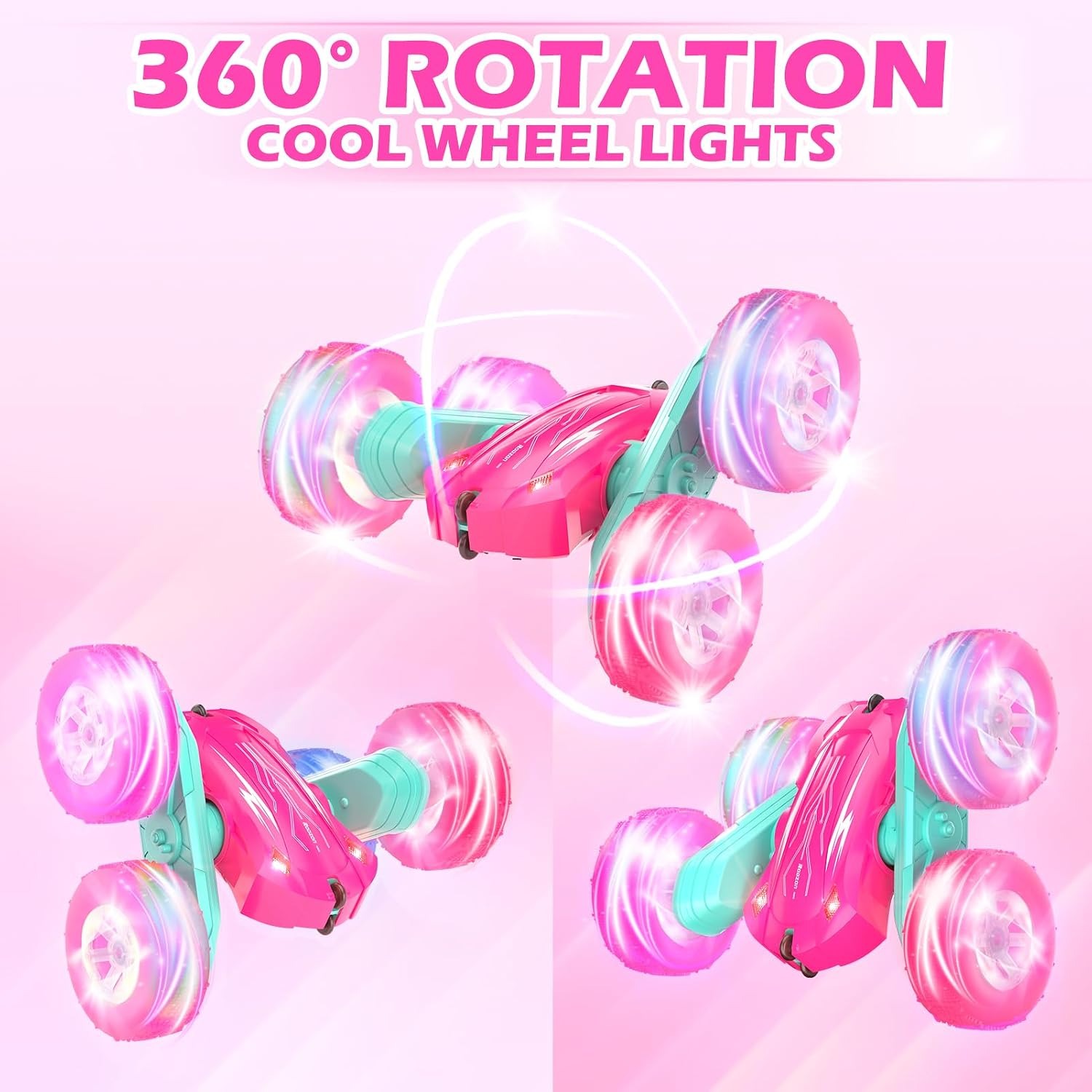
The car does a full 360 degree rotation and can pull stunts at speed. For older children in the range, that is where the interest lies once basic driving gets easy.
Spins want a smooth surface. A driveway, a patio, a hard floor or very short grass all work well. Deep carpet will slow the rotation and long grass will stop it. If a child is set on spin tricks, give them a bit of flat concrete and the toy suddenly looks a lot more impressive.
Who it suits
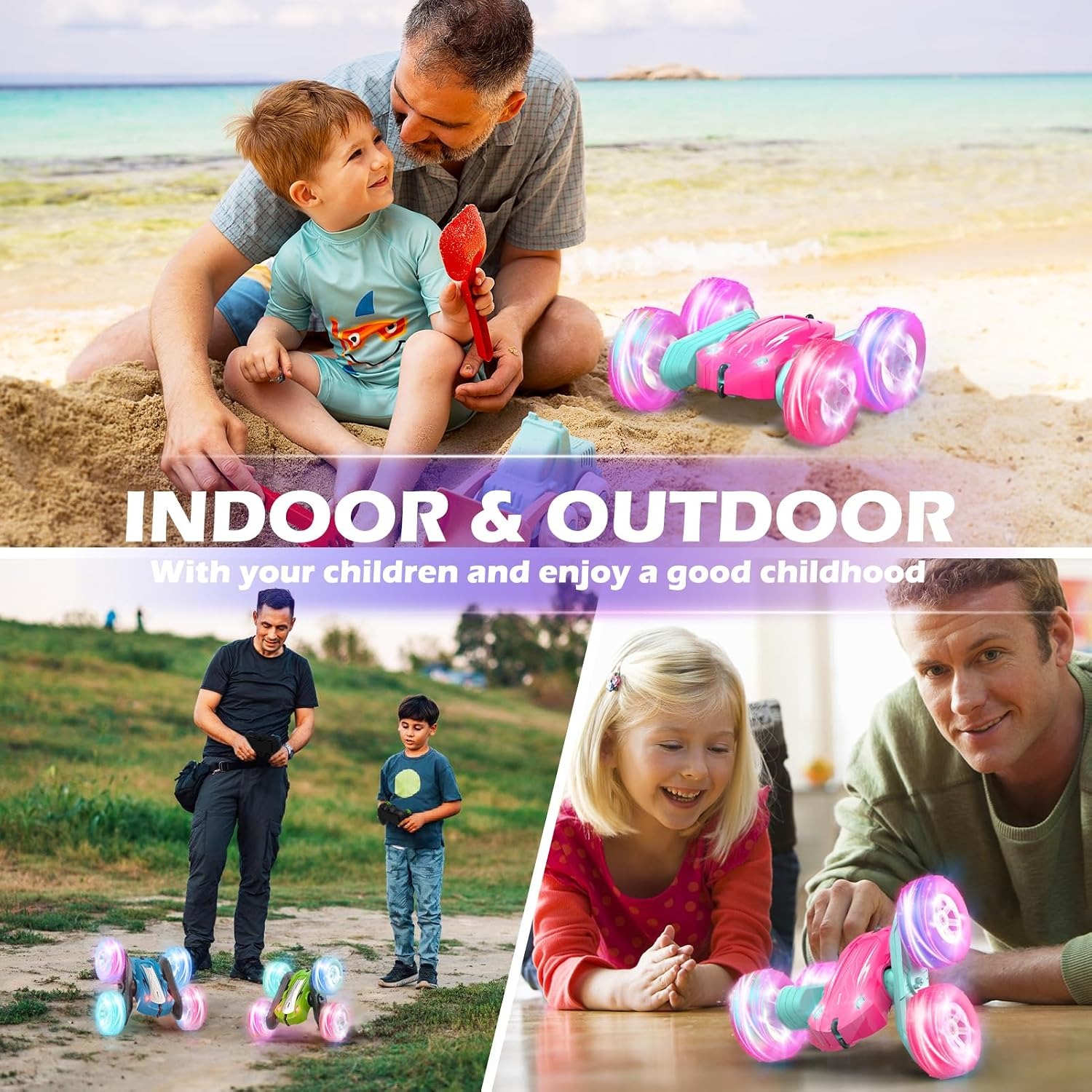
The recommended age is 36 months to 12 years, which is a wide band, so it helps to think about where a child sits in it.
At three and four, this works as a first proper remote control car. The controls are simple, the car is forgiving of bad driving, and the lights hold attention. Supervision is sensible, both because of the small parts warning and because small children do not instinctively keep toys away from roads.
From five to eight, children will start hunting out rougher ground. The grass, the gravel path, the sandpit. This is where the crawler design earns its keep and where the best rechargeable rc car argument really lands, because this age group will burn through battery packs quickly.
From nine to twelve, the appeal shifts to speed and stunts. The 7.46 mph top speed is enough to make a spin feel fast, and the anti-interference radio means they can race a friend's car without problems.
What to look for when you compare
If you are weighing this against other options, a short checklist helps.
Check how many batteries are included, not just the quoted run time. A car with one pack and a thirty minute run time gives you thirty minutes. A car with two packs gives you an afternoon. This one includes two rechargeable lithium-ion packs plus a cable.
Check the tyres and the underside. Thin, hard plastic tyres mean indoor only. Chunky, grippy tyres with guide wheels mean the car can actually leave the house. That difference is what separates the best off road rc car for kids from a toy that lives under the sofa.
Check the radio frequency. 2.4GHz is what you want, particularly if more than one car will be in the house.
Check the material. ABS plastic, as used here, takes knocks and does not crack as readily as the cheaper blends. At 454 grams the car is light enough to be carried easily and heavy enough not to tip over on every turn.
And check the age marking honestly against the child. The under-three warning on this model is there for a reason.
Care that makes it last
None of this is complicated, but it adds months to the life of a toy car.
After a run on sand or gravel, brush the wheel wells out before putting it away. Grit in the drivetrain is the most common reason a working car starts sounding rough. Wipe the body with a dry or barely damp cloth, never a soaking one, and keep water well away from the charging port and battery bay. This is not a waterproof toy and wet grass counts.
Charge with the supplied cable, and unplug once the pack is full rather than leaving it connected overnight. Store the packs at room temperature, not in a freezing shed or a hot car. If the toy is going away for a season, take the battery out of the remote first, because a leaking cell inside a remote is a sad and avoidable thing.
Finally, teach the habit of reversing off an obstacle instead of holding the throttle down against it. Children will pin the car against a wall and keep pushing. Thirty seconds of that does more damage than an hour of normal driving.
As a gift
There are two reasons this one works well as a present. The lights give it instant impact the moment the box opens, which matters at a birthday. And because two charged batteries are included and nothing needs assembling, it can be driven on the day rather than the day after. Anyone who has watched a child wait while a toy charges for three hours will appreciate the difference.
The pink body and matching tyres are distinctive, and the sport theme gives it a look that is a bit more grown up than most toys in this bracket.
The short version
This is a well-judged entry-level crawler. The 2.4GHz radio gives reliable control out to around 40 metres and lets several cars run together. The LED headlights and glowing wheel rings make it easy to follow in low light, which is the single feature children mention most. Two rechargeable packs, each good for roughly 20 to 30 minutes, keep the play going. The ABS body and guide wheels mean it copes with grass, gravel, paths and carpet rather than giving up at the first bump.
It is not a hobby-grade machine, and it is not meant to be. It is a tough, bright, screen-free toy for a child between three and twelve who wants something that goes fast and looks good doing it after dark.