
The complete guide
How To Choose A Wooden Animal Puzzle Set For Ages 3 To 8
The problem with most puzzle purchases
Most puzzles get built twice and then live in a cupboard. That is not because children dislike puzzles. It is usually because the puzzle was either too easy, too hard, or just one picture that stopped being interesting after the second go.
Piece count is the obvious trap. Buy 24 pieces for a five year old and it is over in four minutes. Buy 150 for the same child and you get a half-built board, a frustrated kid and a pile of pieces someone has to sweep up. The gap between those two outcomes is narrower than parents expect, and it moves fast as children grow.
The second trap is the picture itself. A single flat image gives a child one thing to do. Once the shapes are memorised, the challenge is gone. What keeps a puzzle in rotation is having something left to look at afterwards.
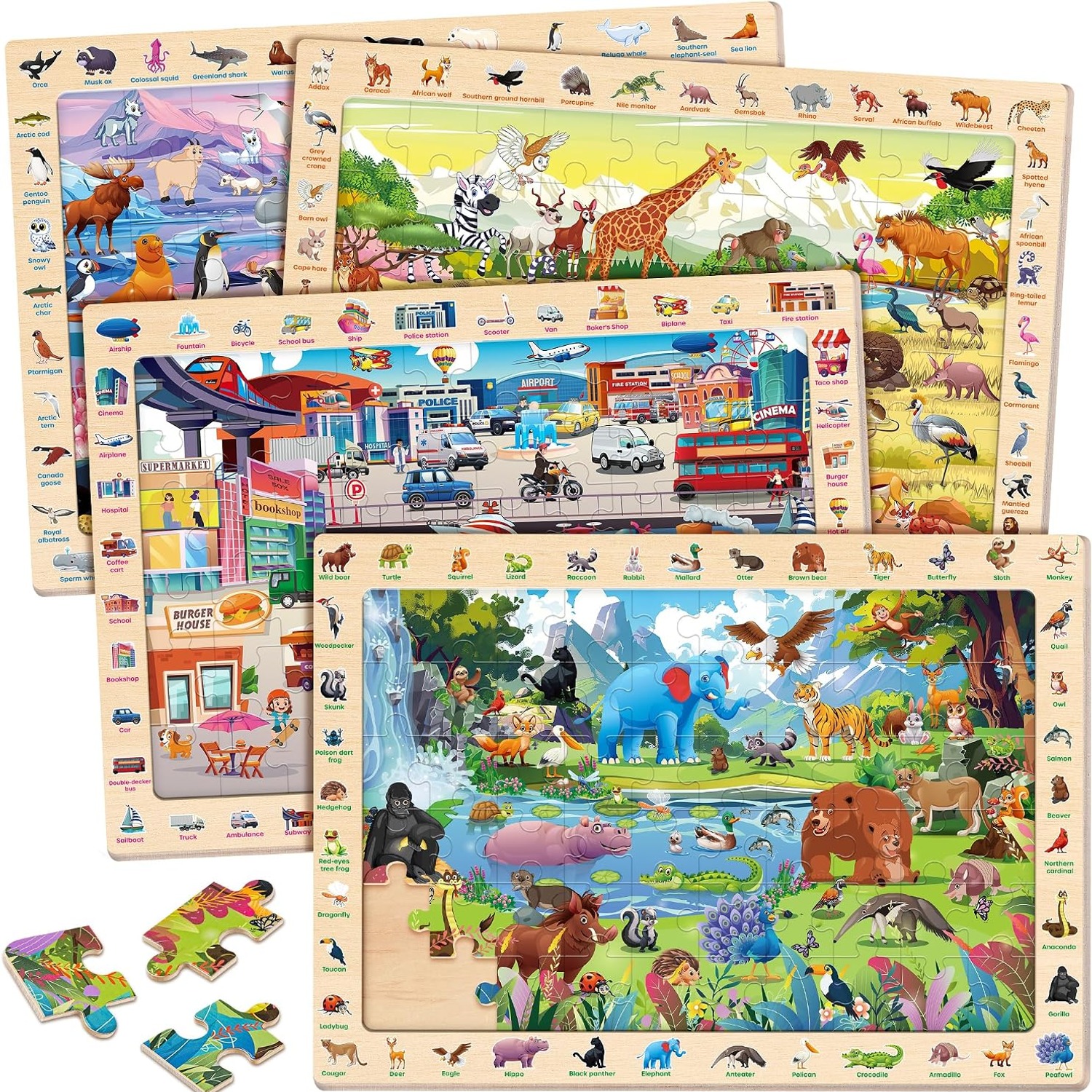
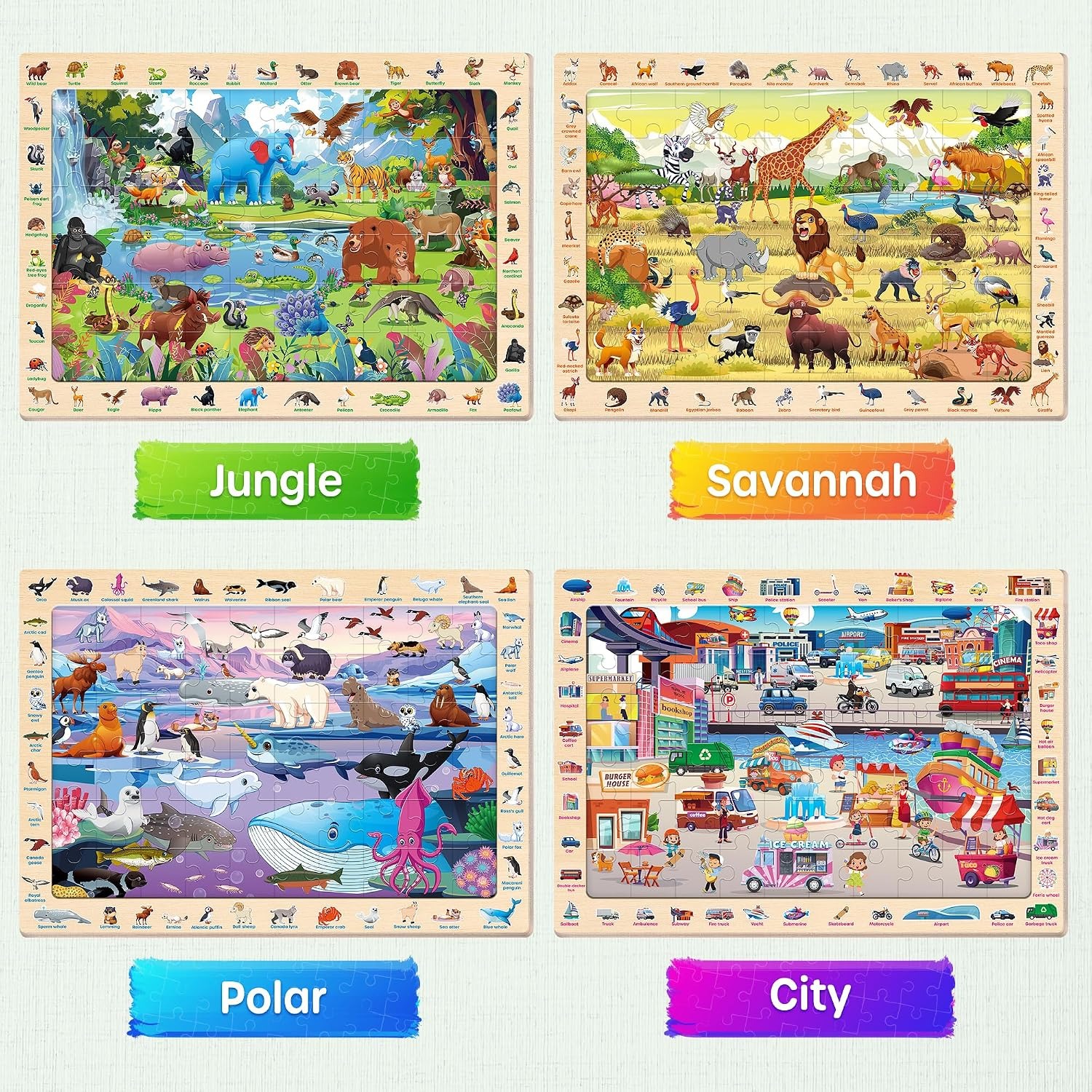
This set tackles both problems in a fairly plain way. It gives you four different pictures at 60 pieces each, and the artwork is built for searching as well as building.
What you are actually getting
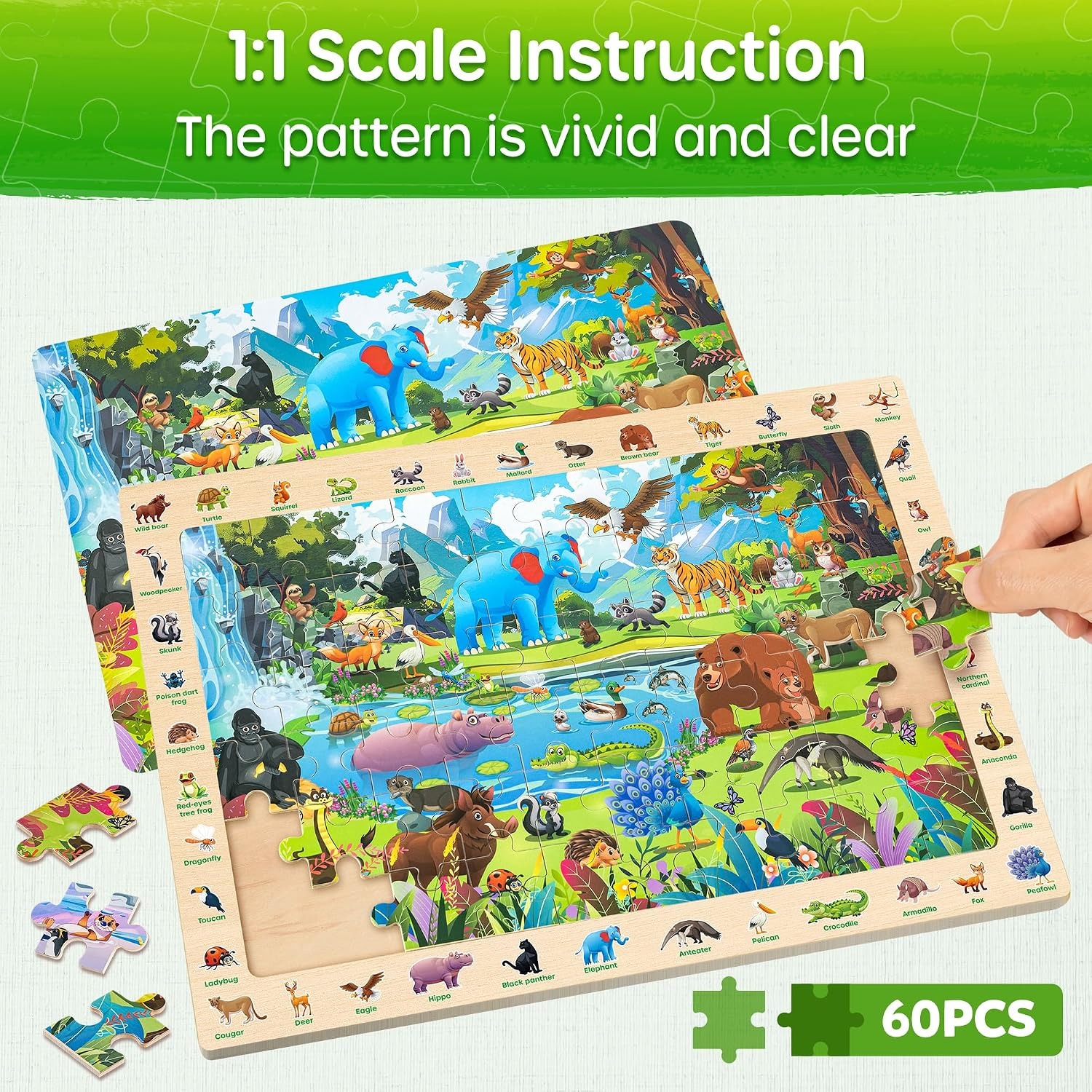
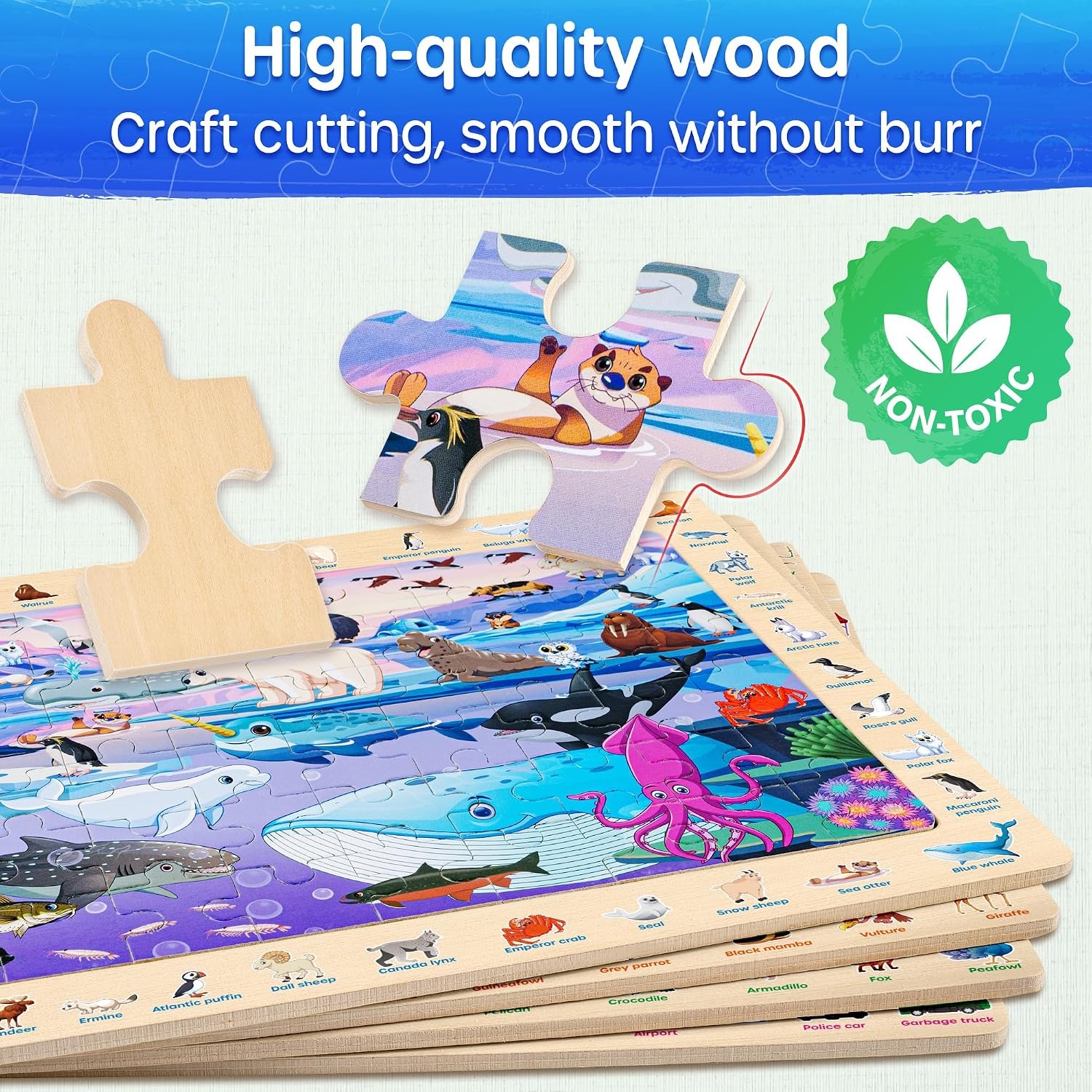
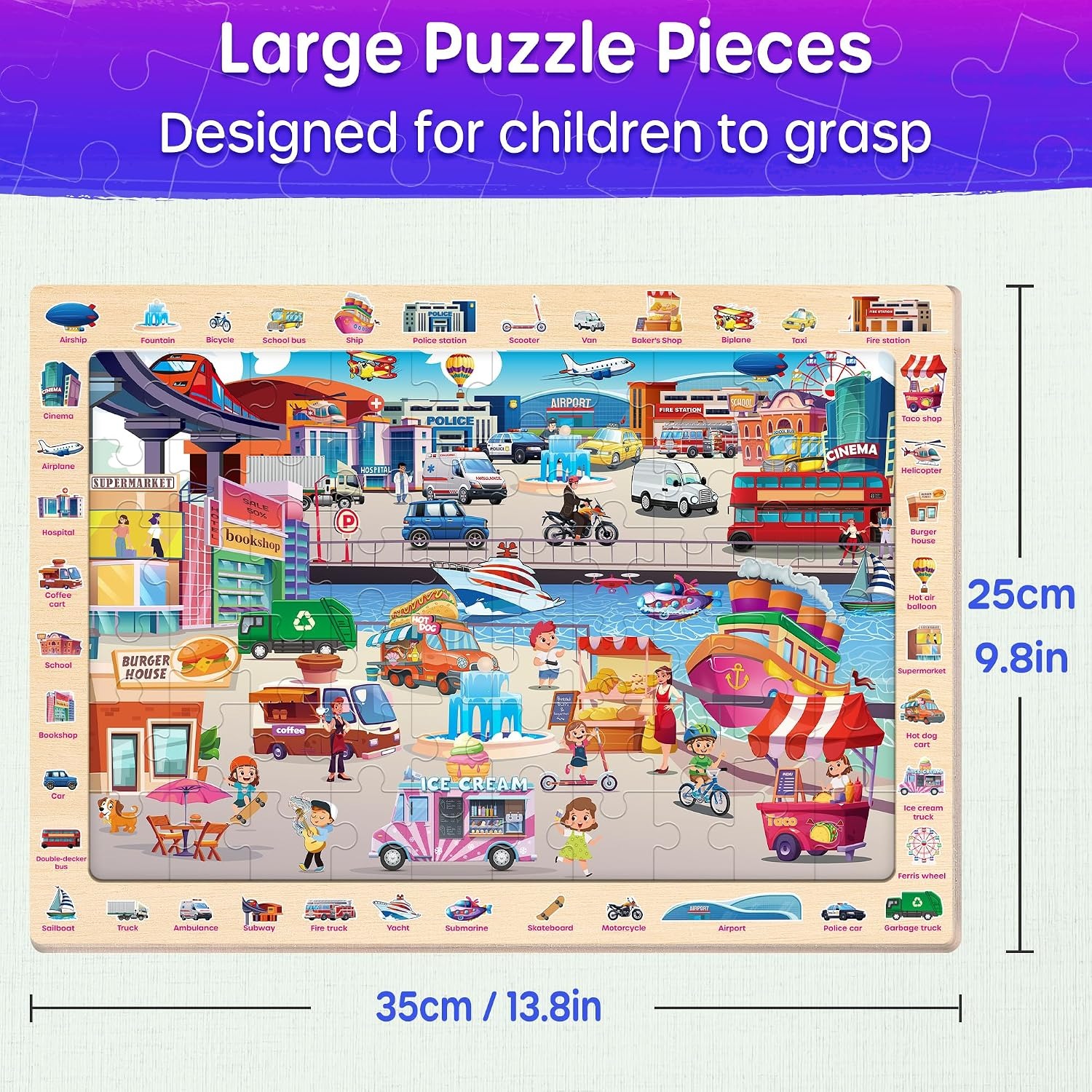
Four wooden jigsaw puzzles come in the pack. Jungle, savannah, polar animals and city life. Each has 60 pieces and each finishes at 35.5 x 26 cm, listed in inches as 13.8 by 9.8.
That size is worth pausing on. A 60 piece puzzle at this footprint means each piece is reasonably large. Small hands can grip them, turn them and press them into place without the fiddly pinching that tiny pieces demand. It also means the completed picture is big enough to study properly rather than squint at.
The material is wood. The maker is SYNARRY and the model number is SYNP095. No batteries, no app, no assembly. Play happens at a table, by hand.
Why four themes beats one
A single puzzle is a one-session toy for most children. Four puzzles in one box behaves differently. A child picks the one they feel like today, finishes it, and still has three untouched boards.
Theme variety also catches different interests. Some children are animal-mad and go straight for the jungle or polar scenes. Others prefer the city board because it has vehicles, buildings and people doing things. Having both in the same box means the set survives a change in taste.
If you are buying for two children, the four-board structure solves the sharing problem on its own. One takes savannah, one takes city, and nobody is waiting their turn.
The match and find element
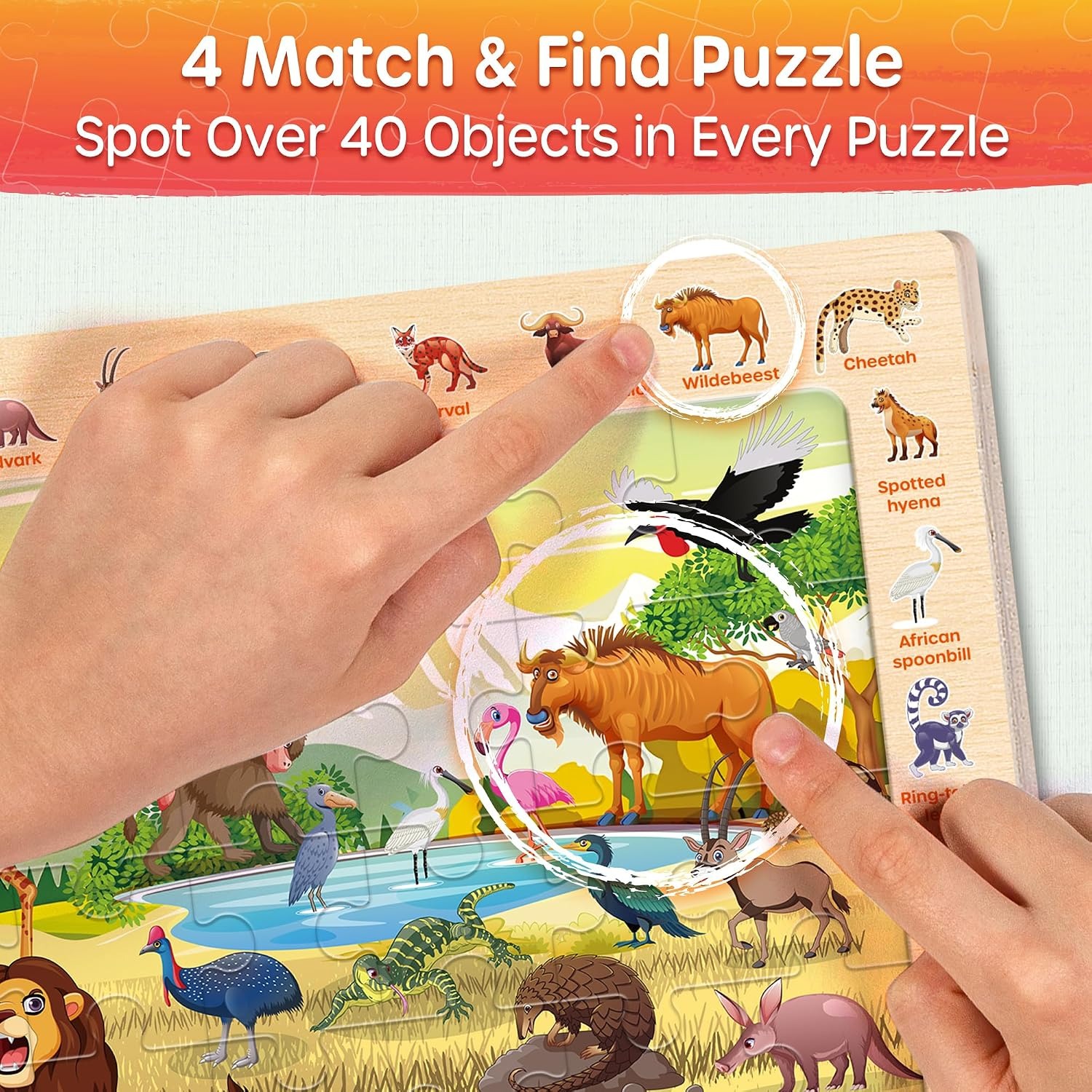
These are described as match and find puzzles, and that changes how they get used.
Standard puzzles finish when the last piece drops in. These do not, quite. The artwork is dense with animals and details, so once the board is complete there is a second game waiting. Find the zebra. Count the penguins. Who is hiding behind the bus.
That second phase matters more than it might seem. It extends the time a child spends with one board, it brings in vocabulary and naming, and it works brilliantly as a shared activity. A parent can sit down for three minutes and play spot-the-animal without committing to building a whole puzzle.
It also builds a genuinely useful skill. Scanning a busy scene for one specific thing is focused attention, and it is the same mental move a child will use later when reading a page or finding a word in a list.
Matching the set to your child
The recommended age range is 36 months to 8 years, with a skill level of beginner to intermediate. Here is roughly how that plays out.
At three, 60 pieces is a shared project. Sit with them, sort pieces by colour, build the frame together and let them place the obvious ones. The win is participation, not independence. Do not expect a solo finish.
At four and five, most children start managing a board with occasional help. They will get stuck on a patch of sky or similar-coloured grass and need a nudge. This is the sweet spot where the best matching puzzles for 4 year olds do their real work, because the challenge is just above comfortable.
At six, seven and eight, this becomes an independent activity. A board gets finished in one sitting, and the find-the-animal game becomes the longer part of the play. By the top of that range, some children will want to move on to higher piece counts, which is fine. The set still works for a younger sibling.
If your child has already done several 100 piece puzzles without help, these will feel quick. If they have only done chunky 12 piece boards, start with an adult sitting alongside.
Wood versus card
Card puzzles are cheaper and lighter. They also wear out. Edges lift, the layers separate at the corners, and after enough builds the pieces no longer sit flush.
Wood holds its shape. Pieces stay flat, keep their cut edges and press together with a firmness that card loses quickly. For a puzzle that will be built many times by the same child, or passed down to a younger sibling, that difference shows up within months.
The trade-off is weight and water. Wooden pieces are heavier in the box, and they do not like moisture. A spilled drink on a card puzzle is bad. A spilled drink on wooden pieces, left to soak, can swell and warp them. Wipe up fast and dry the pieces properly.
Looking after them
The routine is simple. Wipe pieces with a dry or lightly damp cloth, then let them dry fully before they go back in the box. Never soak them or run them under a tap.
Store the set somewhere dry and flat. Radiators, conservatories and damp cupboards are all bad for wood over time. Keeping each puzzle's pieces in their own bag inside the box saves a lot of sorting and stops one missing piece from ruining a board.
Check the pieces every so often. If a piece gets chewed, chipped or cracked, take it out of circulation. This is standard advice for any wooden toy and takes about thirty seconds.
The manufacturer lists no warranty on the set. Our returns policy still applies if something arrives faulty or damaged.
Giving it as a gift
This is an easy present to hand over. The box contains four puzzles, so it reads as generous. There is nothing to charge, nothing to download and nothing to read before play starts.
It suits the 4 to 8 bracket particularly well, which is an awkward gift age. Too old for shape sorters, not yet into the hobby stuff. A set of best wooden puzzle gift set options like this lands in the middle without being babyish or overwhelming.
It also works for families trying to cut screen time without making a thing of it. Four boards on a table is a quiet activity that happens on its own, which is usually more effective than announcing a screen rule.
The short version
Four wooden jigsaw puzzles. Sixty pieces each. Jungle, savannah, polar animals and city life. Each board finishes at 35.5 x 26 cm, made of wood, built on a table with your hands.
Buy it if your child is roughly three to eight, has outgrown chunky puzzles, and you want something that lasts longer than a single afternoon. The four themes keep it in rotation, the match and find artwork gives a second round of play, and wood survives being built over and over.
Skip it if your child is already comfortable with 150 piece puzzles, or if you need something a child under 3 can handle alone.
Not certain where your child sits on that line? Tell us what they finished last and we will give you a straight answer.