Toy Warehouse
Company
Shop By Category
T&Cs
Shop Online
  • Box contents listed
  • Free tracked delivery across the UK over £75
  • 14-day returns

Robot Building Kit | STEM kit for kids | Engineering craft set

5-in-1 Robot Building Kit with Motor and Tools

£49.99 £59.99 Save £10
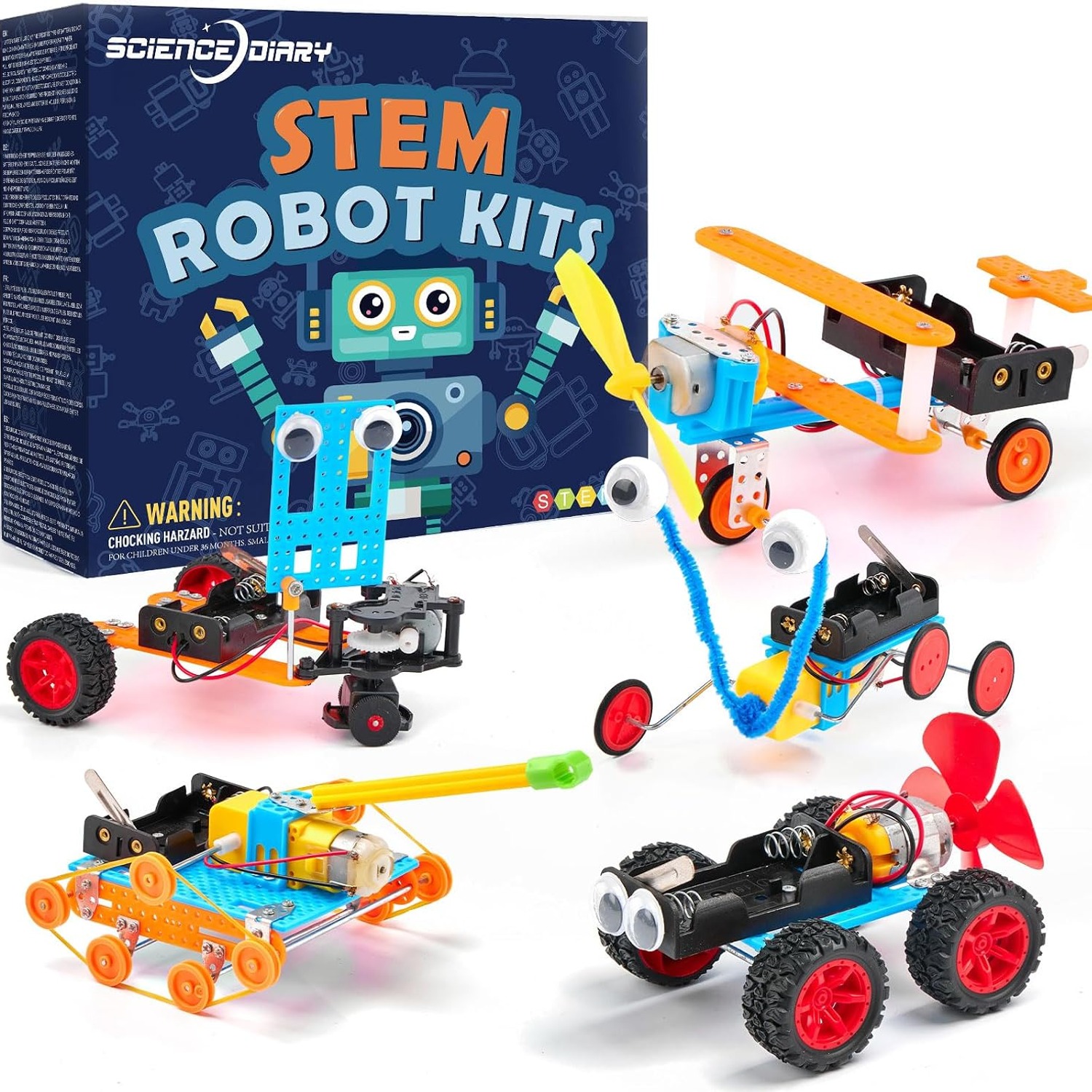
  • Five Models In One
  • Motor And Tools Included
  • Five Language Manual
  • Real Engineering Basics

Price: £49.99 £59.99

  • Free tracked delivery across the UK on orders £75+, otherwise a flat £10
  • Pay by card or PayPal, handled by the payment provider
  • 14 days to change your mind, plus your statutory rights
Product specifications
BrandSCIENCE DIARY
Model NumberSDSK003
Manufacturer Part NumberSDSK003
Set Name5 Robots in 1 Kit
Number Of Items5
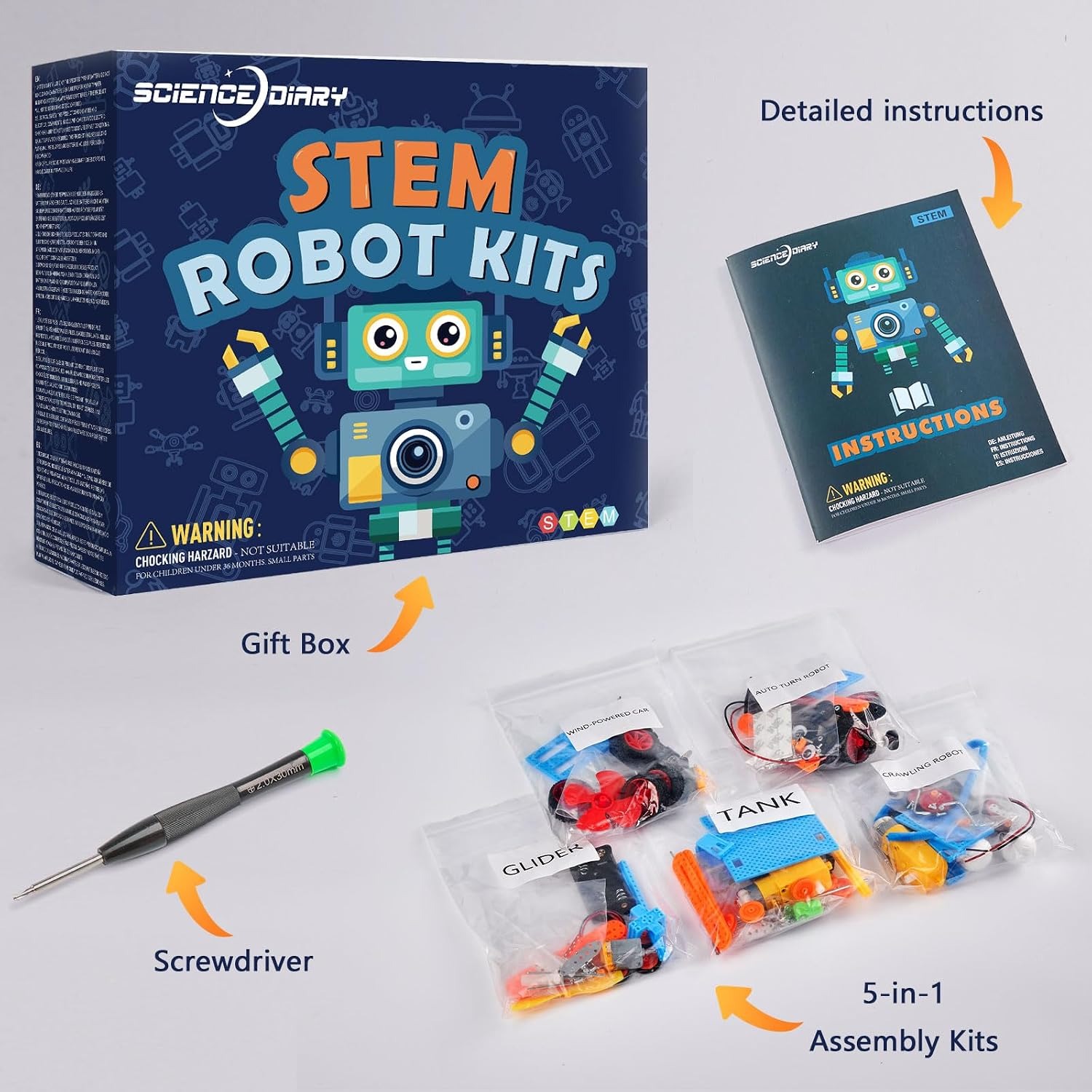
Included Components5 robot models, instructions, tools
Assembly RequiredYes
Recommended Age8 to 12 years
Age Range DescriptionKid
ThemeVehicle, robot
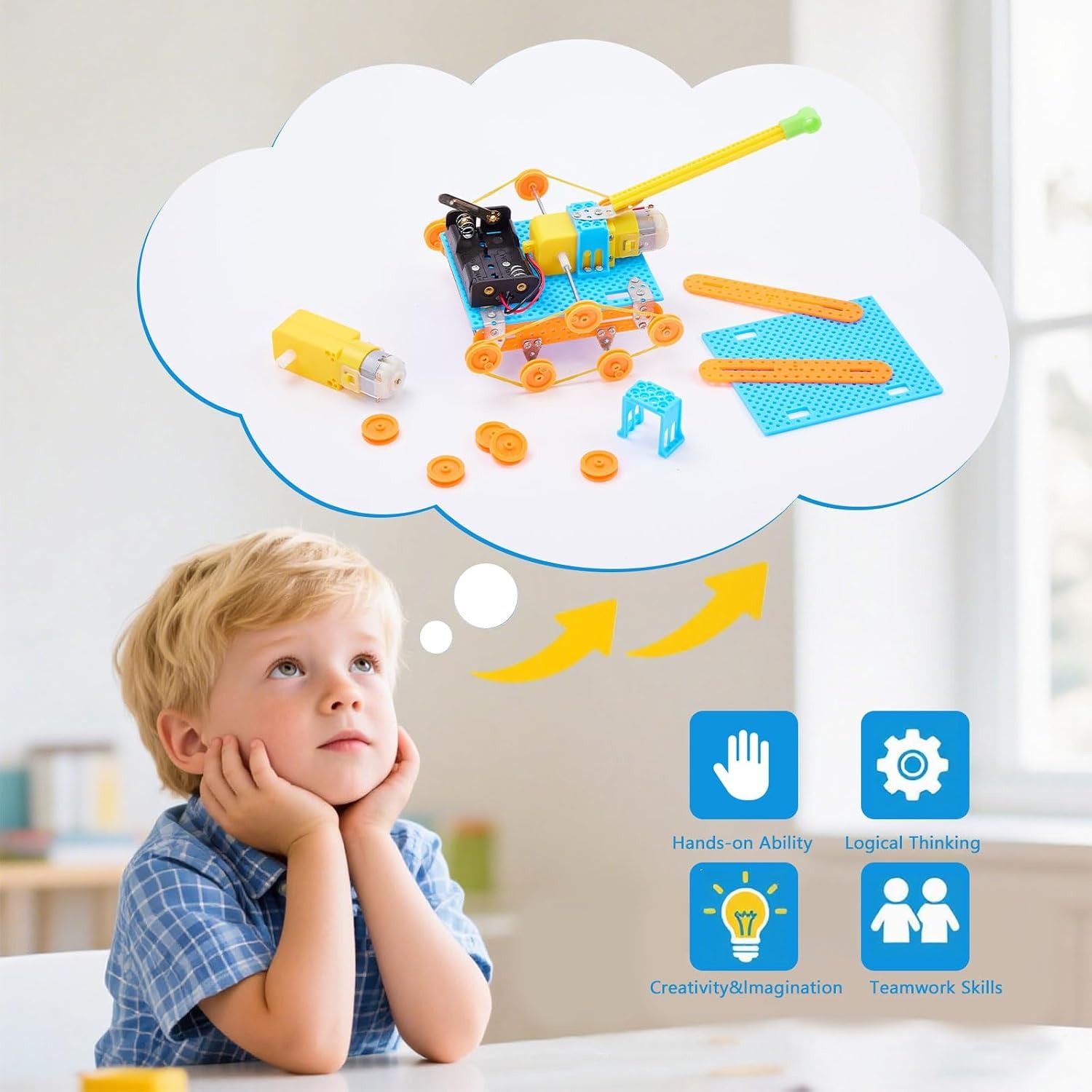
Educational ObjectiveConstruction skills, critical thinking, logical thinking, observation skills, problem solving, STEM
MaterialPlastic
Item Dimensions18 x 16 x 7 cm
Size6.3 x 7.08 x 2.76 inches
Item Weight0.49 kg
Country Of OriginChina
ManufacturerSCIENCE DIARY
Weight0.49 kg
Shipping & returns

Tracked delivery anywhere in the UK. It is free on orders of £75 or more, and a flat £10 below that.

Under the Consumer Contracts Regulations 2013 you have 14 days from delivery to cancel for any reason, and a further 14 days to send it back in resaleable condition. We refund the price you paid, including standard delivery. You cover the cost of returning it unless the item is faulty.

If it arrives faulty, damaged or not as described, we put it right at no cost to you under the Consumer Rights Act 2015, return postage included.

Shipping details · Refunds and returns

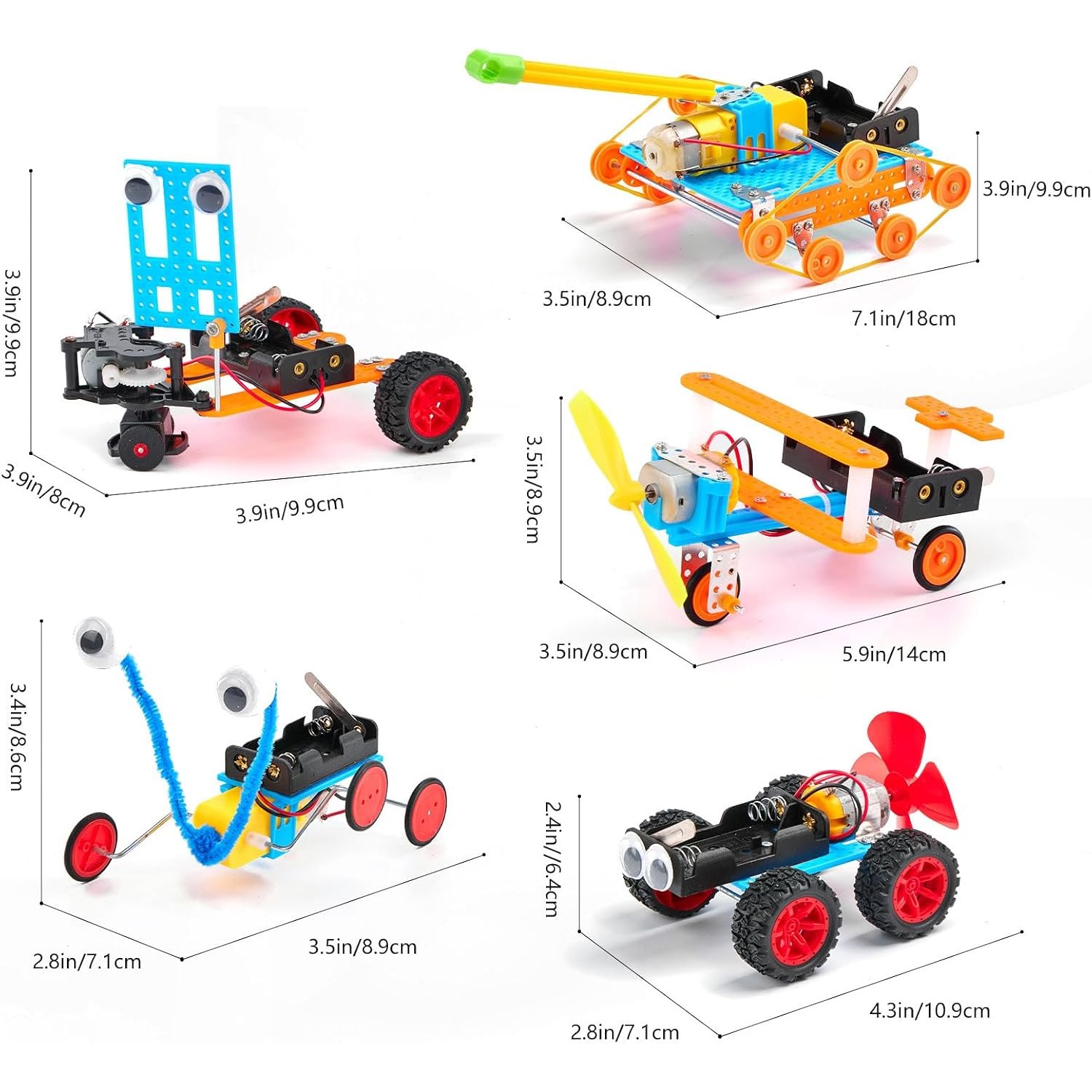
Five Models In OneOne box of parts builds five different machines, not a single fixed toy.
Motor And Tools IncludedThe driving motor and the tools needed for assembly come in the kit.
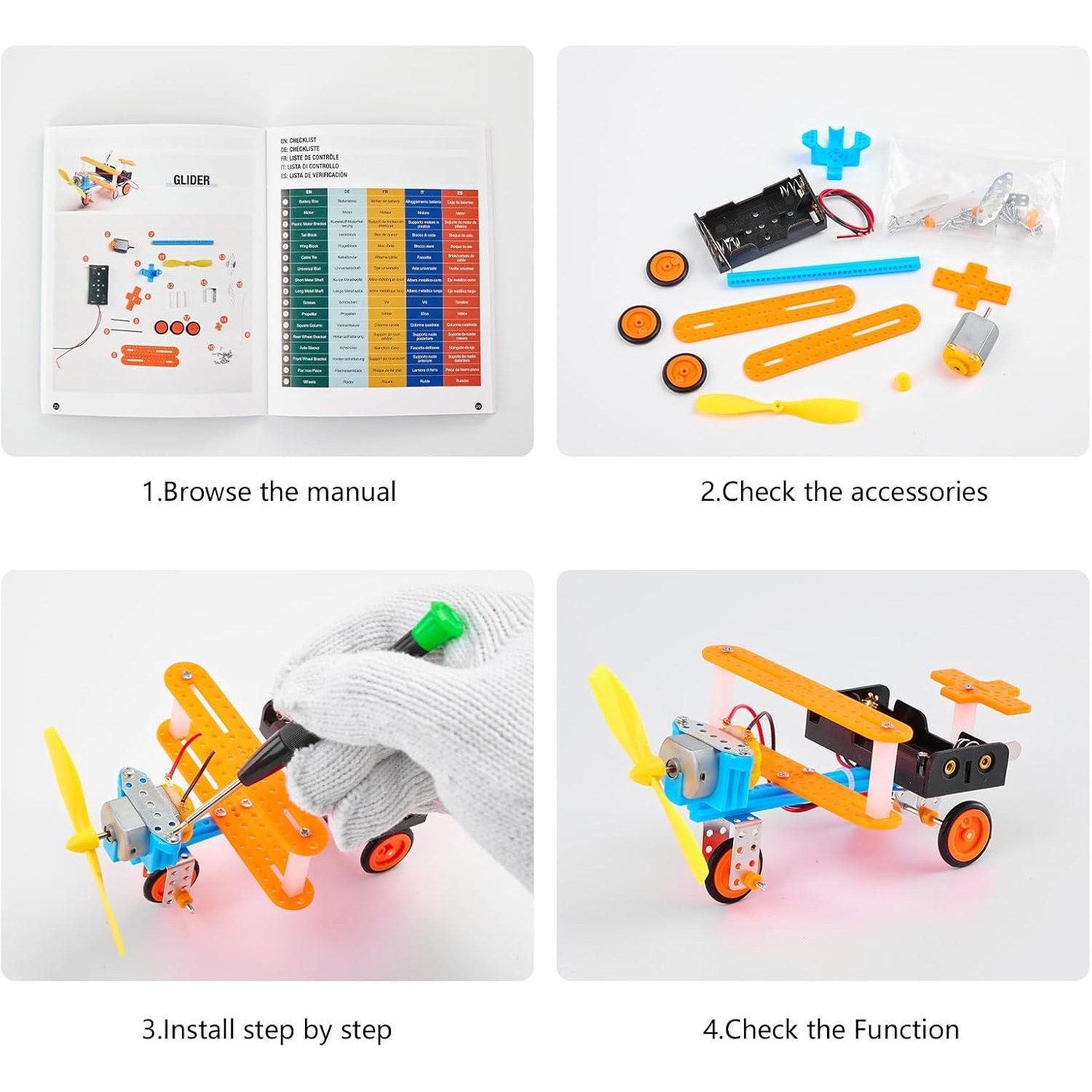
Five Language ManualStep by step instructions with illustrations in English, German, French, Spanish and Italian.
Real Engineering BasicsGears, drive and balance are learned by hand rather than from a screen.

A robot building kit that turns a rainy afternoon into a workbench full of moving machines.

Five buildable models, a motor, tools and illustrated instructions in five languages, all in one box for ages 8 to 12.

This robot building kit gives children a box of parts, a motor and the tools to turn them into five working machines.

The illustrated manual walks through each build one stage at a time, so a child can follow it without an adult reading every line.

It is recommended by the manufacturer for ages 8 to 12, and younger builders usually manage well with a parent beside them.

Every model can be taken apart and rebuilt, so the kit does not stop being interesting after the first afternoon.

Packed small and light at 0.49 kg, it posts easily and makes a tidy birthday or Christmas gift.

5-in-1 Robot Building Kit with Motor and Tools

Most construction toys give a child one thing to build. This one gives five. The parts in the box are designed to come apart and go back together in different configurations, so a single kit covers several builds and several afternoons. For a lot of families that is the difference between a toy that gets used once and a toy that keeps coming back out of the cupboard.

5-in-1 Robot Building Kit with Motor and Tools

The motor is what sets it apart from a static model. Once a build is finished the mechanism actually drives, and the child sees the direct link between how they assembled the gears and how the finished machine behaves. If something does not move properly, the fix is in the build, and working that out is the real lesson. Batteries are not included, so it is worth having a set in the drawer before the box is opened.

5-in-1 Robot Building Kit with Motor and Tools

The instruction manual is printed in English, German, French, Spanish and Italian, with illustrations at each stage. That matters more than it sounds. Clear pictures mean a child can keep going on their own instead of calling for help every two minutes, and the frustration level stays low enough that they finish what they start.

5-in-1 Robot Building Kit with Motor and Tools

SCIENCE DIARY recommends the kit for ages 8 to 12. Children at the younger end of that range, or slightly below it, tend to do fine with an adult sitting alongside, handling the fiddlier connections and reading ahead in the manual. Older children in the range will usually want to be left alone with it, which is its own kind of win on a long weekend.

5-in-1 Robot Building Kit with Motor and Tools

The kit arrives in a compact box measuring 18 x 16 x 7 cm and weighing 0.49 kg, which keeps shipping simple and makes it easy to wrap. It is made of plastic and manufactured in China. Everything needed for assembly, including the tools, is in the box, with the exception of batteries.

Not sure yet? That is fine.

A toy has to suit the child it is for, and you cannot always judge that from a photograph. Under the Consumer Contracts Regulations 2013 you have 14 days from delivery to cancel for any reason, and a further 14 days to send it back in resaleable condition. We refund the price you paid, including standard delivery.

If it turns up faulty, damaged or not as described, that is on us. The Consumer Rights Act 2015 covers you, and we pay the return postage. Read the full detail on our refunds and returns page, or ask us anything before you order.

Frequently Asked Questions

What exactly is in the box?

The kit contains the parts for five robot and vehicle models, a motor, the tools needed to put them together, and a printed instruction manual. Everything listed as an included component ships in one pack. Batteries are not listed among the contents, so plan to supply your own.

How many different models can be built?

Five. The set is sold as a 5 robots in 1 kit, meaning the same pool of parts is reconfigured into five separate builds rather than five builds existing at once. That is part of the appeal, since taking one apart to make the next is half the activity.

What age is this robot building kit for?

The manufacturer recommends ages 8 to 12 years. Children at the lower end often enjoy it most with a parent nearby for the tighter connections. It is one of the better STEM toys for kids in that bracket because the builds are achievable without being trivial.

Can a six or seven year old manage it?

Not usually on their own, but with an adult working alongside them it can go well. An adult can read ahead, sort the parts into groups and handle the stiffer fits while the child does the assembly. Treat it as a shared project rather than a solo one at that age.

Does it need batteries?

Batteries are not included in the listed components, so you will need to supply them separately for the motorised builds. Check the manual once the box is open for the exact type and quantity. Having them ready beforehand avoids a disappointing unboxing.

Is a motor really included?

Yes, the motor is part of the kit along with the tools. That is what lets the finished models actually drive rather than just sit on a shelf. It is a key reason this sits apart from a plain plastic construction set.

What tools do I need to supply?

None listed. The kit includes tools as part of the included components. If you want to make life easier you might add a small container for sorting parts, but that is optional.

What are the models?

The stated theme is vehicle and robot, and the set builds five models in that style. The manual shows each one stage by stage with illustrations. Your child can work through them in any order they like.

How long does one model take to build?

That depends on the child and the model, but most builders in the 8 to 12 range spend somewhere between half an hour and a couple of hours on a build. Younger children with help will take longer. Spreading the five builds across several sessions is usually the most enjoyable approach.

What languages is the manual in?

English, German, French, Spanish and Italian. Each build is laid out as illustrated steps, so even where language is not the first barrier the pictures carry most of the work. This makes it a practical best engineering kit for beginners in multilingual households.

Is assembly required?

Yes. The product is sold as an assembly kit, which is the entire point of it. Nothing arrives pre-built, and part of the learning is in reading the diagrams and sequencing the steps correctly.

What is the kit made from?

The material type is listed as plastic. Specific plastic grades and colours are not specified by the maker. The tools and motor are packaged with the plastic components.

How big is the package?

The item measures 18 x 16 x 7 cm and weighs 0.49 kg. That is small enough to wrap easily and to post without a large parcel charge. The assembled models are smaller than the box footprint suggests, since the parts nest in trays.

Who makes it?

SCIENCE DIARY is both the brand and the listed manufacturer. The model and manufacturer part number is SDSK003. Country of origin is China.

What will my child actually learn?

The stated educational objectives are construction skills, critical thinking, logical thinking, observation skills, problem solving and STEM more broadly. In practice that means following technical diagrams, understanding how a drive system transfers motion, and fixing a build that does not work. It is one of the better hands on learning toys for making those ideas concrete.

Is this a screen free activity?

Yes. Everything happens with physical parts and a printed manual, with no app or device needed. For families looking for the best screen free gift for kids, that is often the deciding factor.

Can the models be taken apart and rebuilt?

Yes, and they are meant to be. Since five models share one set of parts, rebuilding is built into how the kit works. Children often return to a favourite model and rebuild it several times.

Is it suitable for a classroom?

It works well as a small group or single station activity, and the educational objectives line up with typical primary and lower secondary STEM aims. For a whole class you would need multiple kits. As a best classroom robotics starter kit for a club or after school session, one kit per two or three children is a sensible ratio.

Is it suitable for girls and boys?

Yes. There is nothing gendered about gears, motors or problem solving, and the kit is listed as a best science kit for boys and girls alike. The theme is vehicles and robots, which tends to appeal broadly at this age.

Will an adult enjoy building it too?

Many do. It makes a good best family building project because the steps are clear enough to share and the result moves, which keeps everyone interested. Plenty of parents end up finishing the fifth model after bedtime.

Does it come gift ready?

It arrives in its retail packaging, which presents well as a gift without extra work. The compact size makes it simple to wrap. It is a sensible best birthday gift for a 10 year old or a Christmas STEM gift for a slightly older child.

How do I store it between builds?

Keep the parts in the original box or a small lidded container so nothing goes missing. Store the manual with the parts, since rebuilding later is much harder without it. A dry cupboard is fine, as the components are plastic.

How do I clean the parts?

Wipe them with a slightly damp cloth and dry them properly before putting them away. Avoid soaking anything, especially the motor. Do not use solvents or abrasive cleaners on the plastic.

What if a small part goes missing?

Sorting parts into a tray before you start is the best prevention, particularly with younger builders. If something does go astray, check the build area and the box inserts first. Contact us if a part is missing from a new, unopened kit on arrival.

Is there a warranty?

The listing records a manufacturer warranty description value of 1 without further detail, so specific warranty terms are not specified by the maker. Your statutory consumer rights still apply in full. Contact us if the kit arrives damaged or incomplete.

Are there small parts to be careful with?

Construction kits of this type contain small components by nature, which is part of why the recommended age starts at 8. Keep it away from children under 3 and pets, and build on a surface where pieces will not roll onto the floor. Supervise younger siblings during build sessions.

How does shipping work?

Orders are packed and sent from our fulfilment partner once your order is confirmed. You will receive tracking details by email as soon as the parcel is on its way. Most orders arrive within 3 to 7 working days.

Can I buy several as party favours or club supplies?

Yes, there is no limit on quantity for a standard order. If you need a larger number for a school or club, get in touch before ordering so we can check stock and timing. Each kit ships in its own retail box.

Is this a good first robotics kit?

It is a reasonable starting point because it teaches mechanical assembly and drive systems without requiring any coding. Children who enjoy it often move on to programmable kits later. Think of it as the mechanical foundation underneath the electronics.

What if it is not right for my child?

If the kit is not suitable once it arrives, contact us and we will talk you through your return options under our returns policy. Keep the box and packaging where you can, as unopened items are the simplest to process. We would rather sort it out than have a kit sit unused in a cupboard.

How To Choose A Robot Building Kit Your Child Will Actually Finish

6 min read Toy Warehouse

The toy that gets built once

Every household with children has one. A construction set bought with good intentions, built on the day it arrived, admired for an hour, then left on a shelf gathering dust until it is quietly moved to a cupboard. The problem is rarely the child's attention span. It is usually the kit itself, which offered exactly one thing to make and had nothing left to say once that thing was made.

A robot building kit works differently when it is designed around reuse. This one holds the parts for five separate models, and they share the same pool of components. Finish the first build, play with it, take it apart, and there is a second project waiting. That cycle is what keeps a kit in circulation instead of in storage.

The other thing that makes a difference is movement. A static model is a display piece. A model with a motor in it is a machine, and a machine either works or it does not. When it does not, a child has a real problem to solve, and solving it teaches more than any instruction card could.

What is in the box and what it does

The kit contains parts for five models on a vehicle and robot theme, a motor, the tools needed for assembly, and a printed manual. Everything arrives in one compact pack measuring 18 x 16 x 7 cm and weighing 0.49 kg. The components are plastic. The brand and manufacturer is SCIENCE DIARY, model SDSK003, made in China.

Batteries are not listed in the included components, so buy a set before the box is opened. This is a small detail that causes a surprising amount of disappointment on birthday mornings. Check the manual for the exact type once you have the kit in hand.

The manual itself deserves a mention. It is printed in five languages (English, German, French, Spanish and Italian) and laid out as illustrated steps. For a child in the target age range, clear diagrams are what allow independent building. If every third step needs an adult to interpret it, the child stops building and starts waiting, and waiting is where interest dies.

How the learning actually happens

The listed educational objectives are construction skills, critical thinking, logical thinking, observation skills, problem solving and STEM. That is a lot of nouns, and it can read like marketing. Here is what it looks like in practice at a kitchen table.

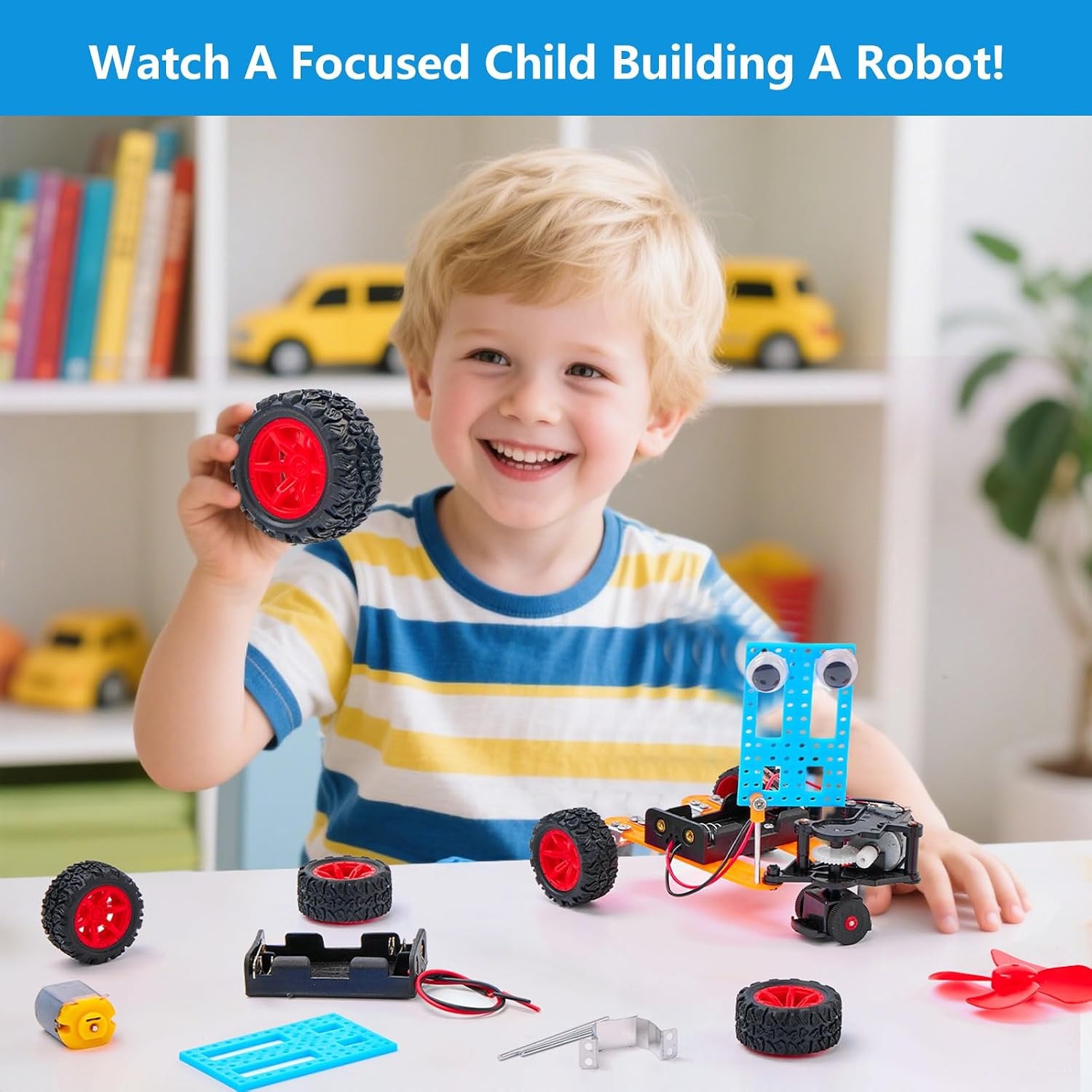
A child picks a model and opens the manual. They have to work out which part in the tray matches the shape in the diagram, which is observation. They have to follow the steps in order, because step nine will not work if step four was skipped, which is sequencing and logic. They have to attach the motor so the drive connects properly to the wheels or legs, which is basic mechanics. Then they switch it on, and it either moves or it does not.

That last moment is the valuable one. When a build does not work, the child has to go back and look for the reason. Is a gear not meshing? Is something on backwards? Is a connection loose? This is debugging, in physical form, and it is the same skill that later turns up in code, in lab work and in fixing a bicycle. No screen required.

Who it suits

SCIENCE DIARY recommends ages 8 to 12, and that is a fair range. Eight year olds will generally need a bit of help, especially with the first model, while a confident ten or eleven year old will want to be left alone with it. Children at the top of the range sometimes finish all five builds in a weekend and then start inventing hybrid versions, which is a good sign rather than a problem.

Younger children of six or seven can take part, but as a shared activity. An adult sorts the parts, reads ahead, and handles any fit that needs real hand strength. The child does the assembly and gets the credit, which is the correct distribution of labour. Plenty of families find this is the best family building project they do all winter, mostly because it gives a parent and child something to do side by side that is neither homework nor television.

It also works well in a club or after school setting. One kit between two or three children keeps everybody involved, since there is sorting, reading and building to go around. For a teacher looking at a best classroom robotics starter kit on a tight budget, a mechanical set like this covers the engineering fundamentals before anyone needs to touch a laptop.

Choosing between kits

If you are comparing options, a few questions sort the useful kits from the shelf decorations.

First, how many builds does one box give you? One is fine for a quick afternoon, but five stretches the value considerably, and the taking apart is part of the fun.

Second, is there a working mechanism? Gears and a motor turn a model into a machine. Without them you have a shape, and shapes get boring faster.

Third, how good are the instructions? Look for step by step illustrations rather than dense text. This single factor decides whether a child builds alone or hovers nearby waiting for help.

Fourth, what is the real age fit? Kits aimed too young bore a capable child in twenty minutes. Kits aimed too old end in tears. The 8 to 12 bracket here is wide but honest, and the lower end is manageable with a bit of adult involvement.

Finally, check what is not included. Batteries, tools and adhesives are the usual gaps. Here the tools are in the box and the batteries are not, which is a common and manageable arrangement.

Keeping it usable

A construction kit survives on part management. Before the first build, tip everything into a shallow tray or a few small pots. Loose parts on a carpet disappear, and a missing gear can stop a build dead.

Store the whole thing back in its box between projects, with the manual tucked inside. The manual matters more than people expect. A year later, when a child wants to rebuild the crawler they liked best, the diagrams are what make it possible.

Cleaning is simple. A slightly damp cloth wipes the plastic clean, then dry it before packing away. Do not soak anything, and keep moisture away from the motor contacts. If the kit is going into storage for a season, take the batteries out first. Cells left in a motor compartment for months can leak and corrode the contacts, which is a sad and entirely avoidable way to lose a working toy.

As a gift

The kit arrives in retail packaging and is small enough to wrap without a fight. At 0.49 kg it posts easily to another address if you are sending it ahead. For a child who already has plenty of plastic in the toy box, a kit that asks them to make something tends to land better than another finished object. It is a sound best birthday gift for a 10 year old, and it holds up as a Christmas present because the five builds stretch across the whole holiday rather than finishing before lunch.

If you are buying for a child you do not know well, the vehicle and robot theme is broad enough to be safe. Interest in making things move is not tied to any particular taste.

The short version

This is a five model robot building kit for ages 8 to 12, with a motor, tools and illustrated instructions in five languages, packed in a small box weighing under half a kilo. The parts are reused across builds, so one purchase covers five projects and as many rebuilds as the child wants. Batteries are not included.

What you are really buying is a quiet afternoon where a child works out why something is not turning, fixes it, and watches it run. That is a good return on a small plastic box.

Browse the shop

Ready to build something that moves?

Order the 5-in-1 robot building kit today and have a box of parts, a motor and five projects waiting for the next free afternoon.

Ask us a question

Page summary

The SCIENCE DIARY 5-in-1 Robot Building Kit (model SDSK003) is a plastic STEM construction set for children aged 8 to 12. One box of parts builds five separate models on a vehicle and robot theme, and the kit includes a motor, assembly tools and a printed instruction manual with illustrations in English, German, French, Spanish and Italian. Assembly is required. Stated educational aims cover construction skills, critical thinking, logical thinking, observation, problem solving and general STEM learning. The packaged item measures 18 x 16 x 7 cm and weighs 0.49 kg. Country of origin is China. Batteries are not listed among the included components. Colour and overall warranty terms are not specified by the maker.