
The complete guide
The Complete Guide to Choosing a Tin Tea Party Set for Kids
Why a tea set still beats a screen on a rainy afternoon
There is a particular kind of boredom that hits around four in the afternoon. The garden is wet, the colouring books are finished, and a child is circling the kitchen asking what there is to do. A tea set solves that moment better than most toys because it does not need instructions. A child picks up the teapot and immediately knows what happens next.
That is the quiet power of a kids tea set. It hands over a familiar routine, pouring, offering, saying thank you, and then lets the child decide who is invited and what is being served. Within minutes you usually hear them talking to themselves, or to a bear, in a slightly grander voice than usual.
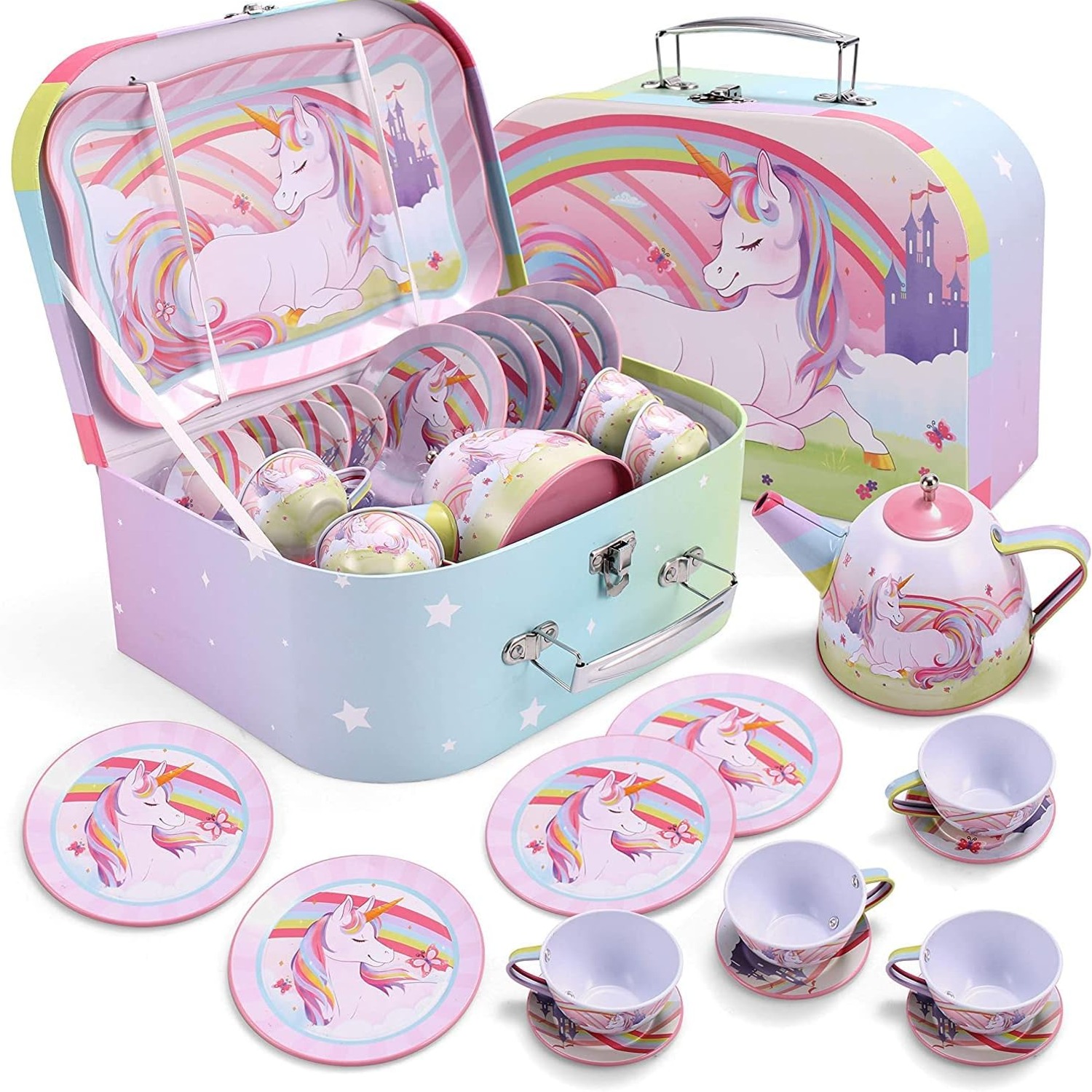
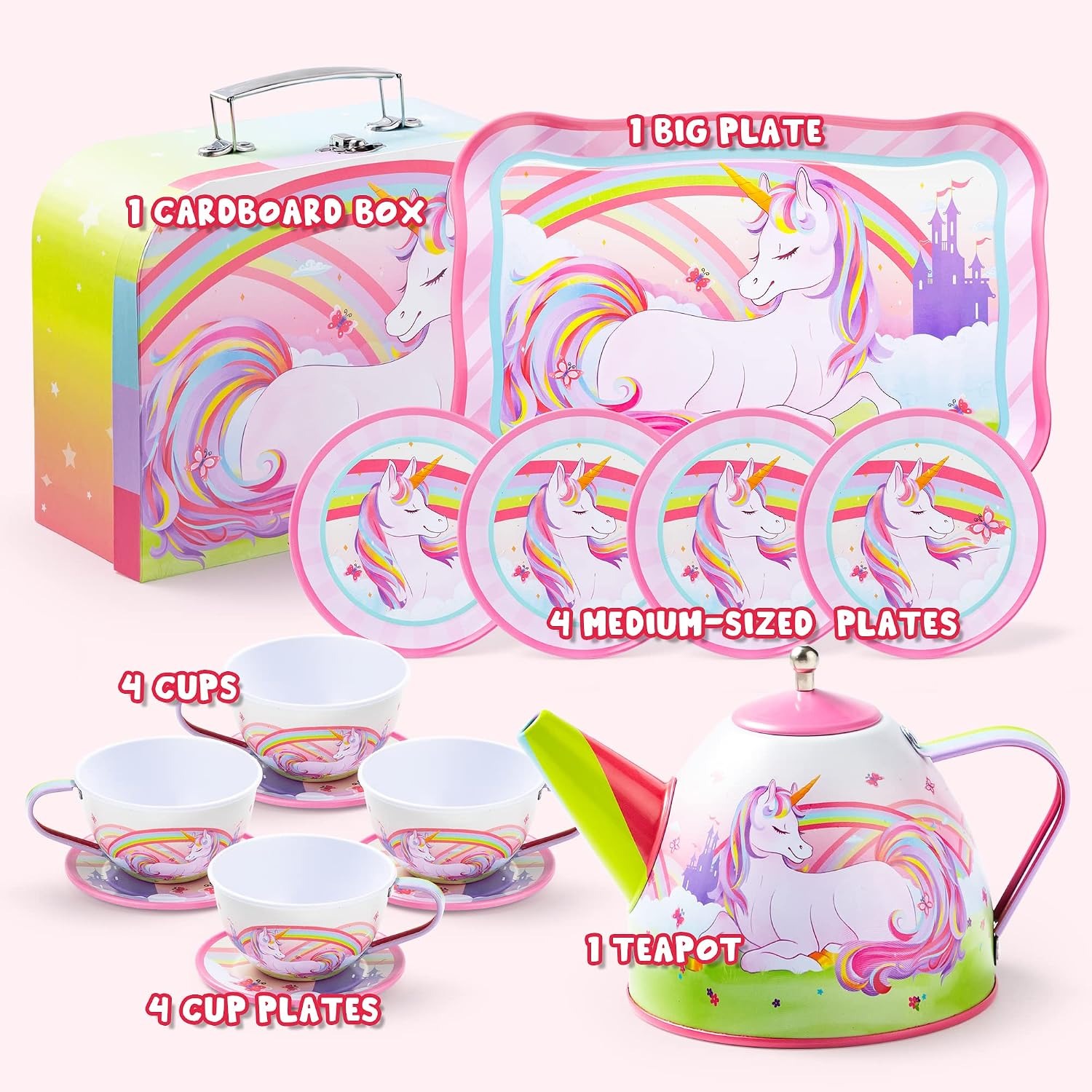
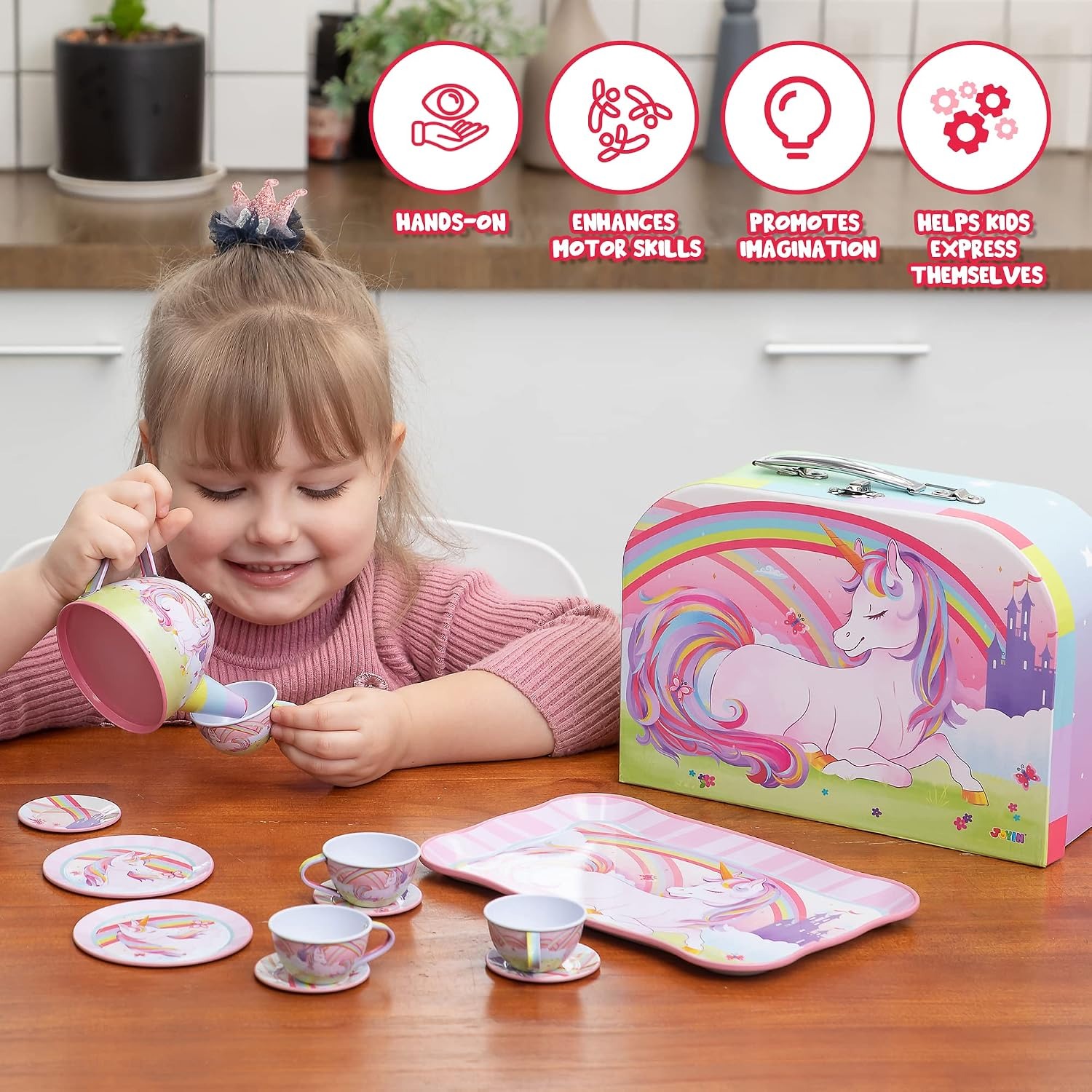
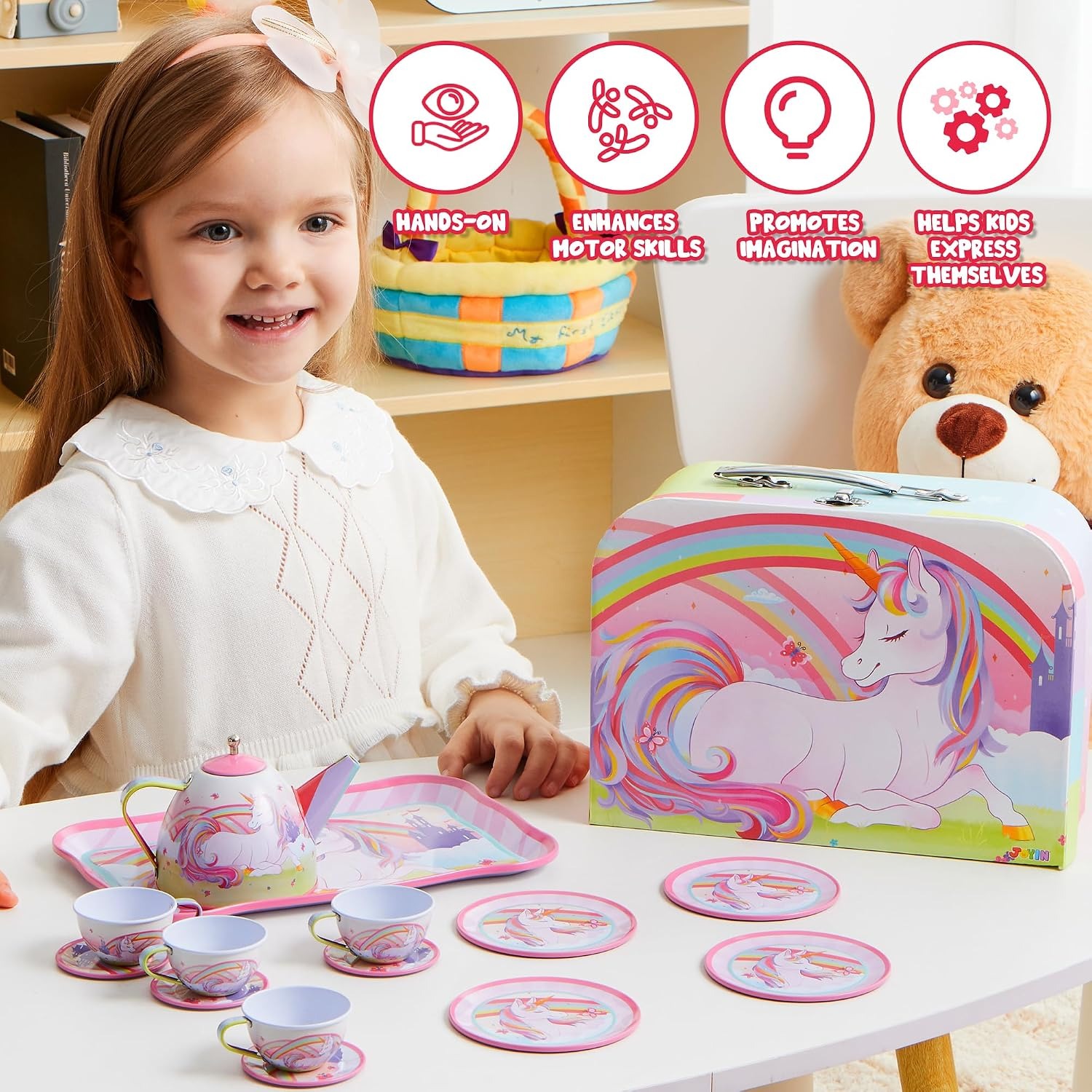
This particular set is a 14-piece collection with one teapot, four cups, four medium plates, four small plates and one large serving plate. It arrives in a unicorn-printed carry case that doubles as storage. That last detail matters more than it sounds, and we will come back to it.
How a pretend play teapot set actually works
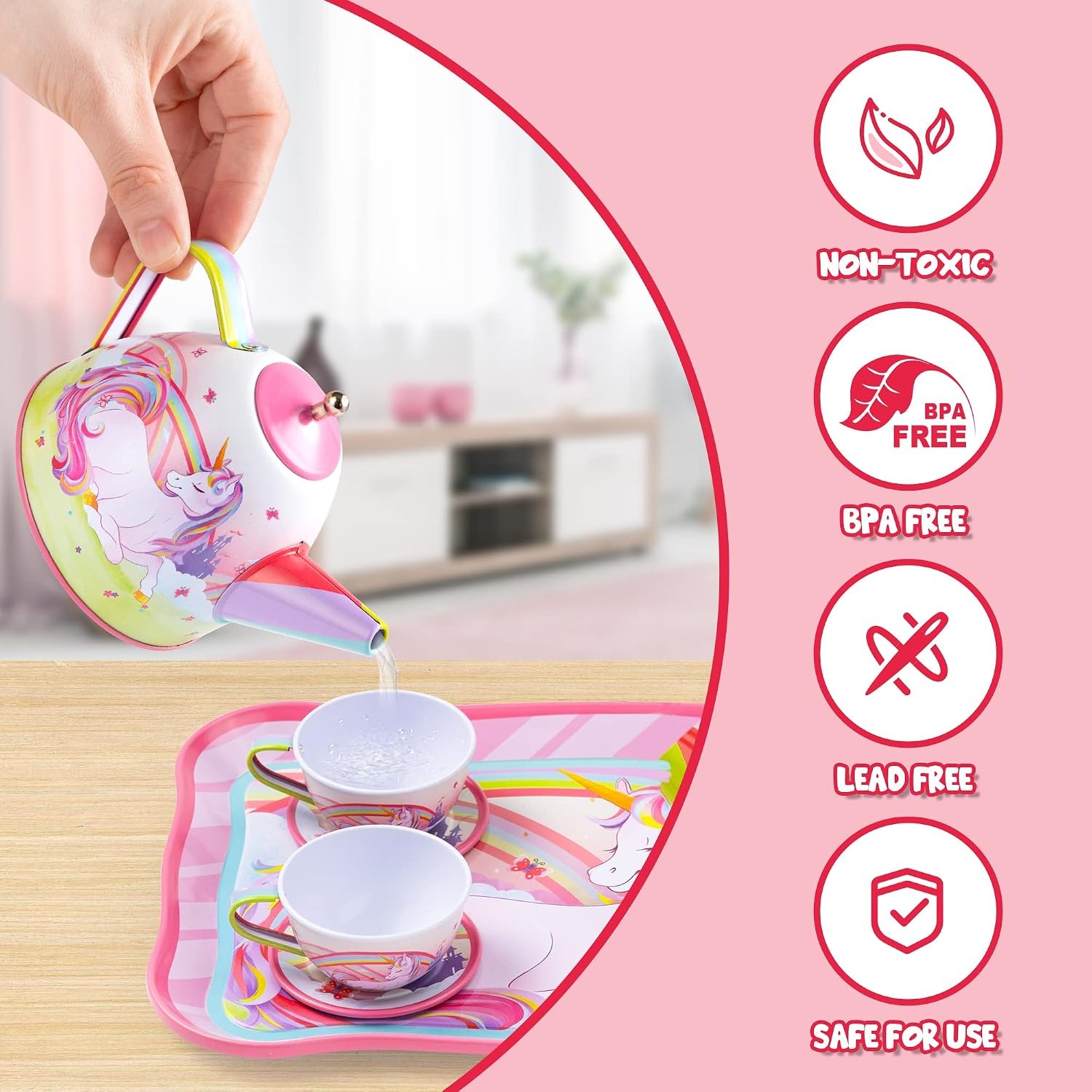
The mechanics are simple on purpose. There are no batteries, no app, no sounds that repeat until you hide the toy in a cupboard. A child sets out the plates, arranges the cups, decides who sits where, and the game begins.
What is happening underneath is more interesting. Role play of this type builds vocabulary, because the child has to name things and describe them. It builds turn-taking, because someone has to be served first and someone has to wait. It builds sequencing, because tea comes before cake and the cups go back on the tray at the end. The stated educational objectives for this set are creative thinking, imagination development and role play, which lines up with what you will actually see at the table.
With four cups and nine plates, the natural group size is four. That could be four children, or one child with three soft toys, or a mix. Having a big serving plate in the middle gives the host something to manage, which is often the favourite job.
Who it suits
The manufacturer recommends ages 36 months to 12 years, and the age range description is preschooler. In practice the play changes a lot across that span.
A three year old uses it for the physical actions. Pour, stir, pass, repeat. That repetition is not boredom, it is practice, and it is exactly what you want at that age. A five or six year old starts adding story. There are guests with names, a reason for the party, sometimes a problem that needs solving before the cake arrives. By eight or nine, children often turn it into a game with rules, menus written on scrap paper and a seating plan.
It is also a good fit for siblings of different ages, because the older one can host while the younger one is a guest. Nurseries, childminders and grandparents' houses all get good use out of a set like this, since it works for a single child or a small group without any setup.
If you are hunting for the best imaginative play toys that work without a parent running the game, this category is a strong place to look.
How to choose a tin tea party set
A few things separate a set that gets used from one that gathers dust.
Count the pieces, then count the guests. Four cups is the sweet spot for most homes. Fewer and a child cannot host friends. Many more and the pieces spread across the house. Nine plates here gives enough variety for a proper service without becoming unmanageable.
Check how it stores. This is the detail parents underestimate. A set with no case ends up in four different rooms within a week. This one packs into a printed carry case measuring 25.5 x 19.3 x 10.4 cm. Tidying becomes part of the game, because putting the tea things away is what the host does after the party.
Think about weight and portability. At 590 grams, a child can carry this themselves. That means it goes to the garden, to grandparents, to a holiday cottage. Portable toys get played with far more often than ones anchored to a playroom shelf. If you need the best travel toys for preschoolers for a long journey, light and self-contained is the brief.
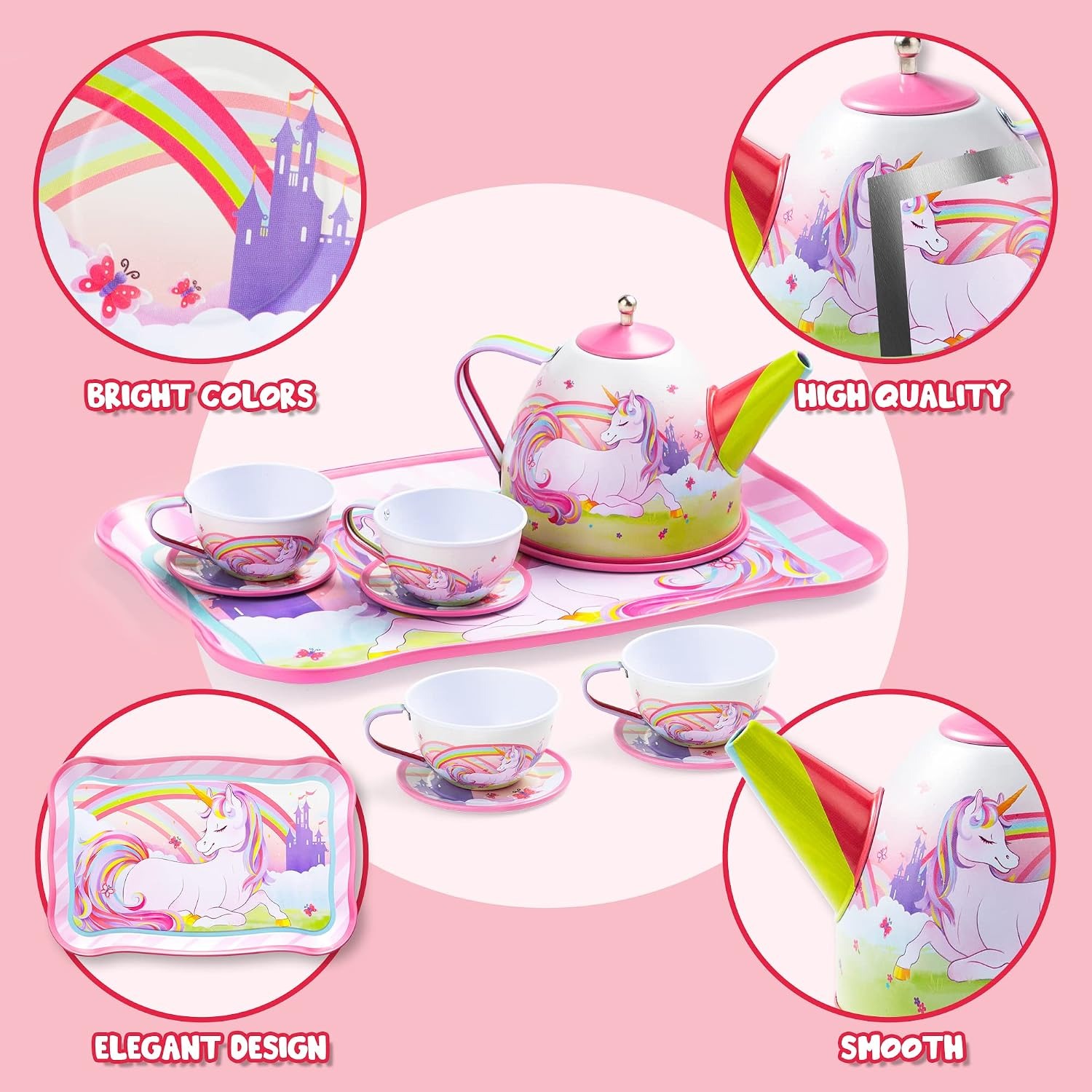
Look at the theme. Artwork is not decoration, it is a story prompt. Unicorns, rainbows and castles give a child an instant setting. A child who does not know what to play will often take the hint from the print and start there.
Match the size to the hands. This set is listed as child-size, which is the right scale for small fingers. Doll-house scale pieces frustrate young children and full adult crockery is too heavy and fragile.
Making it last
Care is not complicated. Wipe each piece with a damp cloth and a little mild soap, then dry it before it goes back in the case. Skip the dishwasher, the microwave and boiling water. Heat and strong detergents are the main enemies of printed artwork.
If the set has been outside, give it a quick wipe before storing. Grass, sand and juice all turn sticky if left. The case itself should not be soaked, so a surface wipe is best.
The single most useful habit is a count. Before the case closes, check you have four cups and nine plates. Thirty seconds now saves the hunt behind the sofa later.
Getting more out of it
A tea set is a base, not a finished game, and that is the point. A few easy additions stretch it a long way.
Play food is the obvious one, but real options work too. Dry cereal, grapes cut in half for older children, or small pieces of fruit turn a pretend party into a snack. A folded tea towel becomes a tablecloth. Paper and crayons become menus and invitations.
Soft toys fill the guest list on days when no friends are available. Dolls work well because the plates and cups look generously large next to them, which children find funny rather than wrong.
For a birthday, the case itself presents nicely with almost no wrapping, which is handy. It is one of those gifts that can be opened and used in the same hour, with no batteries to find or parts to assemble.
A note on safety and supervision
Follow the recommended age of 36 months and up. That guidance exists for good reason and it is a better rule of thumb than eyeballing individual piece sizes. Children who still mouth their toys should be supervised closely or given something else for now.
The set is made of plastic and finished in purple and white with a mermaid-print case. Country of origin is China and the manufacturer is Joyin Inc, with model number 11008. Shipping weight and any warranty period are not specified by the maker, so we have not guessed at either.
The short version
If you want a toy that starts a game by itself, a tea set is hard to beat. This one gives you 14 pieces, enough for four guests, with a teapot that children love to control and a serving plate that makes someone the host.
The carry case is what turns it from a nice toy into a practical one. Everything has a home, the set travels, and tidying up takes a minute rather than a negotiation.
For ages three and up, as a birthday present, a quiet-time activity or a shared toy for siblings, it does the job without fuss. Set out the cups, pick your guests, and let the afternoon take care of itself.