

The complete guide
Solar Robot Kits for Kids, A Practical Buyer's Guide
The problem with most "educational" toys
A lot of toys claim to teach something. Most of them teach a child to press a button and watch an animation. The child learns the sequence, the novelty wears off in a fortnight, and the box goes under the bed.
What is missing is friction. Good learning needs a bit of resistance, the kind where something does not work and you have to figure out why. A construction kit that only snaps together one way does not provide that either. It needs enough parts, enough variation and enough real physics to put up a fight.
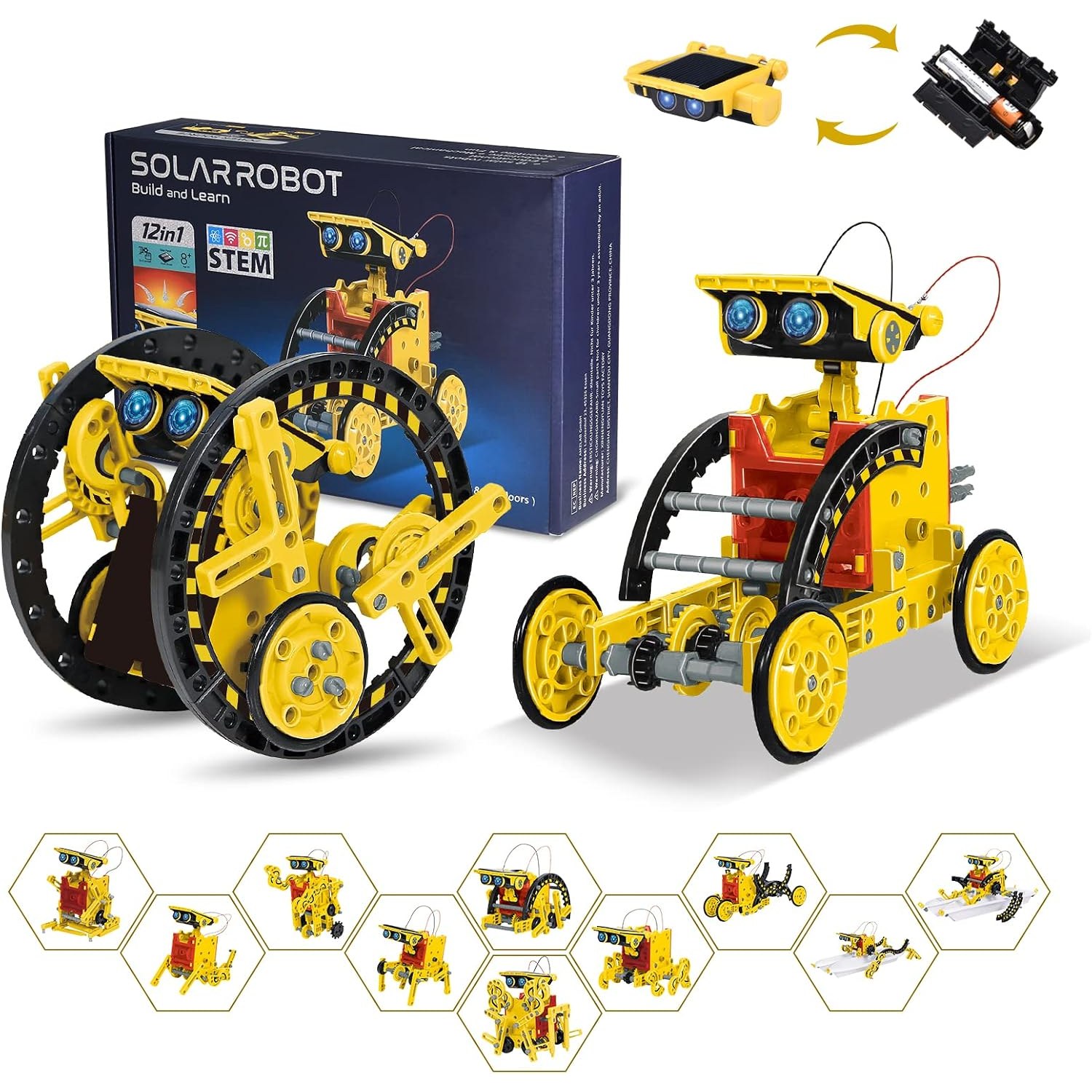
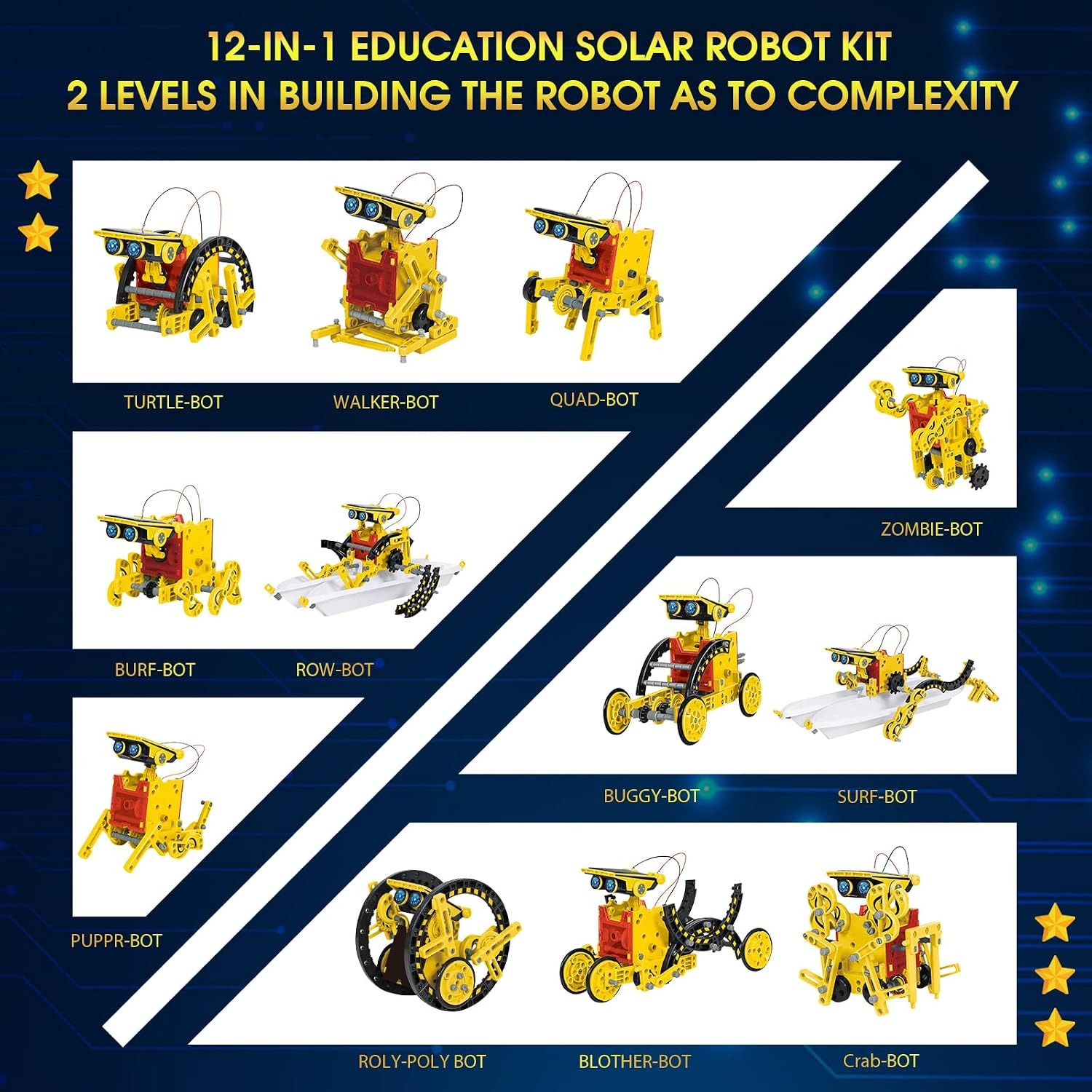
That is the gap a solar robot kit fills. There are 190 pieces, a motor, a solar panel and twelve different machines that can be made from them. None of it works until the child gets it right, and the reward for getting it right is a thing that moves across the carpet under its own power.
How a solar robot kit actually works
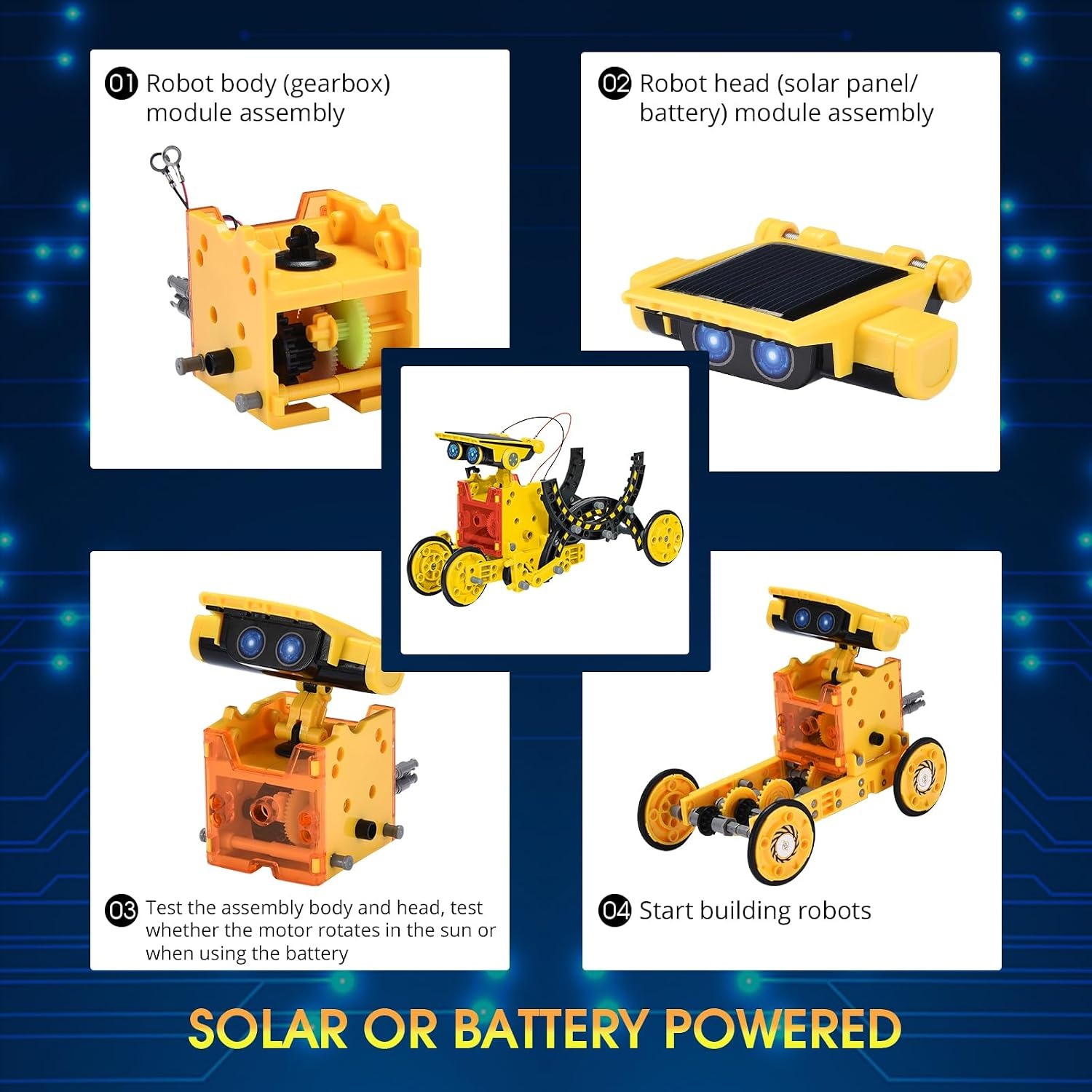
The principle is simple enough for a nine year old to explain back to you after one session. A photovoltaic panel takes light and turns it into a small electric current. That current runs to a motor. The motor spins. Gears and linkages turn that spin into walking, rolling or paddling, depending on which of the twelve models has been built.
What makes this better than reading about it is the immediacy. Carry the finished robot from a sunny window into the hallway and it slows down. Take it back and it speeds up. Cup a hand over the panel and it stops. No adult has to explain anything, because the robot explains it.
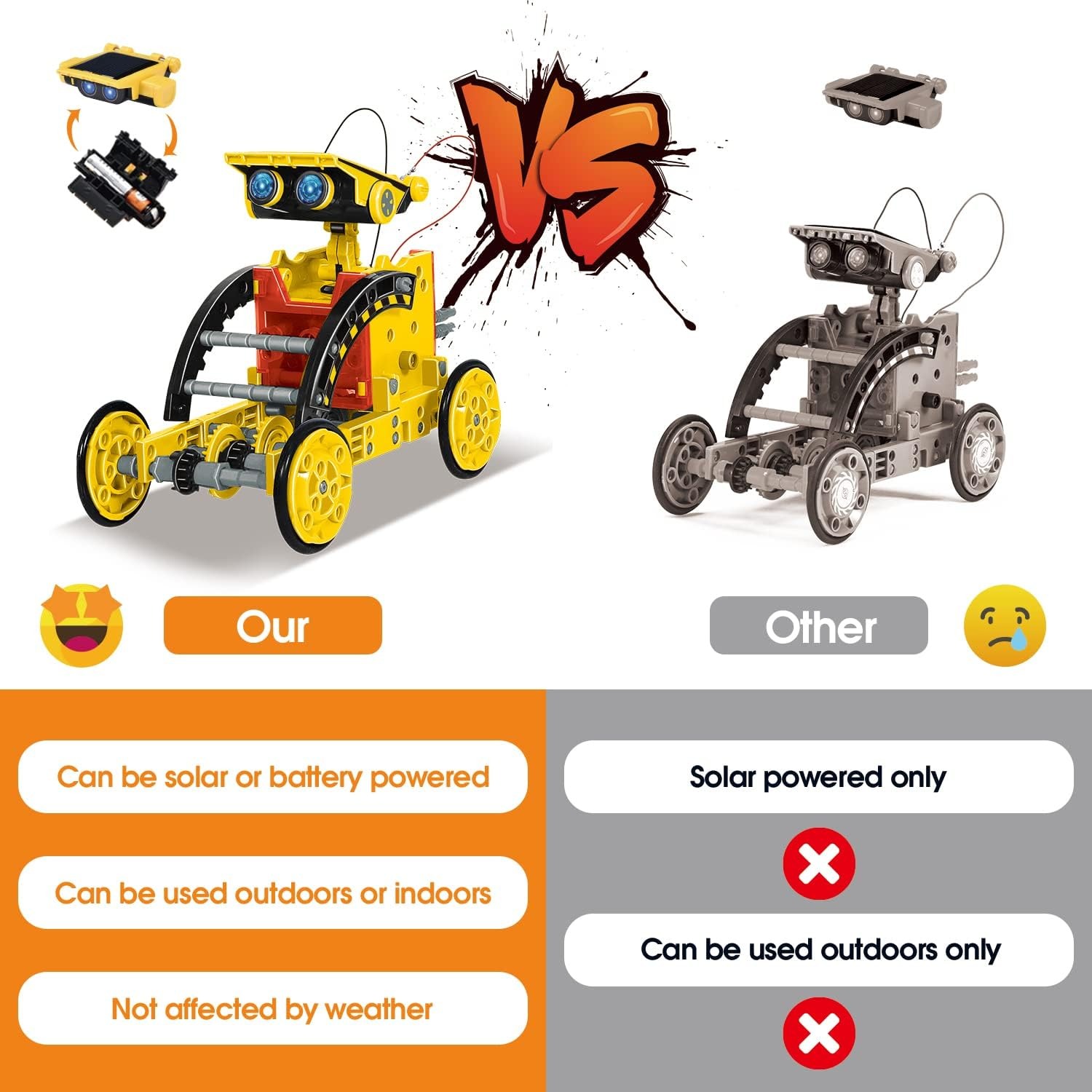
This particular kit also takes alkaline batteries, which is a sensible piece of design. Solar is brilliant in July and frustrating in November. The battery option means the kit works indoors, in the evening, and through a wet week, so it does not become a seasonal toy. Batteries are not supplied, so buy some at the same time.
Who it suits
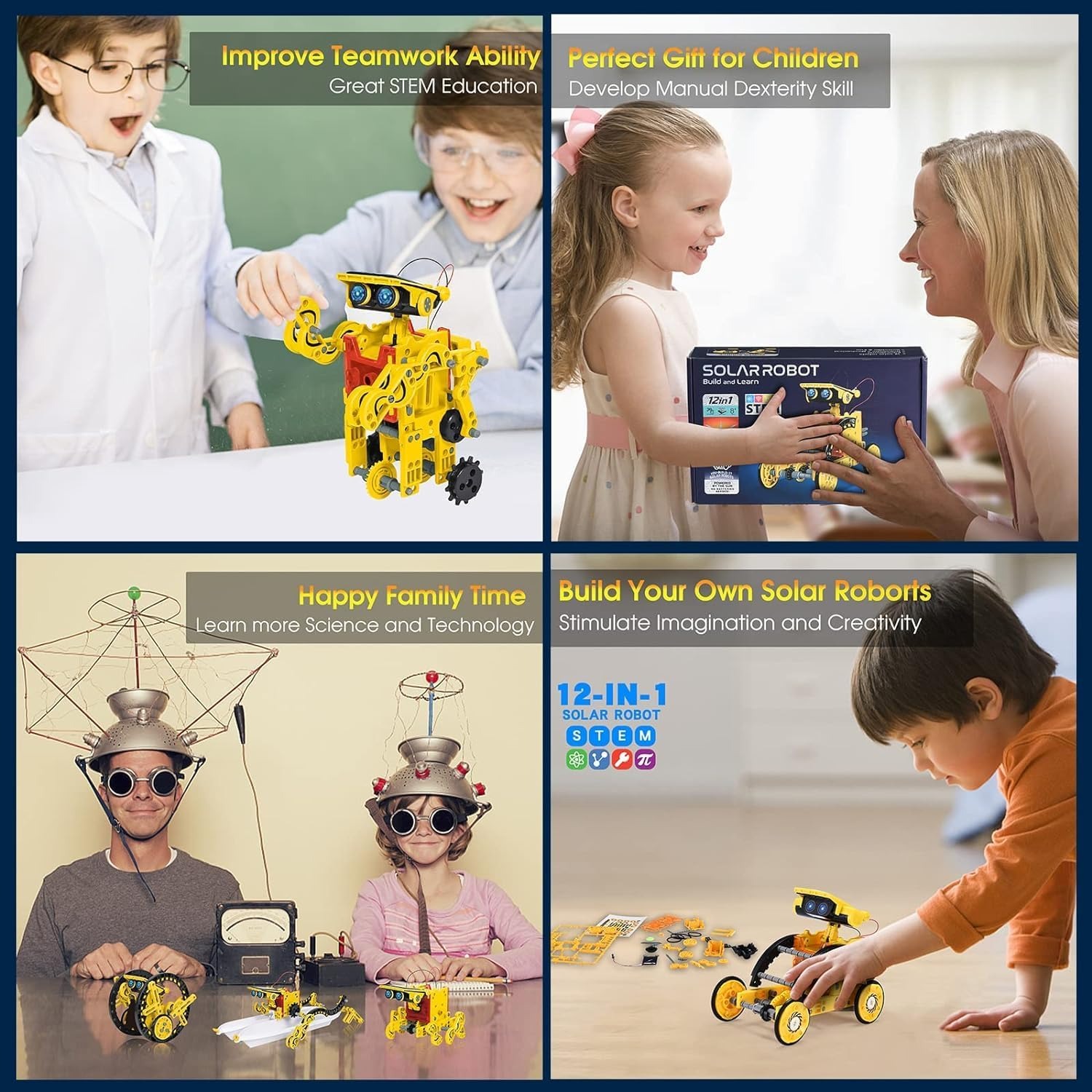
The manufacturer recommends ages 8 to 14, with a wider range description that stretches to 16. In practice the sweet spot depends more on temperament than birthday.
A patient eight year old who likes building bricks and jigsaw puzzles will be fine, though a parent nearby for the first build makes the experience smoother. A ten or eleven year old will usually work through it alone and start experimenting with their own variations. Older children tend to focus on the trickier models and on getting the mechanisms running smoothly.
It is also a strong fit for classroom and homeschool use. The renewable energy angle lines up with science curricula in most countries, and the twelve builds give a teacher enough material for a sequence of sessions rather than a single lesson. If you are hunting for the best engineering toy for kids in a group setting, a kit that can be rebuilt is worth far more than one that cannot.
Children who find fiddly work hard will need a bit more support. The parts are small and some connections need a firm, accurate push. Short sessions work better than marathon ones.
What to look for when choosing a kit
Part count versus build count. A kit with 190 parts and twelve builds is giving you real variety. Some cheaper sets advertise multiple models but reuse almost the same shape each time. Look at the pictures of all the builds and ask whether they genuinely differ.
Power source flexibility. Solar only is lovely in principle and disappointing in a northern winter. Dual power, solar plus battery, is the practical choice for most households.
Instruction quality. This is the thing that decides whether a kit gets finished or abandoned. Illustrated step-by-step booklets work far better for this age group than dense written instructions. A child who can follow the pictures without reading a wall of text stays in the flow.
Reusability. If parts need glue, you get one build and that is it. Clip-together parts that come apart cleanly are what give a kit its long life.
Material and finish. Plastic parts should be smooth, with no sharp flash on the edges, and odourless. This kit's parts are described by the manufacturer as non-toxic and odourless.
Getting the first build right
Set up on a tray or a large plate rather than a carpet. Small parts vanish in carpet pile with astonishing speed, and a lipped tray saves an evening of searching.
Sort before building. Tip everything out and group similar pieces together. It feels like a delay but it saves far more time than it costs, and it is a genuinely useful habit for any construction work.
Start with a simpler model. Resist the urge to go straight for the most impressive looking design on the box. One completed easy build teaches the connection types and builds confidence for the harder ones.
Test the motor and panel early. Connect the motor to the solar panel on its own, take it into the light, and confirm it spins before it disappears inside a chassis. Finding a connection problem at that stage is much easier than finding it after an hour of assembly.
Expect at least one thing not to work. A gear that slips, a wheel that binds, a build that leans. This is normal, and sorting it out is the most valuable part of the whole exercise. Encourage a child to look at where the resistance is rather than taking the entire model apart.
Care and storage
Keep the solar panel clean. A dusty or smeared panel collects less light and the robot runs slower, which gets blamed on the motor when the real fix is a wipe with a soft cloth.
Keep water away from the motor and the panel. The water-capable models are designed to float and move on the surface, not to be dunked. Dry everything off afterwards.
Store the parts together. A lidded tub or a decent resealable bag, with the instruction booklet tucked in alongside, means the next build starts in two minutes rather than twenty. If a child knows where everything lives, they are far more likely to come back to it.
Pull batteries out before a long break. Cells left in an unused toy for months are a leak risk, and a leak can finish off a battery compartment for good.
The short version
Twelve builds, 190 parts, a motor and a solar panel. It runs on daylight outdoors and on alkaline batteries indoors, which keeps it useful all year. The instructions are picture-led, so most children between 8 and 14 can work through them without an adult reading every line aloud.
It is not a toy that entertains a child passively, and that is exactly the point. The child does the work, the robot moves, and somewhere in between they pick up a solid feel for gears, drive and where electricity comes from. For a birthday, Christmas or a school science project, a kit like this earns its shelf space.