
The complete guide
Choosing an Observation Game That Actually Gets Played
The game that never comes off the shelf
Most households have one. A boxed game bought with good intentions, played once, then parked on a high shelf because setting it up takes twenty minutes and explaining it takes ten. Nobody suggests it on a Tuesday evening. Nobody packs it for a weekend away.
The problem is almost never the game itself. It is the gap between the time you actually have and the time the game demands. A family with half an hour before dinner cannot start something with a rulebook. A parent in a hotel room with two tired children cannot run a strategy game. What gets played is what can start in sixty seconds and stop whenever you want.
That is the slot this kind of game fills. Draw a card, look at the board, be first to point. The rules fit in one sentence, the round is over in moments, and the game ends when you decide it does rather than when a track runs out.
How a spot-the-object game works
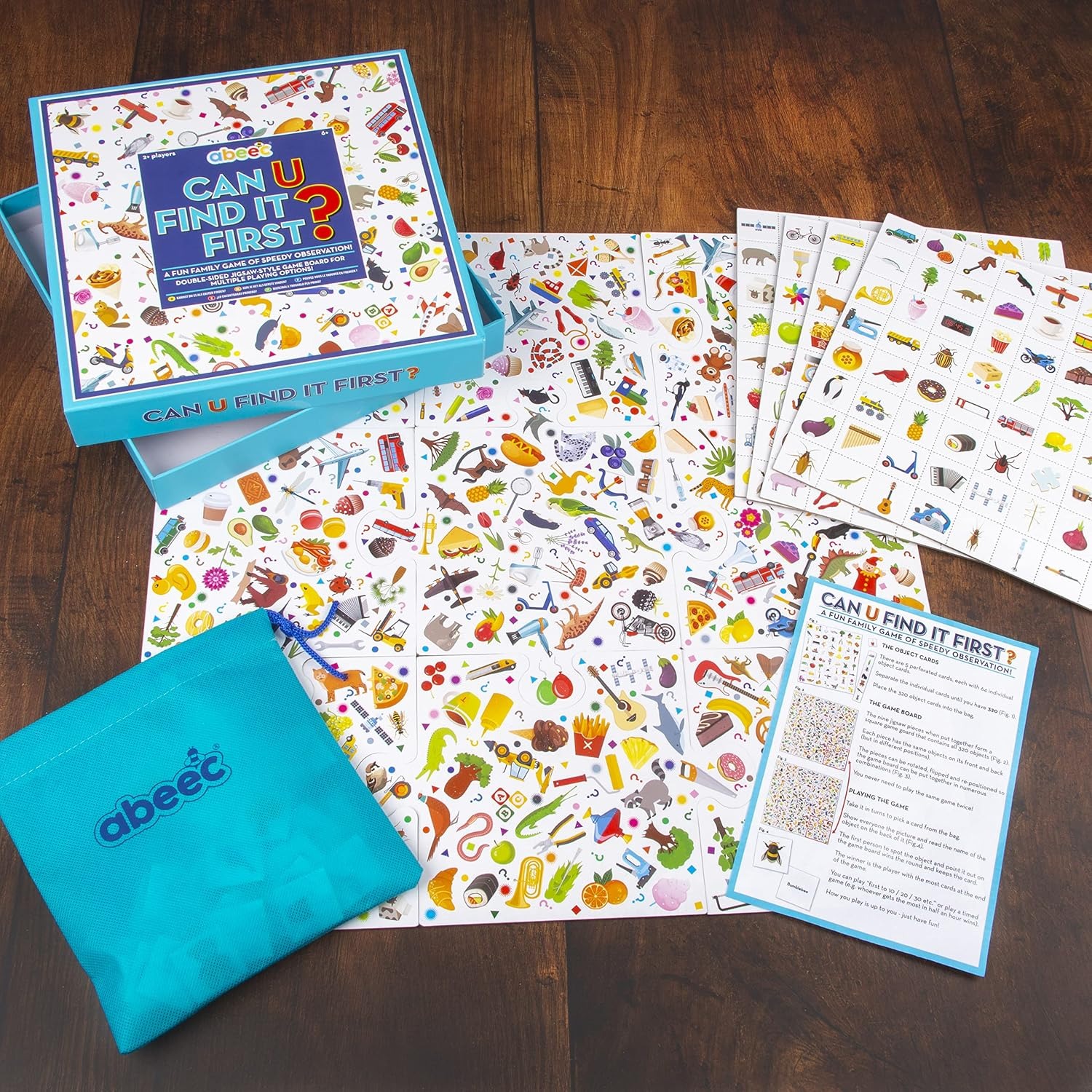
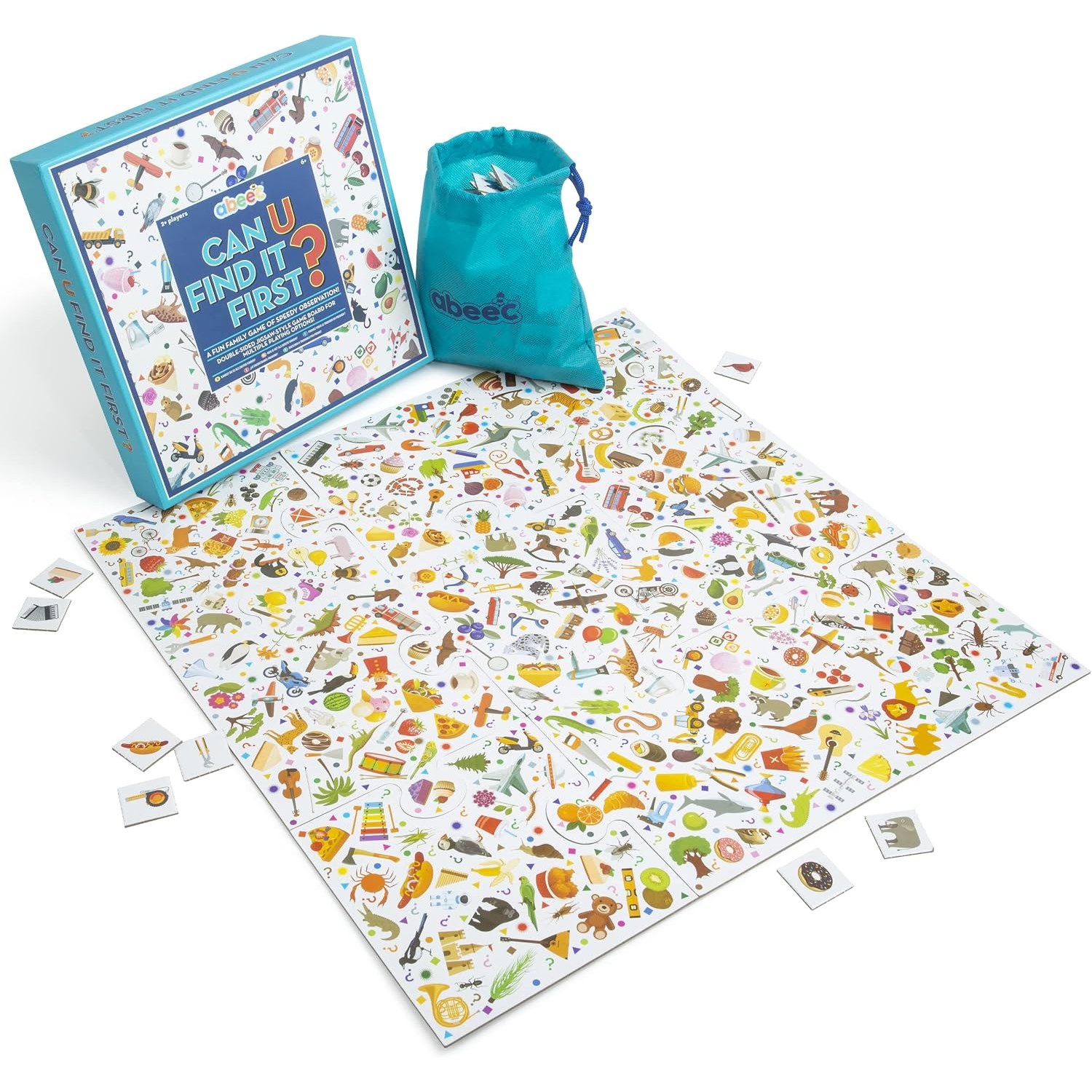
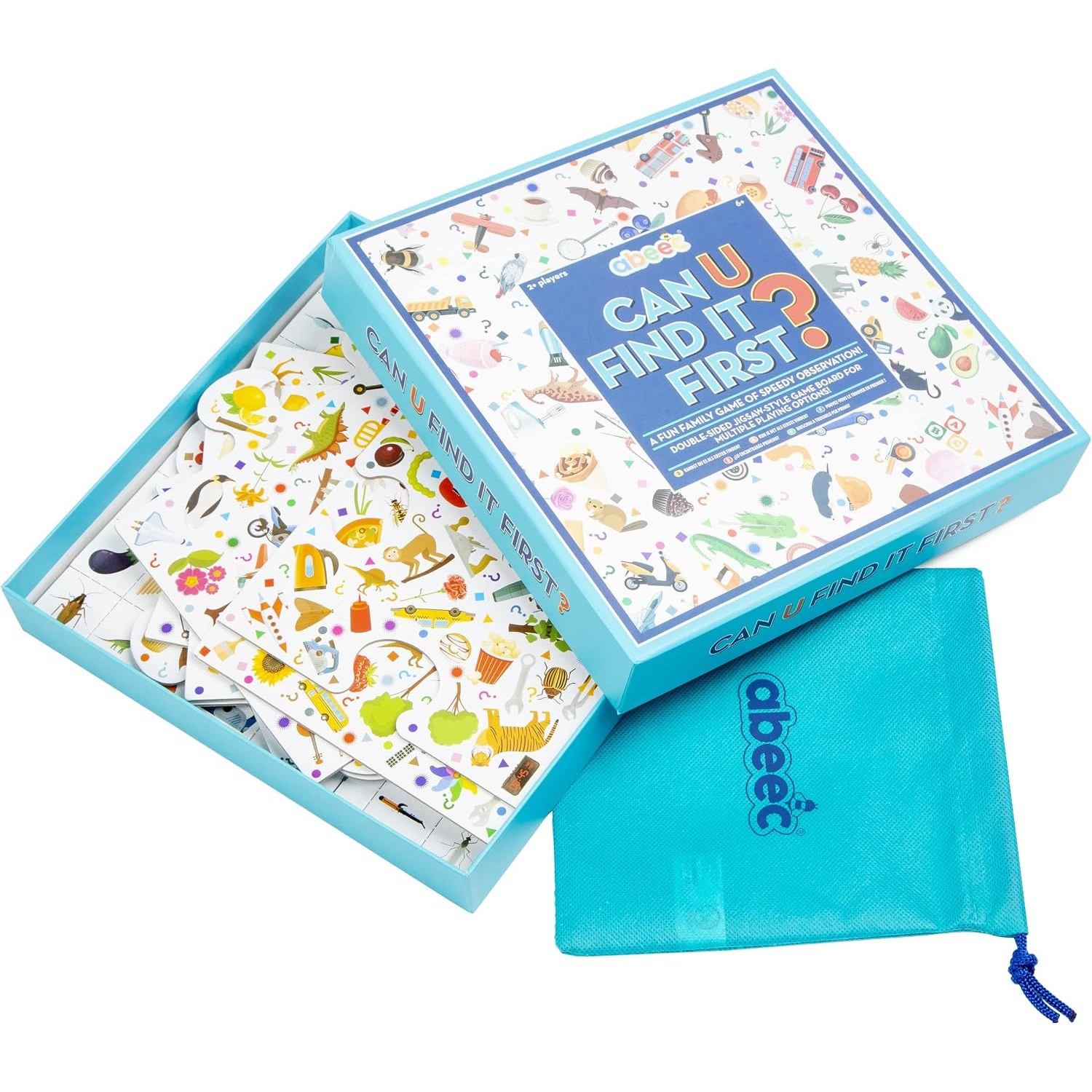
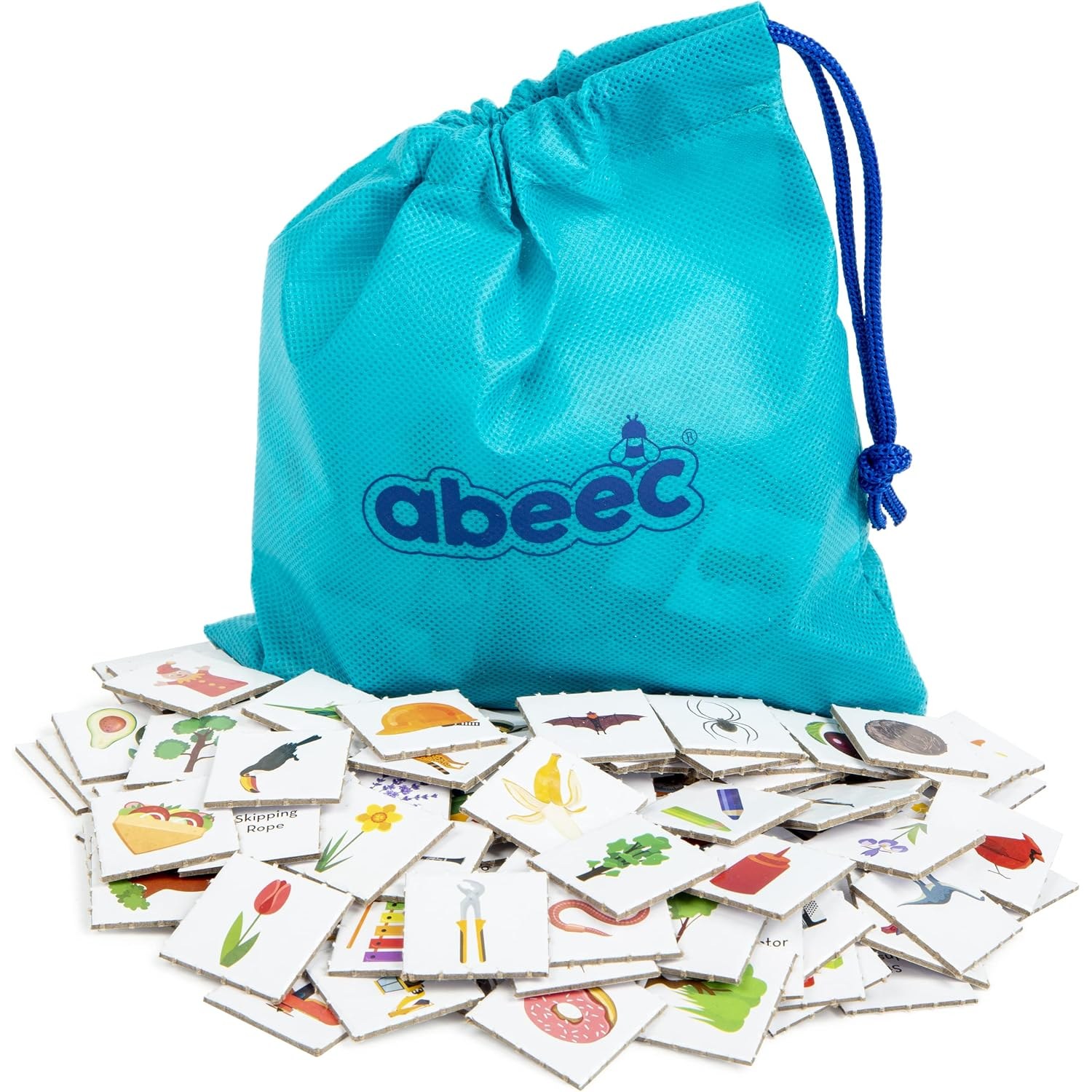
The mechanic is simple on purpose. A board shows a dense field of objects. A card is drawn showing one of them. Everyone searches at the same time, and whoever finds it first claims the card. The player with the most cards wins, or you play to an agreed target like ten.
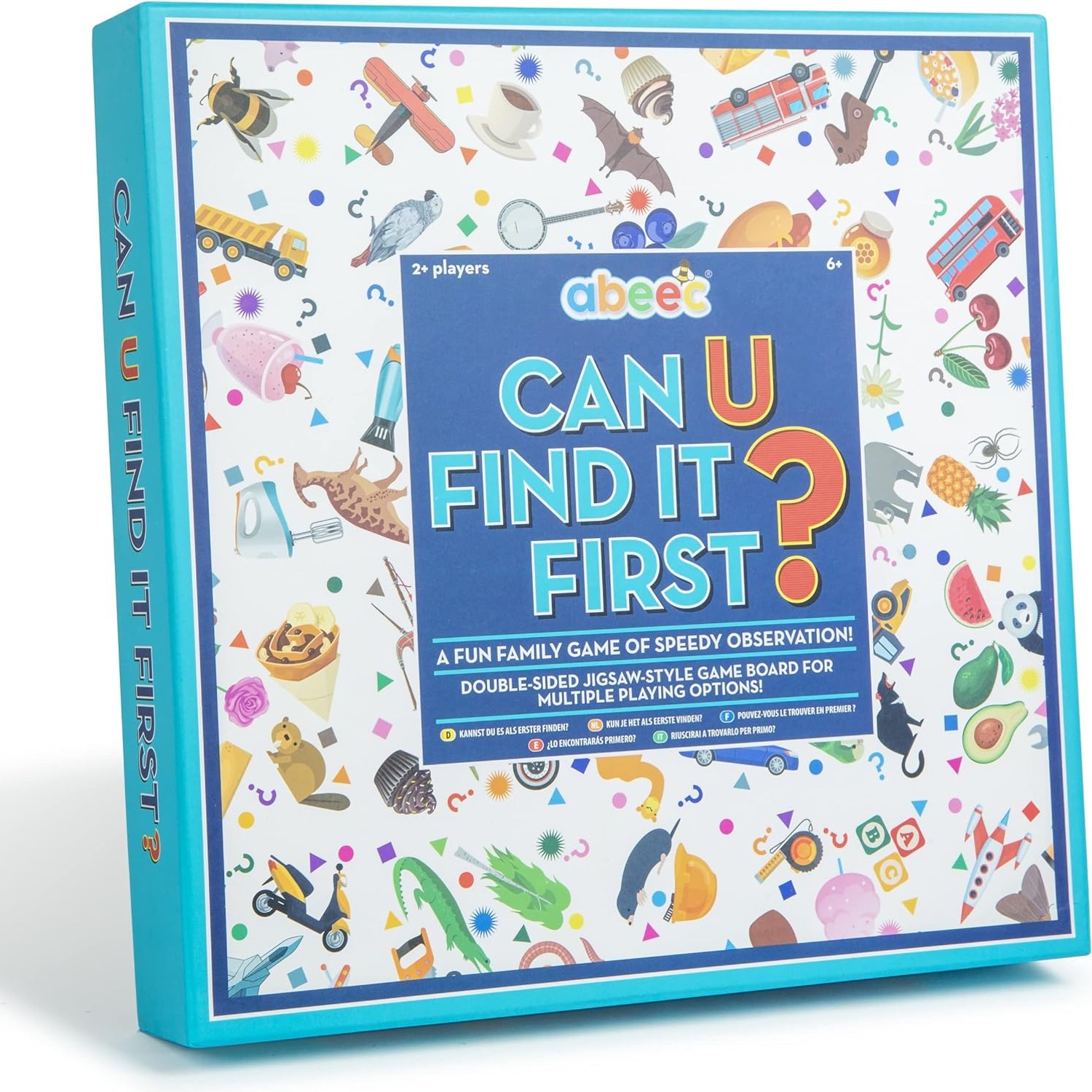
What stops it becoming a memory test is the board construction. Here the play area is made from nine jigsaw pieces, and those pieces are double-sided. Before you start, you can flip them and rearrange them. An object that sat in the top left last night sits somewhere else tonight. Children who have played a dozen times are still genuinely searching rather than reciting.
That matters more than it sounds. Plenty of picture-hunt games are brilliant for two weeks and then dead, because the layout is fixed and the players have memorised it. Rearrangeable boards buy you months instead of weeks.
The whole thing runs on eyes and hands. Power source is manual, there are no batteries, and there is no app. Assembly is required only in the sense that you lay the nine pieces out to form the board, which takes seconds and which children usually want to do themselves.
Who it suits
The manufacturer recommends ages 36 months to 12 years, which is a wide band. In practice the game works across that range because the core skill, searching a busy image, is something a three year old can do slowly and a ten year old can do fast. Nobody needs to read well. Nobody needs to add up. That removes the usual barriers that push younger siblings out of family games.
It is set up for 2 to 4 players. Two works as a straight race, and it is a good way for one parent and one child to play something together without either of them getting bored. Four makes the table noisy in the way a good family game should be. If you have more than four, run teams, with one person per team doing the pointing.
It suits households that want less screen time without a fight, because the alternative being offered is genuinely fun rather than worthy. It also suits childminders, grandparents and teachers who need a short group activity with no prep. The estimated playing time is around five minutes, which is the right length for a transition moment, like the stretch between coming home and sitting down to eat.
Where it suits less well is a group of teenagers or adults looking for depth. This is not a strategy game and does not pretend to be. It is fast, light and loud.
How to choose between observation games
A few things actually separate one from another.
Look at how the board varies. Fixed-layout games go stale quickly. Anything with flippable, rotatable or rearrangeable sections will last longer in a house with children who play often.
Look at round length versus game length. A five minute game is not a short game if you have to reset for ten minutes. Here the reset is laying out nine pieces, so the ratio is good.
Look at the player count against your real household. A game built for two to four is honest about its limits. If you regularly have six people around the table, plan for teams rather than hoping for the best.
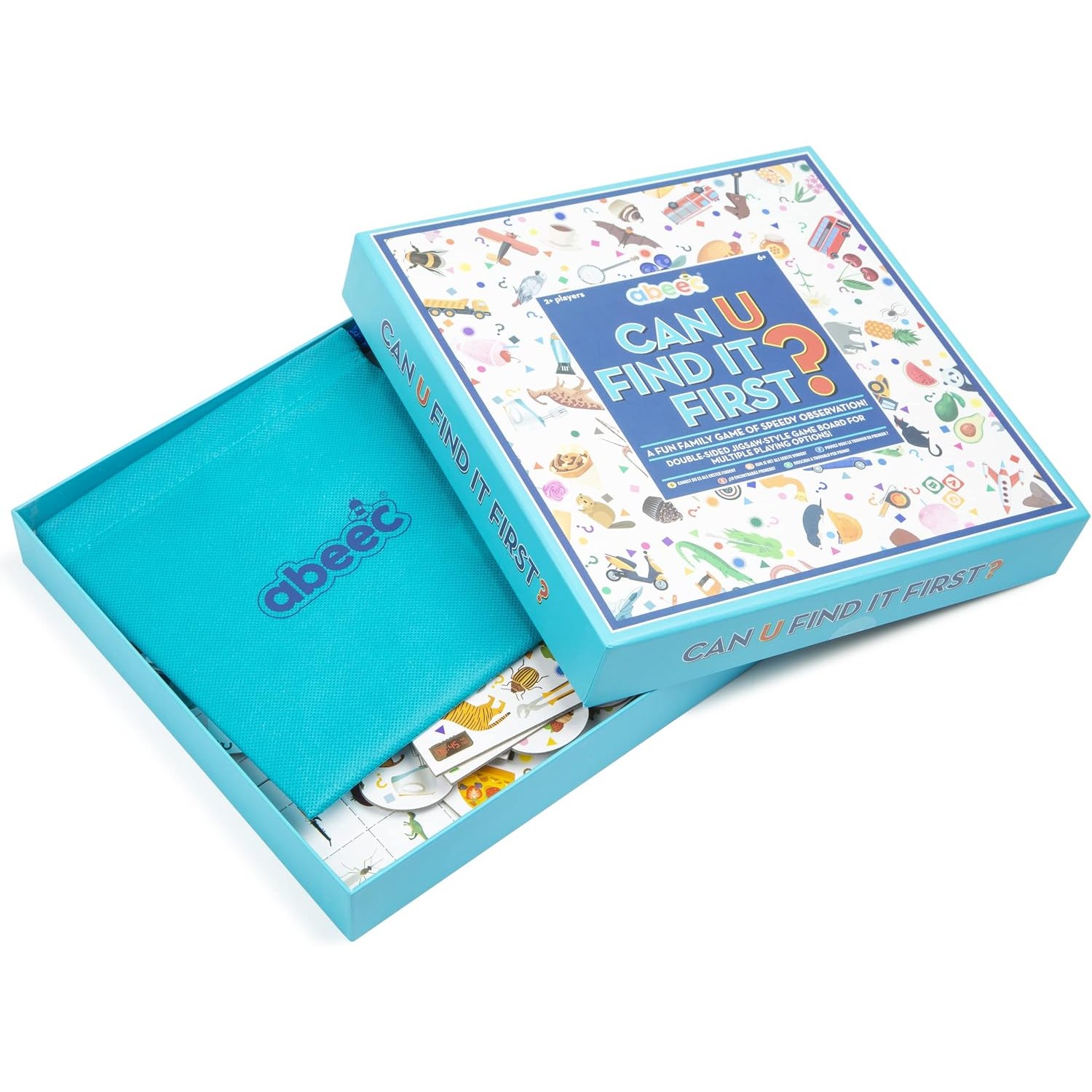
Look at portability. A 25cm square box weighing 891 grams fits in a suitcase without much argument. The components are cardboard, cardstock and paper, so it is light, but it also means you keep it away from water. If you want something to live permanently in a car boot through a damp winter, a card game in a tin may survive better.
Look at what it is doing for the child. The stated educational aim here is observation, concentration and reflex skills. That is realistic. It will not teach maths or spelling. It will give a child practice at scanning carefully and reacting quickly, which is the sort of thing that transfers quietly into reading and sport without anyone announcing it.
Making it last
Cardboard games die in predictable ways. Pieces go missing under furniture, cards get bent in a bag, and the box corners split from being stacked badly.
Three habits fix most of that. Count the pieces back into the box every single time, before anyone leaves the table. Store the box flat rather than on its edge, ideally not at the bottom of a stack. Keep it dry, which means not on a windowsill, not next to a radiator, and not in a garage.
If something sticky happens, wipe the cardboard with a barely damp cloth and let it dry fully before it goes back in the box. Do not soak it. Paper and cardstock warp, and a warped jigsaw piece never sits flat again.
A cheap zip bag inside the box for the cards costs nothing and stops the single most common problem, which is cards sliding out when the lid shifts in a suitcase.
Playing it well
A few small adjustments make games smoother with mixed ages. Agree the finishing point before you draw the first card, whether that is first to ten or most cards after a set number of rounds. Give the youngest player a two second head start if there is a big age gap. Let someone different draw and announce the cards each game so nobody feels stuck in the dealer role.
If a child is getting frustrated, switch to a cooperative version for a few rounds. Everyone searches together and you time how fast the group can clear five cards. It takes the sting out without ending the session.
And rebuild the board between games. It takes twenty seconds and it is the single thing that keeps the game fresh.
The short version
This is a fast, simple observation game for 2 to 4 players, built from nine double-sided jigsaw pieces and a set of cards, in a 25cm square box weighing 891 grams. No batteries, no screen, indoor use, and roughly five minutes a game. The recommended age span of 36 months to 12 years means siblings at different stages can play the same game fairly.
Buy it if you want something that starts in under a minute, fits in a bag, and gets suggested again on a wet Sunday. Look elsewhere if you want a long, strategic game for older players. For most families, the test of a good game is not how clever it is. It is whether anyone reaches for it a second time.