
The complete guide
Choosing a First Keyboard for Your Child, Without Overbuying
The problem most parents are actually trying to solve
A child starts tapping tunes on the table. Or they come home from a friend's house talking about a piano. Or they will not leave the one at school alone. And now you are stuck with a question that has no obvious answer: do you buy an instrument, and if so, how much instrument?
Buy too little and the thing is ignored by the weekend. Buy too much and you have spent several hundred on a digital piano that becomes a laundry shelf. Lessons cost money too, and most teachers will tell you not to book any until the interest has proved itself over a few months.
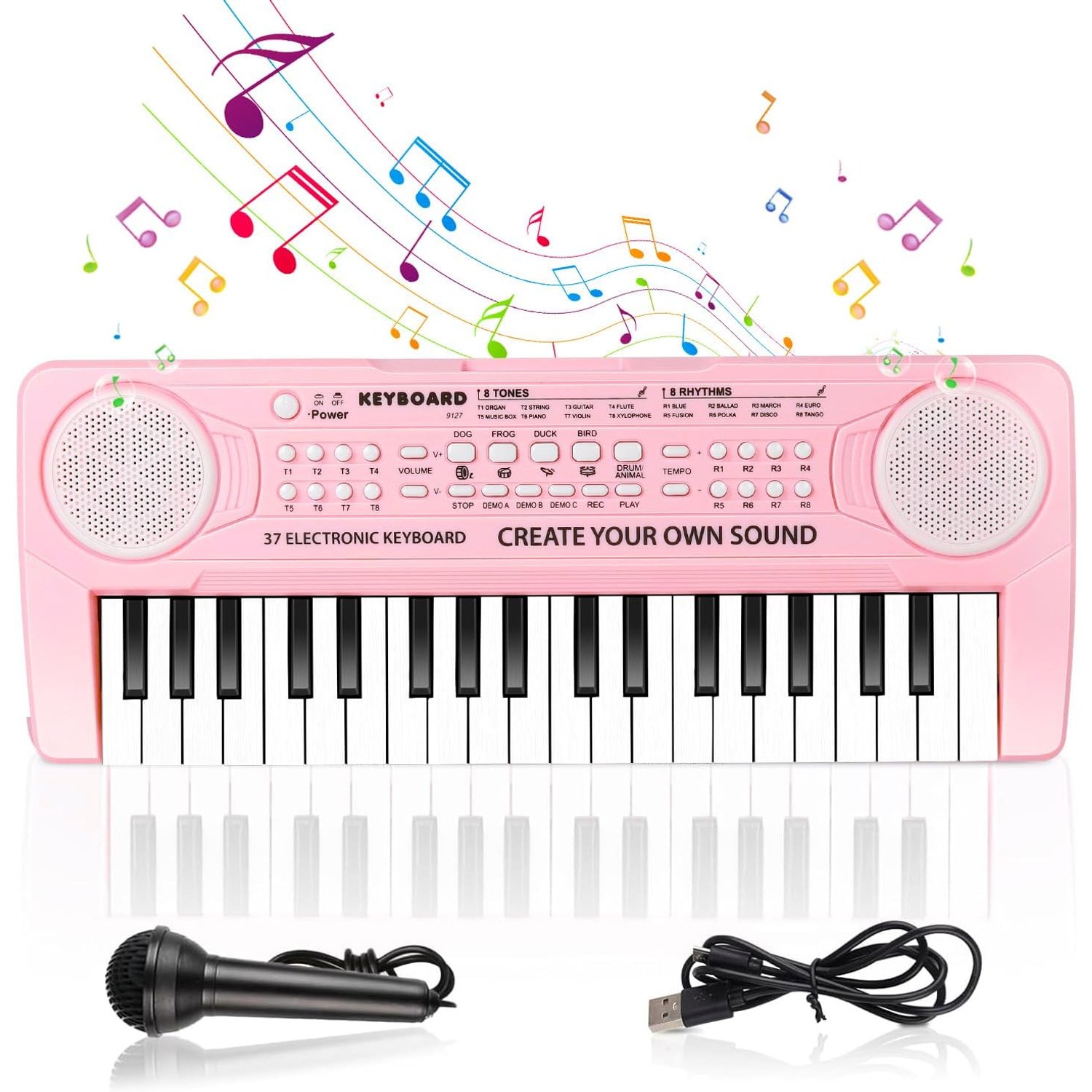
A 37-key kids keyboard piano sits exactly in that gap. It is cheap enough that nobody feels bad if it gets abandoned, but real enough that a child can learn genuine things on it: where the notes are, how to keep time, what a chord sounds like, how a melody holds together. That is the entire point of a first instrument.
How a keyboard like this works
Underneath the plastic there is a small sound chip and a speaker. Press a key and the chip plays back a sampled note. Because it is digital, it never goes out of tune, never needs a technician, and will not mind being carried around the house by a four year old.
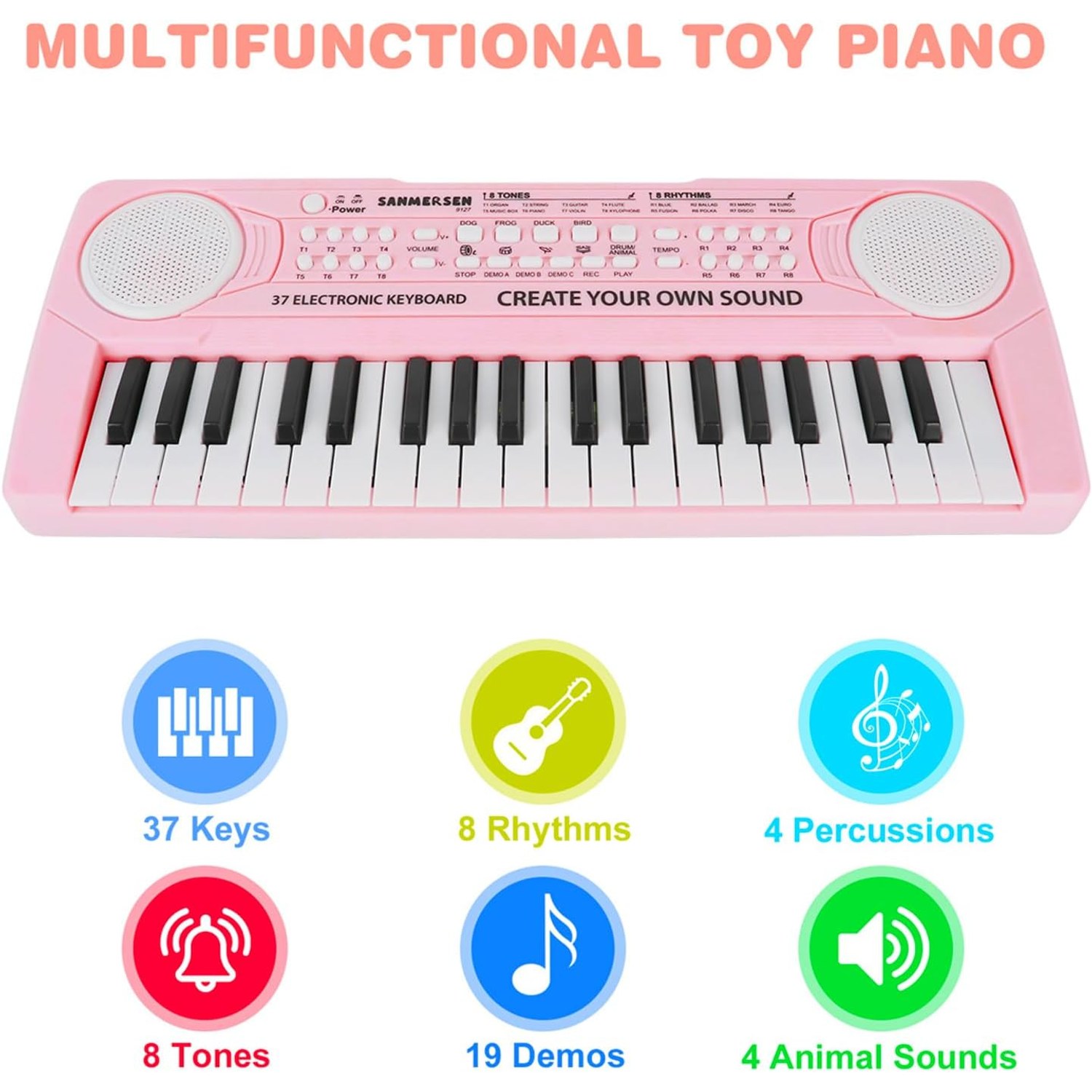
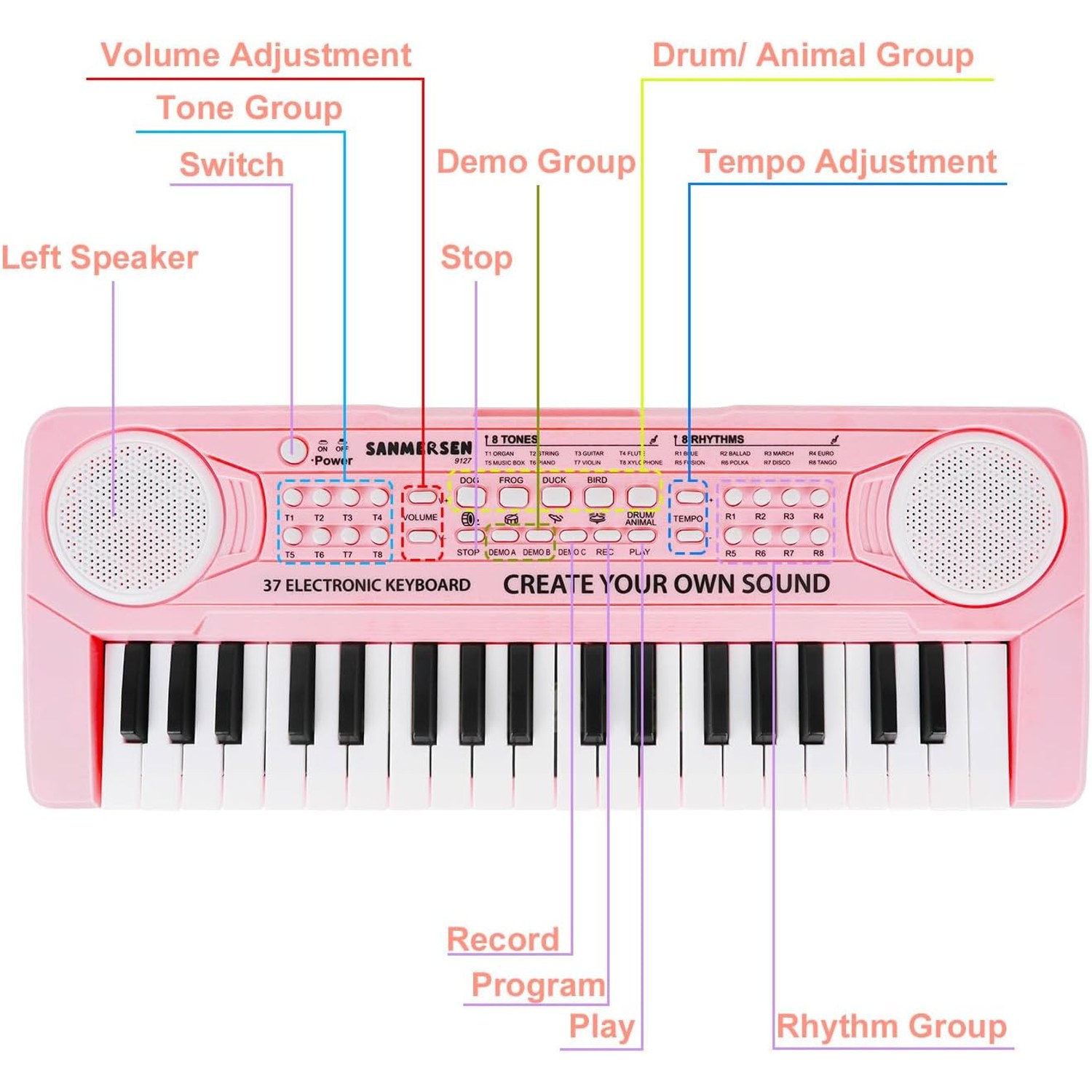
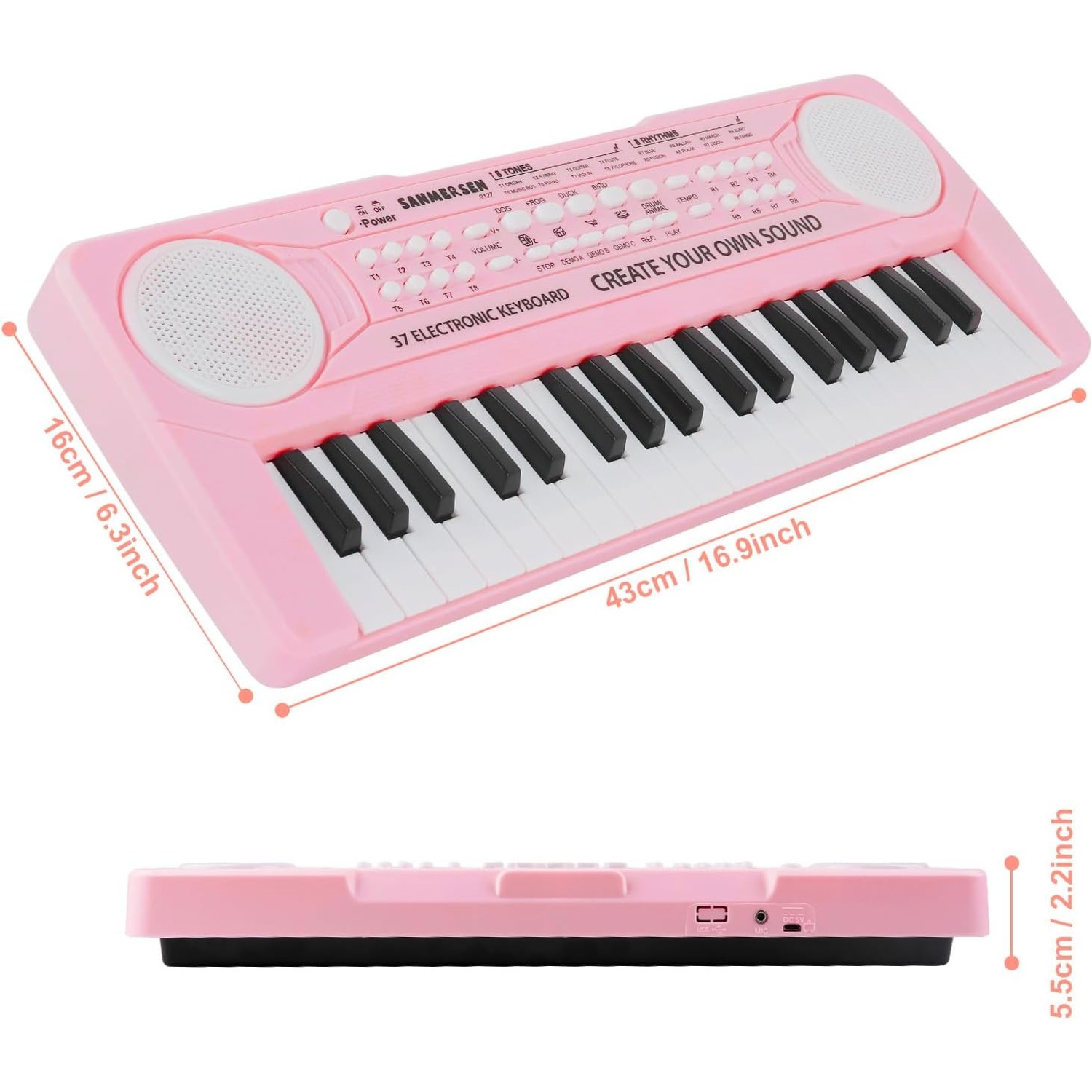
This model has 43 settings. In practice that means 8 rhythms, 8 tones, 19 demo songs, 4 percussion sounds and 4 animal sounds. The tones change what the keys sound like. The rhythms give a backing beat so playing feels less lonely. The demos play a song on their own, which is useful in two ways: it gives a child something to copy, and it gives them something to sing over.
The record and playback function is the feature parents tend to underrate. Children find their own playing fascinating when they hear it back. It turns aimless banging into something closer to practice, because they start noticing the bits that did not sound right and having another go.
The microphone is the other hook. For a lot of younger kids the singing comes before the playing, and that is fine. Singing in time while pressing keys is harder than it looks, and it builds rhythm sense faster than keys alone.
One honest caveat. The audio is mono, coming from the left speaker. The dual speaker look is part of the design but the sound comes from one side. At this price that is a normal trade-off, and children do not notice. It is only worth knowing if you were expecting something closer to a hi-fi.
Who it suits
The manufacturer puts the range at 36 months to 12 years, which is wide, and the way it gets used changes a lot across that span.
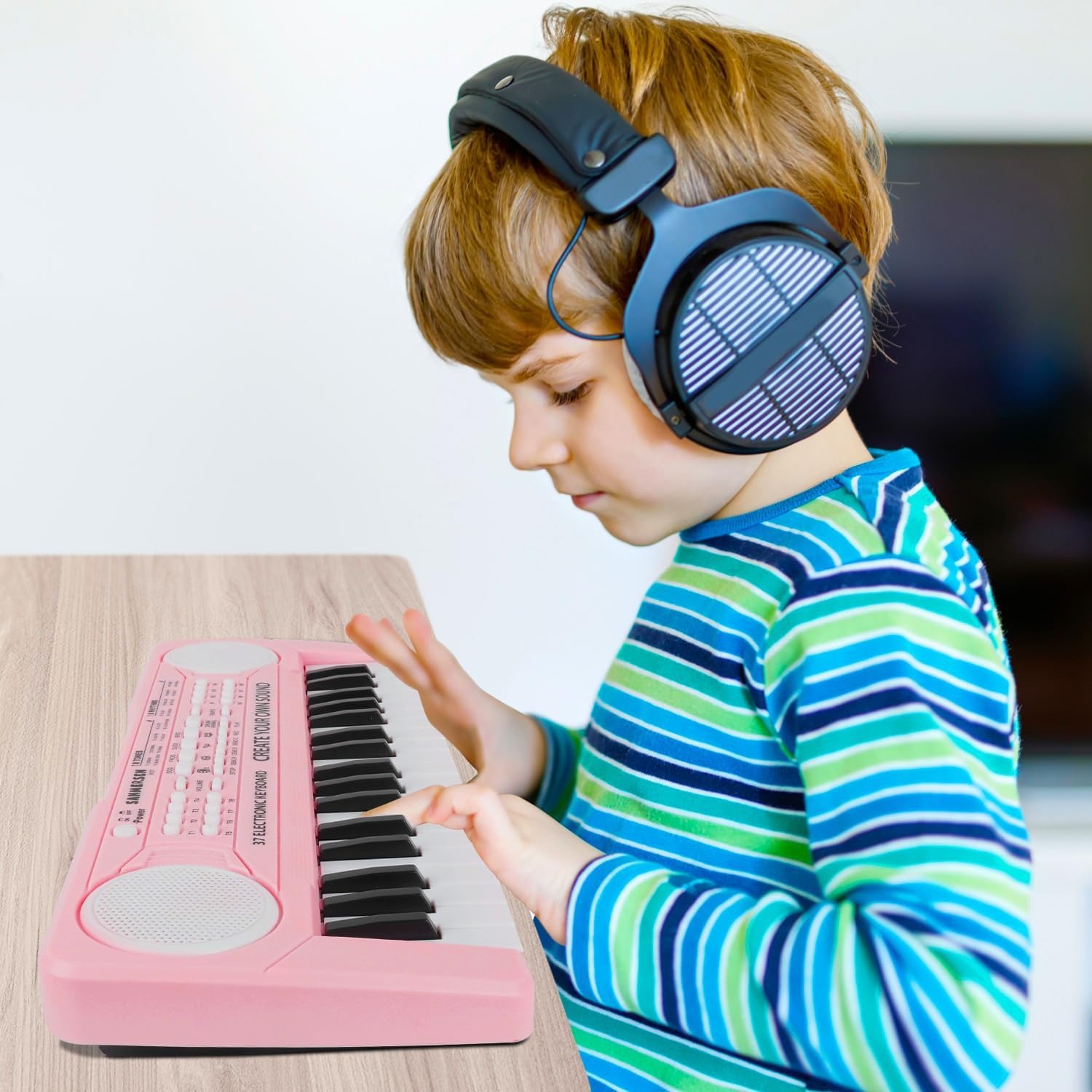
A three or four year old will treat it as a sound machine. They will find the animal noises within ten minutes and play them repeatedly. That is not wasted time. They are learning cause and effect, and they are learning that this object does interesting things when you touch it carefully.
A five to seven year old starts picking out tunes. Twinkle Twinkle, Happy Birthday, whatever they have been singing at school. This is where 37 keys matters, because it is enough range to play almost anything in that repertoire without running out of notes.
An eight to twelve year old uses it more deliberately. They will work through demo songs, try two hands, record themselves, maybe layer a vocal. Some will outgrow it and ask for something bigger, which is a good outcome. That is the keyboard doing its job.
It also suits families who move things around. At 0.64 kg and 43 x 20 x 6.3 cm it travels easily, and with three AA batteries it works in a car, a caravan, a garden or a grandparent's spare room.
How to choose between this and something bigger
Key count is the main fork in the road. Most toy keyboards sit at 25, 32, 37, 49 or 61 keys. Below 32 you quickly hit songs that will not fit. At 37 you have roughly three octaves, which covers almost everything a young child wants to play. At 49 and above you are into equipment that is harder to carry and usually needs a stand.
Key size matters too. Full-size keys are built for adult hands and a five year old has to stretch awkwardly between them. Smaller keys, spaced for small fingers, let a child play comfortably and build a sensible hand shape. Nobody learns good technique by overreaching.
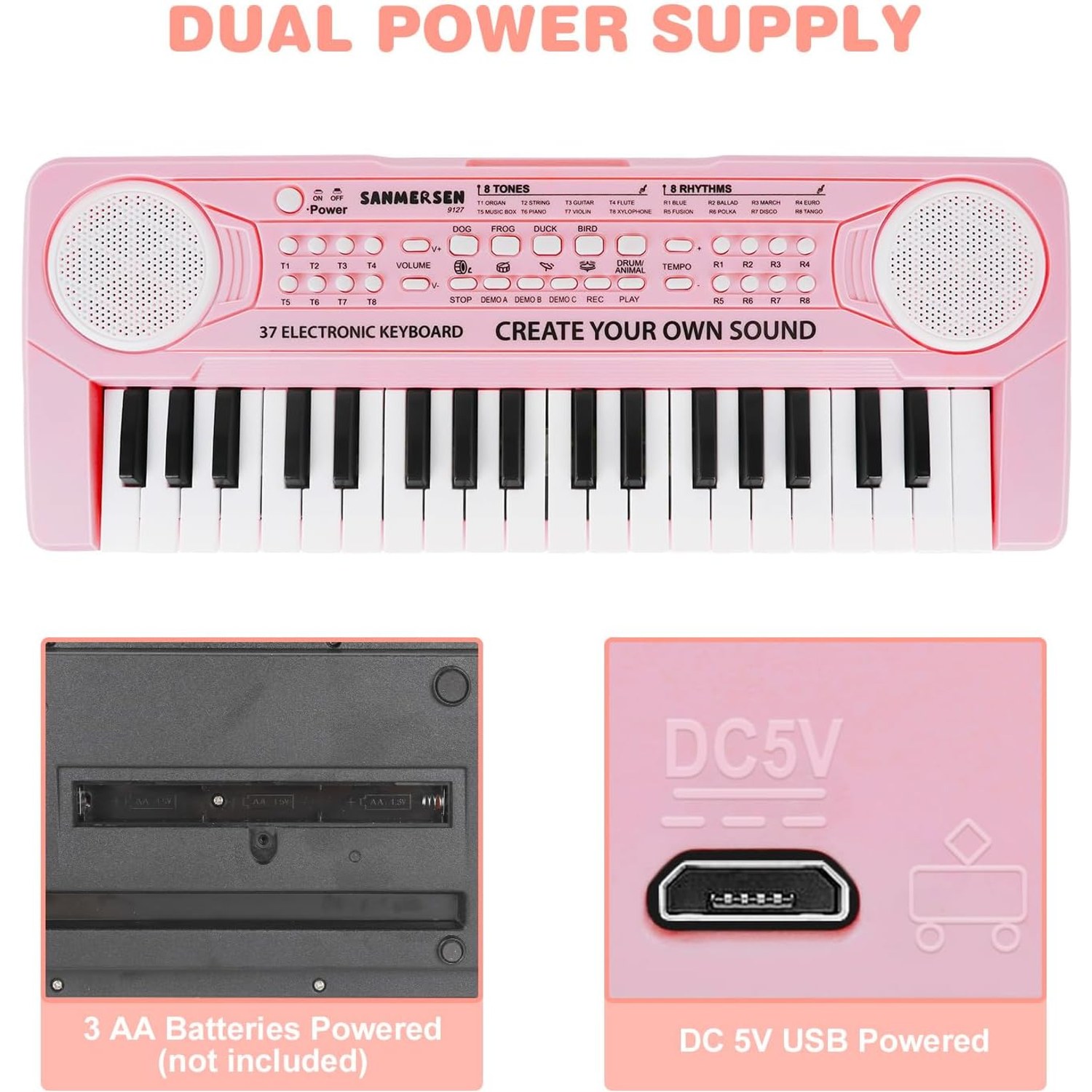
Then there is power. USB only keyboards tether a child to a socket, which is fine on a desk and annoying everywhere else. Dual power, as here, means you can plug in at home and switch to batteries when you want to move. Bear in mind the AA cells are not supplied, so add a pack to the basket if this is a gift that needs to work the moment it is unwrapped.
Finally, think about what will actually hold attention. Extra features sound like padding on a spec sheet, but a microphone and a record button genuinely extend how long a child keeps coming back. A plain keyboard with no extras can get dull fast at this age.
If your child has already had lessons for a year, or has clearly moved past simple melodies, skip this tier and look at a 61-key instrument with touch-sensitive keys instead. This keyboard is for the stage before that.
Setting it up and keeping it going
There is no assembly. Unbox it, fit three 1.5V AA alkaline batteries or connect the USB lead, and it plays. The microphone stores behind the keyboard, which is a small design decision that saves a surprising amount of hunting under sofas.
Give it a home. A keyboard that lives in a cupboard gets played once a fortnight. A keyboard that sits on a desk or a low shelf gets played most days, because the barrier to starting is zero. This single thing makes more difference to whether a child sticks with music than any feature on the box.
Keep sessions short at first. Ten minutes of happy exploring beats half an hour of being made to practise. If you want to nudge things along, learn one song yourself and play it badly. Children are extremely motivated by the chance to do something better than a parent.
Looking after it
Wipe the keys with a soft cloth, slightly damp, then dry them. Do not spray anything directly onto the keyboard and do not let liquid run into the gaps between keys, because that is how a toy keyboard dies.
Keep drinks and snacks away from it. Sticky keys are the most common complaint with any children's instrument and they are almost always preventable.
If it is going to sit unused for a few weeks, take the batteries out. Alkaline cells left in a quiet toy can leak and corrode the contacts, which is a repair nobody wants to attempt.
Store it flat, somewhere dry, out of direct sunlight. Plastic left on a sunny windowsill for a summer will fade and can warp.
The short version
This is a 37-key plastic keyboard for children roughly three to twelve, with 43 settings, a built-in microphone, record and playback, and a choice of USB or AA battery power. It weighs 0.64 kg, measures 43 x 20 x 6.3 cm, needs no assembly, comes in pink and carries a one year manufacturer warranty.
It is not a substitute for a real piano and does not pretend to be. What it does is give a curious child a proper set of keys, enough sounds to stay interested, and a way to hear themselves play, all for a price that makes the experiment easy to justify.
If the interest sticks, you will know within a few months and can upgrade with confidence. If it does not, you have lost very little. That is a reasonable deal either way.