
The complete guide
Choosing a Bug Figure Set, A Practical Buyer's Guide
The problem with most bug toys
Walk into any toy aisle and the insect section is thin. You get a rubber snake, a packet of four stretchy worms, and maybe a single oversized spider meant for Halloween. None of it holds a child's attention past the first week, because there is nothing to compare, nothing to sort, and nothing to be curious about.
Children do not play with bugs the way they play with cars. They play with them the way scientists do, by lining them up, counting legs, deciding which is the odd one out and inventing names for the ones they do not recognise. That kind of play needs variety. One bug is a toy. Sixteen different bugs is a collection, and a collection invites questions.
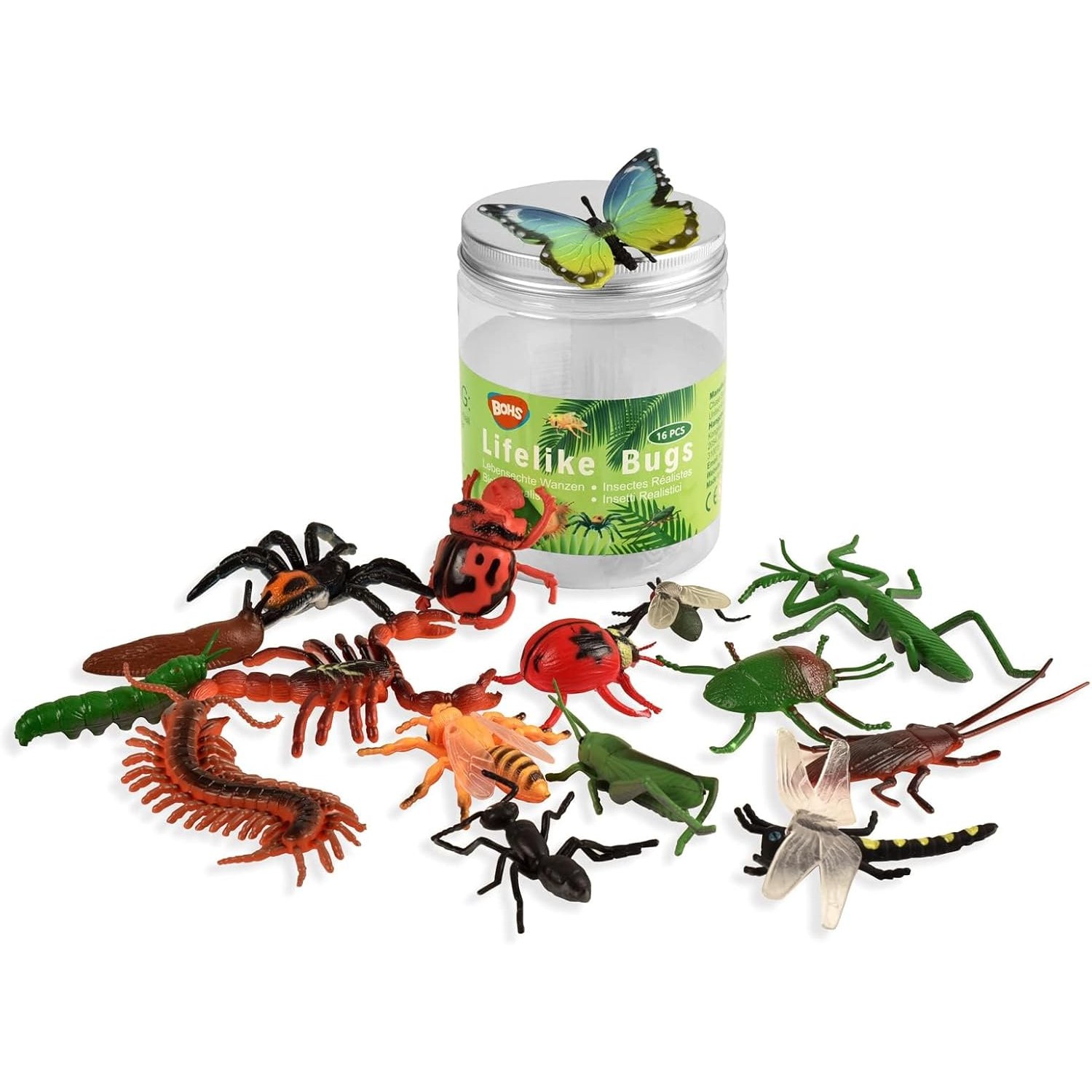
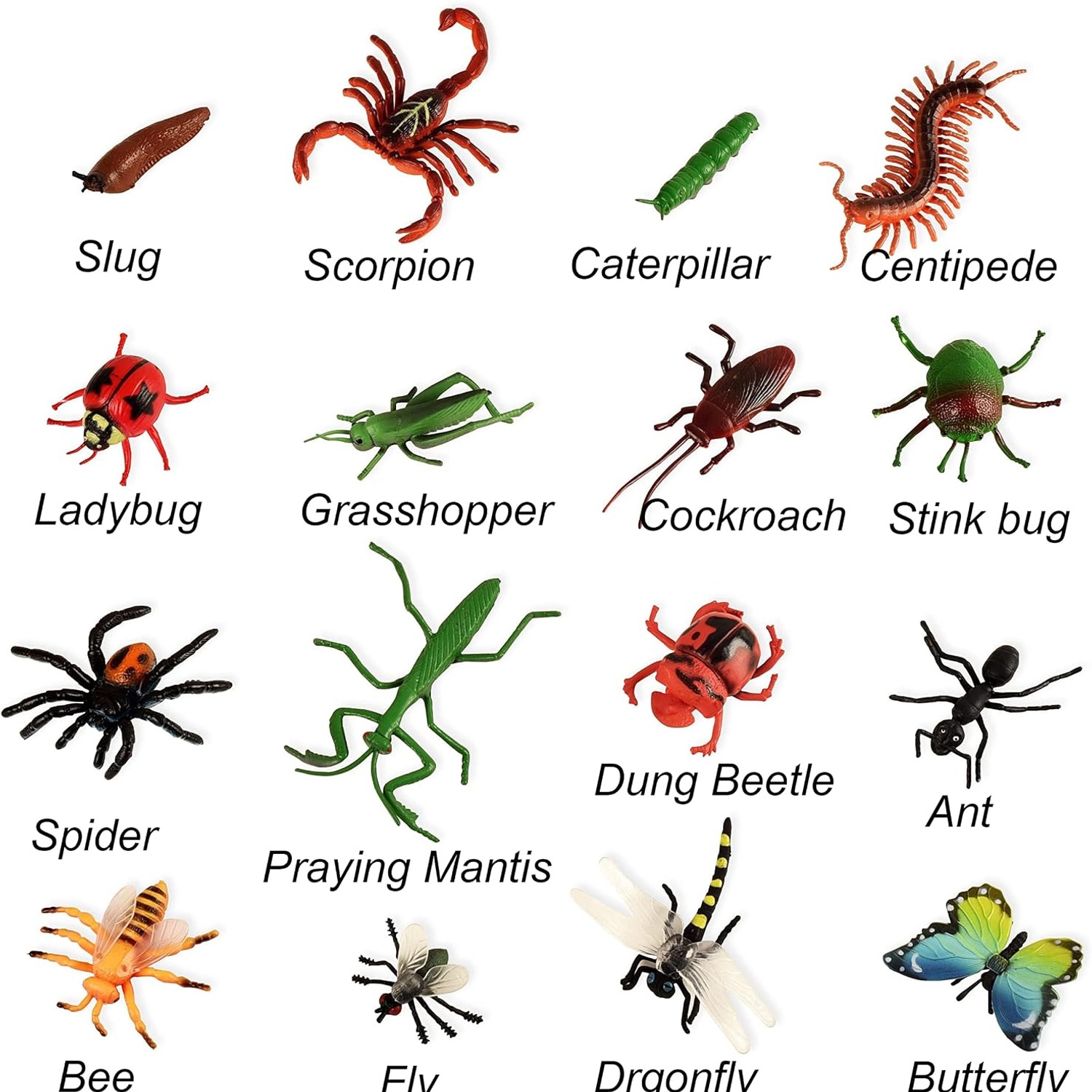
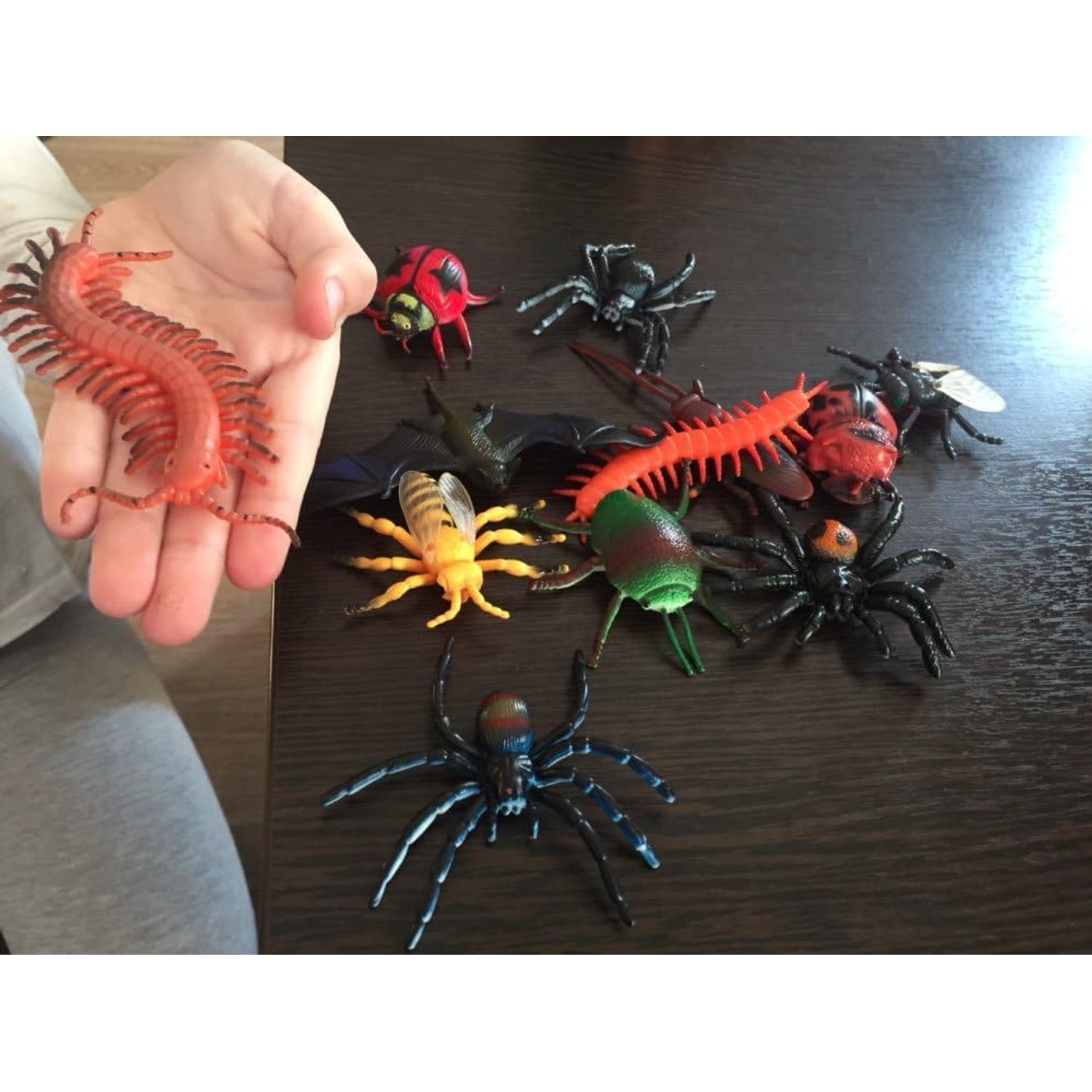
That is the gap this BOHS set fills. Sixteen separate insect figures, each one different, each around 2 to 3 inches, all in one flat box.
How a set like this actually gets used
The first hour is predictable. Everything comes out of the box, gets spread across the floor, and gets sorted by whatever logic the child has in their head that day. Size, scariness, number of legs, colour. Then the figures get named, and some of those names stick for years.
After that, the uses branch out. A few get buried in a sensory bin of rice or dry lentils to be dug up again. Some end up as cast members in a wider small world setup alongside dinosaurs, farm animals and whatever else lives in the toy box. One or two will be deliberately placed in a sibling's shoe, because a realistic plastic cockroach has been fulfilling that role since plastic was invented.
Parents find their own uses. These figures appear on birthday cakes, in party bags, on Halloween tables, in Easter baskets and in Christmas stockings. One set can cover a whole party's worth of favours if you split it up.
None of this needs setup. The power source is listed as manual, there is no battery, and no assembly is required. You open it and play starts.
Why realism matters more than you think
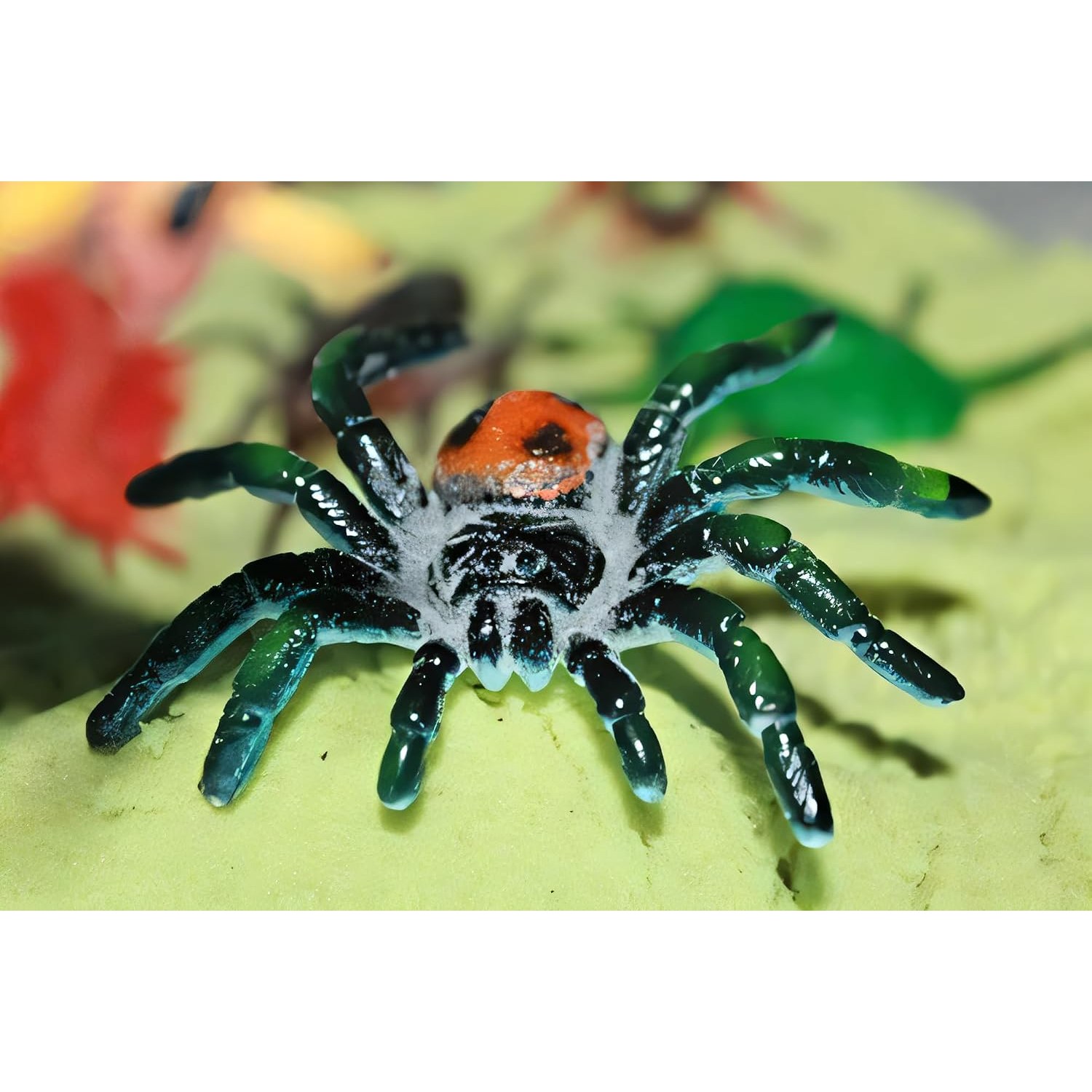
There is a real difference between a cartoon ladybird and a figure moulded with visible wing cases, segmented legs and shell texture. The cartoon version tells a child nothing. The detailed version answers a question before it is even asked.
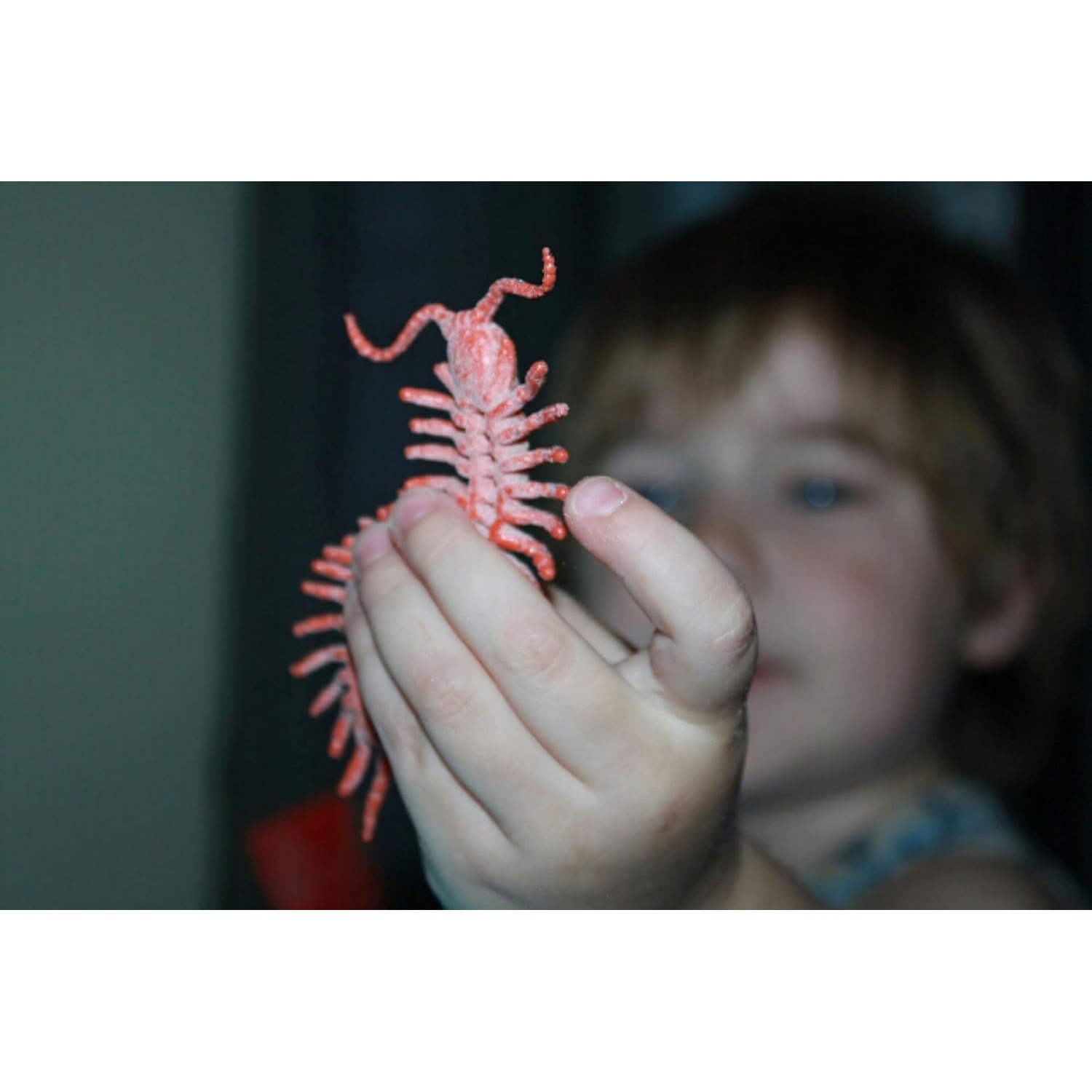
BOHS lists the educational objective for this set as building knowledge of insects and stimulating curiosity about the natural world. That sounds like marketing until you watch a five year old hold a model beetle, turn it over, and count the legs. Six. Then they pick up the spider. Eight. Nobody taught them the difference between an insect and an arachnid, but they just found it themselves, and that sticks far better than being told.
The same realism is why these work as insect models for classrooms and nursery nature tables. A photo is flat. A model can be passed around a circle of children, and every pair of hands finds a detail the last pair missed.
Who it suits
The manufacturer recommends ages 36 months to 8 years. That is a sensible window.
At three, the appeal is tactile and sorting based. Big shapes, obvious differences, lots of lining up in rows. At five or six, children start naming species and wanting to know what each one eats and where it lives. By seven or eight, the figures often become props in more complex stories or get pressed into service for school projects.
Below three, this is not the right toy. The pieces are small and separate, and children under 3 who still mouth objects should not have them. That is not a flaw in the set, it is just what small figure sets are.
The set is listed for indoor use and for one player. In real homes, of course, two or three children will share sixteen bugs quite happily. There is no board, no rules and nothing to run out of.
How to choose a bug set
A few things are worth checking before you buy any insect figure set, this one included.
Count the pieces, and check whether they are all different. Plenty of cheap sets pad their numbers with six identical ants. Sixteen distinct creatures gives you far more play value than twenty with duplicates.
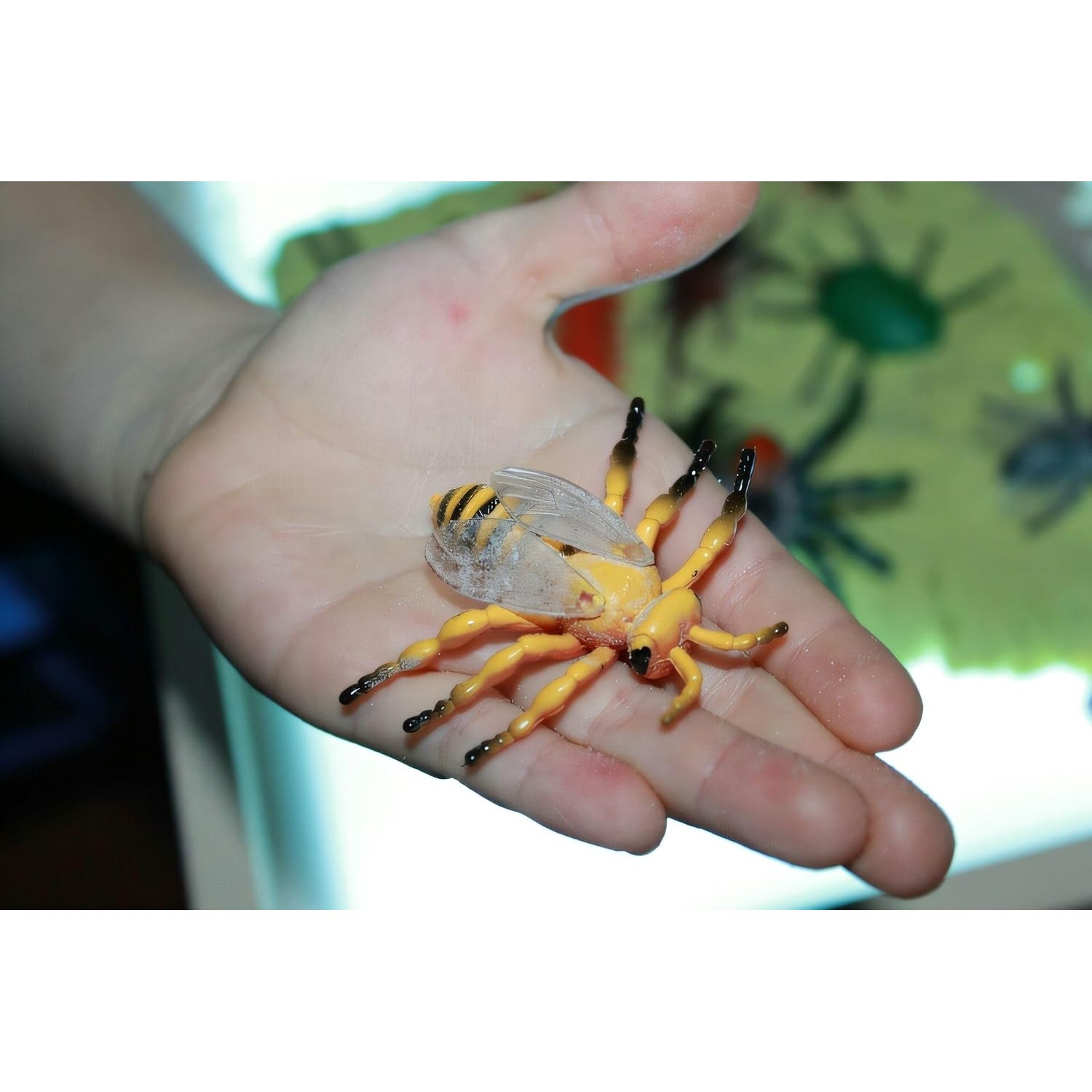
Look at the size. Figures around 2 to 3 inches hit a good balance. Much smaller and they vanish into carpet and become a choking concern. Much larger and you cannot carry the full set anywhere.
Check whether anything needs power. Light up or sound based bug toys sound fun in the shop and are maddening at home. A manual set never runs flat, never needs a screwdriver and never wakes anyone up at six in the morning.
Think about storage before you buy. Sixteen loose pieces need a home. A shoebox, a zip bag or a lidded tub is enough, and deciding on one before the set arrives saves a lot of hunting under the sofa later.
Finally, think past the first use. The best nature learning toys earn their keep because they get reused for parties, school topics, decoration and seasonal fillers, not just the first afternoon.
Care and keeping the set together
Plastic figures are forgiving, but a little care keeps them looking right.
Wipe them with a damp cloth and a drop of mild soap when they get grubby, then dry them fully before they go back in the box. Avoid the dishwasher and boiling water, because heat can soften and warp plastic. Keep the set out of direct sunlight for long stretches and out of hot cars, both of which fade colour over time.
Give them a quick look over now and then. If a leg has snapped and left a sharp point, retire that figure rather than gluing it. Small plastic parts and glue are not a good mix in a child's hands.
The biggest practical issue with any multi piece set is attrition. Figures migrate into other toy boxes, under beds and into coat pockets. A quick headcount at tidy up time, and a dedicated container, does more to keep the set complete than anything else.
Gifting and seasonal use
This set is an easy gift because it needs nothing. No batteries to remember, no app, no age gated content, no charging cable. It ships flat at 24 by 16 by 1 centimetres, so it wraps neatly and posts without drama.
For parties, you can split the figures into individual favour bags or sit them around a cake. For Halloween, scatter them over a table or into a bowl of sweets and let the realism do the work. For Christmas and Easter, a single figure tucked into a stocking or basket costs nothing extra and gets a bigger reaction than most things that do.
If you already have dinosaur figures at home, these combine with them well. Children rarely care that the timelines do not match.
The short version
Sixteen different plastic insect figures, each around 2 to 3 inches, with no batteries and no assembly. BOHS recommends them for ages 36 months to 8 years and lists them for indoor use, with an educational aim of building insect knowledge and curiosity about the natural world.
They work as a toy, a teaching aid, party decoration and a seasonal filler, and they keep working long after the first week. For a child who turns over stones in the garden to see what is underneath, it is about as safe a gift bet as there is.