
Toy Warehouse
Company
Shop By Category
T&Cs
Shop Online
  • Box contents listed
  • Free tracked delivery across the UK over £75
  • 14-day returns

Kids Handheld Digital Microscope | Pocket microscope for kids | Science gadget for kids

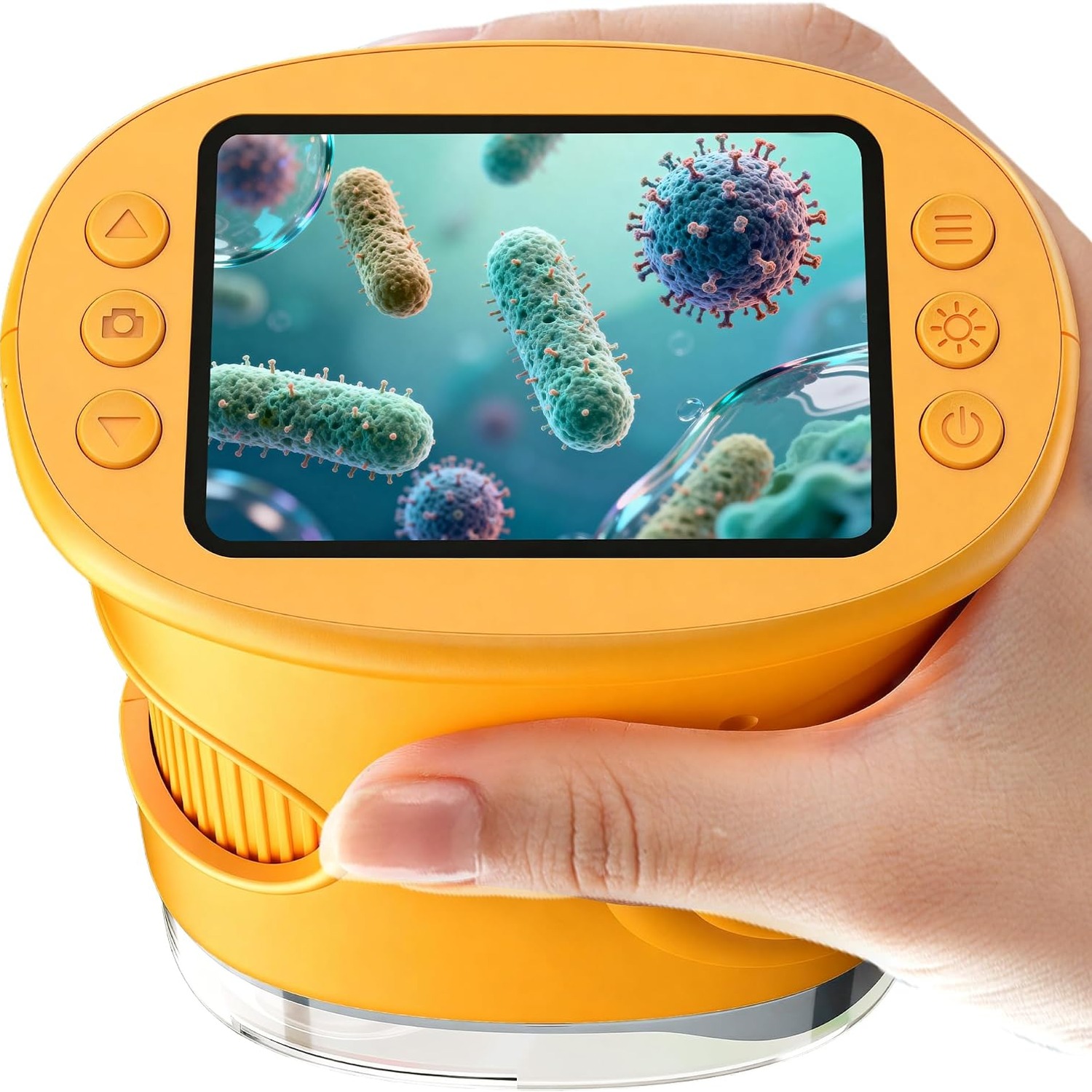
Kids Handheld Digital Microscope with LED Lighting

£50.99 £60.99 Save £10
  • Up to 1000x
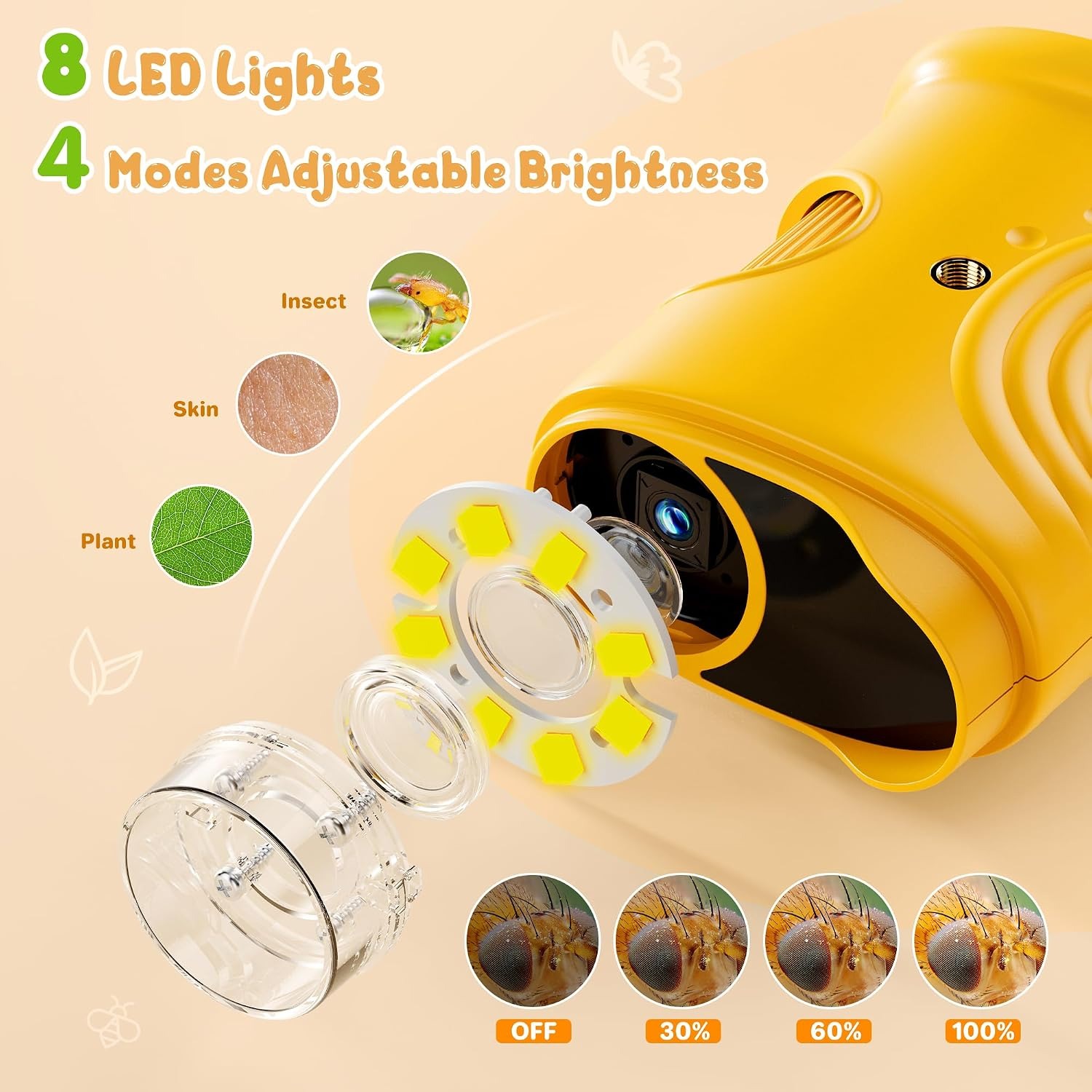
  • 8 LED Ring
  • Photo and Video
  • Built for Small Hands

Price: £50.99 £60.99

  • Free tracked delivery across the UK on orders £75+, otherwise a flat £10
  • Pay by card or PayPal, handled by the payment provider
  • 14 days to change your mind, plus your statutory rights
Product specifications
BrandBMDSAE
Model382
Maximum Magnification1000x
Digital Zoom1000x
Objective LensAchromatic
Light SourceLED
Real Angle of View110 degrees
Power SourceBattery powered, USB-C charging
Enclosure MaterialPlastic
ColourOrange
Item Weight0.22 kg
Number of Items1
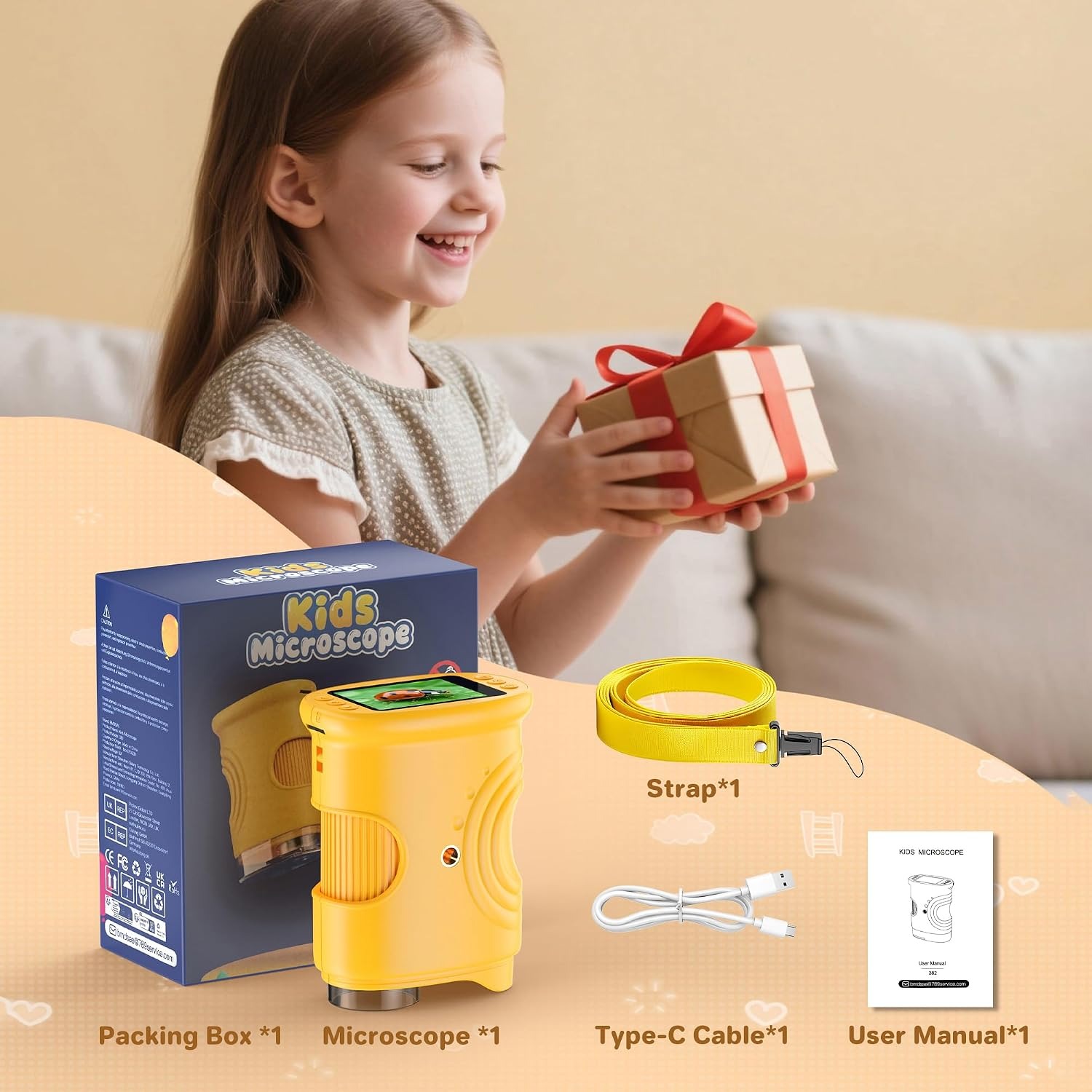
Box ContentsMicroscope, USB-C cable, lanyard, instruction manual
Country of OriginChina
Warranty1 year
Weight0.22 kg
Shipping & returns

Tracked delivery anywhere in the UK. It is free on orders of £75 or more, and a flat £10 below that.

Under the Consumer Contracts Regulations 2013 you have 14 days from delivery to cancel for any reason, and a further 14 days to send it back in resaleable condition. We refund the price you paid, including standard delivery. You cover the cost of returning it unless the item is faulty.

If it arrives faulty, damaged or not as described, we put it right at no cost to you under the Consumer Rights Act 2015, return postage included.

Shipping details · Refunds and returns

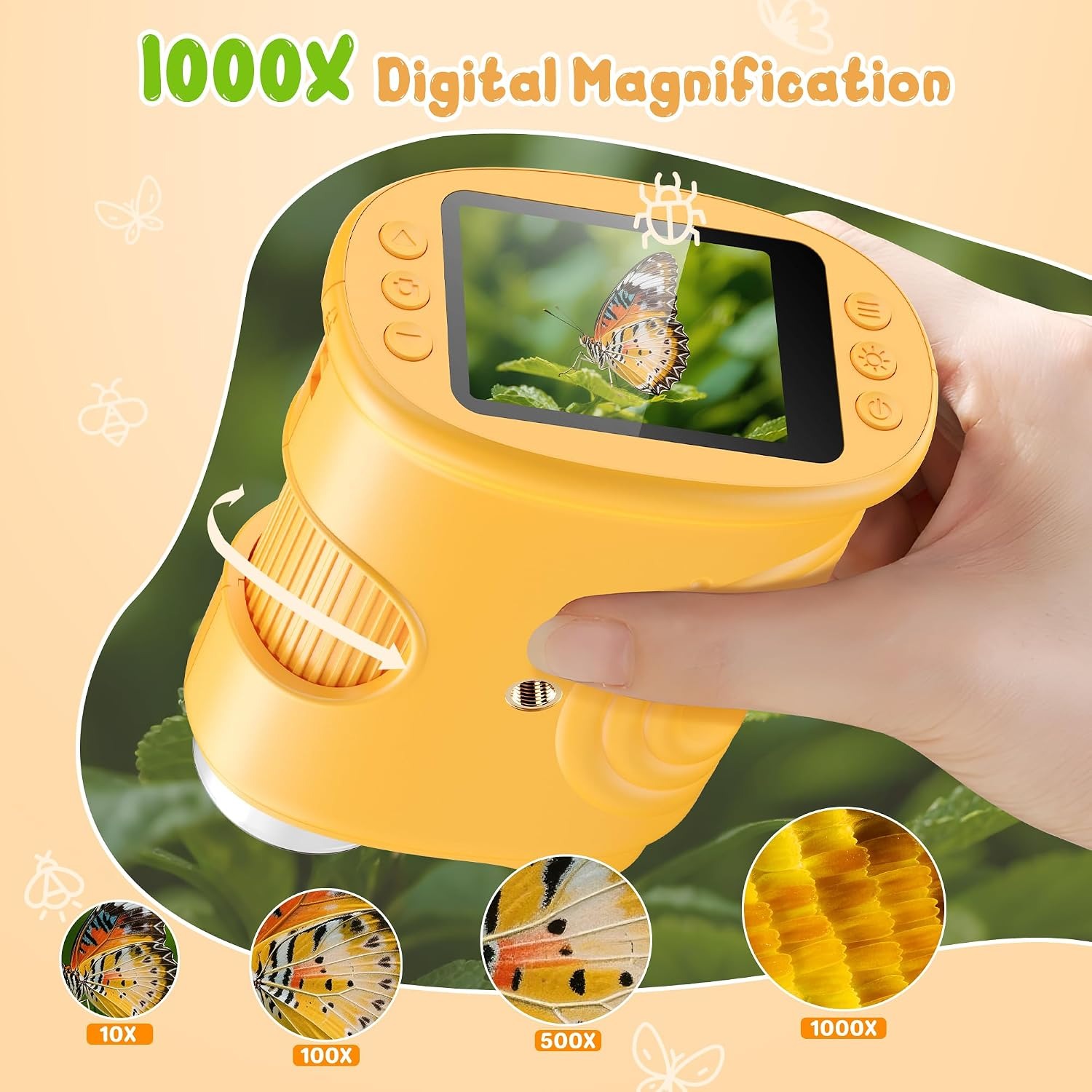
Up to 1000xOptical and digital magnification brings cells, fibres and insect detail into view.
8 LED RingThree brightness settings light specimens evenly, indoors or after dark.
Photo and Video2MP capture with 32M onboard storage for saving and sharing finds.
Built for Small HandsLight 0.22 kg plastic body, large focus dial and a carry lanyard.

Turn a leaf, a feather or a grain of sand into a discovery with a kids handheld digital microscope that goes wherever curiosity does.

Up to 1000x digital magnification, an 8-LED light ring with adjustable brightness, manual focus and onboard photo and video storage, all in a 0.22 kg body sized for small hands.

A handheld digital microscope that gives children real magnification instead of a blurry plastic toy lens.

Manual focus and up to 1000x magnification let young scientists examine leaves, skin, sand, coins and insect wings in detail.

An 8-LED light ring with off, medium and high settings keeps specimens bright without washing them out.

A 2MP camera with 32M of onboard storage saves photos and AVI video that can be copied to a Windows or Mac computer over USB.

At 0.22 kg with a carry lanyard and a rechargeable battery, it travels to the garden, the beach, the classroom or the campsite.

Kids Handheld Digital Microscope with LED Lighting

Most children meet their first microscope as a hollow plastic tube with a fixed lens and a mirror that never quite catches the light. It is fun for about ten minutes. This one works differently. It is a handheld digital microscope with an achromatic objective lens, manual focus and magnification up to 1000x, so what a child sees on the screen is actual structure, not a smear. That difference is usually the gap between a toy that gets shelved and a science gadget for kids that comes out every weekend.

Kids Handheld Digital Microscope with LED Lighting

The body is moulded plastic and weighs 0.22 kg, which matters more than it sounds. A microscope that a six-year-old can hold steady in one hand is a microscope that actually gets used. The focus dial is large enough for fingers that are still learning fine control, and the included lanyard means it can hang around a neck on a walk rather than live in a drawer. The orange casing is easy to spot if it gets put down in long grass.

Kids Handheld Digital Microscope with LED Lighting

Lighting is handled by a ring of eight LEDs with three settings, off, medium and high. Specimens sitting flat on a table have no natural light coming through them, so built-in illumination is what makes the image readable. The three-step control helps as well, because shiny subjects like a coin or a beetle shell need far less light than a fibrous leaf. Turning the LEDs down is often the fix when an image looks blown out rather than out of focus.

Kids Handheld Digital Microscope with LED Lighting

A 2MP camera and 32M of onboard storage mean discoveries do not evaporate. Children can take still photos or record AVI video, then connect the microscope to a Windows or Mac computer with the supplied USB-C cable and copy the files across. That turns a casual look at pond water into a science fair entry, a school presentation or a folder of images they keep adding to over a year. Being able to show someone else what you found is a big part of why the interest sticks.

Kids Handheld Digital Microscope with LED Lighting

It arrives with the microscope, a USB-C cable, a lanyard and an instruction manual, and it carries a one year warranty. Beyond that, the specifics of box dimensions and packaging are not listed by the maker, so we do not claim them. What we can say is that this is a portable microscope for children that is built to be carried, charged and used, rather than displayed.

Not sure yet? That is fine.

A toy has to suit the child it is for, and you cannot always judge that from a photograph. Under the Consumer Contracts Regulations 2013 you have 14 days from delivery to cancel for any reason, and a further 14 days to send it back in resaleable condition. We refund the price you paid, including standard delivery.

If it turns up faulty, damaged or not as described, that is on us. The Consumer Rights Act 2015 covers you, and we pay the return postage. Read the full detail on our refunds and returns page, or ask us anything before you order.

Frequently Asked Questions

What is a kids handheld digital microscope?

It is a microscope you hold in your hand rather than one that sits on a bench with a stage and clips. A camera and lens inside magnify whatever you point it at, and the LED ring lights the subject. This model offers up to 1000x magnification and can save images to its own memory.

How does it differ from a traditional school microscope?

A traditional microscope needs slides, a stage and good lighting, and you look through an eyepiece. This handheld digital microscope is placed directly on or above the object, so there is no slide preparation for most things. It also records photos and video, which a basic optical microscope cannot do.

What magnification does it reach?

The listed maximum is 1000x, combining optical and digital magnification. Lower magnifications are far more useful for everyday objects like fabric, leaves and skin. Most children spend their time well below the top setting.

Is 1000x actually usable for a child?

At very high magnification the depth of field is tiny, so the subject has to be flat and perfectly still. Children usually get the clearest and most satisfying images at moderate magnification. Treat 1000x as the ceiling rather than the everyday setting.

What age is this suitable for?

It suits primary and early secondary school ages, roughly six and up, with younger children enjoying it alongside an adult. The large focus dial and light 0.22 kg body are the main reasons it works for smaller hands. Very young children will need help steadying it.

Does it need batteries?

It is battery powered and charges over USB-C using the included cable. There is no need to keep buying disposable cells. Charge it before a trip the way you would a tablet.

How long does a charge last?

Runtime depends on how brightly the LEDs are set and how much video is recorded. Lowering the LED brightness is the easiest way to stretch a session. Specific runtime figures beyond the battery type are not listed by the maker.

What comes in the box?

The microscope, a USB-C cable, a carry lanyard and an instruction manual. That is everything needed to start using it once it is charged. No slides or specimen kit are included.

Can it take photos?

Yes. It has a 2MP camera and 32M of onboard storage for still photos and AVI video. Files can be copied to a computer using the USB-C cable.

Can I get the images onto a computer?

Yes, connect it to a Windows or Mac machine with the supplied USB-C cable and copy the files across like you would from a USB stick. This makes it genuinely useful as a classroom microscope or for a school project. Children can build a folder of their own findings over time.

Does it work with a phone or tablet?

The listed transfer method is USB connection to a Windows or Mac computer. Phone or tablet compatibility is not specified by the maker. If you need phone mirroring, check the manual before relying on it.

How bright are the LEDs?

There are eight LEDs with three settings, off, medium and high. Having a low option matters, because shiny subjects reflect too much light at full brightness. If an image looks washed out, dropping a level usually fixes it.

Why does it have an off setting for the light?

Some subjects, like a backlit leaf or a translucent wing held against a window, look better with natural light behind them. Turning the LEDs off avoids glare on glossy surfaces too. It also saves battery.

What can my child look at with it?

Leaves, flower petals, soil, sand, salt, sugar, fabric, hair, skin, feathers, coins, printed paper and dead insects found in the garden. Printed money and newspaper photos are surprisingly popular because the dot patterns are striking. Almost anything flat and small is fair game.

Can it look at pond water or anything liquid?

Liquids are tricky on a handheld microscope because they move and because the unit is not waterproof. A single drop on a flat slide or clear plastic can work if it is handled carefully by an adult. Keep water away from the body and lens.

Does it need microscope slides?

Not for most uses. You point it directly at the object, which is the main appeal of a pocket microscope for kids. Slides can still help if you want to examine something very thin or flat.

How do you focus it?

With a manual focus dial. You rest or hover the microscope over the subject and turn the dial until the detail snaps into view. It takes a few minutes to learn and that learning is part of the value.

Why is manual focus better than automatic for a child?

Manual focus teaches patience and gives a sense of control over the image. Autofocus tends to hunt back and forth on textured subjects. Once a child has the knack, they can lock in a sharp image quickly.

What is an achromatic objective lens?

It is a lens design that reduces colour fringing, the faint purple or green edges you sometimes see around high-contrast detail. The result is a cleaner, more accurate image. It is a step above simple single-element toy lenses.

What does the 110 degree angle of view mean?

It describes how wide a view the optics take in. A wider angle makes it easier to find your subject before zooming in on the interesting part. In practice it means less hunting around.

How heavy is it?

It weighs 0.22 kg. That is light enough to hold steady for long stretches and to carry on a lanyard without it being a nuisance. Weight is one of the main reasons it works as a portable microscope for children.

Is it sturdy enough for outdoor use?

The enclosure is plastic and the lanyard helps prevent drops when it is being carried. Like any optical device it should not be thrown, soaked or left in direct sun. Treat it the way you would a compact camera.

What colour is it?

Orange. It is easy to spot if it gets set down on a lawn or a cluttered desk. That is genuinely handy on a nature walk.

How do I clean the lens?

Use a dry lens cloth with light pressure. Avoid solvents, household cleaners and paper towel, which can leave scratches or residue. A speck of dust on the lens looks enormous at magnification, so gentle regular cleaning helps.

How do I clean the body?

Wipe it with a soft, dry or barely damp cloth. Do not run it under a tap or submerge it. Keep the USB-C port free of dust and grit.

Is this a good STEM gift for kids?

It works well as a birthday or Christmas present for a child who collects things, asks a lot of questions or likes nature. The appeal is that it does something real rather than simulating it. Pairing it with a notebook makes the gift feel more complete.

Can it be used for school science fair projects?

Yes. The ability to save photos and video means a child can document observations over several days and present the evidence. That is exactly what a science fair microscope needs to do.

Is there a warranty?

Yes, this product carries a one year warranty. Keep your order confirmation as proof of purchase. Contact us first if something goes wrong and we will help sort it out.

How long does delivery take?

Delivery is by tracked courier to any UK address. Allow 3 to 7 working days from the order date, and a little longer for the Highlands, islands and Northern Ireland. Orders of £75 or more are delivered free, and smaller orders pay a flat £10.

What if it is not right when it arrives?

Contact us within 14 days of delivery with your order number and a short description of the problem. If it arrived damaged or faulty, a photo speeds things up considerably. We will arrange a replacement or a refund rather than leave you with something that is not working.

How to Choose a Handheld Microscope for a Curious Child

6 min read Toy Warehouse

The toy microscope problem

Plenty of parents have bought a microscope for a child, watched it get unwrapped with real excitement, and then watched it go quiet within a week. The reason is almost always the same. Cheap microscopes have a fixed plastic lens, no useful light source and a focus mechanism that does not really focus. The child looks through it, sees a grey blur, tries again, and decides science is boring. That is a shame, because the problem was never the child.

A handheld digital microscope gets around this in two ways. First, the optics are better, with an achromatic objective lens and manual focus that genuinely sharpens the image. Second, the picture appears on a screen rather than through a small eyepiece, so a child does not have to learn eye placement before they see anything at all. They point, they turn the dial, and detail arrives. That first clear view of a leaf vein or the scales on a moth wing is the moment that makes the whole thing worth it.

How a handheld digital microscope works

Instead of a stage, clips and a mirror, you have a small barrel that you rest on or hold above whatever you want to look at. Inside is a lens and a digital camera sensor. Around the lens sits a ring of LEDs that lights the subject, which matters because an object sitting flat on a table has no light coming up through it the way a prepared slide does.

This model uses eight LEDs with three settings, off, medium and high. Having that control is more useful than it sounds. A coin, a piece of foil or a glossy beetle shell will bounce back too much light at full brightness and the image goes white. Drop the LEDs to medium and the detail reappears. A dense leaf or a dark piece of fabric usually wants the high setting. Learning to adjust light before adjusting zoom is one of the first real skills a young scientist picks up here.

Magnification runs up to 1000x, combining optical and digital zoom. It is worth being honest about what that means in daily use. Very high magnification narrows the depth of field to almost nothing, so the subject must be flat and completely still or most of the frame will be soft. In practice, children get their best images well below the maximum, somewhere in the range where you can still recognise what you are looking at while seeing structure you could never see with the naked eye. The top end is there when a subject deserves it.

Why saving images changes everything

The 2MP camera and 32M of onboard storage are not a gimmick. They change how a child uses the microscope. A look through an eyepiece lasts a second and then it is gone. A saved photo can be shown to a parent at dinner, sent to a grandparent, printed for a school display or compared with a photo taken a week later.

Connect the microscope to a Windows or Mac computer with the included USB-C cable and copy the files across. Children who like collecting things take to this immediately. They build folders, name them, compare them. A child who photographs the same patch of moss across a month has done a piece of real observational science without anyone calling it homework. For a science fair microscope, this ability to document is the whole point, because evidence is what separates a project from a guess.

Video recording in AVI format adds another layer. Small moving things, a mite crawling across a leaf or a drop of liquid spreading through fabric, are far more convincing on video than as a still.

Who it suits

The sweet spot is roughly six years old and up. At 0.22 kg, this is light enough for a child to hold without their hand shaking after a minute, and the focus dial is sized for fingers that are still developing fine control. Younger children can absolutely enjoy it, but expect to sit alongside them for the first few sessions and help steady the barrel.

It also suits a particular kind of child rather than every child. If you have one who collects feathers, keeps rocks in their pockets, asks why instead of what, or likes taking things apart, this will land well. It is a solid science gadget for kids who want to find things out rather than be told things.

Teachers and home educators get good value from it too. One handheld unit can be passed around a group far more easily than a bench microscope, and because the images save to storage, the whole class can look at what one child found.

What to look for when comparing microscopes

A few things separate a useful instrument from a disappointing one.

Lens quality comes first. An achromatic lens reduces the coloured fringing you see around high-contrast edges with cheaper single-element optics. The image simply looks cleaner.

Lighting comes second. Any handheld microscope without built-in light will frustrate you, because your own hand and the body of the device will shade the subject. Multiple LEDs with adjustable brightness solve this properly.

Weight is third and it is underrated. Heavy units get put down. Something at 0.22 kg with a carry lanyard actually comes on the walk.

Then consider how you get images off the device. A microscope that stores nothing limits what a child can do with their observations. USB transfer to a standard computer keeps things simple and does not depend on an app that may stop being updated.

Finally, think about power. A rechargeable battery with USB-C means no hunting for AA cells on a Sunday afternoon, and you can top it up from a power bank in the field.

Getting good results

Start low. Put the microscope on a printed page or a banknote at modest magnification and turn the focus dial slowly until the fibres and dot patterns snap into view. That early success builds confidence before moving on to harder subjects.

Keep the subject still. Resting the barrel directly on a flat object gives much sharper results than holding it above. For things that will not sit flat, a scrap of card or a piece of clear plastic underneath helps.

Match the light to the surface. Shiny and pale subjects want less light, dark and fibrous ones want more. If an image looks bleached, that is a lighting issue and not a focus issue.

Clean the lens regularly with a dry lens cloth. A fingerprint that you would barely notice on a phone screen looks like fog at magnification.

Give the child a notebook. Writing down what they looked at, at what setting, and what they noticed turns a gadget into a habit.

Looking after it

Wipe the orange plastic body with a soft, dry or barely damp cloth. Never submerge it and keep it away from taps and puddles. Store it somewhere dry rather than in a damp shed or a car boot in summer. Keep the USB-C port free of dust and grit, and if the microscope is going to sit unused for a while, give the battery a top-up every couple of months so it does not sit flat. The lanyard is worth using every time it leaves the house, because most damage to handheld devices happens between the hand and the ground.

The short version

This is a real instrument at a price that makes sense for a family, not a plastic prop. Up to 1000x magnification through an achromatic lens, eight LEDs with three brightness levels, manual focus, a 2MP camera with onboard storage, USB-C charging and transfer, a 0.22 kg body and a lanyard. It comes with a cable, a lanyard and a manual, and it is covered for a year.

If you want a pocket microscope for kids that survives contact with actual curiosity, this is a sensible choice. Charge it, hand it over, and go look at a leaf together.

Browse the shop

Ready to see the small stuff?

Add the kids handheld digital microscope to your order and let the next walk in the garden turn into a research trip.

Ask us a question

Page summary

The Kids Handheld Digital Microscope by BMDSAE (model 382) is a portable science tool for children, offering up to 1000x magnification through an achromatic objective lens with manual focus. It uses an 8-LED light source with three brightness levels and has a 110 degree real angle of view. A built-in 2MP camera with 32M of onboard storage records photos and AVI video, which can be transferred to Windows or Mac computers via the included USB-C cable. The plastic body is orange, weighs 0.22 kg, and is battery powered with USB-C charging. The box contains the microscope, USB-C cable, lanyard and instruction manual. Country of origin is China. Warranty is one year. Exact product dimensions are not specified by the maker.