

The complete guide
How to Choose a 100 Piece Puzzle Set for Kids
The problem with buying puzzles for children
Most parents have the same experience at least once. You buy a jigsaw that looks lovely in the photo, your child opens it, tips out the pieces, and gives up within four minutes. The box goes in a cupboard. A year later you find it with eleven pieces missing.
Almost always, the cause is the same. The puzzle was pitched at the wrong level. Too few pieces and a capable child is bored before they have begun. Too many and the pile looks like work rather than play. The sweet spot for most primary-age children sits somewhere between 60 and 150 pieces, which is exactly where a 100 piece puzzle lands.
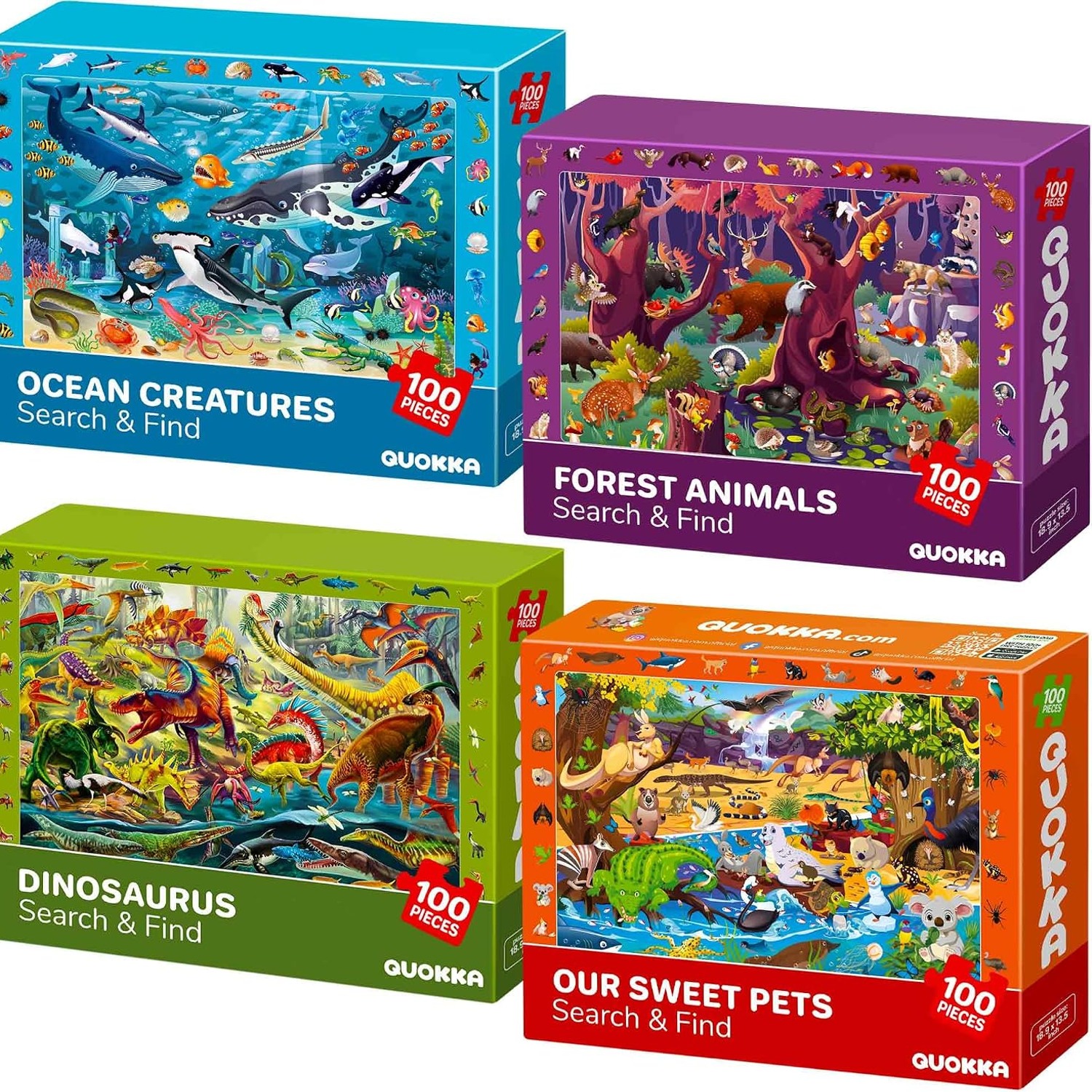
The second common problem is one puzzle, built once. A jigsaw loses some of its pull after the first completion, because the child now knows where things go. A multipack solves that by giving several fresh starts. This QUOKKA set contains four 100 piece puzzles, which is a very different proposition from a single box.
How a jigsaw actually teaches
There is a lot of marketing noise around educational toys, so it helps to be plain about what is really going on when a child builds a puzzle.
First there is sorting. A child tips out 100 pieces and faces chaos. The instinctive move is to group things, straight edges in one pile, blue pieces in another. That is categorisation, and it is the same mental move used in early maths and reading.
Then there is matching. The child holds a piece, scans the picture, and tests a theory. Sometimes it fits, sometimes it does not. The piece gets put back and another is tried. That loop is problem solving in its simplest and most honest form, with instant feedback and no judgement.
Then there is staying with it. A 100 piece puzzle takes longer than one burst of attention. The child learns to come back to something unfinished, which is a harder skill than it sounds and one that transfers to almost everything else.
The listed objectives for this set are animal recognition, concentration, logical thinking, memory, motor skill and patience. None of that happens because the box says so. It happens because a child wants to see the finished dinosaur.
Who this set suits
The recommended age range runs from 36 months to 10 years and the skill level is beginner. That is a wide window, and in practice it splits into three groups.
Children around three and four will need company. At this age 100 pieces is ambitious on their own, but with an adult sorting edges and offering the occasional hint, it becomes a shared activity rather than a frustration. Expect to do most of the structure while they do the satisfying placements.
Children aged five to seven are the core audience. This is the age when a 100 piece build becomes genuinely achievable solo, usually over two sittings at first and then in one as they get quicker. It is also the age when a child starts to take pride in finishing something without help.
Children aged eight to ten will find these easy, and that is not a criticism. An easy puzzle is perfect for a younger sibling to join, for a wind-down before bed, or for a holiday where nobody wants a challenge. Some older children also enjoy building against the clock, which turns an easy puzzle into a game.
Why the finished size matters
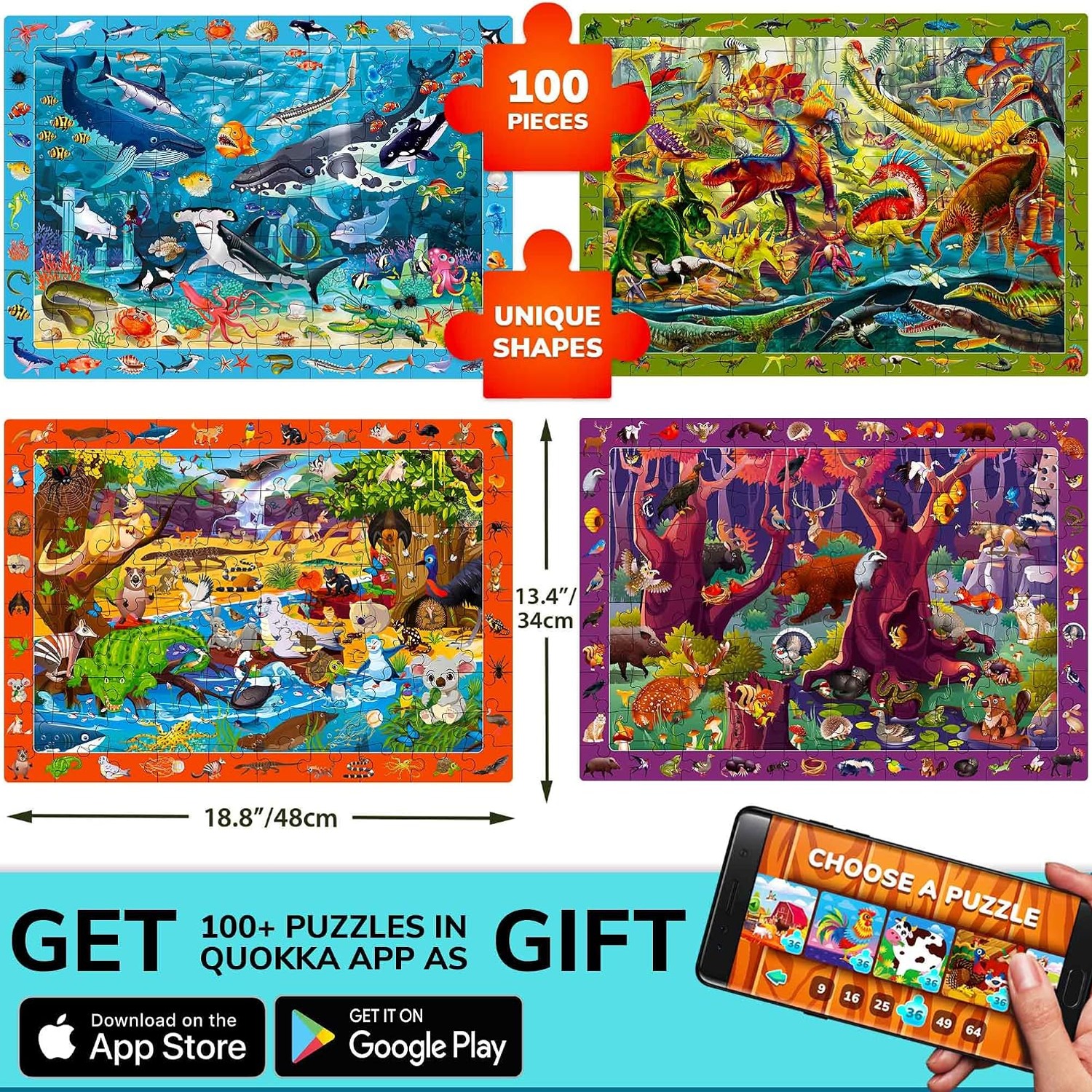
Each puzzle finishes at 60 cm long by 42 cm wide. People tend to skim past this number, but it is one of the more useful specs on the page.
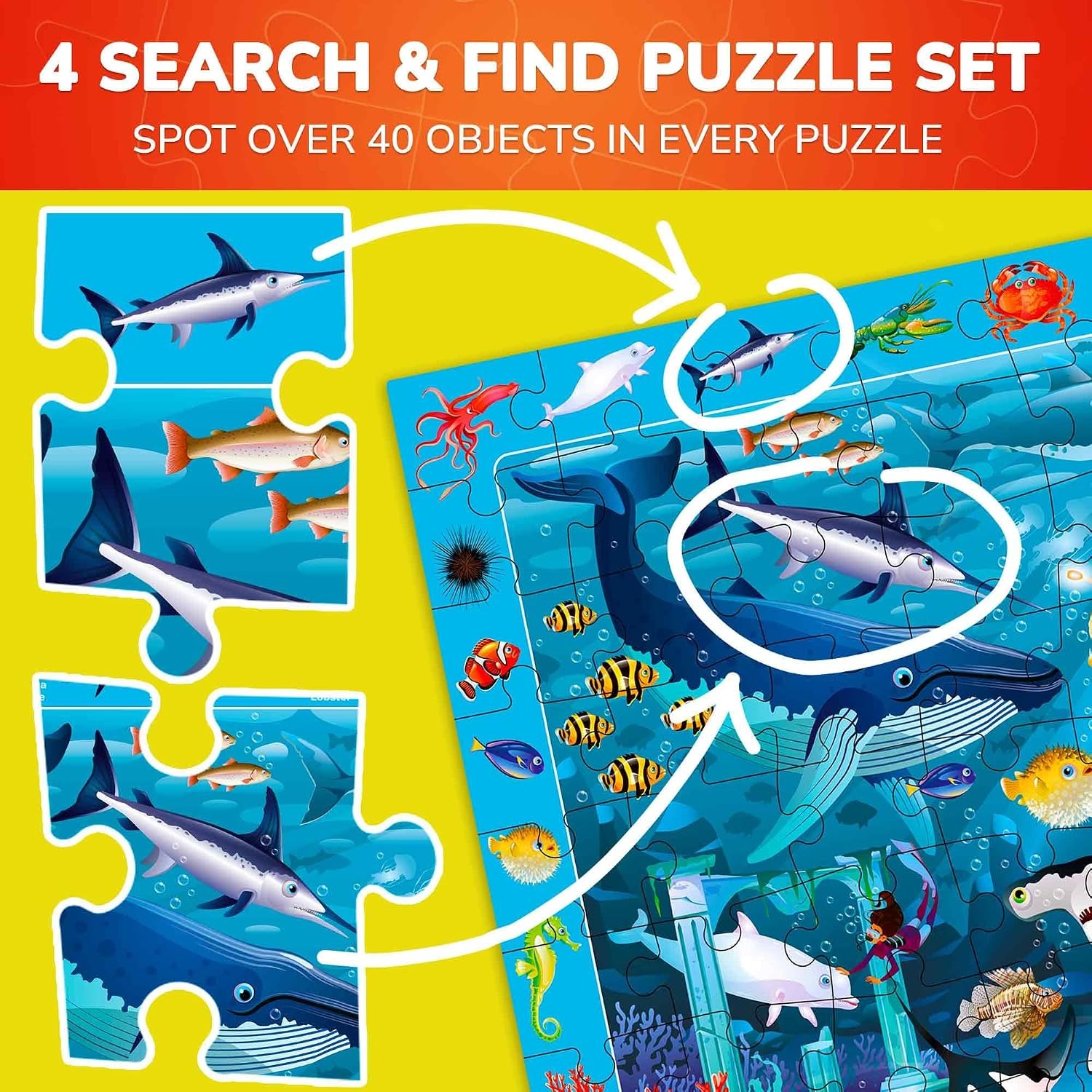
A larger finished area with the same piece count means larger individual pieces. Larger pieces are easier to grip, easier to turn, and easier to see detail on. For a child still developing fine motor control, that is the difference between a pleasant hour and a fiddly one.
It also means you need to think about surface. A 60 by 42 cm build needs clear table space, and ideally space that can stay cleared. If your dining table gets reset for every meal, consider building on a large tray or a sheet of stiff card so the whole thing can be lifted out of the way and brought back later.
Choosing between themes
The theme across the set is animals, covering wild animals, ocean life and dinosaurs. If you are buying for a specific child, think about which of those three they would pick first in a bookshop.
That matters more than parents expect. A child who is deep in a dinosaur phase will attack a dinosaur puzzle with real focus, while the same child might drift off halfway through a generic landscape. Having several subjects in one set means you are covered either way, and you can save the less obvious designs for when the favourite has been built a few times.
If you are buying for a household with more than one child, the mix is genuinely useful. Two children with different interests can each have a puzzle that feels like theirs.
Materials and what to expect
The pieces are cardboard. That is standard for children's jigsaws and it behaves in predictable ways. Cardboard holds a crisp cut, takes bright printing well, and keeps the weight down. The whole set comes in at 939 g, which is light enough to pack for a trip.
The trade off is moisture. Damp is the enemy of any cardboard puzzle. Build away from drinks where you can, wipe hands before starting, and never store the boxes somewhere that gets condensation, like a garage shelf or a window ledge. A dry cupboard is all it takes.
Cardboard pieces also soften slightly at the tabs after many builds. That is normal and does not stop a puzzle working. It usually takes a lot of repeat use before you notice it at all.
Making it last
Puzzle sets fail for one reason more than any other, which is mixed and missing pieces. A few habits sort this almost entirely.
Keep each puzzle in its own container and never let two sets share. Tip out only one puzzle at a time, even if two children are building side by side at the same table. At the end of a session, sweep the table with a flat hand rather than relying on a visual check, since pieces hide under elbows and plates.
If a box gets damaged, move those pieces straight into a labelled zip bag with a photo of the finished picture tucked inside. That photo is worth more than you think, because a child who can see the target stays interested for longer.
Playing together
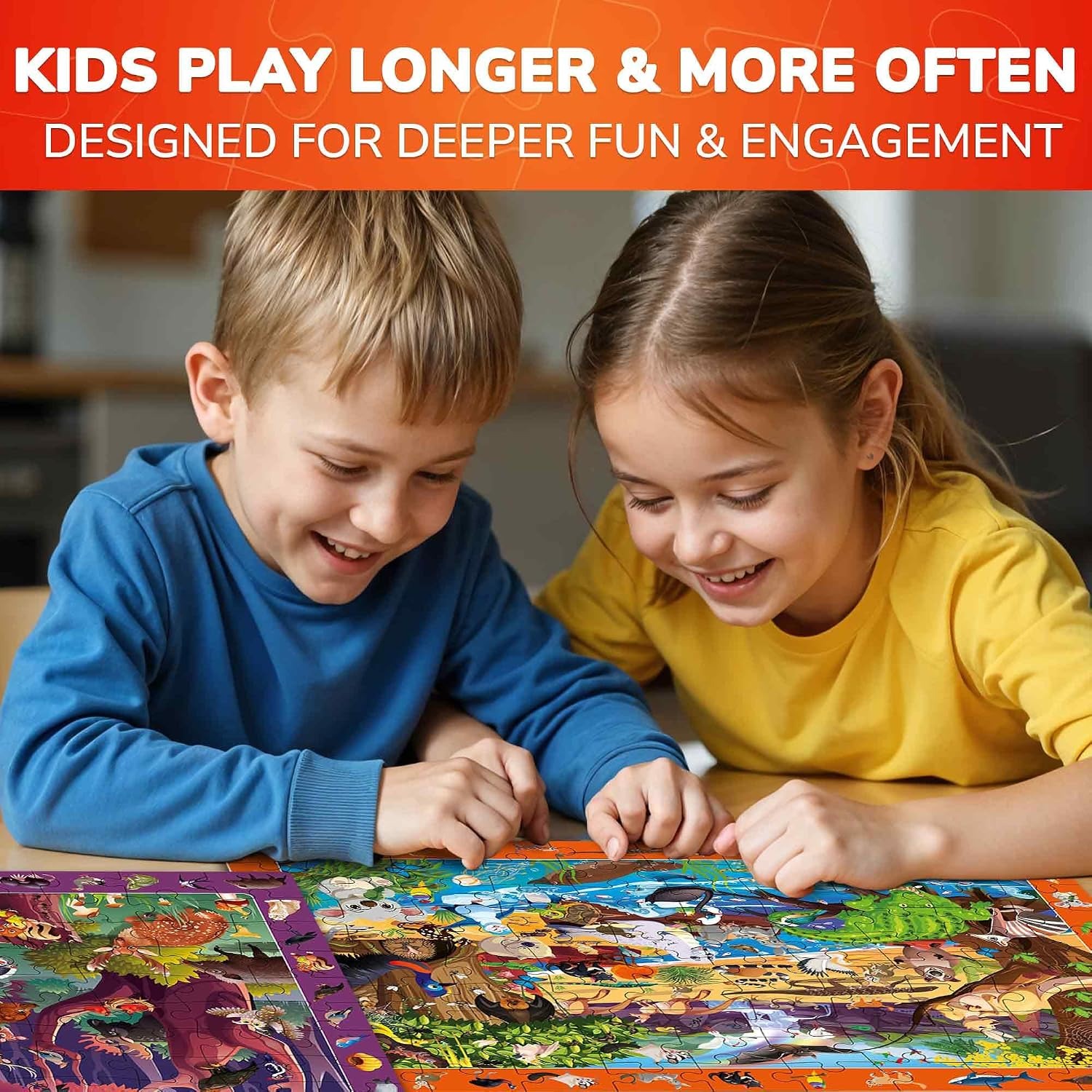
The listed player count is one to four, which reflects how most families actually use a set like this. One child building quietly, two children racing or cooperating, or a whole table working on one picture after a meal.
If you want to make it a shared activity, give people jobs. One person does edges, one sorts by colour, one hunts for a specific animal. It keeps everybody busy and stops the fastest builder from simply finishing it for everyone else.
For a younger child, a good trick is to place a piece almost in position and let them push it home. They get the satisfying click and the sense of progress, and they stay engaged long enough to start spotting matches themselves.
The short version
This is a four pack of beginner-level 100 piece jigsaws with animal, sea creature and dinosaur artwork, cut from cardboard, each finishing at 60 by 42 cm. The recommended age is 36 months to 10 years, and the realistic core audience is five to seven year olds who can mostly manage it alone.
Buy it if you want a set that lasts longer than one afternoon, if you have more than one child, or if you want something sensible to pack for a holiday. Think twice if your child is already comfortably building 300 piece puzzles, since they will outgrow this quickly.
For most families with primary-age children, four puzzles at this level is the right amount of jigsaw to have in the house.