
The complete guide
Choosing a Wooden Dinosaur Puzzle Set, A Parent's Buying Guide
The problem with most children's puzzles
Here is what usually happens. You buy a cardboard jigsaw. It gets done twice. Then a corner bends, two pieces go missing, and the box sits at the bottom of the toy cupboard with a lid that no longer closes. Six months later it goes in the bin.
The failure is rarely the child. It is the materials and the storage. Thin card peels at the die-cut edges after a few dozen presses, and a flimsy box does not hold pieces in any useful way. The puzzle stops fitting together properly, the child senses it, and interest drops off.
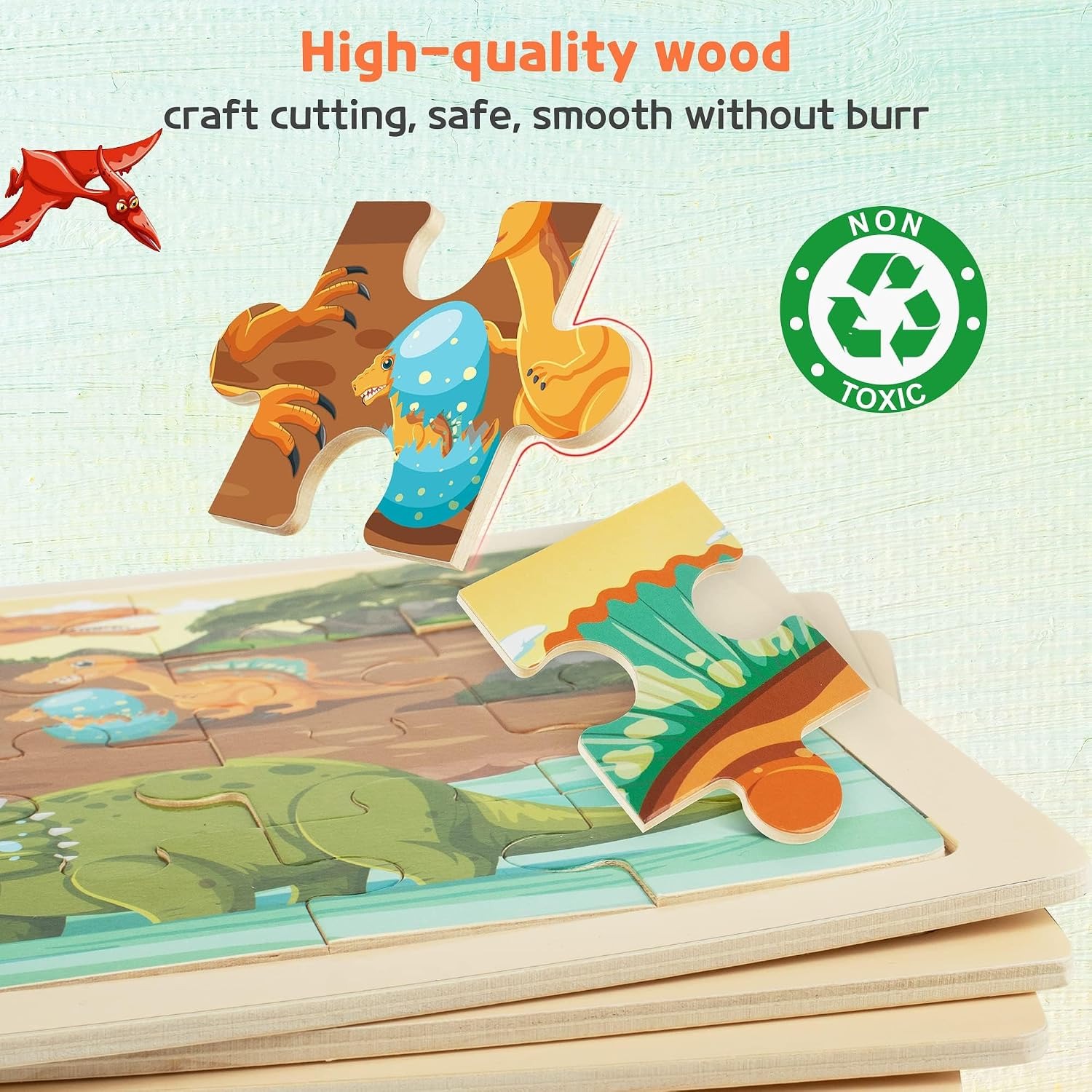
A wooden jigsaw puzzle set fixes both problems at once. The pieces are cut from wood, which means they keep their shape when a small hand presses hard on them. And when a set arrives with a proper tray, the pieces have somewhere to live that is not a torn cardboard box.
What this set actually is
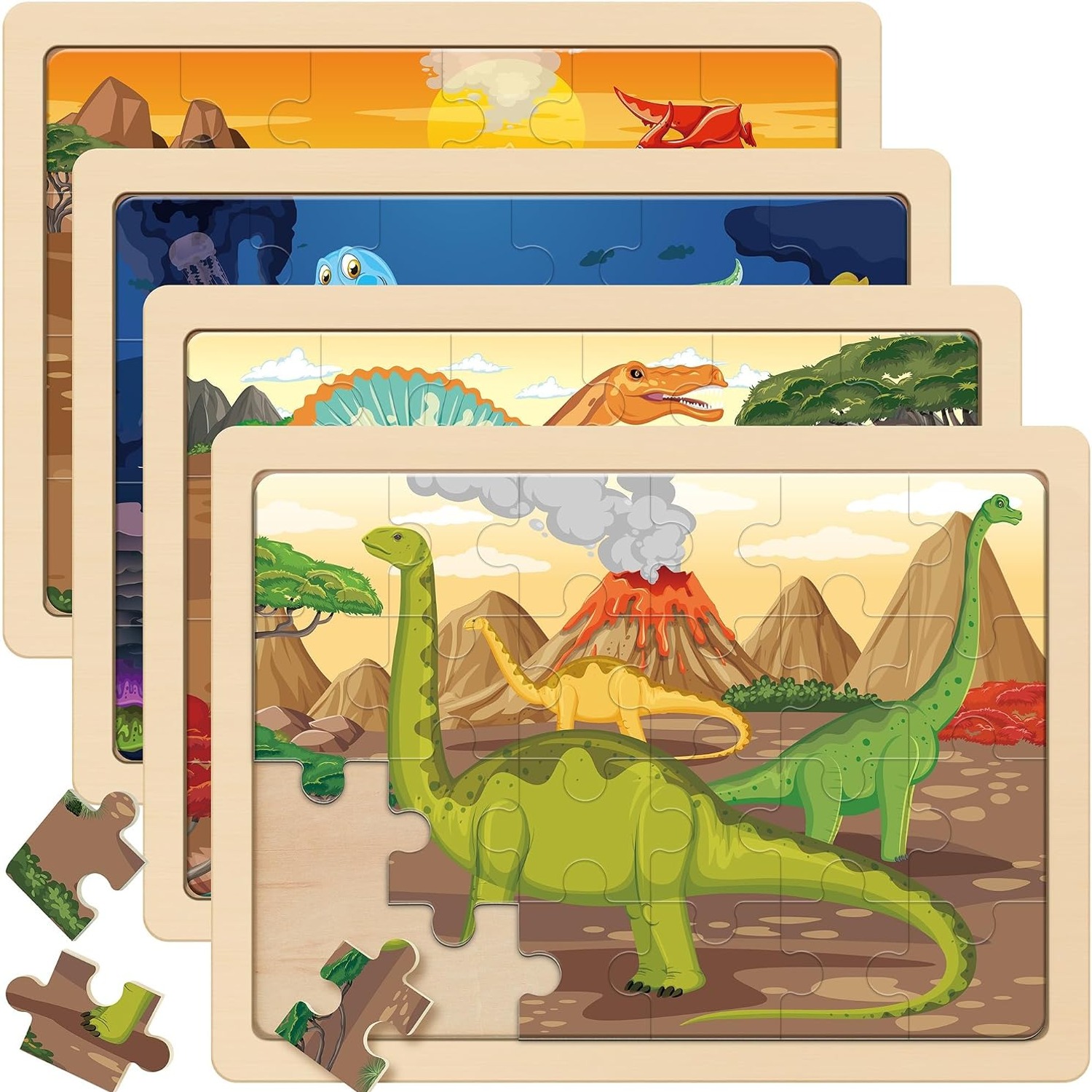
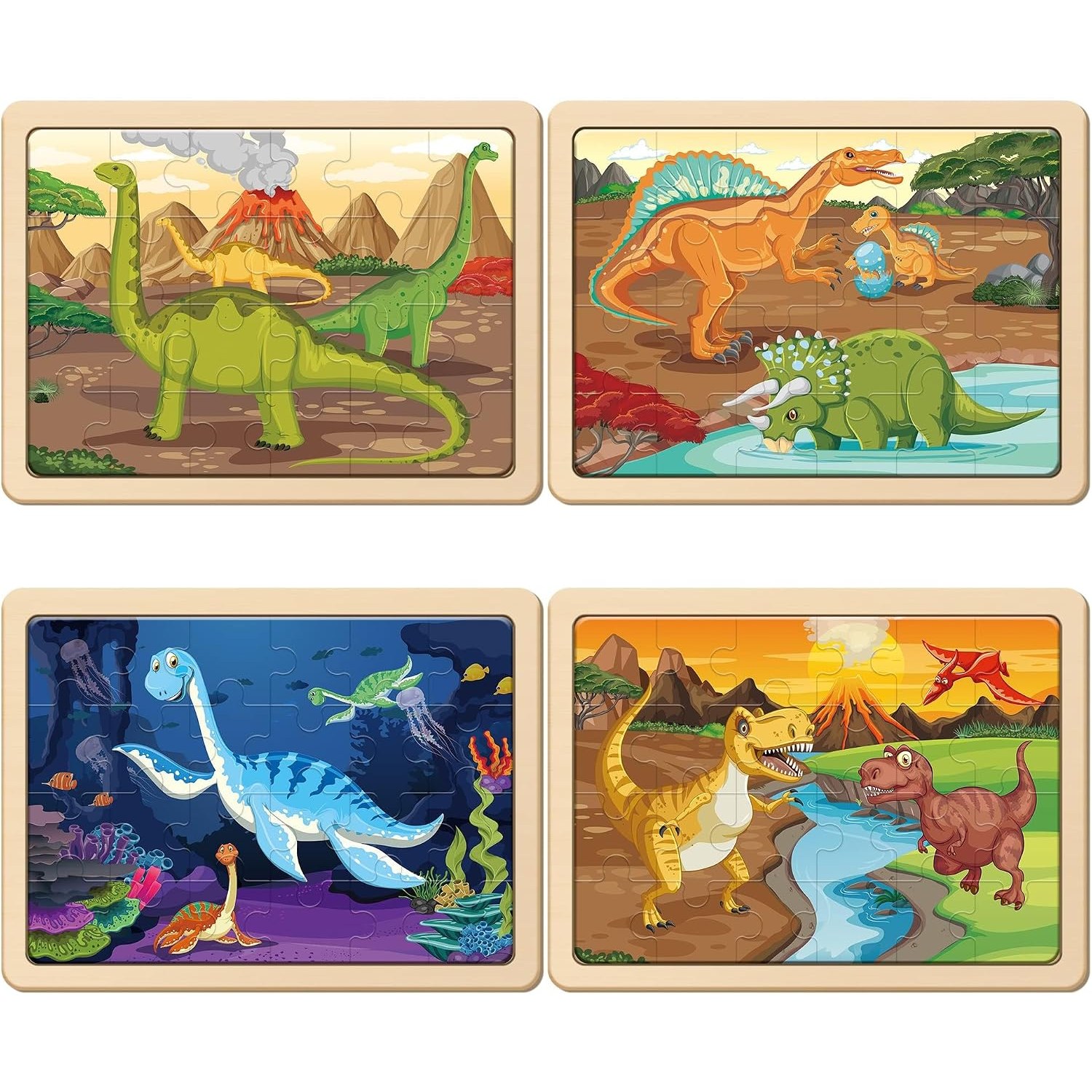
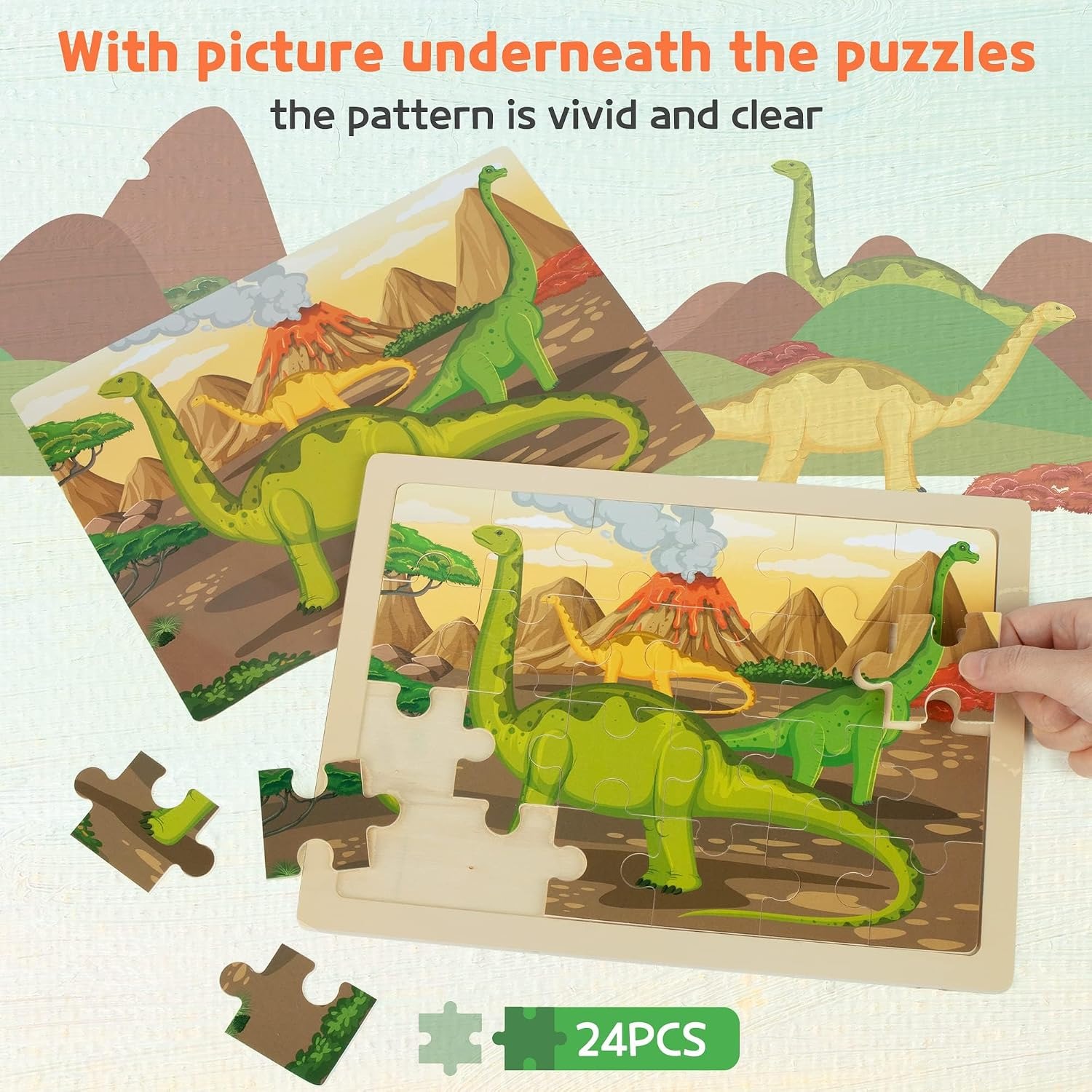
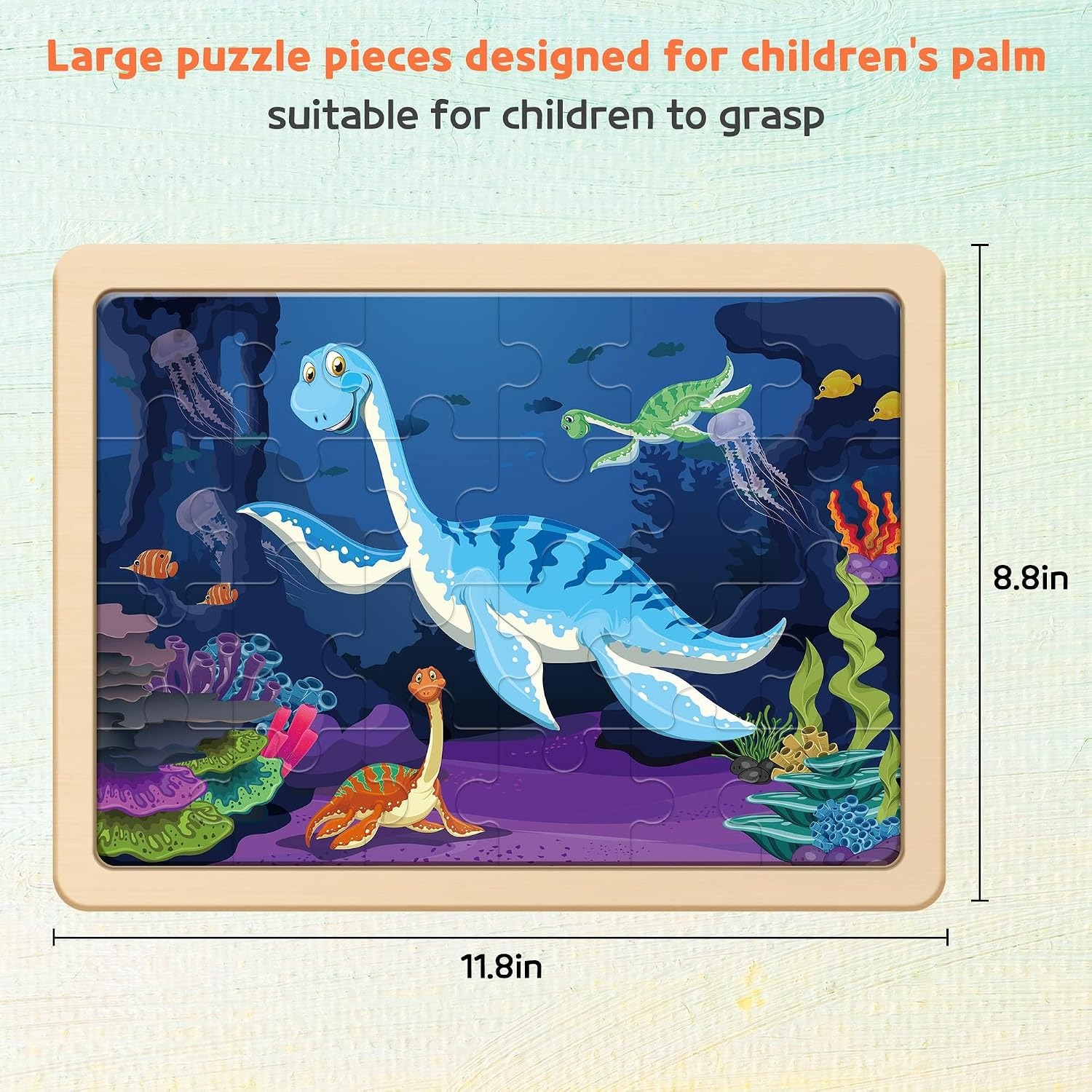
Four wooden dinosaur puzzles. Each one is made up of 24 pieces, so 96 pieces in total across four separate scenes. A sturdy wooden storage tray comes with it.
The finished size of each puzzle is roughly 22 by 30 cm. That is a sensible footprint, big enough that the artwork reads clearly and small enough to fit on a coffee table or a lap tray. Packaged, the whole thing measures about 31 by 23.8 by 2.5 cm and weighs 0.74 kg.
The brand is SYNARRY. The recommended age span is 36 months to 8 years, with a beginner skill level and one to two players. No assembly, no batteries, nothing to charge.
Why 24 pieces is a useful number
Piece count is the single most important thing to get right. Too few and a child who is ready for a challenge gets bored in a minute. Too many and they give up before the border is done.
Twenty-four sits in a sweet spot. Preschooler puzzles with 6 to 12 chunky pieces are about placing shapes into slots. Once a child can do that reliably, they are ready to start thinking about the picture itself, matching colours across pieces and working out that a leg goes under a body. Twenty-four pieces gives them enough to think about without being overwhelming.
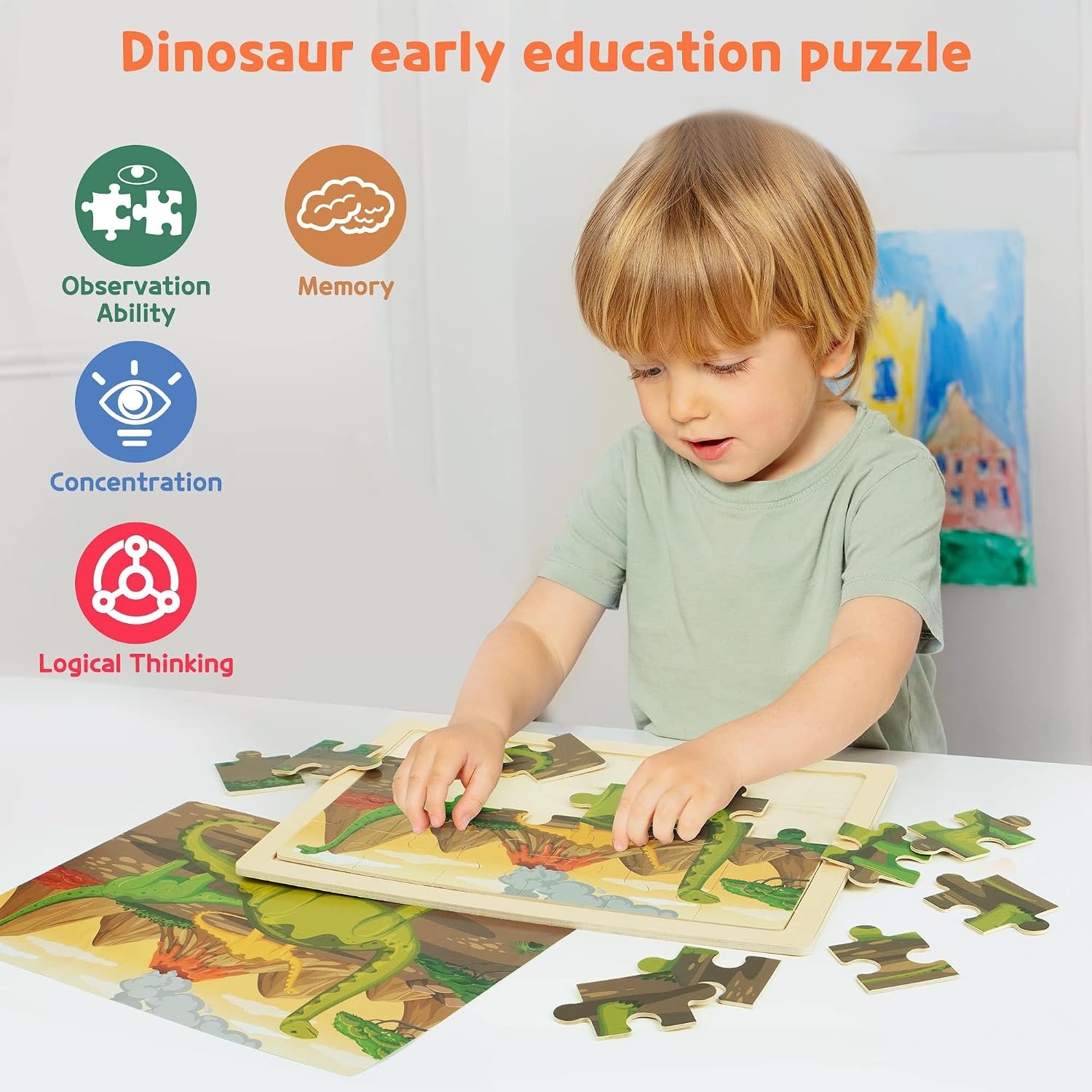
For a three year old, the first few sessions will involve help. That is fine and actually useful, because sitting alongside them is where they pick up the strategy: do the edges first, group by colour, look at the shape before you push. By four or five most children are doing a 24-piece scene alone. By seven or eight they will want to mix all four together, which is a free upgrade in difficulty that costs you nothing.
Why wood beats cardboard
Three practical reasons.
Wood pieces have thickness. A small hand can grip them properly instead of pinching at a flat edge, which matters a lot for children still developing fine motor control. Cardboard puzzles ask for a precision grip that a three year old may not have yet, and that friction turns into frustration.
Wood survives pressure. Children do not gently place a piece. They press it, sometimes with a fist. Wooden pieces absorb that. Cardboard ones fuzz at the edges and eventually stop locking together.
Wood handles the floor. Pieces will end up on the floor, get stepped on and be shoved back in the box. Wood shrugs that off. Card does not.
The trade-off is weight and cost. Wooden sets are heavier and generally more expensive than card. For a set that will be used for several years, often by more than one child, the maths works out in favour of wood.
The storage tray matters more than you think
Parents who have been through a few puzzle sets know that storage is not a nice extra. It is the thing that determines whether the set lasts.
A 24-piece puzzle missing one piece is finished. There is no partial credit. The child gets to the end, finds a hole, and the sense of achievement evaporates. Multiply that across four puzzles and you can see why loose pieces are the enemy.
This set includes a sturdy wooden storage tray, so all four puzzles have one home. The habit to build is simple. When play ends, the pieces go back in the tray before anything else happens. Do it with your child the first few times and it sticks.
If you want extra insurance, keep the four puzzles in separate zip bags inside the tray. Then if one bag goes walkabout you have lost one puzzle, not the whole set.
Who this suits
A child aged roughly three to eight who likes dinosaurs is the obvious match. Dinosaur interest tends to peak between four and six, and this lands right in it.
It also suits households looking for calm activities. Puzzles are quiet. They have a clear beginning and end, which is something children find satisfying in a way that open-ended toys sometimes are not. For an hour before dinner or a long wet weekend, that structure is handy.
It works for two children sharing. With four puzzles, siblings can take one each rather than fighting over a single picture. Two children on the same puzzle also works if you split the pieces by colour and give them each a zone.
As a gift, it has the advantage of looking substantial without being a plastic thing that needs batteries. The best gift for a 4 year old is often the one a parent is happy to see arrive, and a wooden set with a tray tends to clear that bar.
How to introduce it well
Start with one puzzle, not all four. Opening everything at once spreads 96 pieces across a rug and that is a bad first impression for a young child.
Show the finished picture first. Let them look at it, point out the dinosaur, then break it apart. Knowing the target makes the pieces mean something.
Do the border together. Edge pieces have one straight side, which is the easiest rule a young child can learn and apply by themselves. Once the frame is there, the inside feels much less open-ended.
Resist the urge to place pieces for them. Slide the right piece closer instead and let them make the connection. The win has to be theirs or the whole exercise loses its point.
Looking after it
Wipe the pieces with a soft cloth that is barely damp, then dry them straight away. Never soak wooden puzzle pieces and never put them in a dishwasher. Water gets into wood, swells it, and the pieces stop fitting. Printed surfaces can lift too.
Store the tray flat in a dry cupboard or on a shelf. Damp rooms and direct sunlight are the two things to avoid: one warps, the other fades.
Count pieces back into the tray at the end of each session. It takes thirty seconds and it is the difference between a set that lasts years and one that is useless by spring.
Keep it away from children under 3 who still mouth things. The minimum age is 36 months for a reason, and 24-piece puzzles have pieces small enough to be a choking risk for younger children.
The short version
Four wooden dinosaur puzzles, 24 pieces each, with a wooden storage tray. Suitable from 36 months to 8 years, beginner level, no batteries and no assembly. Each finished puzzle is about 22 by 30 cm and the whole set weighs 0.74 kg.
If you have a dinosaur-mad child in that age window, this covers a lot of ground for one box. The wood holds up to real use, the four scenes keep things fresh longer than a single puzzle would, and the tray is what stops the whole thing falling apart within a month. Build the pack-up habit early and it will still be getting used long after the plastic toys from the same birthday have gone quiet.