

Toy Warehouse
Company
Shop By Category
T&Cs
Shop Online
  • Box contents listed
  • Free tracked delivery across the UK over £75
  • 14-day returns

Den Building Kit 130 Piece | Kids fort building set | Indoor den construction toy

130 Piece Den Building Kit

£95.99 £114.99 Save £19
  • 130 Pieces Total
  • Carry Bag Included
  • Ages 5 to 10
  • Build and Rebuild

Price: £95.99 £114.99

  • Free tracked delivery across the UK on orders £75+, otherwise a flat £10
  • Pay by card or PayPal, handled by the payment provider
  • 14 days to change your mind, plus your statutory rights
Product specifications
BrandTiny Land
Model NumberFB0001
Manufacturer Part NumberFB0001-AU
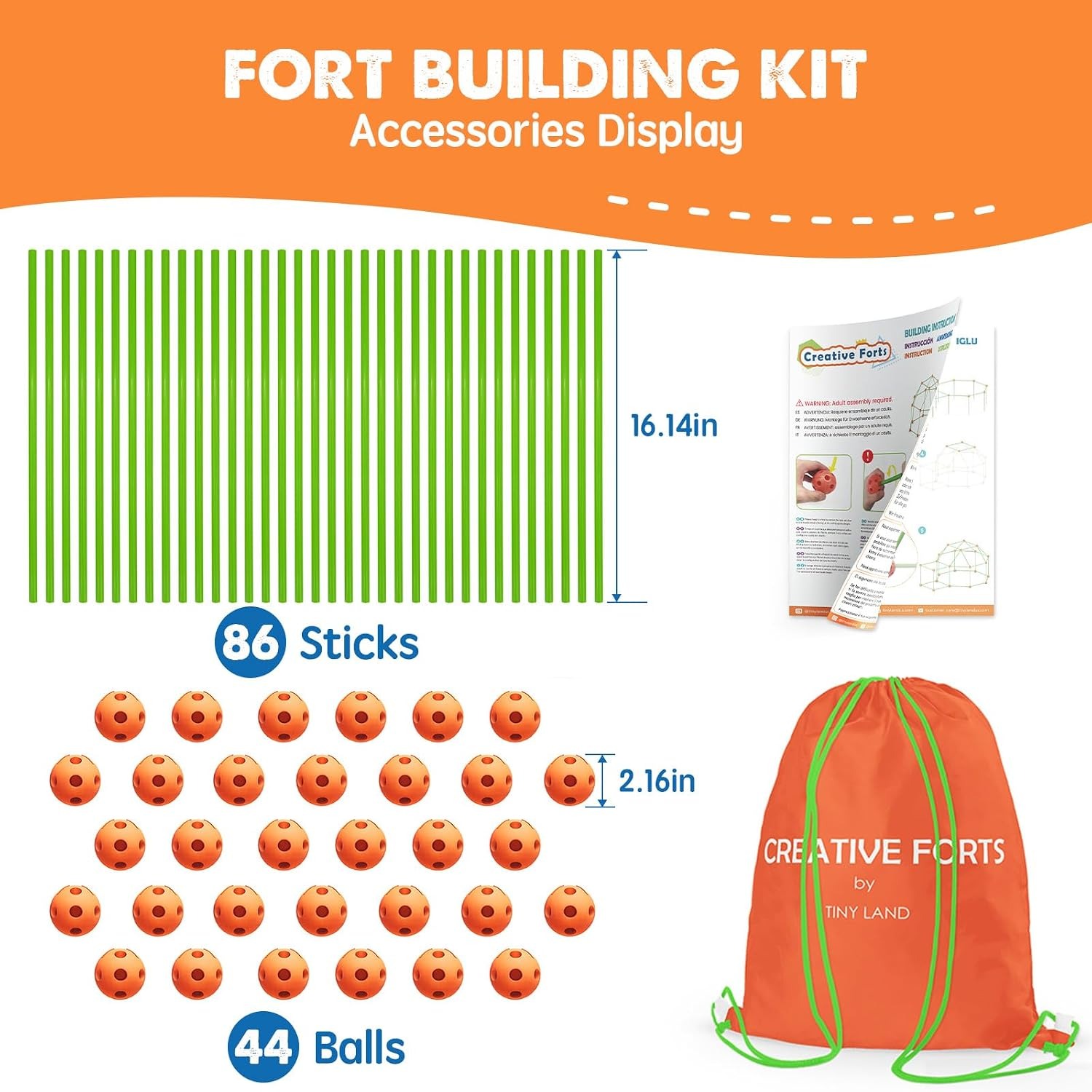
Included Components130 pieces, 44 balls and 86 rods
Recommended Age5 to 10 years
MaterialPlastic
Frame MaterialPlastic
ColourOrange-green
StyleCreative forts
ThemeSports
Packed Dimensions43 cm (L) x 33 cm (W) x 9 cm (H)
Item Weight2.85 kg
Assembly RequiredYes
Country of OriginChina
Weight2.85 kg
Shipping & returns

Tracked delivery anywhere in the UK. It is free on orders of £75 or more, and a flat £10 below that.

Under the Consumer Contracts Regulations 2013 you have 14 days from delivery to cancel for any reason, and a further 14 days to send it back in resaleable condition. We refund the price you paid, including standard delivery. You cover the cost of returning it unless the item is faulty.

If it arrives faulty, damaged or not as described, we put it right at no cost to you under the Consumer Rights Act 2015, return postage included.

Shipping details · Refunds and returns

130 Pieces Total44 connector balls and 86 rods for big builds.
Carry Bag IncludedEverything packs down into one portable bag.
Ages 5 to 10Manufacturer recommended age range for this set.
Build and RebuildPieces come apart easily so the next den starts fresh.

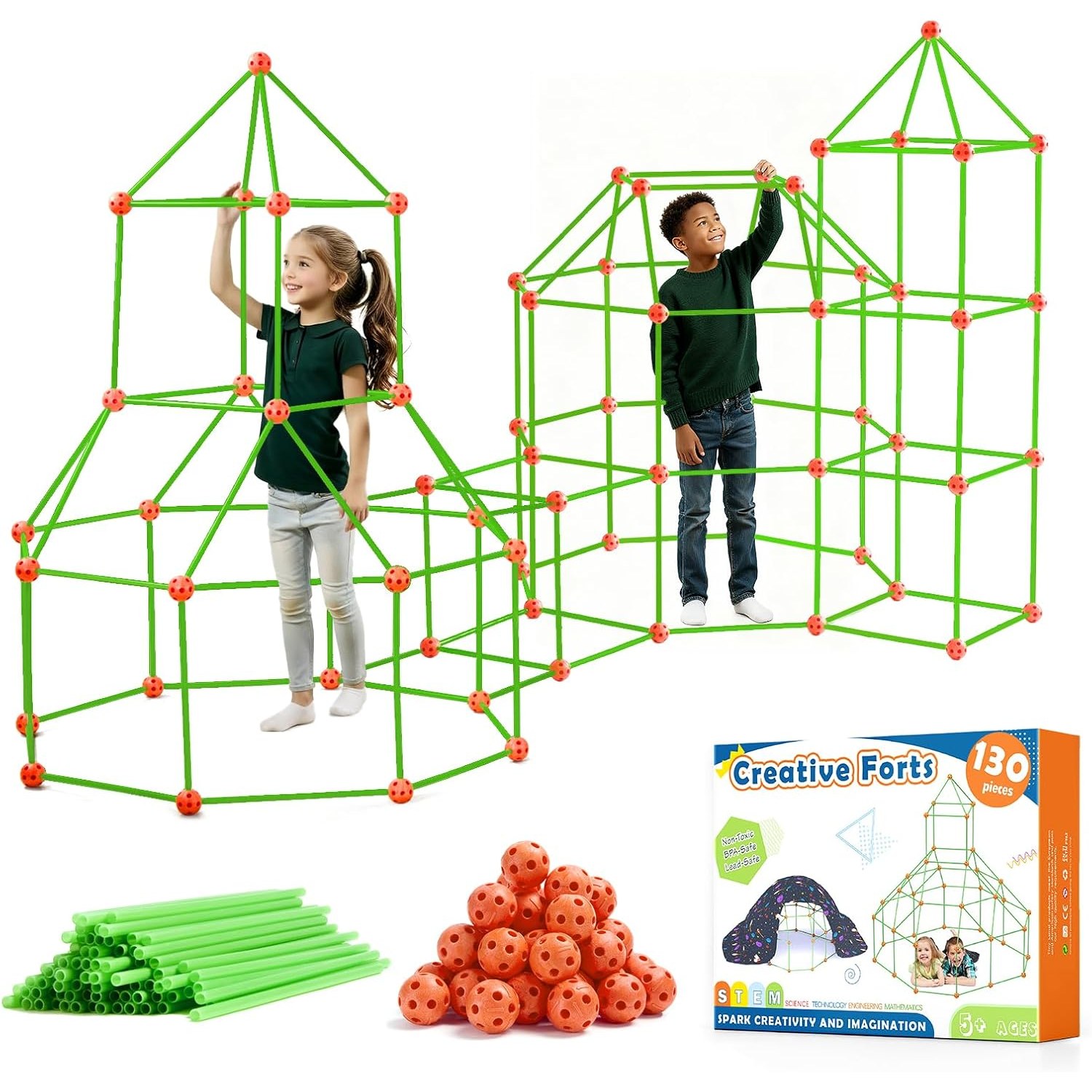
Turn any lounge floor or back garden into a hideout with a den building kit that packs 130 pieces into one carry bag.

Forty-four connector balls and eighty-six rods click together into caves, castles, tunnels and towers, then come apart just as fast when it is time to tidy up.

A 130 piece den building kit made up of 44 connector balls and 86 rods that push together into frames of almost any shape.

Kids can throw a bedsheet or light blanket over the finished frame to turn it into a proper hideout, tunnel or playhouse.

The whole set packs into the included carry bag, so the pieces do not end up scattered under the sofa.

Building, testing and rebuilding gives children hands-on practice with balance, shapes and problem solving without feeling like a lesson.

Suits two to four children playing together, which makes it a useful pick for siblings, playdates and sleepovers.

130 Piece Den Building Kit

Every parent knows the cardboard box problem. A delivery arrives, the box gets claimed, and for two days it is a spaceship. Then it collapses, gets damp, or goes in the recycling, and the hideout is gone. A den building kit solves that by giving children a frame they can put up, knock down and put up again in a completely different shape, as many times as they like.

130 Piece Den Building Kit

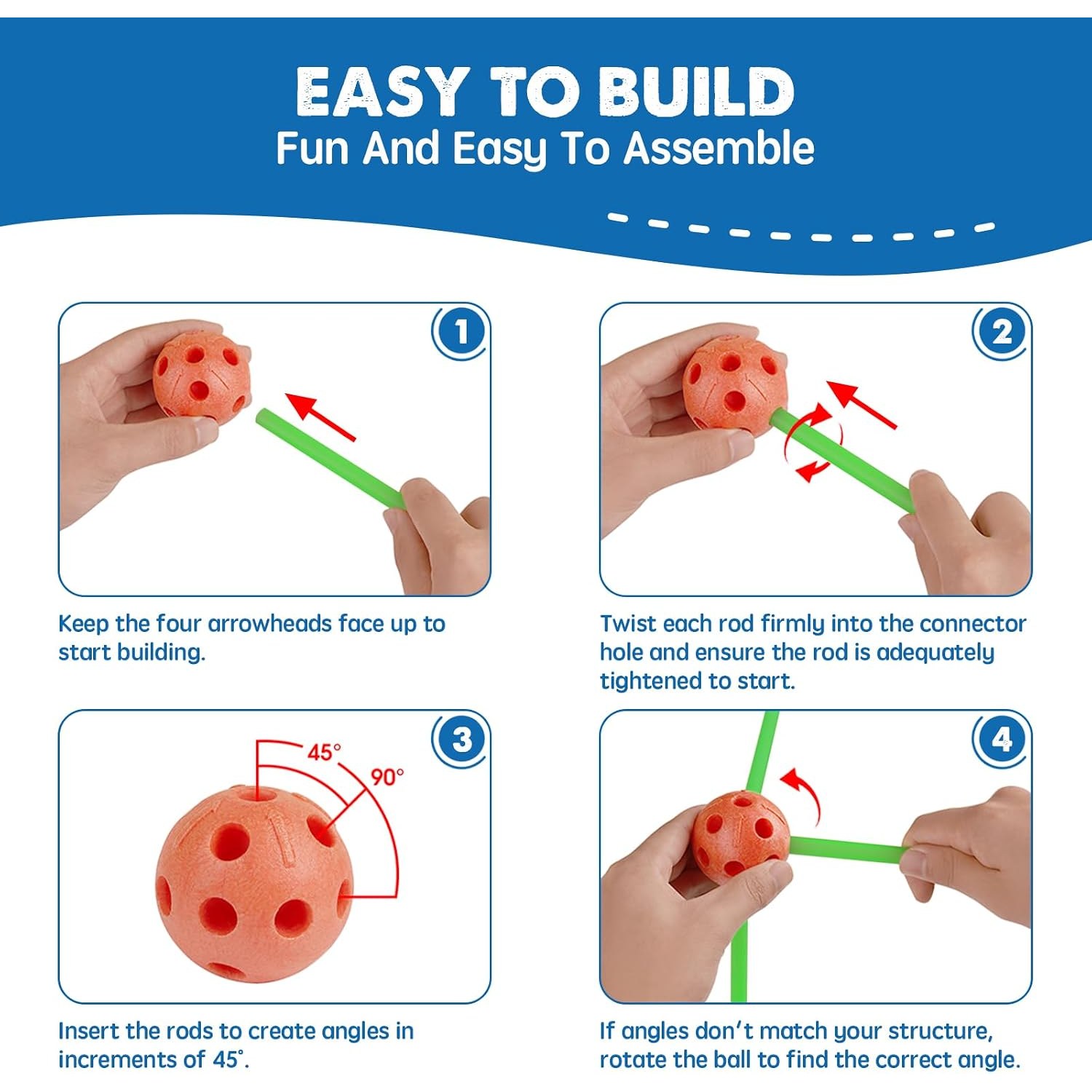
This set contains 130 pieces in total, split into 44 connector balls and 86 rods. The balls have multiple sockets, so a rod can head off in several directions from the same joint. That is the whole trick. Once a child works out that three rods meeting at a ball makes a corner, and four corners make a box, they can scale that idea up into a cube big enough to sit inside, or sideways into a crawl tunnel.

130 Piece Den Building Kit

The frame on its own is only half the toy. Drape a bedsheet, a throw or a light blanket over the top and the open structure becomes an enclosed den with a roof and walls. Children tend to work out their own door flaps and windows. Fairy lights, cushions and a torch usually follow. Rainy afternoons stop being a problem when the living room can become a castle in twenty minutes.

130 Piece Den Building Kit

The pieces are plastic and the set is listed for ages 5 to 10, with assembly required, which here just means the child does the building. Younger builders in that range may want a hand with the first large structure until they learn how much support a big roof needs. After that, most work it out by trial and error, which is the useful part.

130 Piece Den Building Kit

Packed down, the kit measures 43 cm by 33 cm by 9 cm and weighs 2.85 kg, and a carry bag is included. That matters more than it sounds. Loose rods are the kind of thing that migrate under beds and behind radiators. A bag means the set goes back together, travels to a grandparent's house, and still has all its pieces next month.

Not sure yet? That is fine.

A toy has to suit the child it is for, and you cannot always judge that from a photograph. Under the Consumer Contracts Regulations 2013 you have 14 days from delivery to cancel for any reason, and a further 14 days to send it back in resaleable condition. We refund the price you paid, including standard delivery.

If it turns up faulty, damaged or not as described, that is on us. The Consumer Rights Act 2015 covers you, and we pay the return postage. Read the full detail on our refunds and returns page, or ask us anything before you order.

Frequently Asked Questions

What exactly comes in the box?

The kit contains 130 pieces in total, made up of 44 connector balls and 86 rods. A carry bag is also included for storage and transport. No sheets, covers or clips are listed as part of the set.

How does a den building kit actually work?

The connector balls have multiple sockets around them, and the rods push into those sockets. By joining rods at the balls you build up a three dimensional frame, like a skeleton. Covering the frame with a sheet turns it into an enclosed den.

What age is this set designed for?

The manufacturer recommends it for ages 5 to 10 years. Older children often still enjoy it, especially when they start building more ambitious shapes. Adult supervision is sensible for younger builders.

Is it suitable for a three or four year old?

It falls outside the stated 5 to 10 age range, so it is not recommended as a solo toy for that age. A younger sibling can usually join in under supervision, handing pieces over and playing inside a den an older child built. Always follow the age guidance on the packaging.

How big a den can you build with 130 pieces?

That depends on the shape. A simple cube using long spans will be large enough for a child or two to sit inside, while a more detailed castle with towers will use pieces faster and end up smaller. Most families find the piece count generous for one big structure or two smaller ones.

Can two children build separate dens at once?

Yes, 130 pieces split reasonably well into two smaller builds. The set is described as suiting two to four children playing together, so splitting the pieces is a normal way to use it. Just expect each den to be more of a cosy pod than a full room.

What is the kit made from?

The material is listed as plastic, including the frame. The maker does not state other material. We do not have details on the exact polymer type.

Is it suitable for children?

The set is sold as a children's toy for ages 5 to 10 and assembly is done by the child. As with any construction toy, supervision is sensible, particularly when large structures are being built. We do not list specific safety certifications for the maker's details.

Can it be used outdoors in the garden?

Yes, the set works on grass, patio or decking as well as indoors. Bring it in after play rather than leaving it out in rain or strong sun, which is better for the plastic over time. Uneven ground makes tall builds wobblier, so a flat patch helps.

Does it need any tools to put together?

No tools are needed. The rods push into the connector balls by hand. That is the main reason this is one of the best construction toy options for 5 year olds who want to build without adult help.

How hard is it to take apart?

Pieces pull apart by hand. Some joints hold firmly, which is what you want in a den that has to stand up, so a bit of a tug is normal. Children usually find dismantling almost as fun as building.

What do I cover the frame with?

A bedsheet, light blanket or throw works well, and these are not included. Lighter covers are better because heavy duvets put a lot of load on the roof span. Pegs or clips from around the house help hold a cover in place.

Will the frame hold a heavy blanket?

It is designed to support light covers like bedsheets and thin blankets. A thick duvet can sag the roof or pull joints apart, especially on wide spans. Adding extra rods across the top helps spread the weight if you want a heavier cover.

Can children sit or lean on the finished den?

The frame is built to be covered, not climbed. Children should play inside it rather than sitting on it or hanging off the top. That keeps the structure standing and the pieces in good shape.

What shapes can kids build?

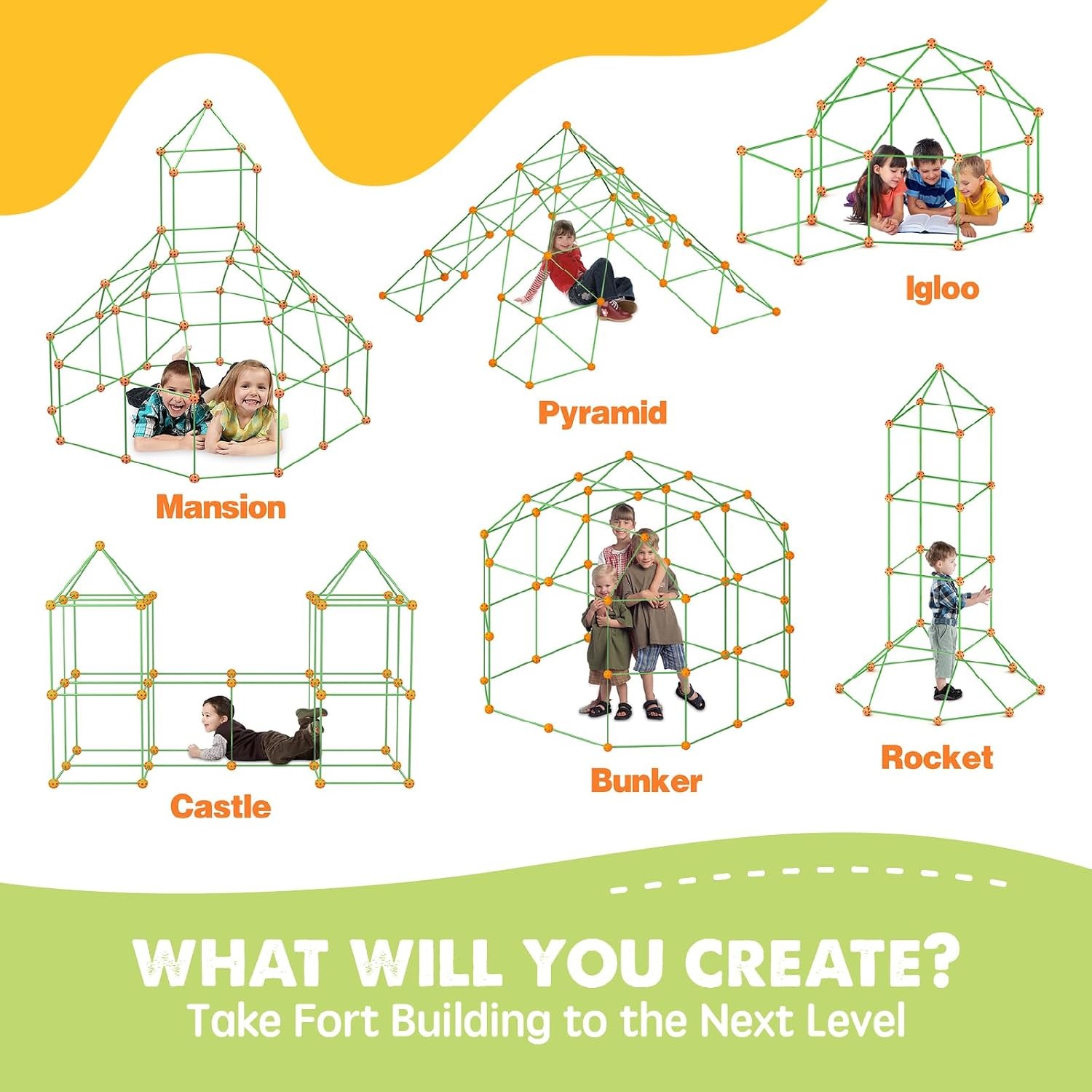
Cubes, tunnels, tents, towers, rockets, castles and crawl-through shapes are all achievable. The connector balls allow rods to go off in several directions, so angled and pyramid shapes work too. Most families find the best kids tent building kit ideas come from the children themselves after a few sessions.

Is this good for STEM learning?

It gives hands-on practice with shapes, balance, spans and simple structural ideas, all through trial and error. Children quickly learn which shapes stand up and which collapse. It is play first, with the learning happening quietly in the background.

Does it help with fine motor skills?

Pushing rods into sockets, lining up joints and working at different heights all use hand strength and coordination. Younger children in the age range tend to get noticeably quicker at it within a few builds. It is a practical, repetitive kind of practice.

How much space do I need indoors?

A cleared area of a lounge or bedroom floor is usually enough for a decent sized den. Pushing furniture back a metre or so on each side gives room to walk around the build. Ceiling height is rarely an issue for a child-sized structure.

How does it store away?

All the pieces go back into the included carry bag. Packed, the set measures 43 cm long, 33 cm wide and 9 cm high, and weighs 2.85 kg. That slides under a bed or sits on a shelf easily, which is why it rates as one of the best playroom storage toy picks.

Can I take it on holiday or to a grandparent's house?

Yes, the carry bag and modest packed size make it portable. At 2.85 kg it is easy enough to carry to a car or put in a suitcase. It is a good choice if you want the best travel friendly building set for keeping children busy away from home.

What colour is it?

The colour is listed as orange-green. Specific shade distribution between rods and balls is not detailed in the maker's details. Images on the product page give the clearest idea.

How do I clean the pieces?

Wipe them with a damp cloth and a little mild soap, then dry them before packing away. Do not put them in a dishwasher or use harsh cleaners. Letting them dry fully stops damp getting into the carry bag.

What if a piece gets lost or broken?

With 130 pieces, losing one or two will not stop you building. Set aside any cracked or split pieces rather than using them in a load-bearing part of a frame. The carry bag is the simplest way to avoid losses in the first place.

Is it a good gift?

It suits birthdays and holidays well because it is gender neutral, it works for group play, and it does not need batteries. Children who already like building toys tend to take to it straight away. It is a common pick for parents looking for the best birthday gift for 6 year olds that will not be forgotten by February.

Can it be combined with another set?

Two of the same kit would give you 260 pieces and much larger builds. Mixing with a different brand is unlikely to work because connector sockets and rod diameters vary. Stick to matching sets if you want to expand.

Will my child get bored of it?

Because the frame comes apart and goes back together in new shapes, it does not have a single finished state. Children tend to revisit it on wet days and for sleepovers. Adding different covers, lights or props keeps it feeling new.

Is assembly required?

Yes, assembly is listed as required, which simply means the structure is built from loose parts rather than arriving ready made. That building is the point of the toy. No tools or adult construction are needed.

How is the item delivered?

We deliver to addresses across the UK with a tracked courier. Most orders arrive within 3 to 7 working days of the order date, including one working day of handling. Delivery is free on orders of £75 or more and a flat £10 under that.

Can I return it if the children do not take to it?

Yes. You can return it within 14 days of delivery if you change your mind, as long as it is unused and in its original packaging with everything included. You pay the return postage. Contact us first and we will send the return details.

What if the kit is not right for us when it arrives?

Get in touch and tell us what the problem is, whether it is a missing piece, damage in transit, or simply the wrong fit for your child's age. We will sort a replacement, a return or a refund depending on the situation. You are not stuck with something that does not work for your family.

How to Choose and Get the Most From a Den Building Kit

6 min read Toy Warehouse

The problem with cardboard boxes

Children have been building dens forever. Sofa cushions, clothes horses, the dining table with a sheet over it. It works, right up until someone needs the dining table back, or the cushions go flat, or the big delivery box finally gives up.

The frustration is not the mess. Most parents make peace with mess. It is that the den is always temporary and always borrowed from something else. Every build starts from scratch with whatever furniture is free that afternoon.

A den building kit fixes that by giving children their own set of parts. Rods and connector balls, nothing else. They go together, they come apart, and nobody has to dismantle the sofa.

How a rod and ball system works

The idea behind this kind of construction toy is simple enough that a five year old grasps it in about two minutes.

Each connector ball has sockets around its surface. Rods push into those sockets. Because the sockets point in different directions, a single ball can send rods out sideways, upwards and diagonally at the same time. That is what lets a flat square turn into a cube, and a cube turn into a tower.

This kit has 44 balls and 86 rods, 130 pieces in total. The ratio matters more than the raw number. You need roughly two rods for every ball in a boxy structure, so the split here is well judged for building closed shapes rather than long flat fences.

Once the frame stands up, it is still open. That is deliberate. The child throws a bedsheet or a light blanket over the top and the skeleton becomes a proper enclosed den with a roof and walls. Covers are not included, which is fine, because every house already has spare sheets and every child has strong opinions about which one.

Who it suits

The manufacturer lists this for ages 5 to 10 years. That range feels honest.

At five, children can push rods into balls without trouble but will build mostly simple shapes, usually a box they can crawl into. They may need a hand the first time a roof sags. At seven or eight, things change. Children start planning before they build, counting pieces, and arguing about whether a tower needs a wider base. By nine or ten, the builds get ambitious and sometimes deliberately strange.

It is described as suiting two to four children playing together, and that is where it comes alive. Siblings, cousins, a playdate on a wet Saturday. There is a natural division of labour that emerges, with one child holding and another connecting. Groups also build bigger, because four pairs of hands can hold up a wall while someone fits the roof.

It is gender neutral in design, with no princess or pirate theme baked in. The children supply the story.

What to look for when choosing a kit

If you are comparing the best fort building set options, a few things separate the good from the forgettable.

Piece count is the obvious one, but it only means something alongside the rod-to-ball ratio. A kit with lots of rods and few connectors cannot make enclosed shapes. Look at the split, not just the headline number.

Joint grip is the next thing. Rods should hold firmly enough that a frame stands on its own, but release by hand when a child pulls. If joints are too loose, nothing stays up. If they are too tight, small hands give up.

Storage is the one people forget until it is too late. Loose rods scatter. They end up under beds, down the side of the sofa, and in the vacuum cleaner. This set comes with a carry bag, and packed down it is 43 cm by 33 cm by 9 cm at 2.85 kg. That slides under a bed or into a car boot without a fight.

Finally, think about whether the toy has an end state. Sets that build one specific model get finished and then sit there. Open-ended systems like this one never really finish, which is why they survive longer in the toy cupboard.

Getting the first build right

The first session sets the tone, so it helps to stack the odds.

Clear a decent patch of floor. A metre of space around the build area stops rods getting knocked out while a child is reaching across. Flat, level ground matters more than you would think, especially outdoors where grass tufts tilt everything slightly.

Start with a cube. It is the most forgiving shape, it stands up on its own, and it is immediately useful as a den. Once a child has made one cube, they understand corners, and everything else follows from there.

Keep the first cover light. A single bedsheet is ideal. Heavy duvets pull on the roof span and teach the child that the toy does not work, when really the cover was just too heavy. If they want a thicker blanket later, show them how adding extra rods across the top spreads the load.

Resist the urge to build it for them. The collapses are the lesson. A wall falling over because the base was too narrow teaches more in ten seconds than any explanation.

What children actually learn

Nobody buys this as a classroom resource, and it should not feel like one. But useful things happen anyway.

Children get practical experience of structure. Which shapes hold, which wobble, why a triangle behaves differently from a square. They learn that a tall thing needs a wide base. They learn to count out parts before starting instead of running out halfway through.

There is hand work too. Lining up a rod with a socket, pushing with controlled force, working above head height. That is real fine motor practice, repeated dozens of times a session without anyone calling it practice.

And when two or three children build together, there is negotiation. Whose design, who does the roof, where the door goes. That tends to be noisier and more valuable than the engineering.

Care and keeping it going

Plastic construction parts are easy to look after, but a bit of routine extends the life of a set considerably.

Wipe pieces with a damp cloth and mild soap when they get grubby, particularly after garden use. Let them dry fully before they go back in the bag, because damp plastic in a closed bag gets musty fast. Skip the dishwasher.

Do not leave the set outdoors for weeks at a time. Long exposure to strong sun and rain is unkind to plastic. Bring it in with the garden chairs.

Before a big build, have a quick look for cracked or split pieces and put any aside. A damaged rod in a load-bearing span is how a roof comes down on someone's head.

Then make the bag a rule. Everything back in the bag before the next activity. It sounds strict, but it is the single thing that decides whether this set is still complete in two years or down to half its pieces by Easter.

The short version

This is a 130 piece kit, 44 connector balls and 86 rods, aimed at children aged 5 to 10. It builds frames for dens, tunnels, towers and playhouses, which you cover with a sheet to make them enclosed. It packs into an included carry bag at 43 cm by 33 cm by 9 cm and 2.85 kg.

It works indoors and out, it suits two to four children at once, and because nothing is ever finished, it keeps being interesting long after the novelty of most toys has worn off.

If your children keep commandeering the sofa cushions, this gives them something better to build with and gives you your living room back.

Browse the shop

Ready to build the first den?

Order the 130 piece kit today and have a fort up on the lounge floor by the weekend.

Ask us a question

Page summary

The 130 Piece Den Building Kit from Tiny Land is a plastic rod-and-connector construction set for children aged 5 to 10. It contains 130 pieces in total, made up of 44 connector balls and 86 rods, and includes a carry bag. Children assemble frames for forts, dens, tunnels, playhouses and towers, then cover them with bedsheets or light blankets to enclose them. The set packs to 43 cm x 33 cm x 9 cm and weighs 2.85 kg. Colour is listed as orange-green, material as plastic, country of origin China, model number FB0001. Assembly is required, meaning the child builds the structure. The set suits indoor and outdoor play and two to four children at once. Certifications and warranty are not specified by the maker.