
The complete guide
The Honest Buyer's Guide to Outdoor Explorer Kits for Kids
The problem with "go and play outside"
Telling a child to go outside and play is easy. Getting them to stay out there and enjoy it is the harder part. Without something to do, most kids circle the garden twice, kick something, and come back in asking what else there is.
What usually fixes it is not more space. It is a job. Give a child a net and a container and suddenly the hedge has a purpose. Hand them binoculars and the roofline they have ignored for years becomes worth checking for pigeons. Tools create tasks, and tasks keep children outside for an hour instead of five minutes.
That is really what a 22-piece outdoor explorer kit is for. It is not a single toy that gets played with once. It is a small set of jobs packed into one drawstring bag.
What is actually in the kit
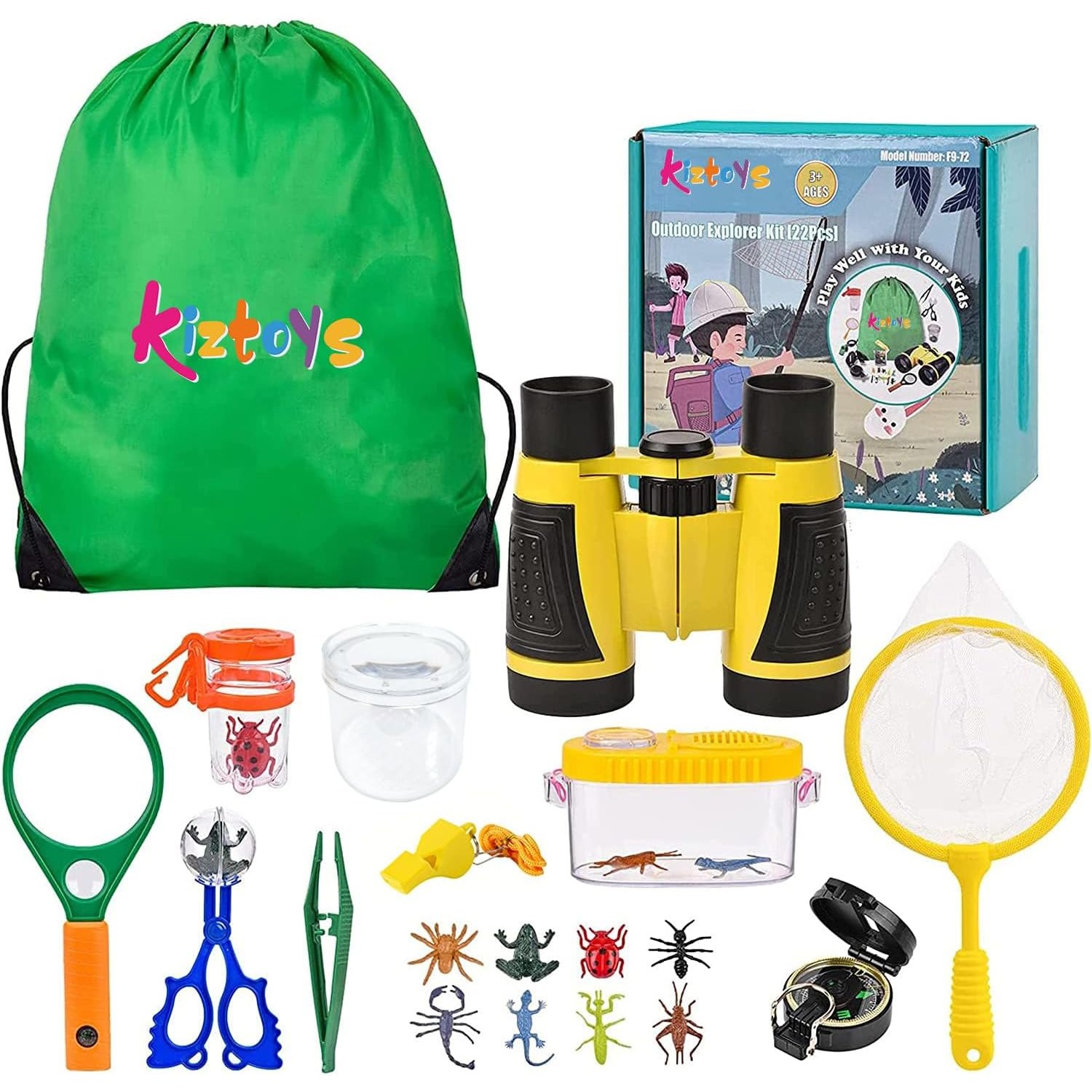
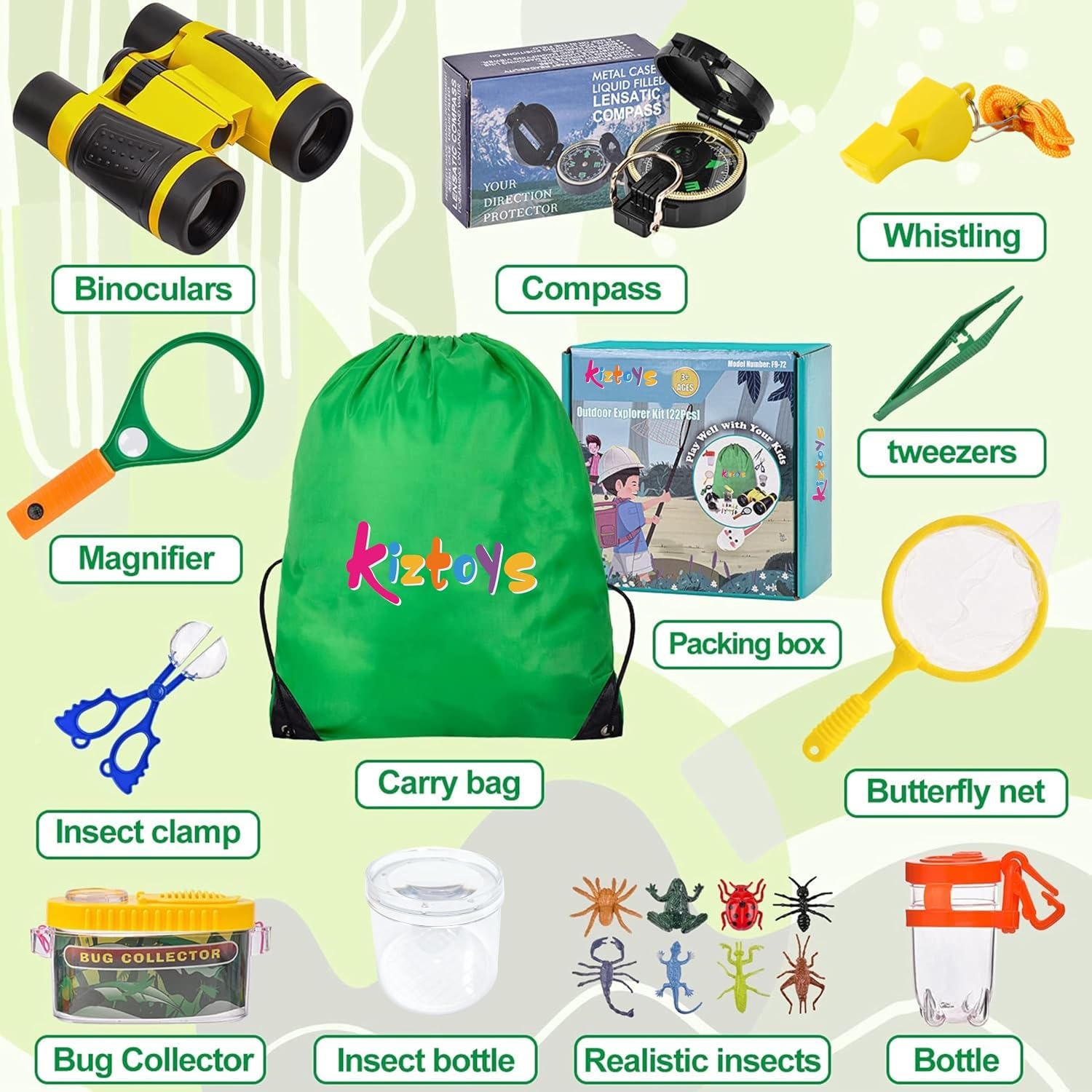
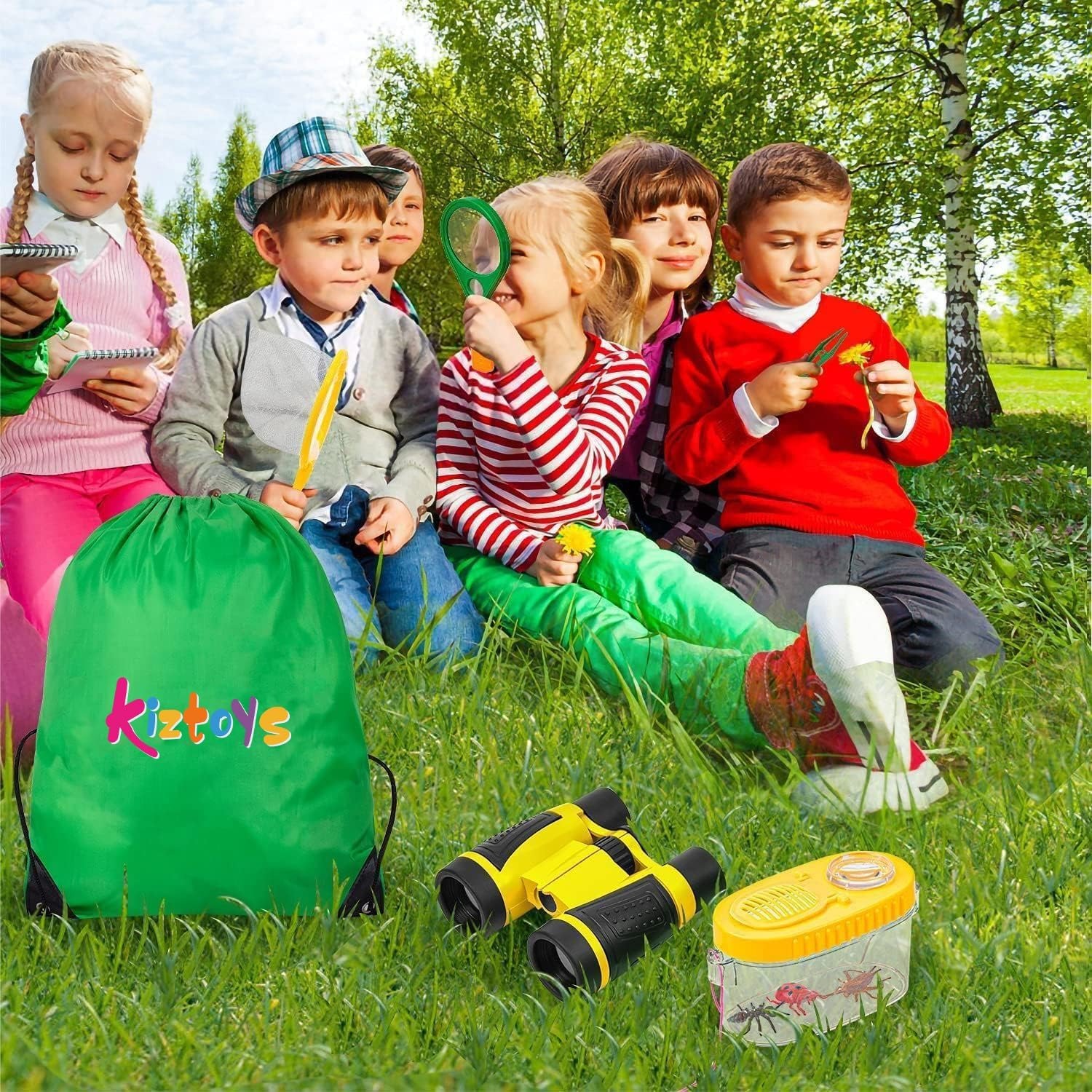
This set contains binoculars, a compass, a butterfly net, a whistle, a magnifying glass, tweezers, a certificate, an insect clamp, an insect container, a pack of fake insects and the drawstring carry bag itself. Twenty-two pieces altogether.
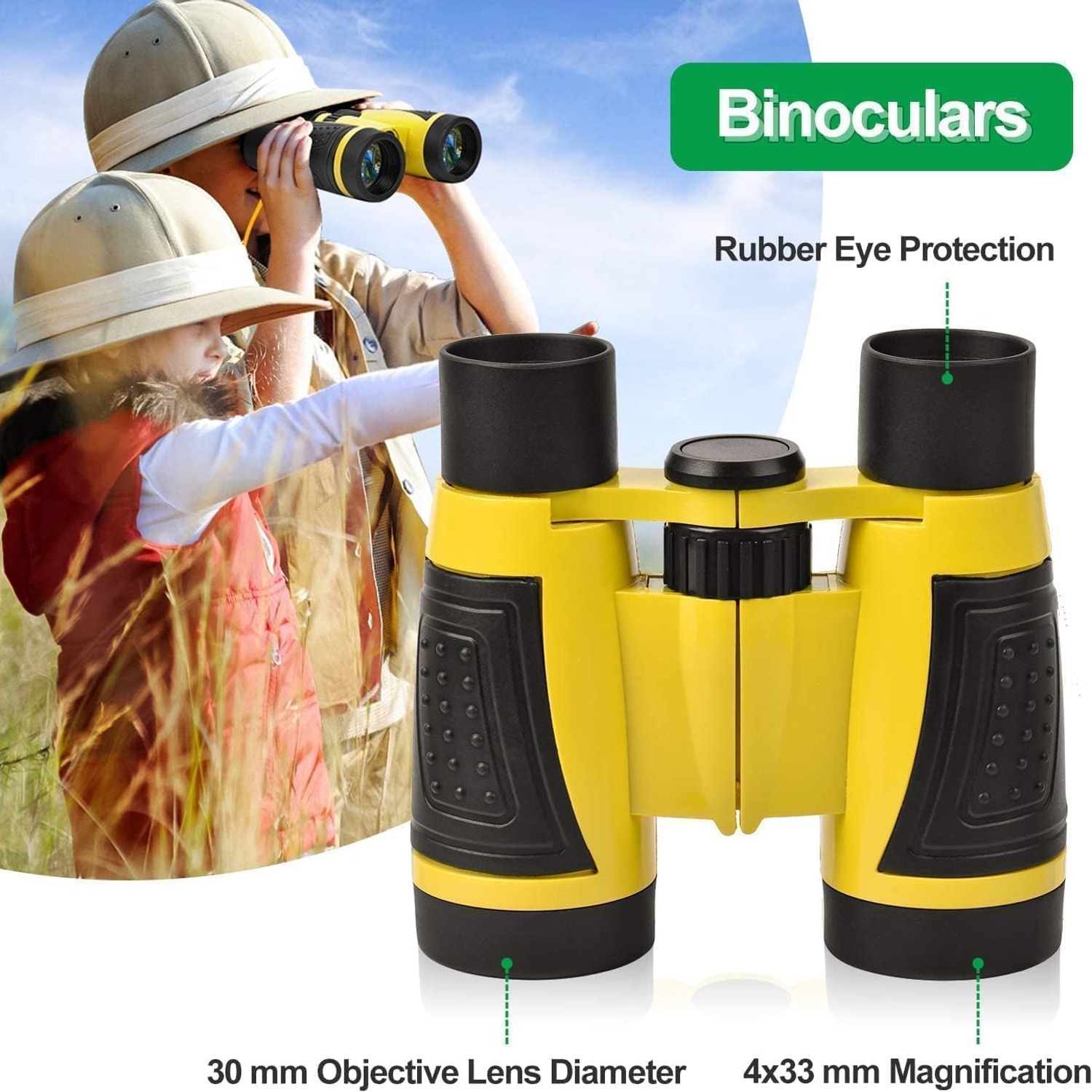
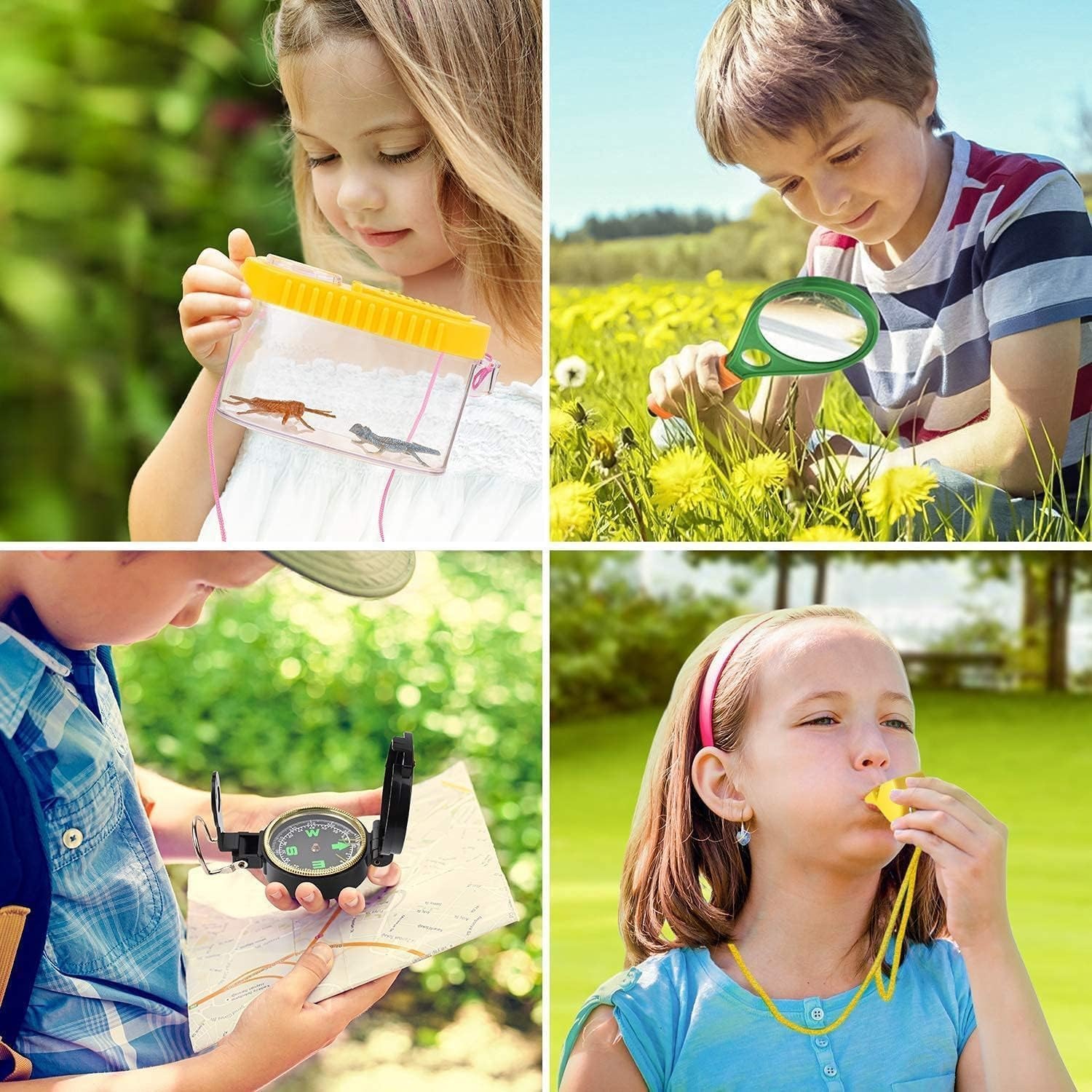
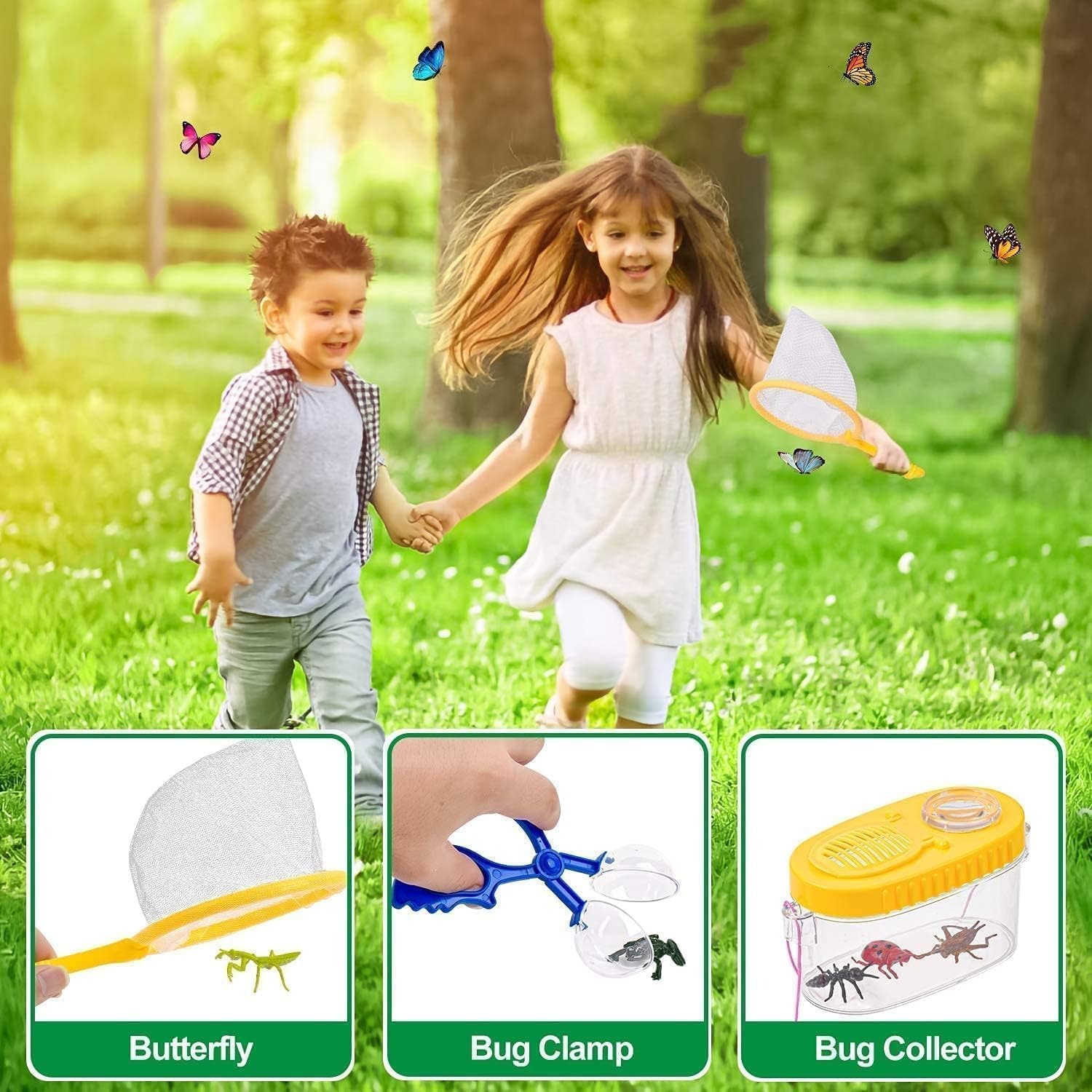
Each one does something different, and that is the point. The binoculars handle distance. The magnifying glass handles detail. The net, clamp, tweezers and container handle anything that moves and does not want to be caught. The compass turns a walk into a route. The whistle makes noise, which is apparently a feature for every child who has ever held one.
The fake insects are the item parents tend to dismiss and children tend to love. They are useful on wet days, handy for a child who is nervous about real bugs, and reliably funny when hidden in a sibling's shoe.
Material type is plastic. The whole thing weighs 0.69 kg and packs to 10.5 x 19.6 x 19.8 cm. No assembly is needed, so it can go straight from the box to the garden.
How children actually use it
The first session is usually chaotic. Everything comes out of the bag at once, the whistle gets a thorough test, and three bugs get caught in the first ten minutes.
After that, a pattern tends to form. Most children settle into a favourite tool. Some become netters, chasing butterflies and moths across the grass. Some become lookers, happiest lying on their front with a magnifying glass over an ant trail. Others get fixated on the compass and want to know which way north is in every single room of the house.
Let them follow that. A child who uses two pieces heavily is getting more out of the kit than one who rotates through all twenty-two politely.
The catch-and-release habit is worth setting early. Catch the bug, look at it properly through the container, say what you noticed, then put it back where you found it. It takes thirty seconds to teach and it sticks for years.
Who this suits
The recommended age is 36 months to 12 years, which is a wide span, and the kit is used quite differently at each end.
A three or four-year-old mostly wants to catch things and look at them. They will need help with the clamp and tweezers, and the compass will mean nothing to them yet. That is fine. The joy at that age is the catching.
Five to seven is probably the sweet spot. Children at this age have the hand control for the tools, the patience to wait for something to crawl into view, and enough school science to connect what they see with words like habitat and insect.
Eight and up tends to be about projects. Older children start recording what they find, comparing the shady side of the garden with the sunny side, and asking harder questions. A notebook alongside the kit works well here.
It also suits families who travel. Because everything lives in one bag, the kit goes to campsites, beaches, grandparents' gardens and holiday cottages without fuss. A good bug catching kit earns its keep by being portable.
How to choose between explorer kits
There are a lot of these sets around, so here is what actually separates them.
Piece count is the least useful number. A kit with forty pieces might just have more plastic bugs. Look at what the tools do. You want distance vision, close-up vision, a way to catch, a way to hold and a way to observe. This set covers all five.
Storage matters more than most people expect. Sets without a bag get lost within a fortnight, piece by piece, across lawns and car boots. The drawstring bag here is not glamorous but it is the reason the kit survives past the first month.
Age range matters too. A kit aimed only at older children will frustrate a four-year-old, and a preschooler-focused set bores a nine-year-old within a day. A span of 36 months to 12 years gives you years of use and works for families with a few children of different ages.
Finally, be realistic about optics. Children's binoculars are not birdwatching instruments. They are tough, simple and good enough for a child, which is the correct trade-off at this price.
Looking after it
Plastic outdoor toys last a long time if they come indoors. Wipe the pieces down with a damp cloth, dry them, and rinse the container and bug catcher so nothing is left inside to go off.
Lenses need a bit of care. Grit scratches them, so blow or brush dust off first and then wipe with a soft dry cloth. Paper towel is rougher than it looks.
Then pack everything back into the drawstring bag. A quick count before leaving a spot saves a lot of lost tweezers. Store the bag indoors, somewhere dry and out of direct sunlight, and the set will come out next summer in the same condition it went away.
A few ideas to get more out of it
Set small missions rather than saying "go find bugs". Find three creatures with more than six legs. Find something under a stone and something on a leaf. Work out which direction the front door faces.
Try the same spot at different times. A hedge at nine in the morning holds different things than the same hedge at six in the evening, and children notice that quickly.
Take it somewhere new. A canal path, a woodland edge, a rockpool, a campsite. New ground resets interest better than anything else when enthusiasm dips.
Keep sessions short at first. Twenty focused minutes beats two hours of dragging it out.
The short version
This is a 22-piece set from Kiztoys, model F9-72, built around earth science and exploratory skills for ages 36 months to 12 years. You get binoculars, a compass, a butterfly net, a whistle, a magnifying glass, tweezers, a certificate, an insect clamp, an insect container, fake insects and a drawstring bag. Plastic construction, 0.69 kg, no assembly.
Buy it if you have a child who already picks things up and asks what they are, if you want something that packs down for trips, or if you need a gift that is more interesting than another single toy. It gives children a reason to be outside, and a reason to look properly once they are there.