

The complete guide
The Honest Buyer's Guide to Rock Painting Kits for Kids
The problem with "let's do a craft today"
Craft activities fail for boring reasons. The glue is dried out. There are two brushes and three children. Somebody needs a specific colour that was used up in August. Or, in the case of rock painting, you have paint but no rocks, which means a walk, a bit of hunting, and a return home with stones that are rough, porous and the wrong shape.
By the time all that is sorted, the mood has passed.
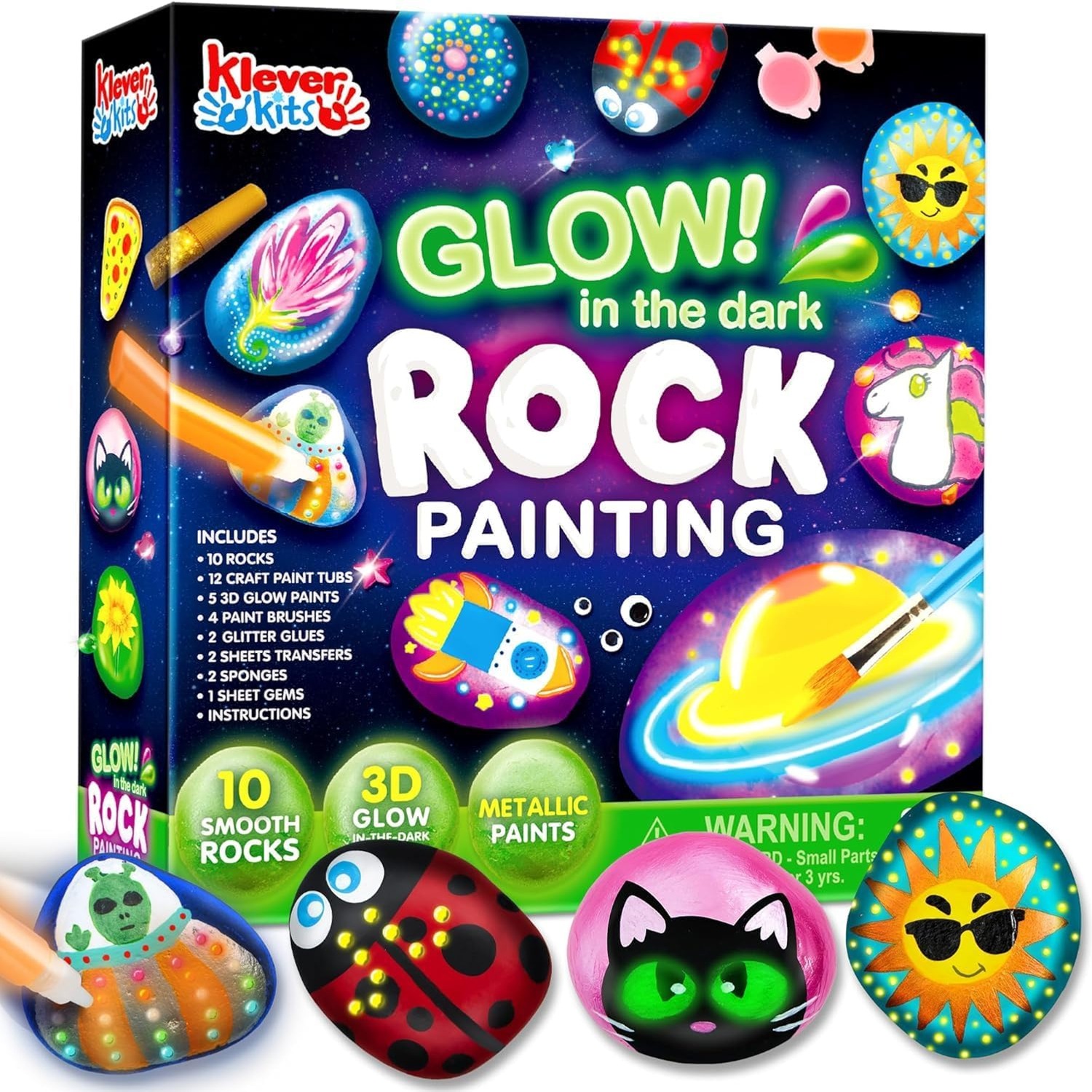
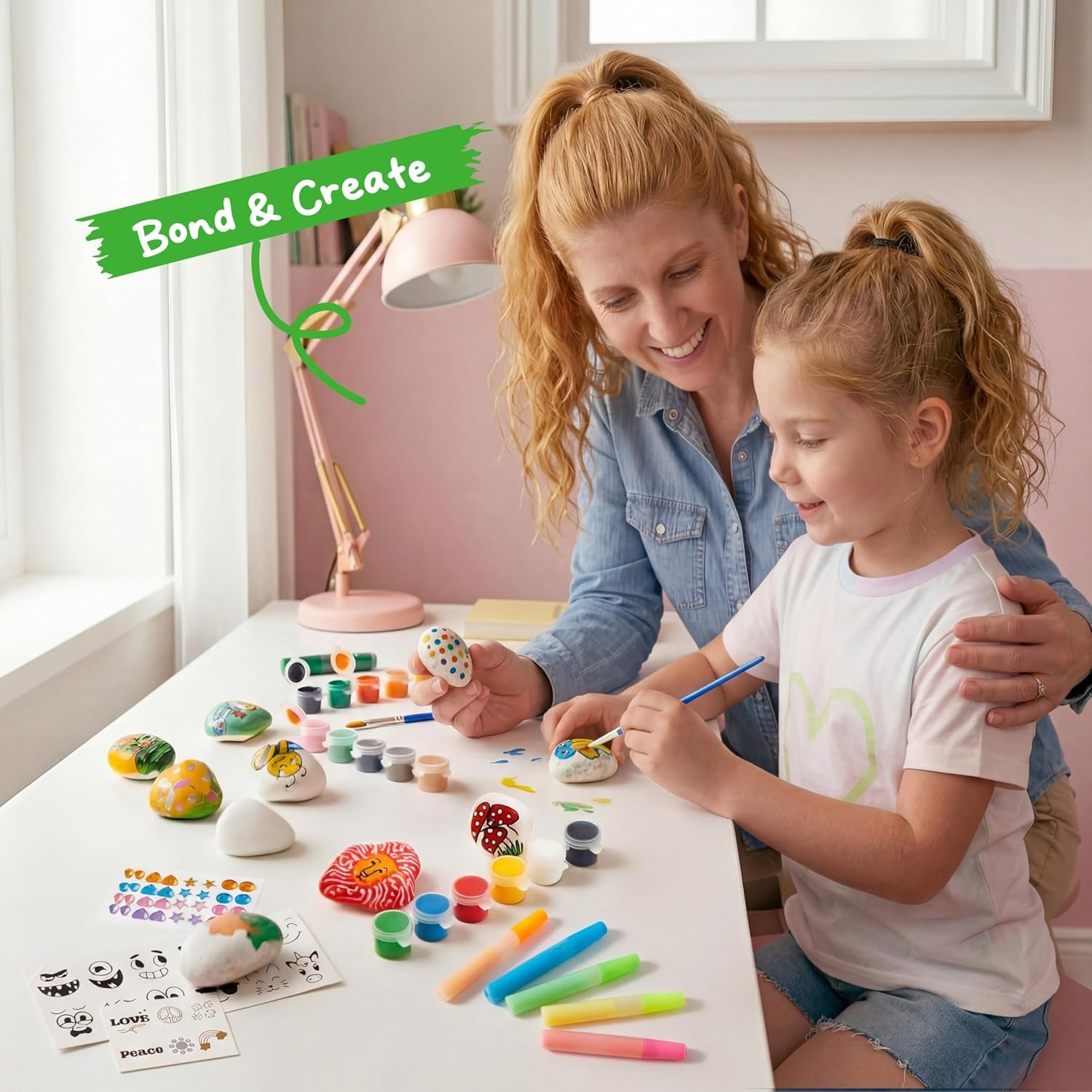
The appeal of a packaged kit is that it removes every one of those small stalls. This one arrives with 12 rocks already in the box, smooth and palm sized, alongside the paint, the brushes, the glue and the decorations. The gap between "shall we do something?" and the first brush stroke is about a minute. For anyone who has tried to organise an activity for a bored seven year old, that gap matters more than any individual feature.
What is actually in the box
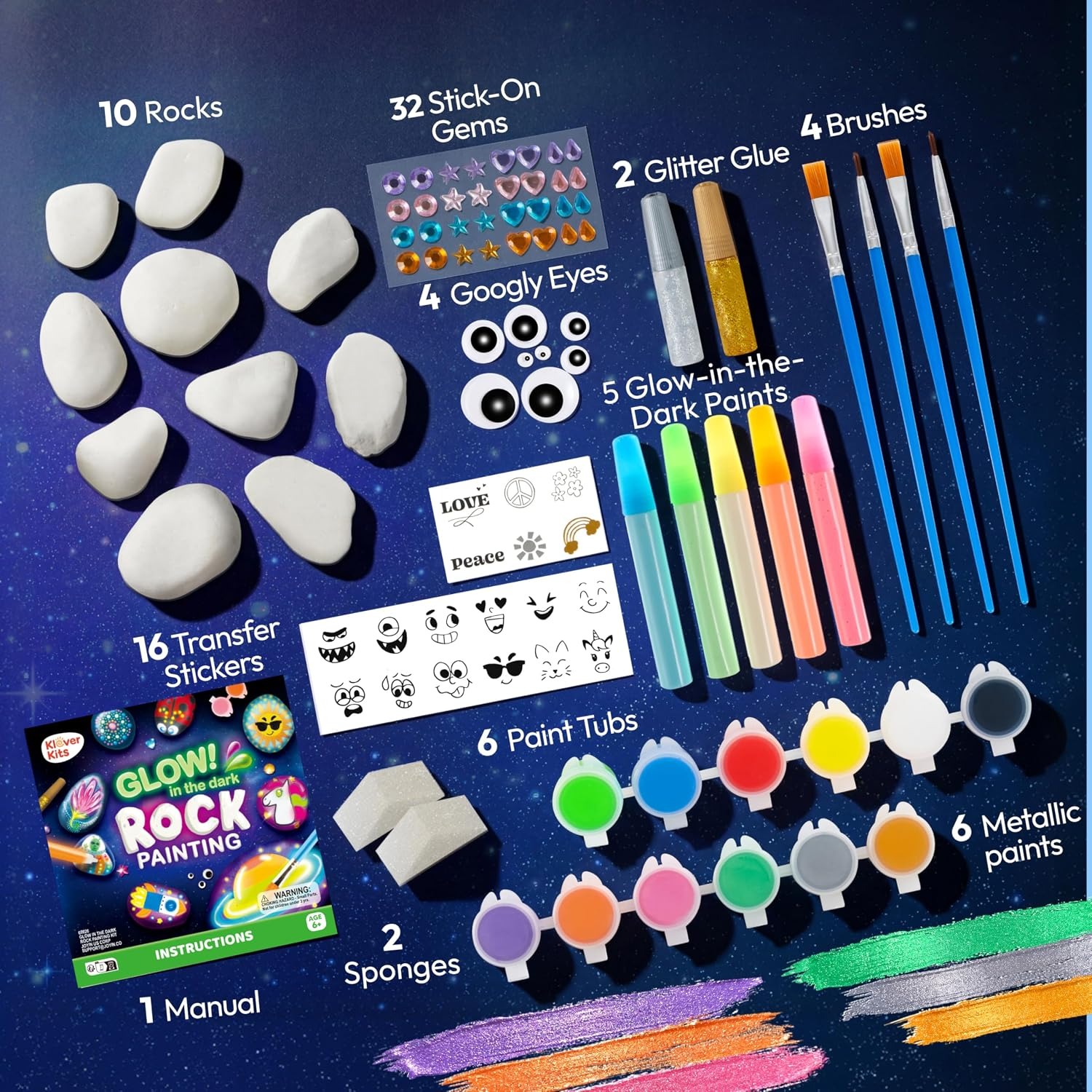
Forty-four pieces, and worth going through properly because the mix is what makes this kit work rather than any single item.
Twelve rocks. Seventeen paints split across three finishes, 6 standard, 6 metallic and 5 glow in the dark. Four tubes of glitter glue, 32 gems, 50 stickers, 4 brushes, 2 sponges and an instruction booklet.
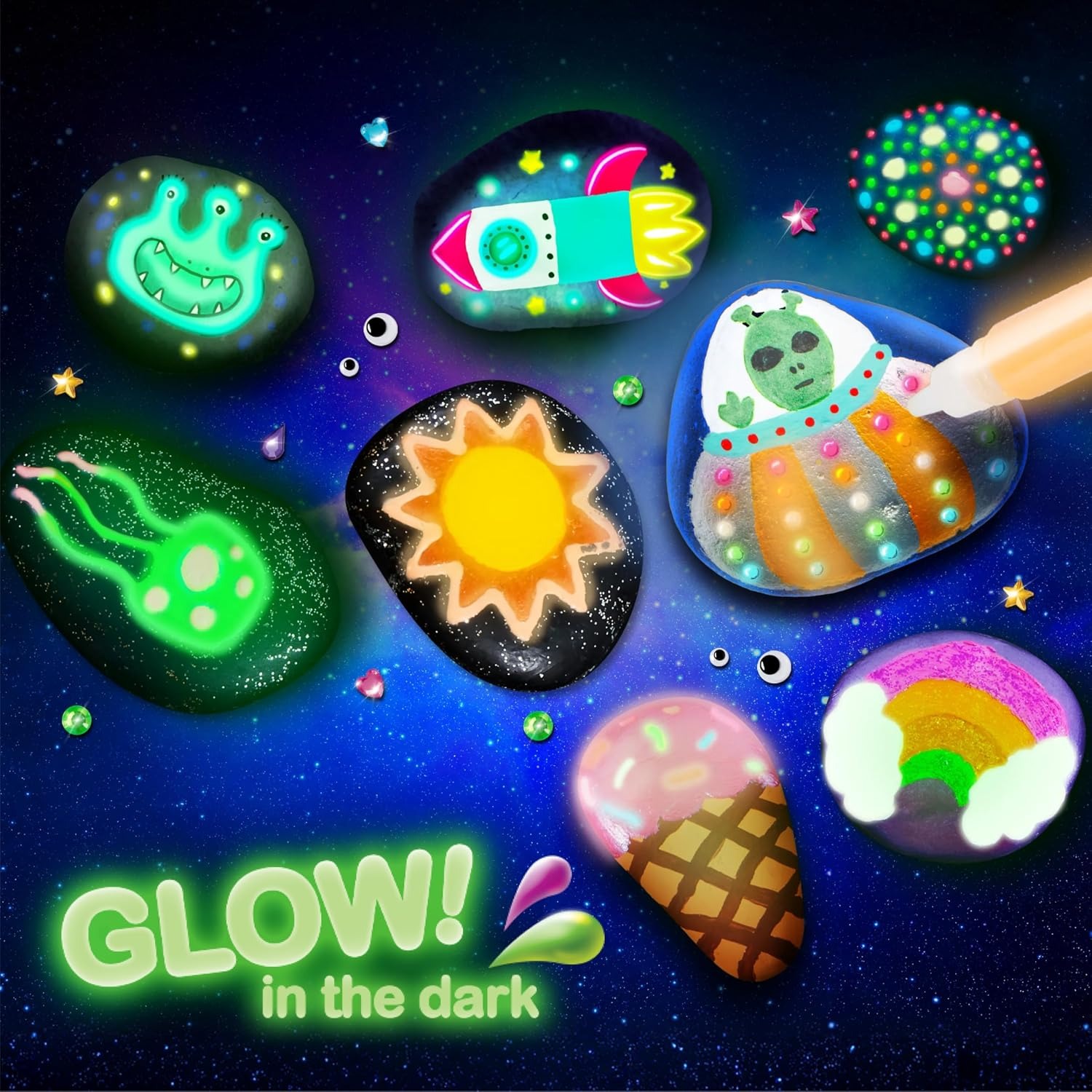
The three paint finishes are the interesting part. Standard colours do the base work. Metallics catch the light and look far better on a stone surface than they do on paper, because the curves give the shine somewhere to move. Then there are the glow paints, which do nothing in daylight and everything once the lights go off.
The gems and stickers deserve more credit than they usually get. They are the reason a four year old and a nine year old can sit at the same table and both finish something they are happy with. The younger one covers a rock in gems and stickers and declares it a dragon. The older one paints careful detail next to them. Neither feels like they are doing the easy version.
How the glow paint actually behaves
This is where expectations need setting, because glow in the dark paint has a reputation for disappointing people.
It works by absorbing light and releasing it slowly. Charge a finished rock under a lamp or on a windowsill for several minutes, then take it into a dark room. You get a clear glow that is brightest in the first few minutes and softens from there. It is not a torch. It is a soft, steady light that looks genuinely good lined up along a shelf or a windowsill.
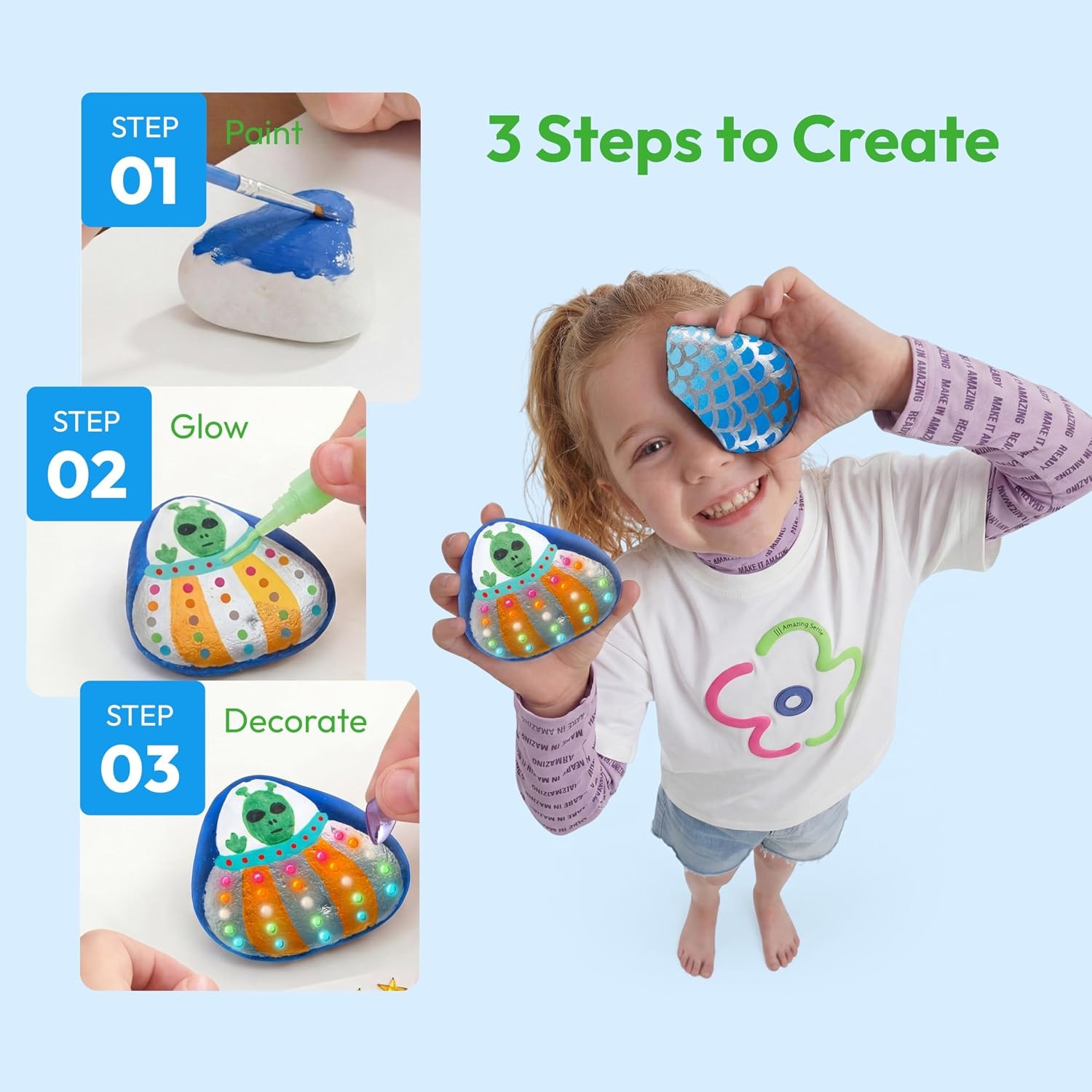
Two things make a big difference. First, put a white or pale base coat under the glow paint. Painted straight onto a grey rock, the effect is weak. Over white, it is three or four times stronger. Second, charge it properly. Thirty seconds under a reading lamp is not the same as ten minutes in a sunny window.
Children work this out fast, and the experimenting is half the fun. Watching a kid test the same design two ways to see which glows harder is better learning than any worksheet.
Who it suits
Children who like making things and have run out of ideas. Rock painting has a lower barrier than drawing on paper because the surface is small, forgiving and already an interesting shape. A rock suggests what it wants to be. One looks like a face, one looks like a beetle, one just wants stripes.
It also suits children who are not naturally crafty. The small surface area means a project is finished in fifteen minutes rather than dragging across an afternoon. That short loop keeps attention, and finishing something is what makes a child want to start the next one.
Groups work well too. It is one of the best party favour craft options because each child leaves with something they made, which saves assembling goody bags. Teachers use it the same way for small group sessions, though with 12 rocks per kit you will want more than one box for a full class.
Finally, it suits families looking for a screen free activity that does not require the adult to be an artist. You do not need to demonstrate anything. Open the box, hand over a rock, sit down with your own.
How to choose a rock painting kit
If you are comparing options, a few things matter more than the piece count on the front of the box.
Does it include rocks? Plenty of kits do not, which means you are buying paint and a promise. Count the rocks, not the total pieces. Twelve is a reasonable number for one or two children across a couple of sessions.
What is the paint range? A kit with six colours and nothing else gets dull. Mixed finishes, standard, metallic and glow, give kids reasons to keep going. The variety here is the main thing separating this from a basic paint pot set.
Are there decorations beyond paint? Gems, glitter glue and stickers extend who can use the kit. Without them, a kit is only really suitable for children confident with a brush.
Are there enough tools? Four brushes and two sponges means two or three children can work at once without taking turns. One brush in a box is a recipe for arguments.
And check the size of the package if storage or travel matters. This one measures 17.8 x 16.8 x 5.1 cm and weighs about 0.45 kg, small enough to pack for a holiday or keep in a cupboard without it becoming a nuisance.
Getting good results
A few practical things, learned the hard way by most families who have tried this.
Cover the table. It takes thirty seconds and saves a conversation later. An apron or an old t-shirt helps too.
Work in thin coats. Thick paint takes forever to dry, cracks as it shrinks and hides the detail underneath. Two thin coats beat one heavy one every time.
Let the base dry before adding gems. Gems pressed into wet paint slide, and the glitter glue grips far better on a dry surface.
Be patient with drying. Touch dry in an hour in a warm room is typical for a thin coat, but leave rocks overnight before stacking them or putting them somewhere they will be knocked.
If you want rocks to go outdoors on a rock trail or in the garden, an adult should add a clear craft sealer. That is not included in the kit, and without it rain and sun will fade the colour within weeks.
Care and storage
Rinse brushes in warm water straight after use. Work the paint out from the base of the bristles rather than just the tips, because that is where it hardens. Stand them bristle-side up to dry.
Press every paint lid down firmly before putting the kit away. Half-closed lids are the single most common reason a craft kit is unusable the second time somebody opens it.
Keep the original tray and put the gems and stickers back in it. Loose gems vanish into carpets permanently.
Store the box somewhere cool and out of direct sunlight. Nothing dramatic happens if you do not, but paints last longer this way.
The short version
This is a complete rock painting set for kids rather than a collection of parts you have to finish yourself. Twelve rocks, seventeen paints across three finishes, glitter glue, gems, stickers, brushes, sponges and a booklet, all in a box small enough to travel.
The glow paints are the hook, and they do work, provided you put them over a pale base and give them a proper charge. The gems and stickers are the quiet feature that lets a wide age range use the same kit at the same table.
It is a tidy gift, a decent party activity and a reliable answer to a wet afternoon. Open it, hand out a rock, and the rest looks after itself.