

Toy Warehouse
Company
Shop By Category
T&Cs
Shop Online
  • Box contents listed
  • Free tracked delivery across the UK over £75
  • 14-day returns

Butterfly Kite 2 Pack | Easy to fly kite | Kite for kids

Butterfly Kite 2 Pack with Long Tails and 30m Lines

£33.99 £40.99 Save £7
  • Two Kites Included
  • Easy To Fly
  • Fast Assembly
  • Packs Into One Bag

Price: £33.99 £40.99

  • Free tracked delivery across the UK on orders £75+, otherwise a flat £10
  • Pay by card or PayPal, handled by the payment provider
  • 14 days to change your mind, plus your statutory rights
Product specifications
Product TypeButterfly kite
Pack Contents2 kites with tails, 2 handles with 30m string, 2 instruction sheets, 1 kite bag
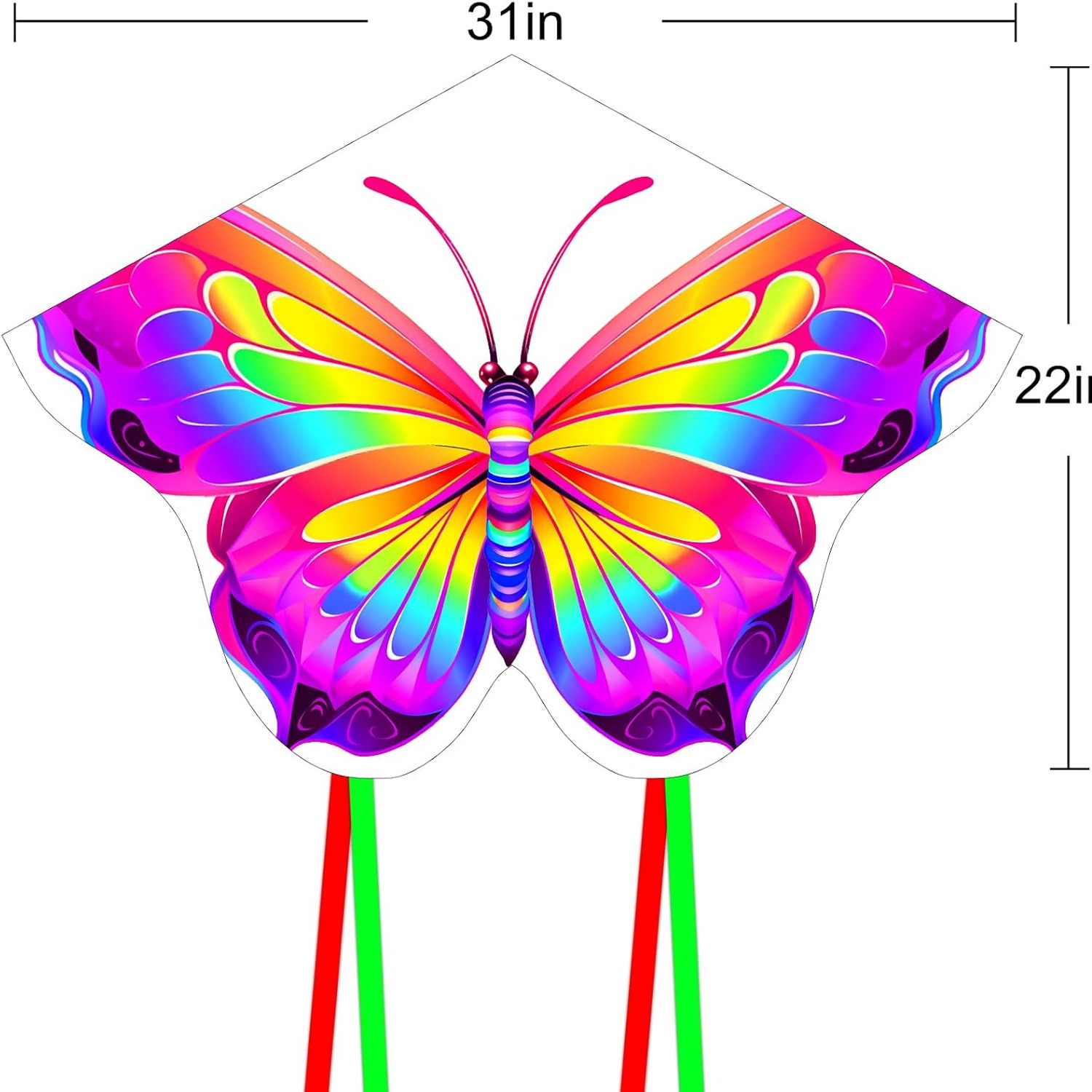
Kite Size78.7 cm L x 55.9 cm W (31 in x 22 in)
Tail Length100 in
Sail MaterialPolyester
Frame MaterialFibreglass
Line Length30 m per handle
Line Weight50 g
SizeS
ColourColourful
ThemeButterfly
Age Range DescriptionAdult
BrandTouch the sky
ManufacturerHENGDA KITE
Country of OriginChina
Package Dimensions17.24 in x 5.04 in x 1.5 in
Warranty1 Year
Shipping & returns

Tracked delivery anywhere in the UK. It is free on orders of £75 or more, and a flat £10 below that.

Under the Consumer Contracts Regulations 2013 you have 14 days from delivery to cancel for any reason, and a further 14 days to send it back in resaleable condition. We refund the price you paid, including standard delivery. You cover the cost of returning it unless the item is faulty.

If it arrives faulty, damaged or not as described, we put it right at no cost to you under the Consumer Rights Act 2015, return postage included.

Shipping details · Refunds and returns

Two Kites IncludedBoth children can fly at once, so nobody waits for a turn.
Easy To FlyLight polyester sail and fibreglass frame lift in a gentle breeze.
Fast AssemblySlot the rods in and you are flying in about a minute.
Packs Into One BagKites, handles and lines all travel in the included carry bag.

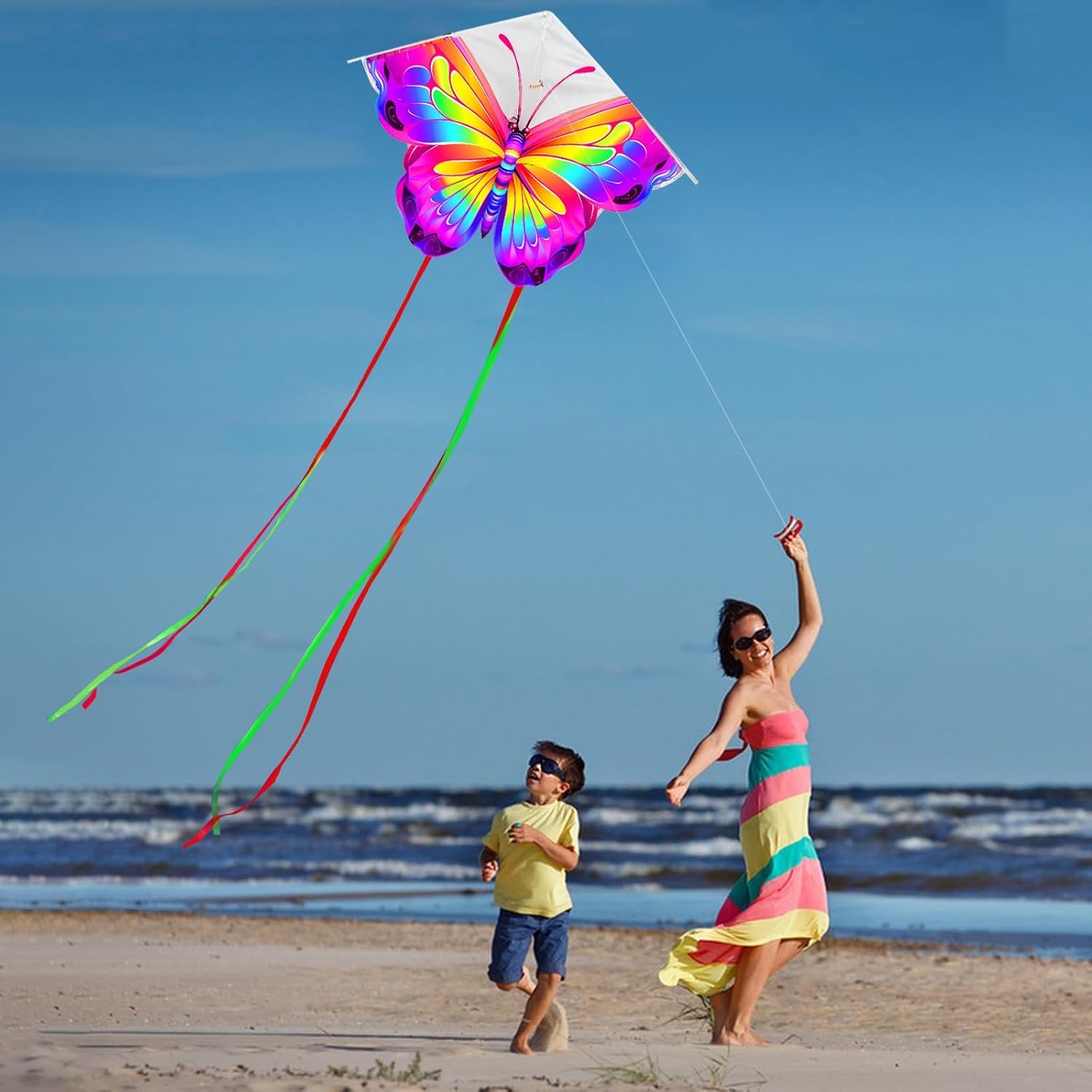
Two bright butterfly kites that get airborne in a minute, so a windy afternoon turns into the best part of the weekend.

Tear-resistant polyester sails on fibreglass frames, each with a 100 inch tail, an easy-grip handle and 30m of line, packed in a single carry bag.

This butterfly kite 2 pack gives you two complete kites, each with a long flowing tail and its own handle wound with 30m of line.

The sail is tear-resistant polyester and the frame is fibreglass, a light combination that lifts in a soft breeze and holds steady when the wind picks up.

Assembly is simple enough that a child can do most of it, with rods sliding into sleeves and the tail clipping on at the base.

Everything folds down into one kite bag, so it fits in a backpack for the park, the beach or a camping trip.

With two in the set it works as a shared gift for siblings, cousins or a parent and child flying together.

Butterfly Kite 2 Pack with Long Tails and 30m Lines

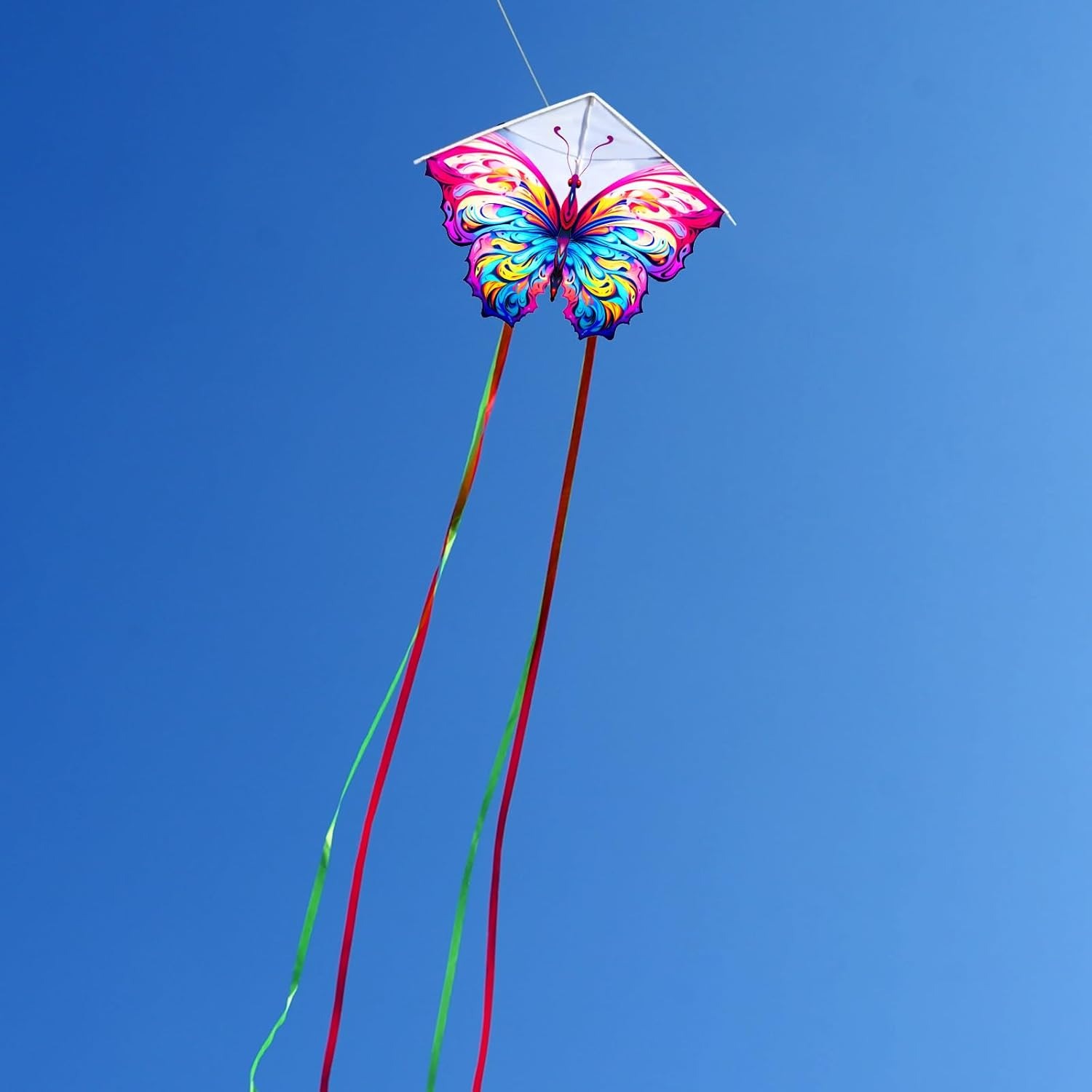
A kite is one of the few outdoor toys that still works with no batteries, no screen and no setup fee. This butterfly kite 2 pack keeps that simple idea intact. Each kite has a bright butterfly sail cut from tear-resistant polyester, a fibreglass frame that flexes rather than snaps, and a tail that runs 100 inches behind it. The tail is not just decoration. It adds drag at the back of the kite, which is what keeps the nose pointed up and stops the whole thing spinning when a gust arrives.

Butterfly Kite 2 Pack with Long Tails and 30m Lines

The set includes two kites rather than one, which quietly solves the most common problem with buying a kite for a family. One kite means taking turns, and taking turns on a windy afternoon usually means one child holding the line and another getting bored. With two handles, two lines and two kites, both children fly at the same time, or a parent flies alongside a beginner and shows them how to feed out line and walk the kite up.

Butterfly Kite 2 Pack with Long Tails and 30m Lines

Setting up is deliberately plain. The rods slide into the sleeves on the back of the sail, the cross spar locks the shape, the tail attaches at the base and the line clips to the bridle. Most people manage it in under a minute once they have done it once. Packing down is the same process in reverse, and everything goes back into the single kite bag that comes with the set, so you are not hunting for loose rods in the boot of the car.

Butterfly Kite 2 Pack with Long Tails and 30m Lines

The sail area is modest at roughly 78.7 cm by 55.9 cm, and that is a deliberate choice for a beginner kite. A smaller sail pulls less hard, so a young child can hold the handle without being dragged forward, and it needs less wind to get moving. It is a sensible first kite for a seven year old and still enjoyable for an adult who wants twenty minutes of quiet on a hillside. The 30m of line on each handle gives plenty of height for a park or an open beach without the kite disappearing into the distance.

These kites are made in Weifang, China, a city with a long history of kite making. The listed specification covers the sail material, frame material, line length and pack contents, and the product carries a one year warranty. Colour is listed simply as colourful and the exact butterfly print may vary. Shipped weight and packed box dimensions are not specified by the maker for this item.

Not sure yet? That is fine.

A toy has to suit the child it is for, and you cannot always judge that from a photograph. Under the Consumer Contracts Regulations 2013 you have 14 days from delivery to cancel for any reason, and a further 14 days to send it back in resaleable condition. We refund the price you paid, including standard delivery.

If it turns up faulty, damaged or not as described, that is on us. The Consumer Rights Act 2015 covers you, and we pay the return postage. Read the full detail on our refunds and returns page, or ask us anything before you order.

Frequently Asked Questions

What exactly comes in the box?

You get two complete butterfly kites, each with a tail already attached or ready to clip on, plus two handles each wound with 30m of string and two instruction sheets. There is also one kite bag to carry the whole set. Nothing else is needed to fly on the day it arrives.

How big is each kite?

Each kite measures 78.7 cm long by 55.9 cm wide, which is 31 inches by 22 inches. The tail adds another 100 inches behind it in the air. That puts it in the small to medium range, which is the usual size band for the best kite for beginners.

Is this a good kite for kids?

Yes. The small sail area means it does not pull hard on the handle, so a child can hold it without being tugged off balance. The long tail also keeps it stable, which reduces the frustrating nose-dives that put kids off flying.

What age is it suitable for?

The maker gives the age range description as adult, which is the manufacturer's own classification. In practice children of around seven and up usually fly it themselves, and younger children enjoy it with an adult holding the handle. Adult supervision is sensible for any child near a long line.

Can adults fly it too?

Absolutely. Plenty of adults buy a simple kite like this for camping trips, beach days or a quiet half hour on a hillside. It is light enough to pack and forgiving enough that you do not need any technique.

How much wind do I need?

A light steady breeze is enough, the kind where you can feel the wind on your face and see leaves moving. It also copes when the wind picks up, thanks to the flexible fibreglass frame and the drag from the tail. Dead calm days will not work for any kite.

Is it too fragile for strong wind?

The fibreglass rods bend under load rather than staying rigid, which is what you want in gusts. Very strong or sharply gusting wind is hard on any kite in this size class, so if you are being pushed around on the ground it is a good moment to reel in.

How long does assembly take?

Once you have done it once, under a minute. The rods slide into fabric sleeves on the back of the sail, the spar sets the shape, the tail attaches at the base and the line clips to the bridle loop. The first time may take a few minutes while you read the instruction sheet.

Do I need tools?

No tools at all. Everything pushes or clips together by hand. That is part of why it works as the best kite for park days where you want to be flying straight out of the car.

What is the sail made from?

Polyester, described as tear-resistant. It is a light synthetic fabric that holds colour well and does not absorb much water, which is why it is standard for recreational kites.

What is the frame made from?

Fibreglass rods. Fibreglass is light, springy and recovers its shape after flexing, which suits a kite that will get knocked about in a bag and occasionally land hard.

How long is the flying line?

Each handle carries 30m of string. That gives real height in an open park or on a beach while still letting you see the kite clearly and reel it in quickly.

Can I use a longer line?

You can attach a longer line if you have one, but 30m is plenty for the lift this size of kite produces, and longer lines add weight and sag. Most people never feel the need to change it.

Does the tail have to be attached?

Yes, fly it with the tail on. The tail adds drag behind the kite, keeps the nose up and stops it spinning. Flying without it usually ends in a loop and a crash.

Where is the best place to fly it?

Open ground with clear space downwind, so parks, playing fields, beaches and open grassland. Stay well away from power lines, trees, roads and crowds. Beaches are a favourite because the wind off the water tends to be steady, which makes this the best kite for the beach kind of outing.

How do I launch it on my own?

Stand with your back to the wind, hold the kite up by the bridle and let it catch the air, then release and feed out line in short pulls. If it drops, walk backwards a few steps rather than running. Running is the classic mistake and it rarely helps.

Why does my kite keep diving?

The usual causes are not enough wind, a missing or tangled tail, or line being let out too fast. Check the tail is free, reel in a little to add tension and try again. Moving to a more open spot often fixes it instantly.

Can two people fly both kites at once?

That is the point of a two pack kite set. Keep a few metres between flyers and try not to cross lines, since crossed lines tangle quickly and can bring both kites down.

What if the lines get tangled?

Bring both kites down, lay the lines out on the ground and work the knot loose rather than pulling. Winding the line back onto the handle under light tension after each flight prevents most tangles in the first place.

Is it waterproof?

The polyester sail does not soak up much water, so a few spots of rain or a splash of sea spray will not ruin it. Dry it fully before packing, because folding a damp kite into a bag can leave mildew marks over time.

How do I clean it?

Shake off sand and loose grass, then wipe the sail with a damp cloth if needed. Avoid harsh cleaners and never put it in a washing machine. Let it air dry in the shade before folding.

How should I store it?

Fold the sail loosely, keep the fibreglass rods straight and put everything back in the kite bag. Store it somewhere dry and away from heavy items that could bend the rods. A cupboard shelf or the top of a wardrobe is ideal.

Will the colours fade in the sun?

Printed polyester holds colour reasonably well, but long term exposure to strong sun will fade any kite fabric eventually. Packing it away between outings rather than leaving it out in the garden makes a noticeable difference.

Can I repair a small tear?

Small tears in polyester are usually fixable with a patch of ripstop repair tape applied to both sides. Catch them early, because a tear in a sail spreads fast once the wind gets into it.

Is it good for camping?

Yes. It packs flat, weighs very little and gives children something to do that does not involve a screen. The single carry bag means the whole set travels as one item.

Does it make a good gift?

It works well as a gift precisely because there are two kites. Siblings, cousins or a parent and child can fly together instead of sharing, and the carry bag makes it easy to wrap or hand over as a single package.

What is the warranty?

The product warranty is listed as one year. Keep your order confirmation so a claim can be matched to the purchase if you ever need it.

Where is it made?

China. The manufacturer is HENGDA KITE and the kites are produced in Weifang, a region known for kite making.

How is it shipped and how long will it take?

We deliver to addresses across the UK with a tracked courier. Most orders arrive within 3 to 7 working days of the order date, including one working day of handling. Delivery is free on orders of £75 or more and a flat £10 under that.

What if it is not right for us?

Get in touch and we will sort it. If the kite arrives damaged or faulty, send a photo and we will arrange a replacement or refund. If you simply change your mind, contact us within 14 days of delivery with the kite unused and back in its bag, and we will walk you through the return.

Choosing and Flying a Butterfly Kite, A Practical Buyer's Guide

6 min read Toy Warehouse

The problem with most first kites

Plenty of people buy a kite, take it to a field, spend twenty minutes watching it nose-dive into the grass and quietly give up. The kite goes in the shed and nobody mentions it again. That experience is almost never the flyer's fault. It is usually a mismatch between the kite and the conditions, or a design that needs more skill than a beginner has on day one.

Big kites look impressive in the shop and pull like a dog on a lead in the air. Cheap flat kites with no tail spin the moment a gust hits them. Novelty kites made from thin plastic tear on the first hard landing. None of those are the right starting point.

What makes a kite easy is a combination of modest sail area, a flexible frame and a long tail. Modest sail area means less pull, so a child can hold the handle. A flexible frame means the kite absorbs gusts rather than fighting them. A long tail adds drag at the back, which keeps the nose pointed up and turns a twitchy kite into a steady one. This butterfly kite 2 pack is built around exactly that combination.

How this kite works

Each kite has a polyester sail measuring 78.7 cm by 55.9 cm, which is 31 inches by 22 inches. Behind it trails a tail 100 inches long. The frame is fibreglass rod, which slides into sleeves sewn onto the back of the sail.

Polyester is the standard sail fabric for recreational kites for good reason. It is light, it does not absorb much water, it holds printed colour and it resists tearing far better than plastic film. Fibreglass does the same job on the structure side. It bends and springs back, so a hard landing or a sharp gust flexes the rods instead of snapping them.

When the wind hits the sail, the sail wants to lift and the line holds it back. That tension is what creates flight. The tail hangs below and behind, dragging through the air and pulling the lower edge of the kite down, which keeps the whole thing angled into the wind. Without the tail, there is nothing stopping the kite from rolling sideways and spiralling in.

Each kite comes with its own handle wound with 30m of line. That length is well matched to this sail size. You get genuine height, but the kite stays visible and you can bring it in quickly if someone wanders into the flying zone.

Who it suits

This is a beginner and family kite. If you have children between roughly seven and twelve who have never flown before, this is the kind of set that gives them a win on the first attempt. The maker gives the age range description as adult, which is the maker's own classification, so supervise young children and keep an eye on the line.

It also suits adults who want something simple to throw in a camping bag. There is no learning curve worth mentioning and no technical setup. Some people buy a kite purely because it is twenty quiet minutes outside with something to watch.

What it is not is a stunt kite or a competition kite. Those are dual-line designs built for tricks, and they need space, wind and practice. This is a single-line kite that goes up and stays up, which is a different and more relaxing activity.

The two-pack format matters more than it sounds. The most common complaint about buying a family kite is that only one person flies at a time. Two kites, two handles and two lines means both children are busy, or a parent flies alongside a beginner and demonstrates. That alone usually doubles how long everyone stays interested.

How to choose a kite that actually flies

A few things are worth checking whenever you are comparing a lightweight kite for kids against something else.

Look at sail area first. Anything much bigger than about a metre across will pull hard enough to worry a small child. Smaller sails need less wind to lift, which matters because most days are breezy rather than windy.

Check the frame material. Fibreglass is the sweet spot for recreational kites, light and flexible without being fragile. Solid plastic spars tend to be heavy and snap, and carbon is excellent but priced for enthusiasts.

Check whether a tail is included. A kite sold without a tail is usually either a sophisticated design that does not need one or a cheap one that should have had one. For a beginner, a long tail is not optional.

Look at line length and how it is stored. Thirty metres on a moulded handle is practical. Line sold loose on a card is a tangle waiting to happen.

Finally, think about how it packs. A kite that folds into a bag with its rods and handles together is a kite you will actually take out again. One that lives in three separate pieces in a cupboard will not get used.

Flying it well

Pick open ground with clear space downwind. Parks, playing fields, open grassland and beaches all work. Beaches are a favourite because sea breezes tend to be steady rather than gusty, and steady wind is what a kite likes.

Stay away from power lines, roads, trees and crowds. A kite line is thin and strong, and a kite coming down across a power line is genuinely dangerous. Give yourself a clear circle of space.

To launch alone, stand with your back to the wind, hold the kite up and let the breeze take it, then release and feed line out in short pulls rather than one long run. If the kite sags, walk backwards a few steps to add tension. Resist the urge to sprint. Running almost never rescues a launch and usually ends with the kite in the grass.

If you have a second person, have them walk the kite downwind twenty metres, hold it up and let go on your signal while you pull in.

When the kite dives repeatedly, work through the short list. Is the tail attached and free of tangles? Is there actually enough wind where you are standing? Are you letting line out too fast? Nine times out of ten it is one of those three.

Looking after it

Kite care is mostly about moisture and rods. Shake sand and grass off before packing. If the sail is dirty, a damp cloth is enough. Skip the washing machine and skip detergents.

Let it dry fully in the shade before folding. A damp kite folded into a bag can come out spotted weeks later. Shade rather than direct sun, because long hours in strong sunlight will fade any printed fabric eventually.

Wind the line back onto the handle under light tension. Loose line dumped into a bag turns into a knot by the next outing, and untangling 30m of string in a field is nobody's idea of fun.

Keep the fibreglass rods straight. Do not stack heavy things on the bag. If you spot a small tear in the sail, patch it with ripstop repair tape on both sides straight away. Tears spread fast once wind gets into them.

Each kite in this set carries a one year product warranty, so keep your order confirmation somewhere you can find it.

The short version

This is a simple, well-matched beginner kite sold in pairs. A 78.7 cm by 55.9 cm polyester sail on a fibreglass frame, a 100 inch tail for stability, 30m of line on an easy-grip handle, and everything packing into one bag. Assembly takes about a minute.

Buy it if you want something that works on a normal breezy afternoon with children who have never flown a kite. Buy it especially if there are two children, because sharing a single kite is where most kite days go wrong. Look elsewhere if you want a dual-line stunt kite or something built for high wind performance.

For a park, a beach or a camping trip, it does the one thing it needs to do. It goes up and stays up.

Browse the shop

Ready for a windy afternoon?

Two kites, two lines and one bag, everything you need to get both children flying at the same time.

Ask us a question

Page summary

The Butterfly Kite 2 Pack from Touch the sky (manufacturer HENGDA KITE) contains two butterfly-themed kites, each with a 100 inch tail, a handle wound with 30m of string, and an instruction sheet, plus one shared kite bag. Each kite measures 78.7 cm long by 55.9 cm wide (31 in x 22 in). The sail is polyester and the frame is fibreglass. Line weight is listed at 50 g. Package dimensions are 17.24 in x 5.04 in x 1.5 in. Colour is listed as colourful, theme butterfly, size S, country of origin China, with a one year product warranty. Shipping weight and overall boxed dimensions are not specified by the maker. Suited to beginners, children and adults flying in parks, fields or at the beach.