Toy Warehouse
Company
Shop By Category
T&Cs
Shop Online
  • Box contents listed
  • Free tracked delivery across the UK over £75
  • 14-day returns

Rainbow Xylophone 8 Note | Wooden xylophone for kids | Kids glockenspiel

Rainbow 8-Note Wooden Xylophone with Mallets and Songbook

£29.99 £35.99 Save £6
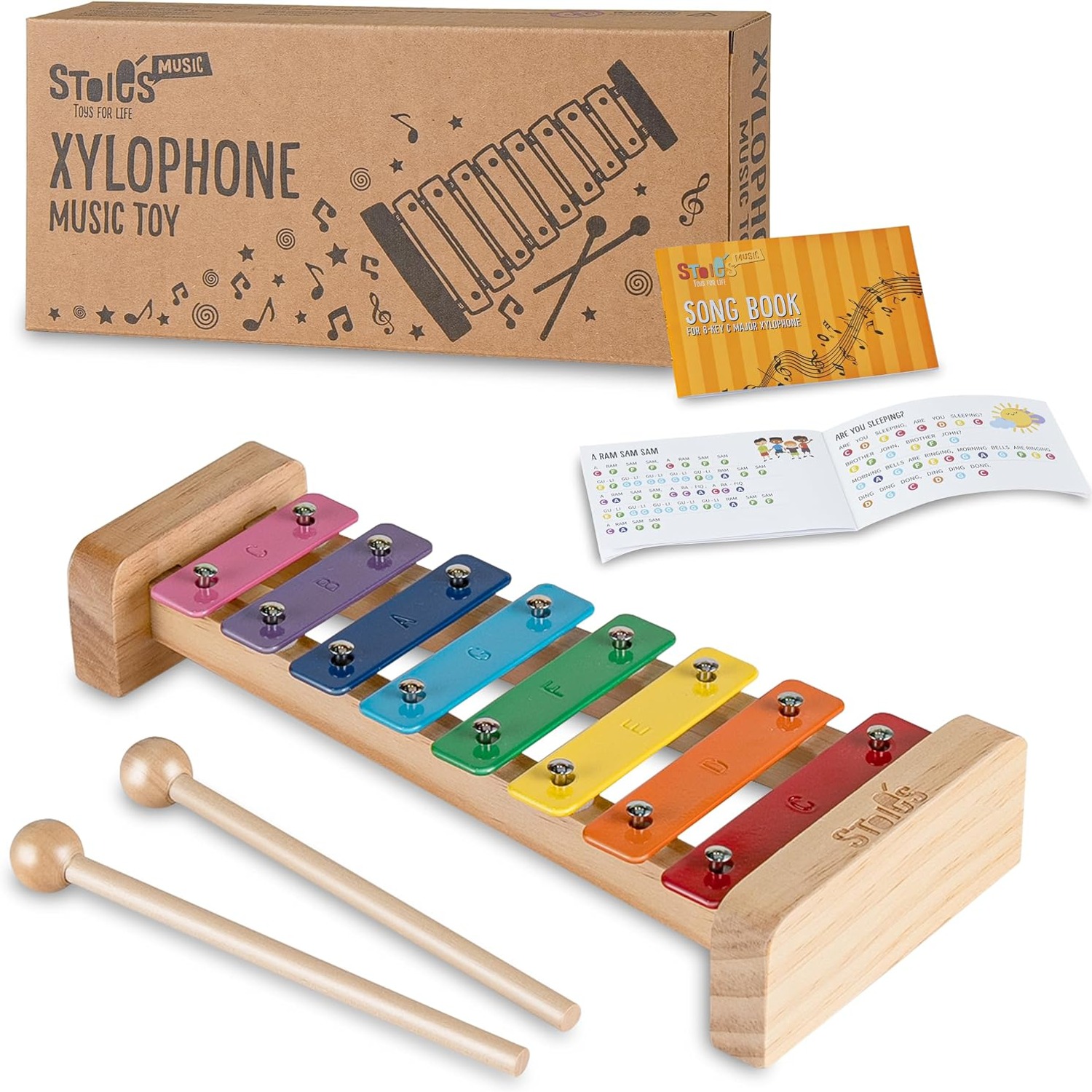
  • Eight Tuned Keys
  • Colour Coded
  • Wooden Build
  • Ready To Play

Price: £29.99 £35.99

  • Free tracked delivery across the UK on orders £75+, otherwise a flat £10
  • Pay by card or PayPal, handled by the payment provider
  • 14 days to change your mind, plus your statutory rights
Product specifications
BrandStoie's
Model NumberSX-0002
Manufacturer Part NumberSX-0002
Instrument TypeXylophone
Number Of Keys8
ColourRainbow
ThemeRainbow
Material TypeWood
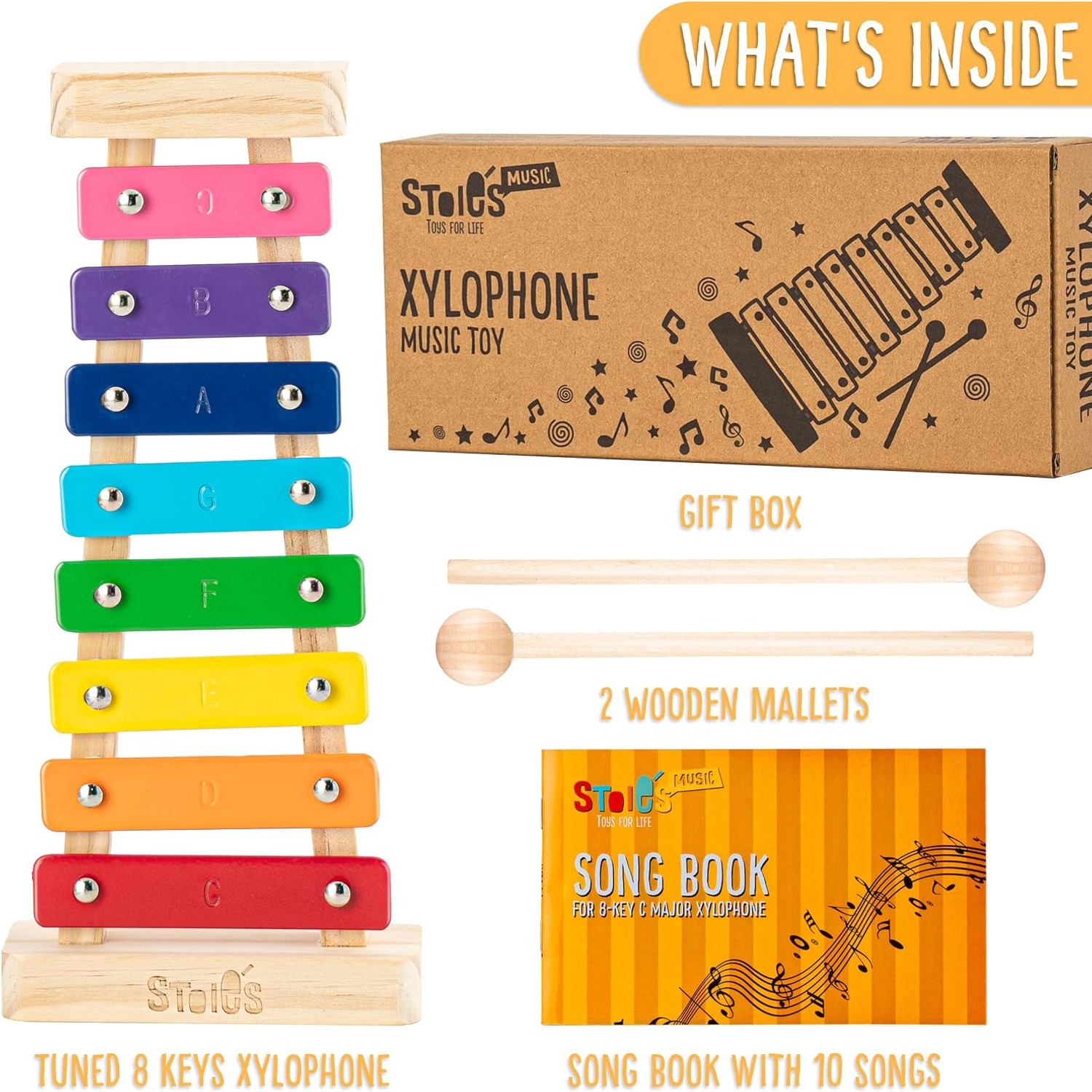
Included ComponentsXylophone, mallets, song book
Set Name1 piece
Number Of Items1
Unit Count1.0 count
Manufacturer Recommended Age3 years and up
Number Of Players2 or more
Educational ObjectiveDevelop musical and cognitive skills in children
Operation ModeManual
Power SourceManual
Assembly RequiredNo
SizeSmall
Item Dimensions25 x 12 x 5 cm
Item Weight0.2 kg
Country Of OriginChina
Manufacturer Warranty30 days
Weight0.2 kg
Shipping & returns

Tracked delivery anywhere in the UK. It is free on orders of £75 or more, and a flat £10 below that.

Under the Consumer Contracts Regulations 2013 you have 14 days from delivery to cancel for any reason, and a further 14 days to send it back in resaleable condition. We refund the price you paid, including standard delivery. You cover the cost of returning it unless the item is faulty.

If it arrives faulty, damaged or not as described, we put it right at no cost to you under the Consumer Rights Act 2015, return postage included.

Shipping details · Refunds and returns

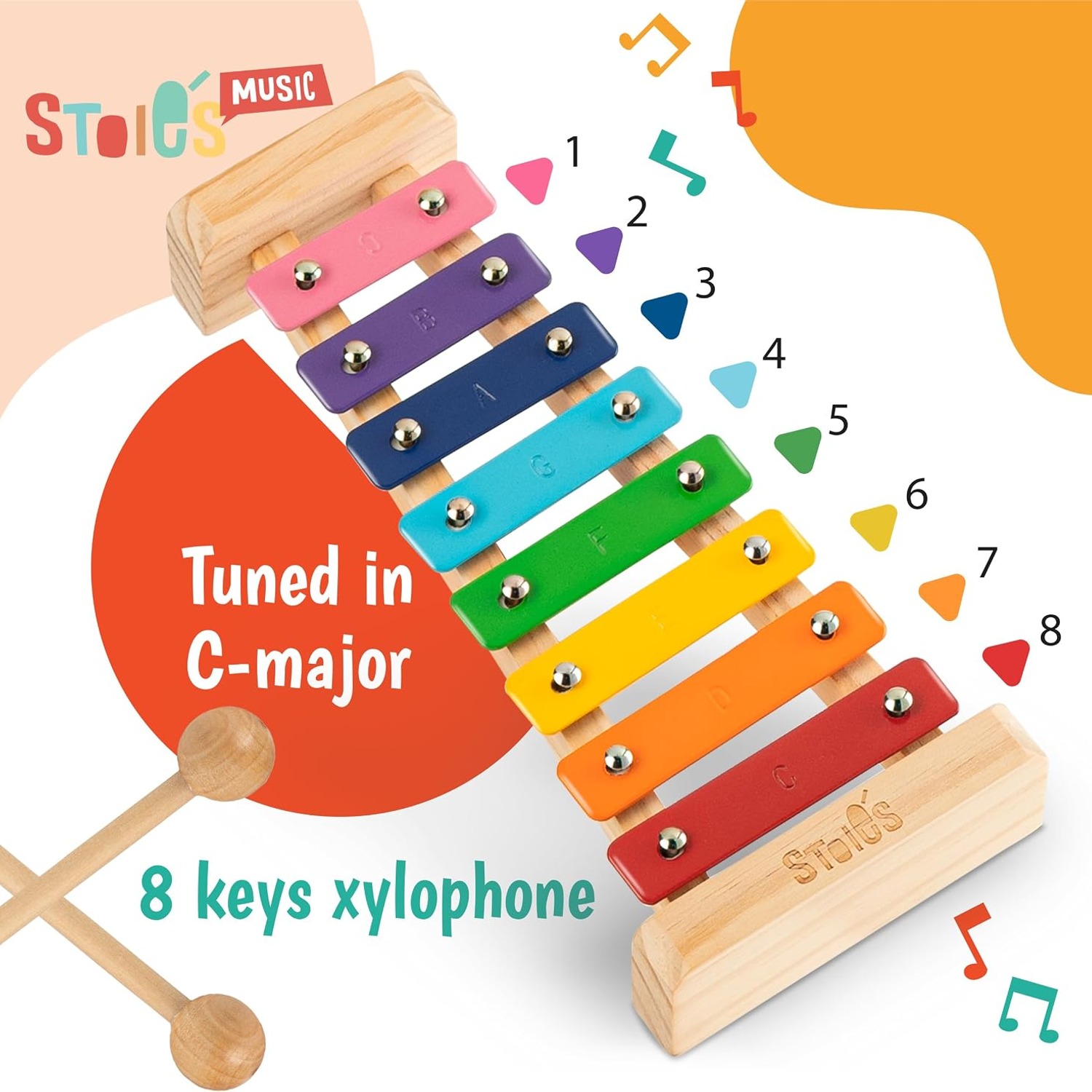
Eight Tuned KeysKeys run through the C-major scale so simple tunes actually sound right.
Colour CodedEach key has its own colour, which makes following the songbook easy.
Wooden BuildMade from wood with smooth, rounded edges for small hands.
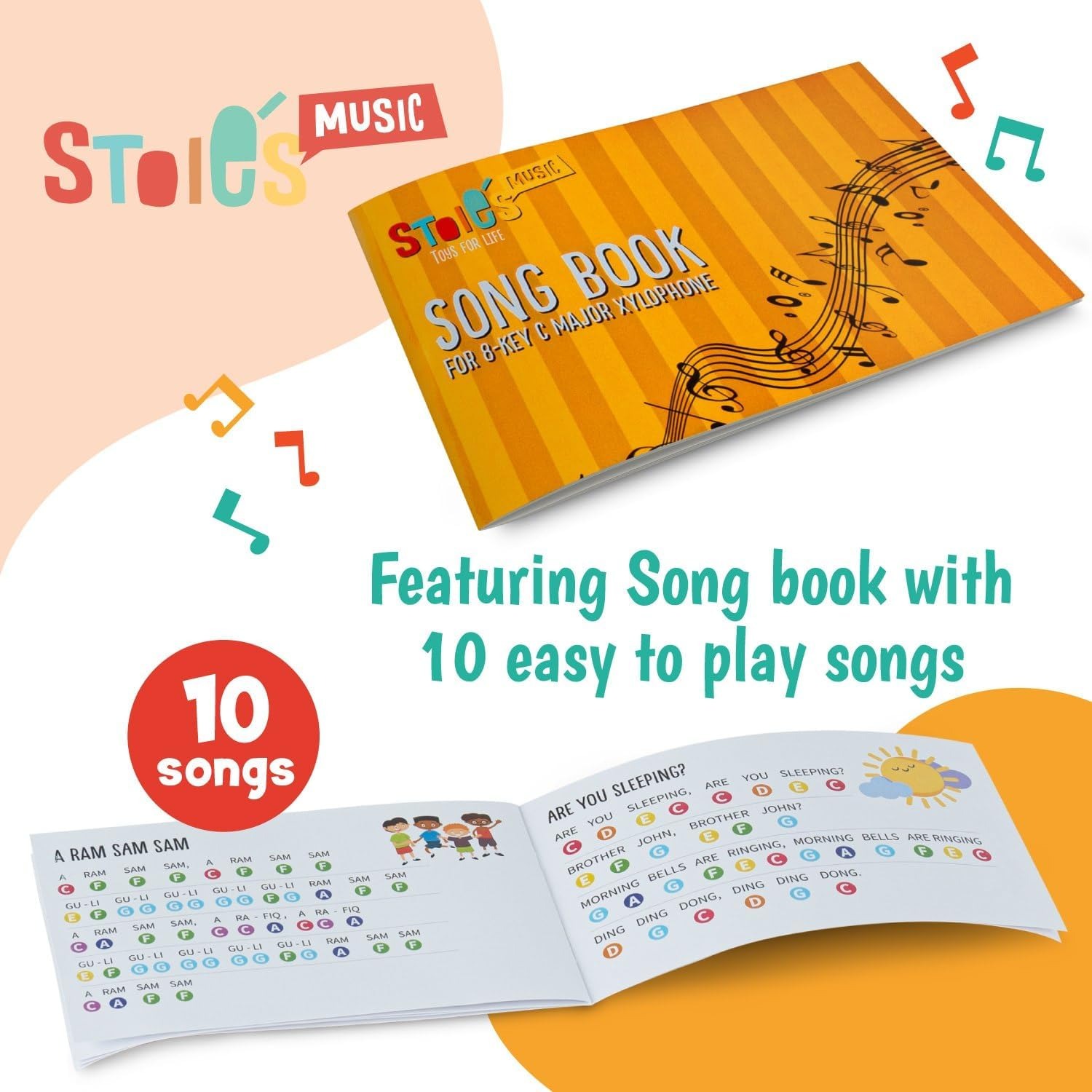
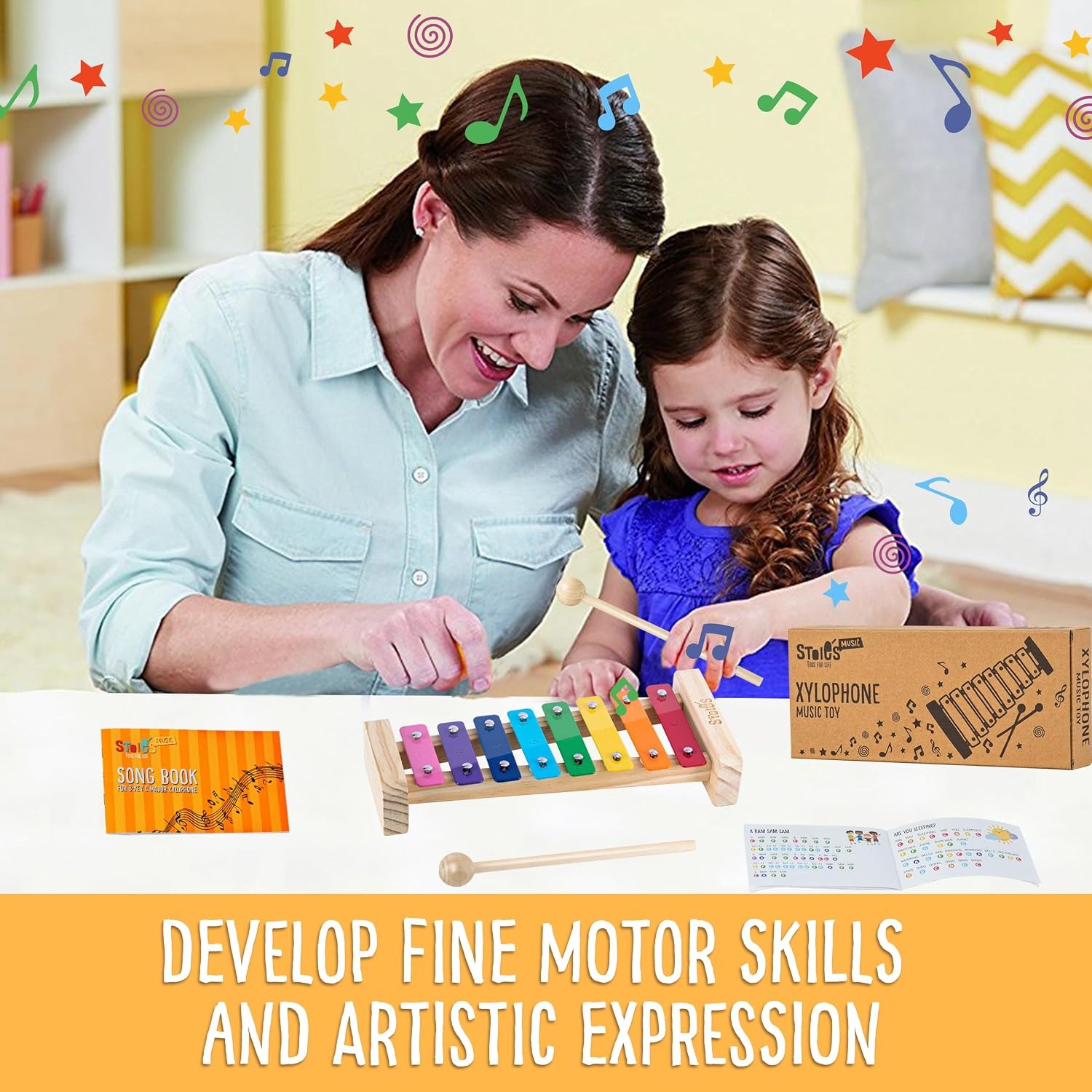
Ready To PlayTwo mallets and a 10-song book are included, with no assembly needed.

A rainbow xylophone 8 note set that turns a wet afternoon into a first concert.

Eight wooden keys tuned to the C-major scale, two mallets and a songbook with ten tunes, sized small enough for a preschooler to carry and sturdy enough for daily play.

An 8-note wooden xylophone tuned to the C-major scale, so the tunes children pick out sound the way they expect.

Rainbow colour coding on the keys gives beginners a simple way to follow along before they can read music.

Two mallets are included, which means a parent, sibling or friend can play at the same time.

A songbook with ten familiar children's songs gives new players something to aim for in the first week.

At 25 x 12 x 5 cm and 200 g, it fits in a bag for grandparents' houses, holidays and nursery days.

Rainbow 8-Note Wooden Xylophone with Mallets and Songbook

Most children meet music by banging something. A saucepan, a radiator, the side of the bath. This rainbow xylophone 8 note set takes that instinct and gives it somewhere useful to go. Eight keys, tuned to the C-major scale, mean that a child who hits them in order hears a scale going up and coming back down. That is the moment a lot of small players realise sound has an order to it, and it tends to hold their attention far longer than a toy that only makes noise.

Rainbow 8-Note Wooden Xylophone with Mallets and Songbook

The colour coding does quiet work in the background. Each key is a different colour, so a three year old who cannot read a note name can still follow a picture or a parent's finger. The included songbook uses ten songs most families already know, which matters more than it sounds. Playing something recognisable in the first session is what makes a child come back to an instrument on day two. It is one of the reasons a wooden xylophone for kids outlasts most light-up plastic toys in a playroom.

Rainbow 8-Note Wooden Xylophone with Mallets and Songbook

It is built from wood with smooth, rounded edges, and it is small. At 25 x 12 x 5 cm and around 200 g, a preschooler can pick it up and carry it to another room, which they will. That size also makes it sensible for nursery bags, car journeys and visits to relatives. There is no assembly, no batteries and no app. You open the box, hand over a mallet and the thing works.

Rainbow 8-Note Wooden Xylophone with Mallets and Songbook

Two mallets is a deliberate choice rather than a spare. Two children can play together, or an adult can sit opposite and play call-and-response, which is how most early music teaching actually happens. Nurseries and childminders tend to like this for group time, and at home it stops the familiar argument about whose turn it is. Older children often start using both mallets at once, which is the beginning of real two-handed playing.

Rainbow 8-Note Wooden Xylophone with Mallets and Songbook

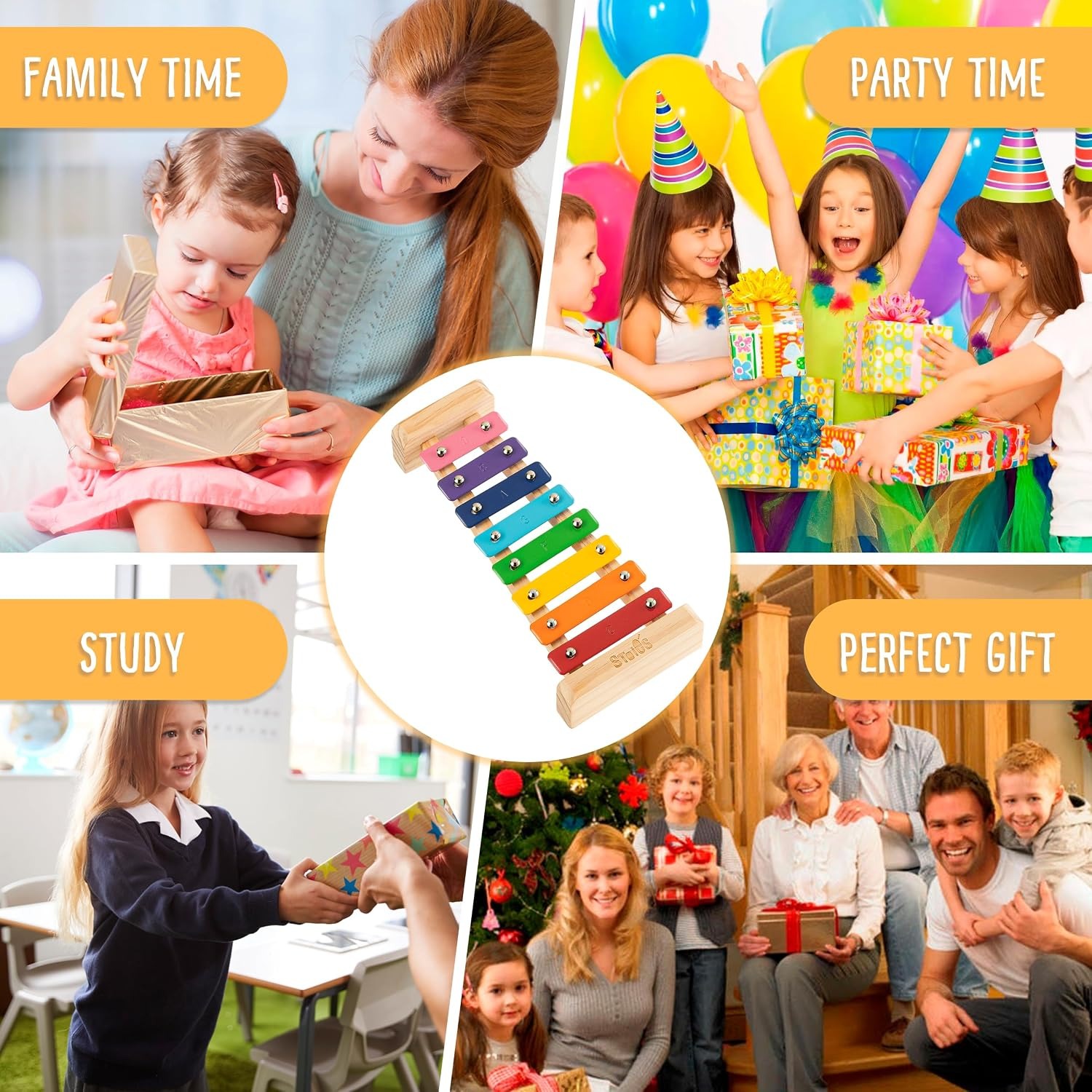
As a gift it is easy to get right. It suits birthdays and holidays for ages three and up, it does not need anything else bought alongside it, and it is the kind of present that grandparents and parents are both happy about. The manufacturer lists a 30 day warranty. Beyond that, a kids glockenspiel of this type tends to get handed down to the next sibling, because there is very little on it to break.

Not sure yet? That is fine.

A toy has to suit the child it is for, and you cannot always judge that from a photograph. Under the Consumer Contracts Regulations 2013 you have 14 days from delivery to cancel for any reason, and a further 14 days to send it back in resaleable condition. We refund the price you paid, including standard delivery.

If it turns up faulty, damaged or not as described, that is on us. The Consumer Rights Act 2015 covers you, and we pay the return postage. Read the full detail on our refunds and returns page, or ask us anything before you order.

Frequently Asked Questions

What is a rainbow xylophone 8 note set?

It is a small wooden percussion instrument with eight tuned keys, each in a different colour. You strike the keys with a mallet to make notes. This set includes the instrument, mallets and a songbook with ten tunes.

How many keys does it have?

Eight. They are tuned to the C-major scale, which covers one full octave from C up to the C above it. That is enough range for most simple children's songs.

What size is it?

It measures 25 cm long, 12 cm wide and 5 cm high. That is small enough for a preschooler to lift and carry, and small enough to fit in a nursery bag or a car door pocket.

How much does it weigh?

Around 0.2 kg. The light weight is part of why it travels well and why a young child can move it around without help.

What age is it for?

The manufacturer recommends three years and up. Younger preschoolers often enjoy it with an adult sitting alongside, but the age guidance should be followed for unsupervised play.

Is it suitable as a first instrument?

Yes, it is one of the more sensible starting points. There is no technique barrier, the notes are already in tune, and a child hears a result on the first strike. Many parents looking for the best first instrument for kids land on a xylophone for exactly that reason.

What is it made of?

Wood. The listing records the material type as wood and notes smooth, rounded edges. A specific timber species is not specified by the maker.

What colour is it?

The theme and colour are listed as rainbow, with each key in a different shade. A single overall colour field is not specified by the maker.

Does it come with mallets?

Yes, mallets are included as part of the set. Having more than one means two children can play together, or an adult can play along with the child.

What is in the songbook?

The set includes a songbook with ten children's songs. It gives new players something recognisable to aim for in the first few sessions rather than just free play.

Does it need batteries?

No. The operation mode and power source are both listed as manual, so there is nothing to charge and nothing to replace.

Does it need assembling?

No. Assembly is listed as not required, so it comes ready to play straight out of the box.

Is it actually in tune?

The keys are tuned to the C-major scale, so notes played in order give a proper scale. That matters more than people expect, because an out-of-tune toy teaches a child the wrong thing.

Can two children play at once?

Yes. The listing records it as suitable for two or more players, and more than one mallet is supplied. Shared play is one of the things this size of instrument does well.

Is it good for nurseries and classrooms?

It suits group settings because it is light, needs no power and survives being passed around. Many teachers hunting for the best music toy for classrooms choose simple tuned percussion for exactly this reason.

Can adults play it too?

Yes, though the keys are small for adult hands. Most parents use it to lead a tune and then hand the mallet over, which is how call-and-response teaching works.

How loud is it?

It is a wooden acoustic instrument, so it is bright but not amplified. Volume depends on how hard the child hits it, and wooden bars are generally softer than metal ones.

Is it a xylophone or a glockenspiel?

Strictly, a xylophone has wooden bars and a glockenspiel has metal ones. This one has wooden keys, so it is a xylophone, though it is widely searched for as a kids glockenspiel and used the same way.

How do I clean it?

Wipe the keys and frame with a slightly damp cloth and dry them straight away. Never soak it or put it in a dishwasher, because moisture can affect wood and tuning.

Where should I store it?

Somewhere dry, out of direct sun and away from radiators. Keep the mallets with the instrument, since a lost mallet is the main reason these end up unused in a cupboard.

What if a mallet goes missing?

Most families use a pencil-sized wooden stick or a spare mallet from another toy in the short term. Keeping both mallets in the same box or bag as the instrument is the simpler fix.

Will the keys go out of tune?

Wooden bars are reasonably stable if they are kept dry and away from heat. Damp and extreme temperature swings are the usual causes of trouble, so storage matters more than playing style.

Is it suitable for a child to hold?

It is described as having smooth, rounded edges and is light at 0.2 kg. As with any toy with loose parts like mallets, supervise younger children and follow the three years and up age guidance.

Does it help with learning?

The stated educational objective is developing musical and cognitive skills. In practice children work on listening, sequencing, hand-eye coordination and turn taking, which is a lot for one small toy.

Is it a good gift?

It is an easy present because nothing else needs buying alongside it. For a birthday or holiday gift for a three to six year old, a xylophone sits in the useful middle ground between fun and worthwhile.

Can a child learn to read music from it?

It is a stepping stone rather than a method book. Colour coding teaches sequence and pattern first, and most children move on to note names later with a teacher or a simple beginner book.

What is the brand and model?

The brand is Stoie's and the model number is SX-0002, which is also the manufacturer part number. Country of origin is listed as China.

Is there a warranty?

The manufacturer warranty is listed as 30 days. Keep your order confirmation in case you need to raise anything within that window.

How is it delivered?

Delivery is by tracked courier to any UK address. Allow 3 to 7 working days from the order date, and a little longer for the Highlands, islands and Northern Ireland. Orders of £75 or more are delivered free, and smaller orders pay a flat £10.

What if it is not right when it arrives?

Contact us with your order number and a short note about the problem, and a photo if something is damaged. Unused items in their original packaging can be returned within the published returns window, and we will sort a replacement or a refund.

Choosing a First Xylophone for Your Child, A Practical Buyer's Guide

6 min read Toy Warehouse

The problem with most "musical" toys

Walk down the toy aisle and you will find a lot of things that make noise. Buttons that trigger a tinny recording, drums that light up, keyboards with a demo track that plays whether anyone asks it to. Children love them for about four days. Then the novelty wears off, because the child was never really making the music. The toy was.

A tuned xylophone is different in one important way. Nothing happens unless the child does something. Hit a key, get a note. Hit it softer, get a quieter note. Hit two in a row and you have the beginning of a tune. That direct link between action and sound is the whole point, and it is the reason a simple wooden instrument tends to outlast the battery-powered stuff in the same playroom.

How an 8-note xylophone works

Eight keys, arranged shortest to longest. The shorter the bar, the higher the pitch. Run a mallet across them from one end to the other and you get a scale, going up or coming down depending on which way you go.

The eight notes here are tuned to C major. In plain terms, that means they are the white notes on a piano from C to the C above it, with no sharps or flats. It sounds limiting. It is not. A surprising number of children's songs sit entirely inside one octave of C major, which is exactly why songbooks for this kind of instrument exist. Twinkle Twinkle, Mary Had a Little Lamb, Frère Jacques, Happy Birthday. All playable.

The rainbow colouring on the keys does something clever. A three year old cannot read a staff, cannot read note names, and probably cannot read at all. But they can match red to red. Colour coding turns a music-reading task into a matching task, which preschoolers are already very good at. That is why a colour coded xylophone usually gets a child playing a real tune faster than a plain wooden one.

Who this suits

The manufacturer recommends three years and up, and that is a fair line. At three, most children have the grip strength and the patience to aim a mallet at a specific key rather than just swinging at the whole thing. Below that, it becomes more of a supervised activity, which is fine, but it is not independent play.

Three to six is the sweet spot. Six to nine still works well, especially with the songbook, because older children start wanting to play something that sounds like a real song rather than just exploring. A child of eight can pick up the ten tunes in the book over a few weeks without anyone teaching them.

It also suits households with more than one child. Two mallets are included, which sounds like a small detail and is actually the difference between a toy that causes arguments and one that creates a game. Nurseries, childminders and primary classrooms use tuned percussion for the same reason. No power, no screen, no setup, and a whole group can take turns in a circle.

If you are looking for the best musical gift for preschoolers and you do not want to add to the pile of plastic, this sits in a comfortable spot. It is a real instrument scaled down, not a toy pretending to be one.

How to choose between xylophones

A few things genuinely matter, and a few things do not.

Tuning is first. An untuned toy xylophone teaches a child that notes are random. A tuned one teaches them that notes have relationships. Always check the maker says the keys are tuned to a scale. This one is tuned to C major.

Number of keys matters next. Eight gives you a full octave, which is the minimum for playing real songs. Five or six keys look similar in a photo but leave half the songbook unplayable. More than eight is lovely, but the instrument gets bigger and heavier, and a preschooler stops being able to carry it.

Wood versus metal changes the sound. Wooden bars give a warmer, shorter, softer note. Metal bars ring longer and brighter, and are noticeably louder in a small room. For a first instrument in a family home, wood is usually the kinder choice. This set has wooden keys.

Size and weight decide where it gets played. At 25 x 12 x 5 cm and 200 g, this one goes in a bag. If an instrument lives in the car boot and the nursery bag, it gets played far more than one that lives on a shelf because it is too awkward to move. Anyone searching for the best travel size xylophone is really asking this question.

Extras should be useful, not padding. A songbook with ten known tunes is useful. A second mallet is useful. Stickers and tie-ins are not. This set includes the xylophone, mallets and the songbook, and needs no assembly.

Getting started in the first week

Do not start with the songbook. Start by letting your child hit every key in any order for ten minutes with no instruction at all. That exploration stage is not wasted time, it is how they learn that each key sounds different.

Then play a simple game. You play two notes, they copy. You play three, they copy. This is call-and-response, and it is how music has been taught to small children for a very long time. It also uses both mallets, which is what they are there for.

Only after that does the songbook make sense. Point at the colour, let them find the key, go slowly. Expect the first run through of any song to sound nothing like the song. The second one usually does.

One more tip. Keep it out and visible. Instruments that live in a cupboard get played once a month. Instruments that sit on a low shelf get picked up most days.

Looking after it

Wood and water do not get along. Wipe the keys and frame with a slightly damp cloth, then dry them straight away. No soaking, no dishwasher, no spray cleaners.

Keep it out of direct sunlight and away from radiators, because repeated drying and swelling is what eventually affects the tuning of wooden bars. Normal room conditions are fine.

Store the mallets with the instrument. A missing mallet is the single most common reason one of these stops getting used. A drawstring bag or a shoebox solves it.

Every so often, check that the keys are still sitting snugly on their mounts. Tuned percussion relies on the bars being able to vibrate freely, so nothing should be loose and nothing should be jammed tight.

The short version

You are buying a small, light, wooden instrument with eight keys tuned to C major, colour coded so a child who cannot read can still follow along. It comes with mallets and a ten-song book, needs no batteries and no assembly, and is recommended from three years old.

It works because the child makes the sound, not the toy. That is a simple thing, and it is the reason a xylophone is still the standard first instrument decades after much flashier toys have come and gone. If you want something that gets used rather than admired, this is an easy one to say yes to.

Browse the shop

Ready to hand over the mallet?

Order the rainbow xylophone 8 note set today and have a first instrument in your child's hands this week.

Ask us a question

Page summary

The Stoie's Rainbow 8-Note Wooden Xylophone (model SX-0002) is a children's percussion instrument with eight wooden keys tuned to the C-major scale and rainbow colour coding. It measures 25 x 12 x 5 cm, weighs 0.2 kg, and is made of wood. The set includes the xylophone, mallets and a songbook with ten children's songs. It is manual, needs no batteries and requires no assembly. The manufacturer recommends it for ages three years and up, and it is designed for two or more players. Country of origin is China, and a 30 day manufacturer warranty is listed. Colour and specific material grade beyond "wood" are not specified by the maker, and no verified rating or review count is recorded here.