
The complete guide
Choosing a Solar System Floor Puzzle, a Parent's Buying Guide
The problem with most "educational" toys
Plenty of toys claim to teach something. Most of them do it by talking at a child through a speaker, and the lesson lasts about as long as the batteries. A puzzle works the other way around. Nothing happens unless the child does it, which means every bit of progress is theirs. That is why a good floor puzzle has outlasted so many flashier toys on so many shelves.
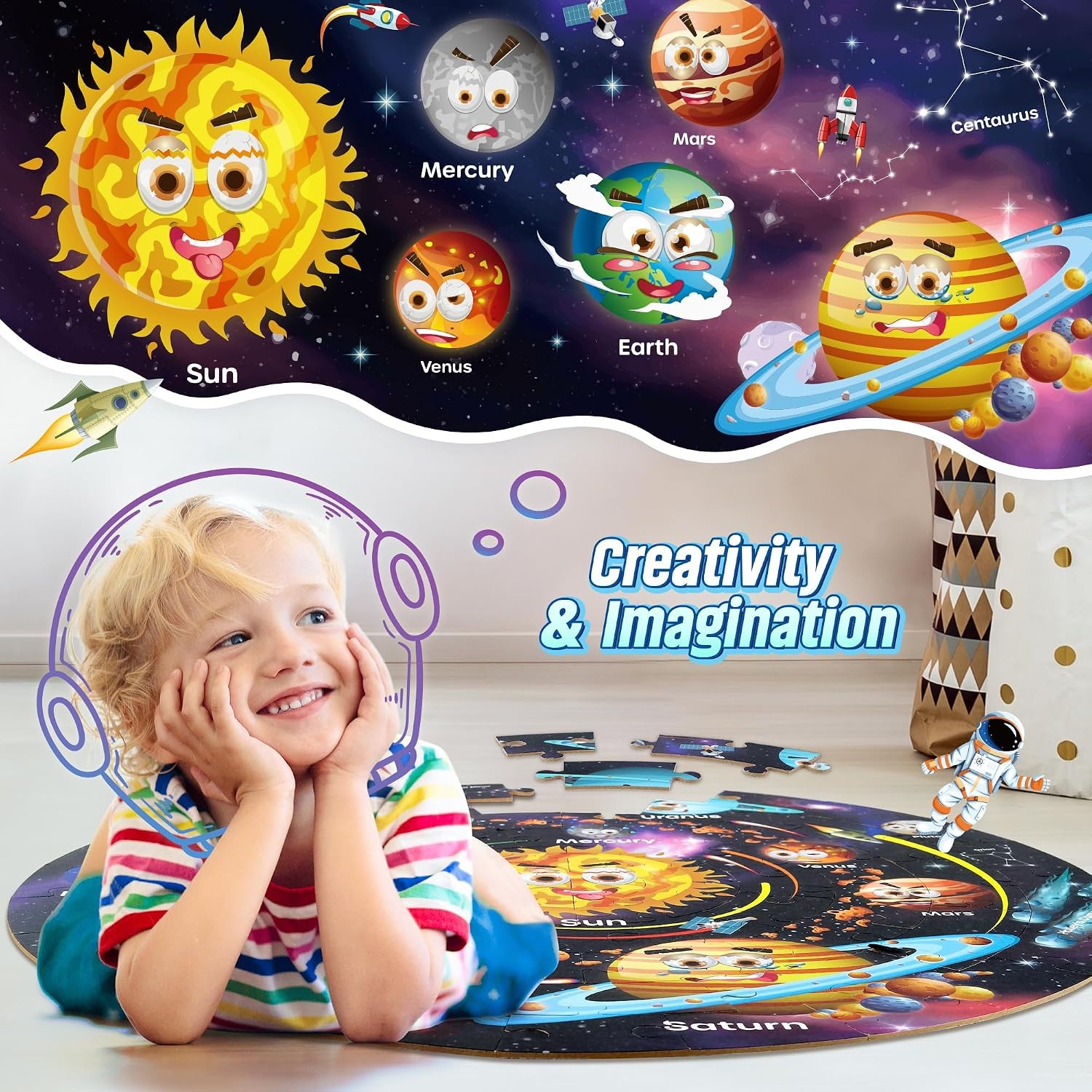
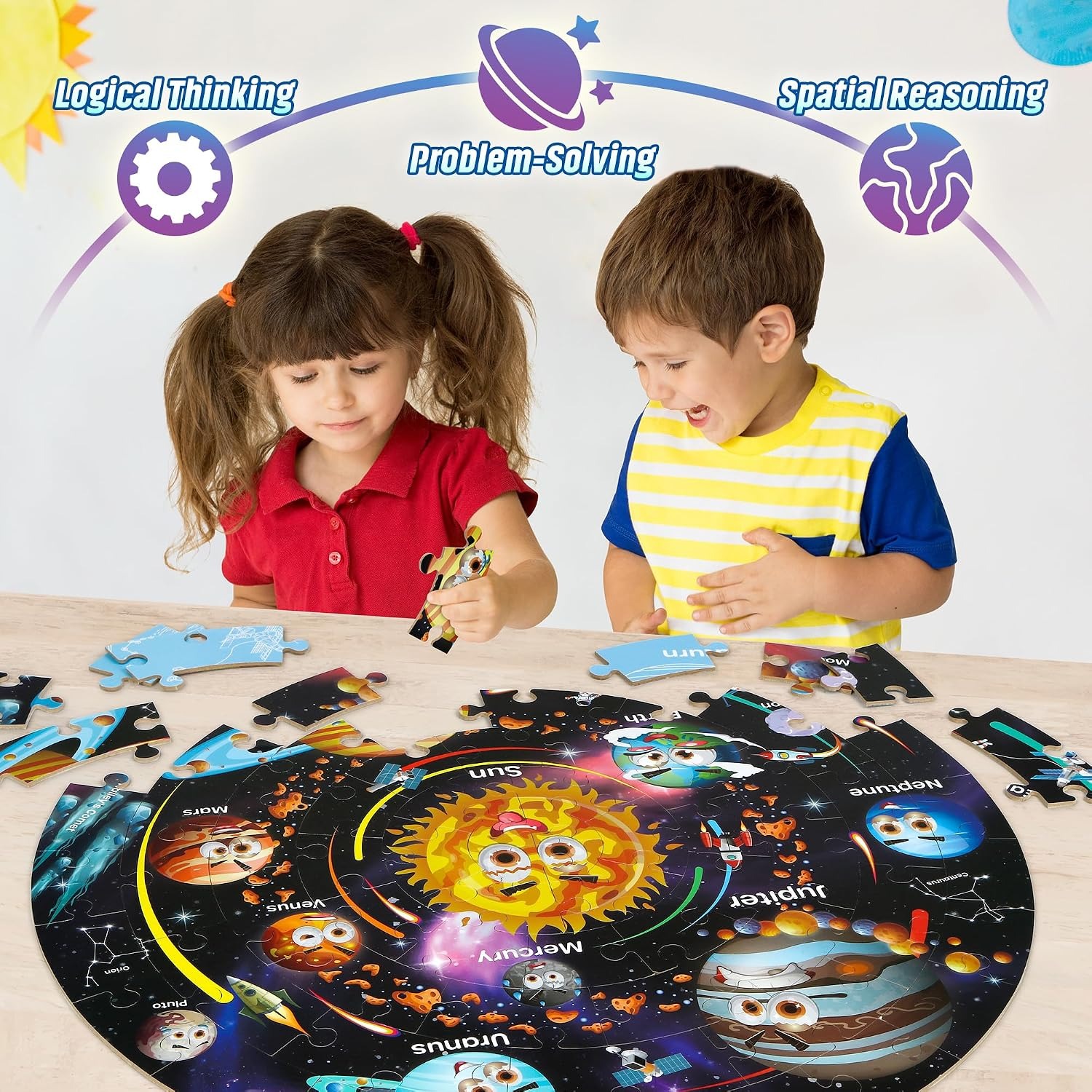
A solar system floor puzzle adds a second layer on top of that. The picture itself is a conversation. A child placing a planet will eventually ask which one it is, and that question is worth more than any recorded voice announcing facts. You get the quiet concentration of a jigsaw plus a natural way into talking about space.
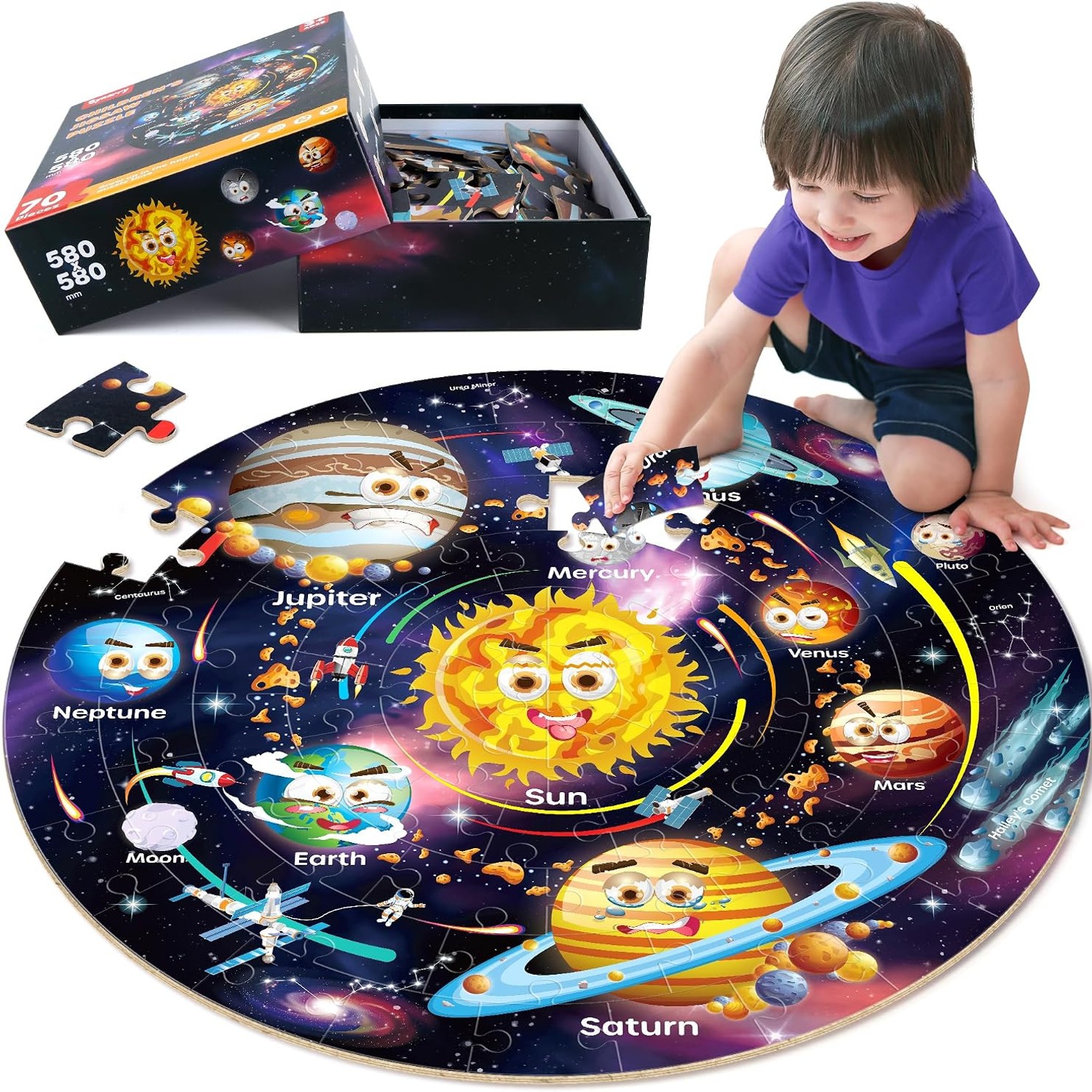
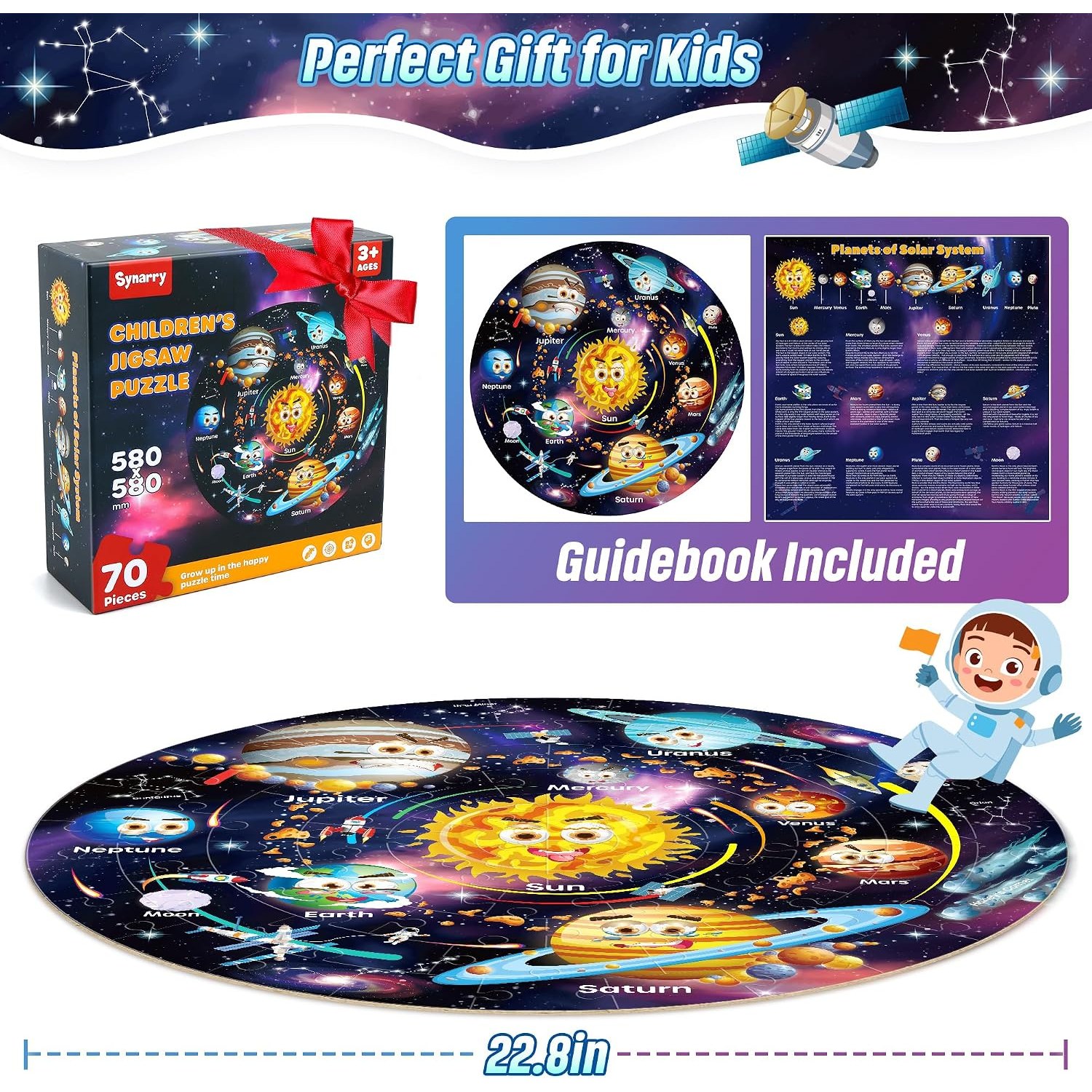
This particular set is a 70 piece round puzzle from SYNARRY, made from wood, weighing 816 g, and recommended by the manufacturer for children from 36 months up to eight years.
What makes a floor puzzle different
A floor puzzle is not just a normal jigsaw scaled up. The pieces are bigger and thicker so small hands can grip them properly. The picture tends to use bold shapes and strong colour blocks rather than fine detail, because a four year old sorts by colour long before they sort by shape.
Piece count matters more than most people expect. A preschooler puzzle might have 12 pieces. A 70 piece set like this one sits in the bracket where a child has to do real work: sort, group, test and retry. If you are hunting for the best kids floor jigsaw for a preschooler who has outgrown chunky shape puzzles, that middle range is usually where to land.
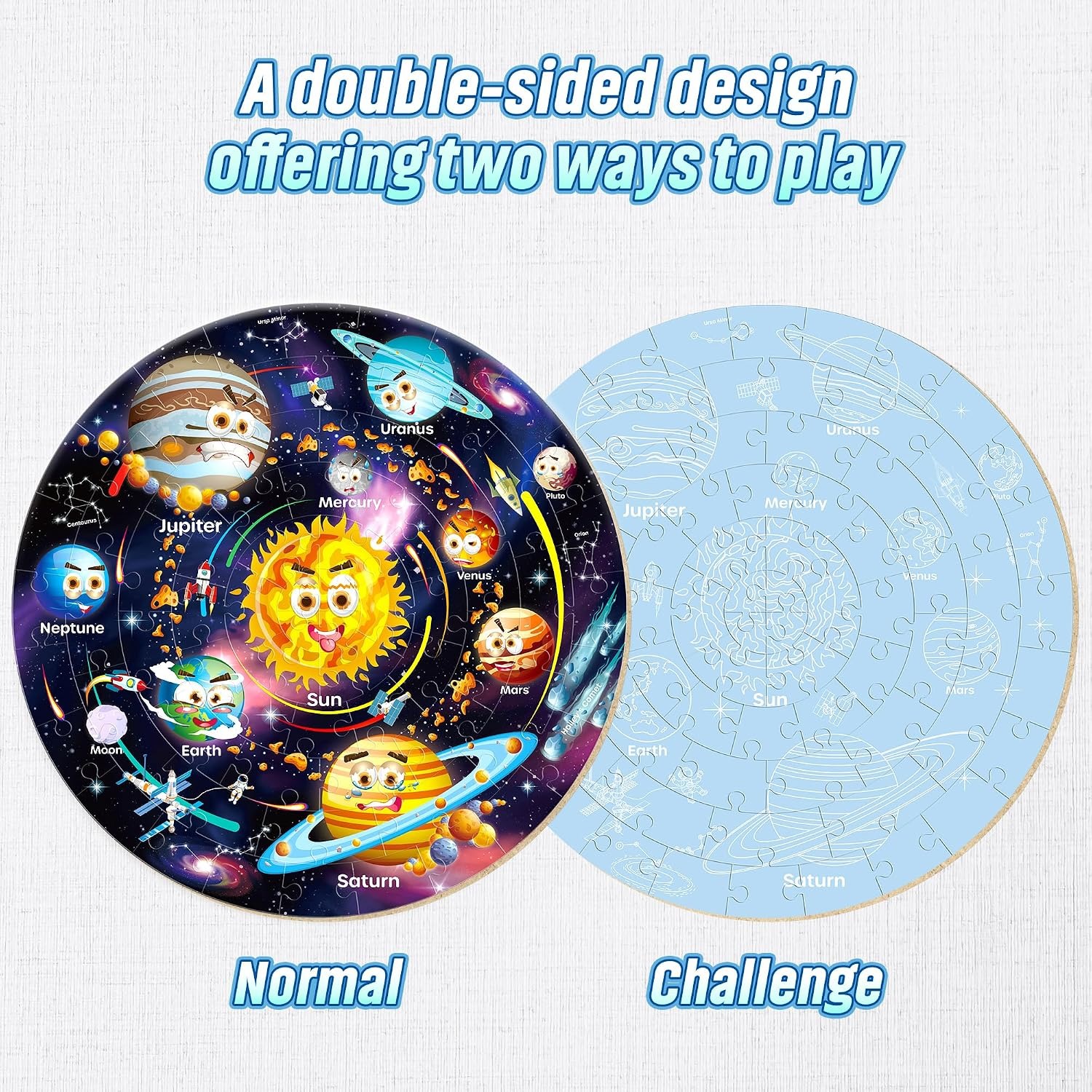
The round shape is worth a mention too. Most puzzles have four straight edges, and children learn to build the frame first. A circular puzzle removes that crutch. There is still an outside edge to work along, but it curves, so the child has to pay closer attention to how pieces meet. It is a small change that makes the build feel fresh.
How children actually use it
Watch a child the first time and you will see them tip the whole box out and stare. That is normal. The sorting stage comes next, usually by colour, and this is where a parent can help without taking over. Pulling all the yellow sun pieces into one group gives a child a win straight away.
From there it goes in bursts. A few pieces click, then a long pause, then another run. Children do not puzzle at a steady pace, and they should not be pushed to. If the attention starts to wander, leave the half-built picture where it is and come back after lunch. A puzzle that gets abandoned once and finished later still counts as finished.
By the third or fourth build, something different happens. The child starts remembering where pieces go. Speed picks up, frustration drops, and the puzzle turns into a confidence exercise rather than a challenge. That is the point at which many families find the best planet puzzle for preschoolers becomes the puzzle a child does alone while a parent cooks dinner.
Matching the puzzle to the child
The manufacturer range of 36 months to eight years is broad, so here is a more practical way to think about it.
At three, expect to sit alongside them. Sort the pieces into groups, hand them over a few at a time, and treat the whole thing as a shared activity rather than a test. Do not worry if they only place six pieces and then want to stack them instead.
At four and five, most children can manage a decent stretch on their own once an adult has done the initial sort. This is the age where a 70 piece set feels properly satisfying, hard enough to be an achievement but not so hard it ends in tears.
At six and up, children generally want to do the whole thing solo, including the sorting. Some start timing themselves. Older siblings often take over and finish it in one go, which is fine, though it helps to set a rule that the younger child gets first crack.
If you are buying for a child who already finishes 100 piece puzzles without breaking a sweat, this one may feel quick. If you are buying for a two year old, wait a while. The best educational puzzle for 4 year olds is almost always one that is a touch above their current level, not far above it.
Material and safety, in plain terms
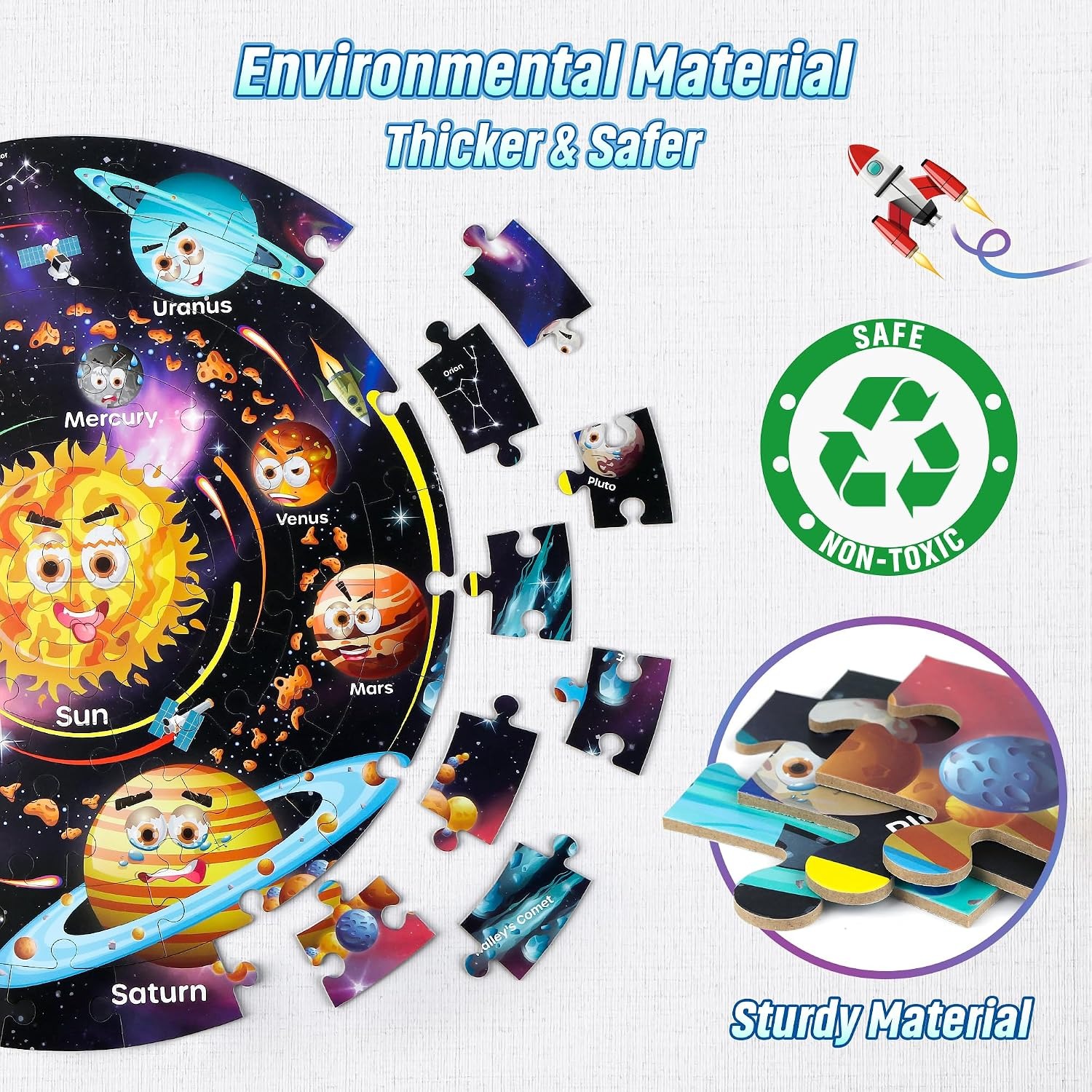
The material type here is listed as wood, and the product is described as PVC free, latex free, phthalate free, BPA free and lead free. Those are the standard flags parents look for on anything a young child will handle for an hour at a time.
Wood matters for durability too. Thin card pieces fuzz at the edges and delaminate after a few dozen builds, particularly when a child presses hard or a damp hand grips them. Wooden pieces survive that treatment far better, which is a real consideration for a puzzle you expect to come out weekly for a couple of years.
The listed item weight is 816 g for the set. Heavier pieces are easier for a child to position precisely, and they are less likely to shift when someone leans on the rug.
Care and keeping the set complete
Puzzle care comes down to two things: dryness and piece discipline.
Keep the box somewhere dry. Wood takes on moisture, and a puzzle stored in a damp cupboard can warp over a season. A wardrobe shelf or a toy cupboard inside the house is fine. A garage or a shed is not.
If a piece picks up a sticky mark, wipe it with a barely damp cloth and let it dry completely before it goes back in the box. Never soak it, and keep it well away from the washing machine.
For piece discipline, make the count part of the routine. When the build is done and admired, everything goes back in the box before anything else starts. One missing piece out of 70 is enough to make a child refuse to do the puzzle again, and most missing pieces are found within a metre of where the puzzle was built.
Buying it as a gift
Puzzles make easy gifts because they need no setup. No batteries, no charging cable, no app, no small print about what else you need to buy. It arrives in a box, which wraps neatly, and it can be opened and started within a minute.
A few things worth thinking about before you buy. Check what the child already owns, since puzzle duplicates are a common gift miss. Consider whether the recipient's home has floor space, because a round floor puzzle needs a clear patch of carpet. And think about the child's temperament. A child who loves building and sorting will adore it. A child who needs constant movement may prefer it alongside an adult rather than alone.
For a space-mad four, five or six year old, this is a strong pick. The best birthday gift for a 6 year old is often the one that keeps getting used in February, not just in the week after the party, and a rebuildable puzzle clears that bar.
The short version
This is a 70 piece round solar system floor puzzle made from wood, weighing 816 g, with product dimensions listed as 21 x 21 x 0.1 cm and a manufacturer recommended age of 36 months to eight years. It is a single player, indoor, manual toy that needs no assembly and no batteries.
What you get for the money is a quiet hour, repeated many times over, while a child practises focus, matching, hand-eye coordination and patience. The space theme gives it a second life as a conversation starter about the planets.
If your child is three or four, plan on doing the first few builds together. If they are six or seven, hand it over and let them get on with it. Either way, count the pieces back into the box when you are done.