

The complete guide
Choosing a Wooden Doctor Play Set, A Parent's Buying Guide
Why children keep coming back to doctor play
Ask a group of five year olds what they want to be and someone always says doctor. Part of that is the costume. Most of it is control. A trip to the surgery is something that happens to a child, usually at speed, often when they already feel rotten. Someone shines a light in their ear, presses something cold to their chest and talks over their head to a parent.
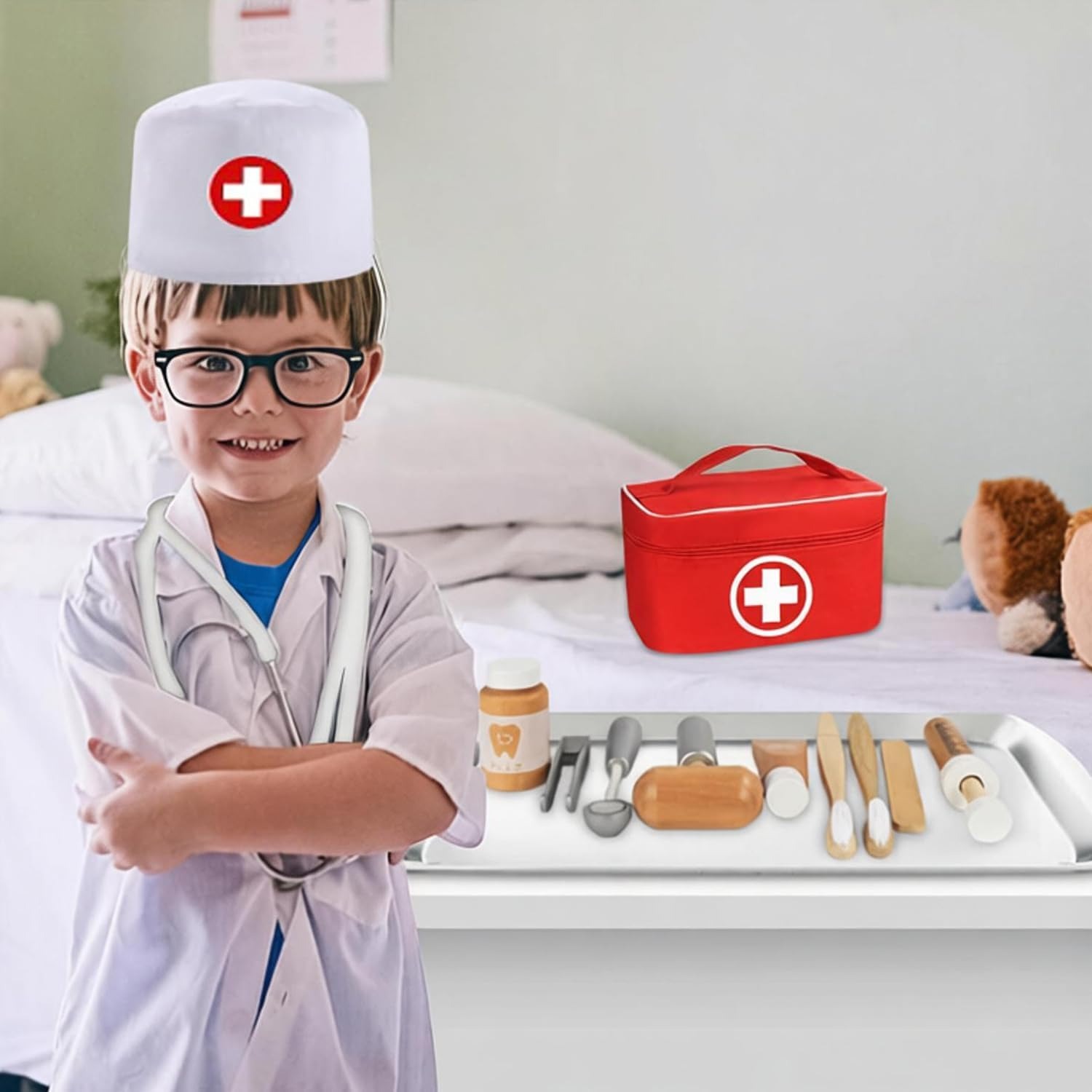
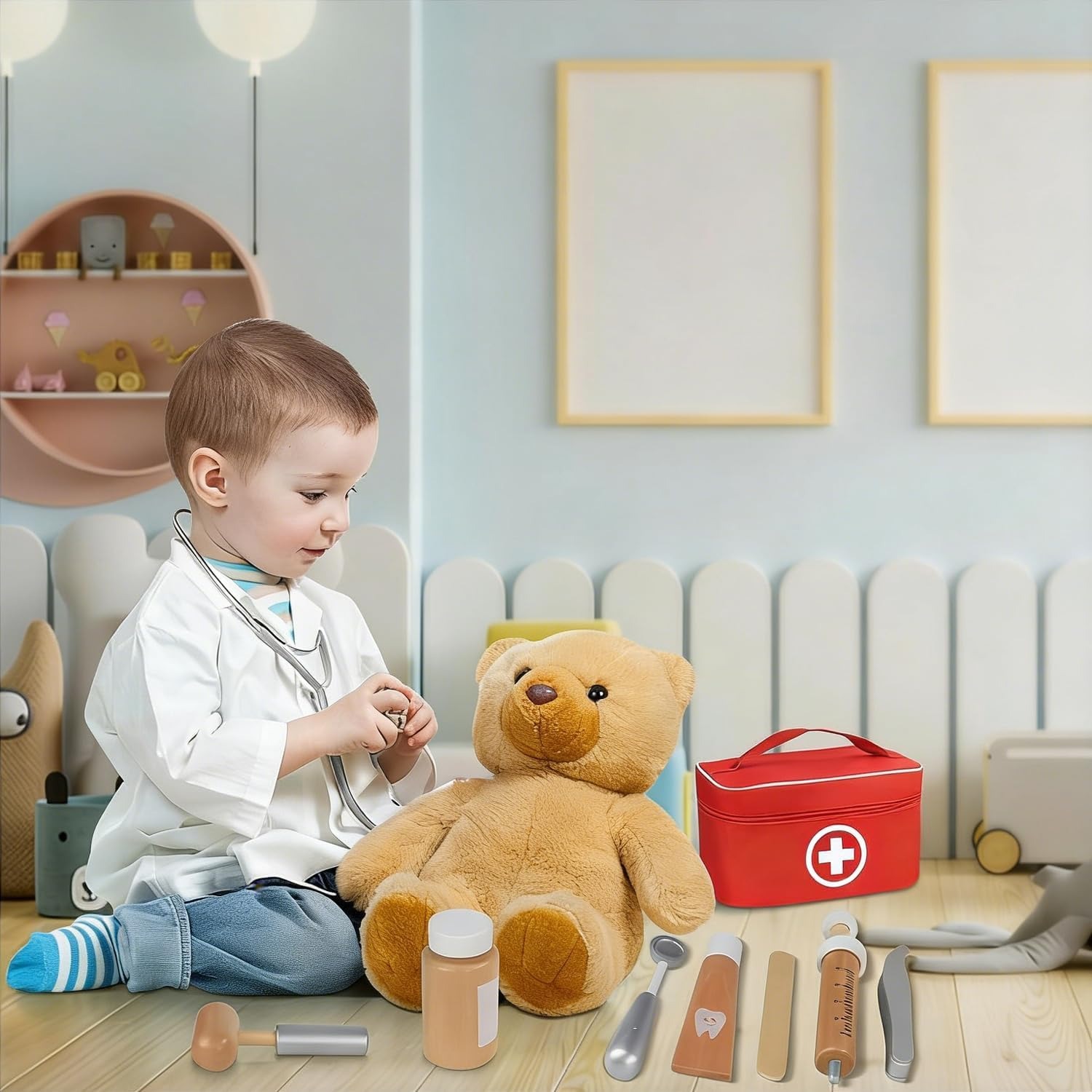
A wooden doctor play set hands all of that back. The child decides who is ill, what the problem is and what the treatment will be. They hold the stethoscope. They wear the coat. Teddy, the dog and a patient grandparent all line up for inspection. It looks like simple make believe, and it is, but it is also how children process things they do not fully understand yet.
That is why doctor kits have outlasted hundreds of trendier toys. They give children a job, and children love having a job.
What you actually get in this set
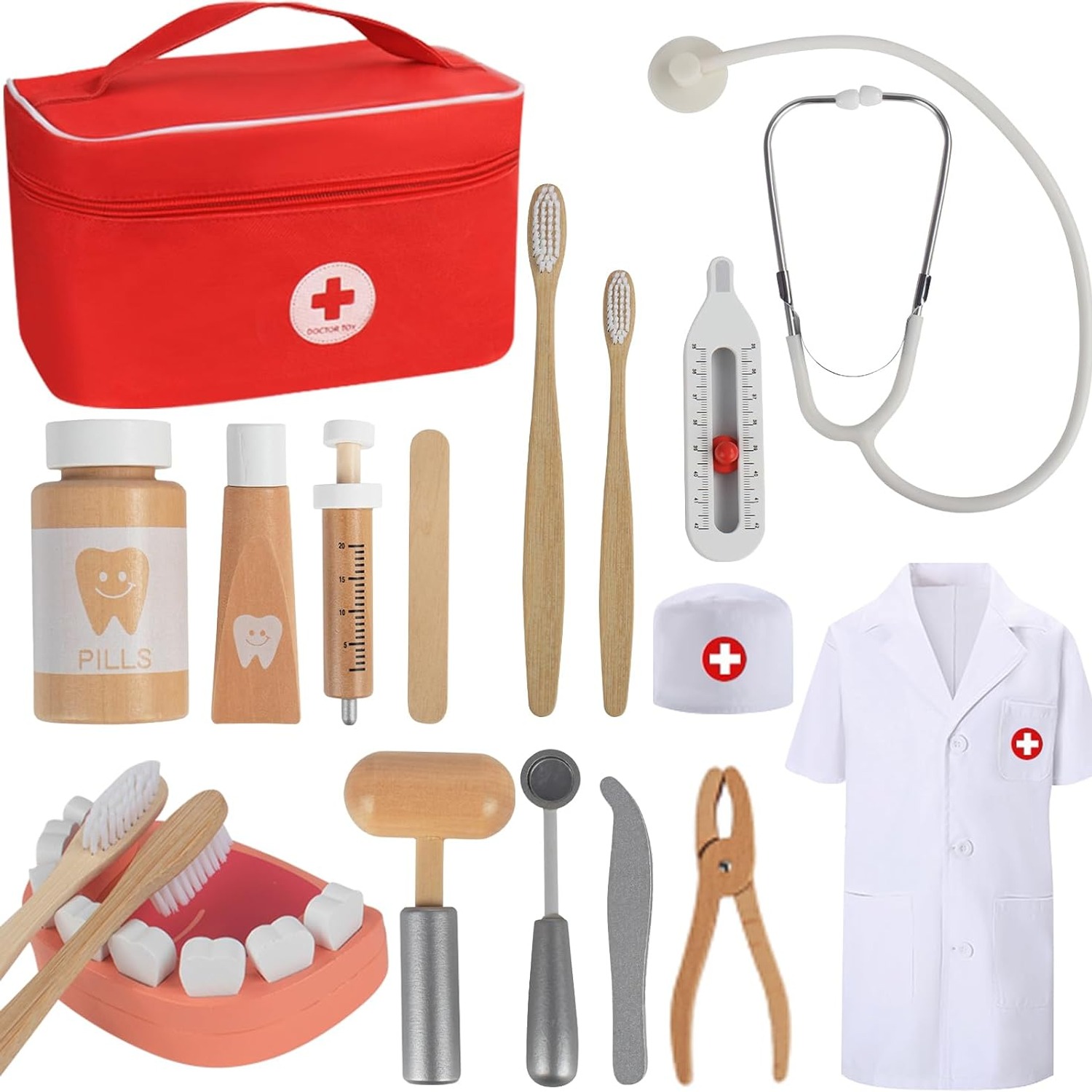
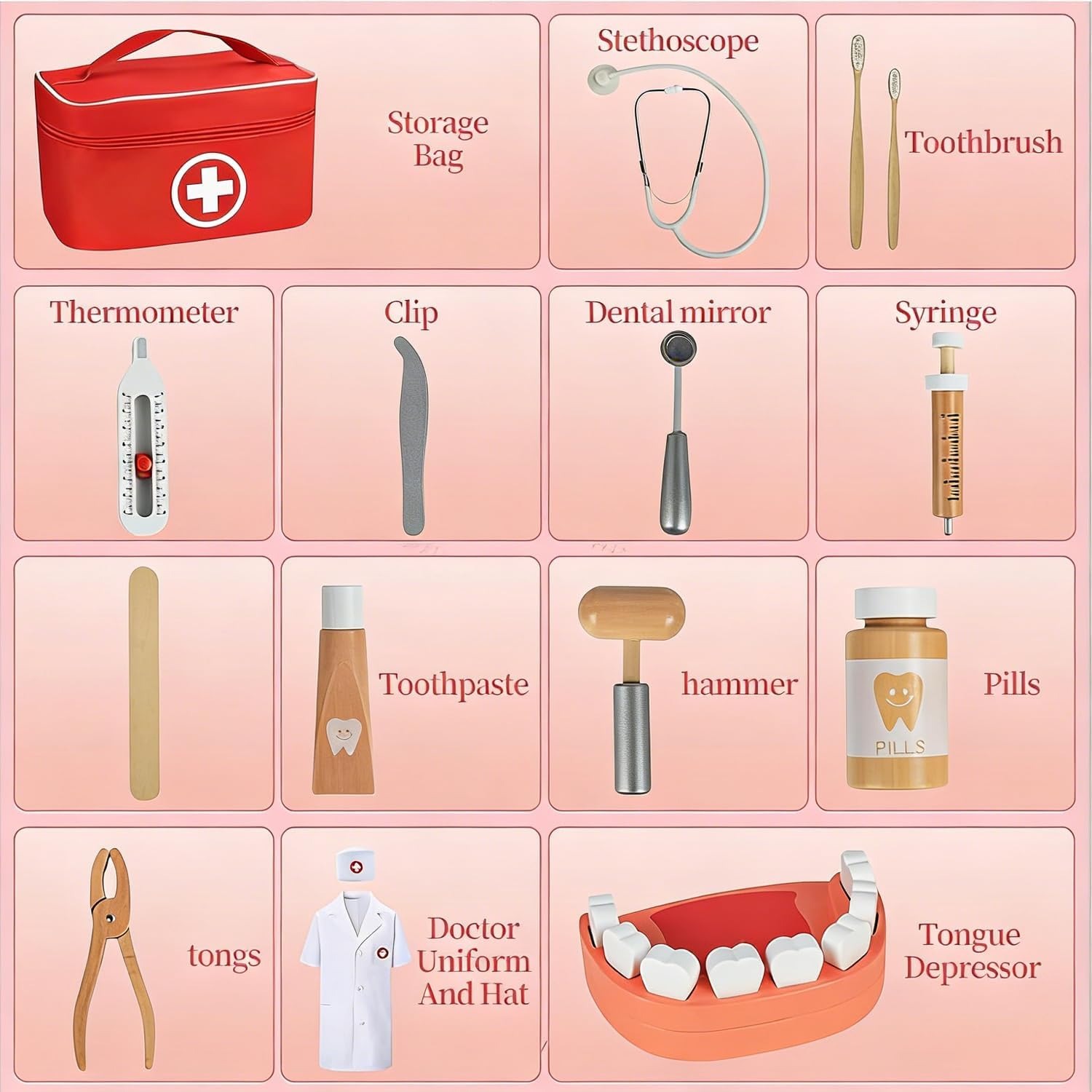
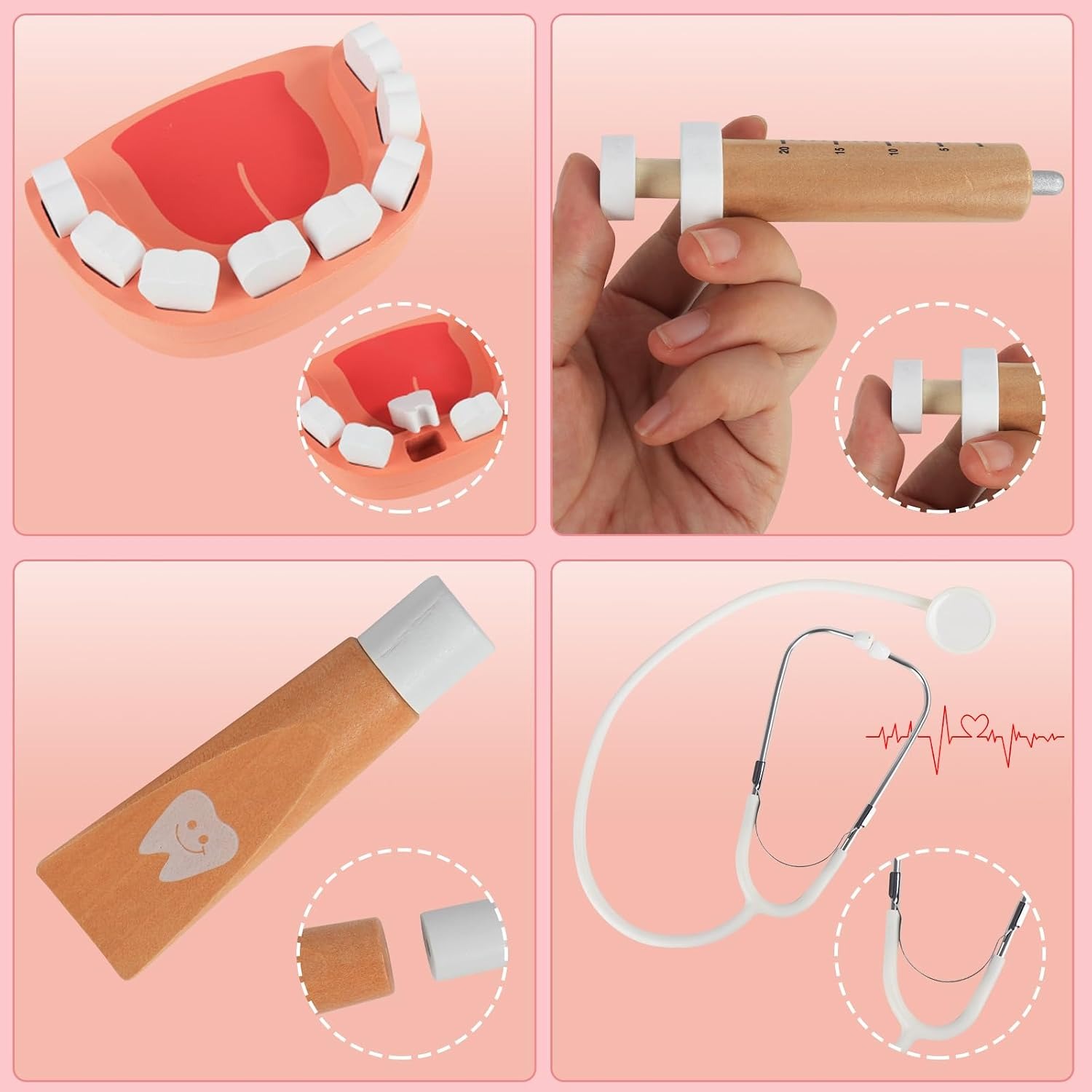
This one is built around a red doctor bag. Inside sits a child-size doctor's coat, a stethoscope and a selection of wooden doctor's utensils. The maker notes the exact tools can vary by model, so read the tool list as a guide rather than a guaranteed count.
The headline material is wood, the colour is red, and the whole thing measures 24 x 8 x 19 cm. The maker is TGTT, model 1032B, with a one year manufacturer warranty. Age guidance runs from 36 months up to 12 years.
Weight is not recorded for this item, so if you are ordering to a remote address and shipping cost matters, check the estimate at checkout.
Wood versus plastic, honestly
There is a bit of snobbery about wooden toys, and some of it is not earned. Plenty of plastic toys are well made and last for years. But for a kids doctors set specifically, wood does bring a couple of real advantages.
The first is weight. A wooden thermometer sits in the hand with a bit of heft. Children register that difference straight away and treat the object with more care, which quietly extends the life of the toy. Hollow plastic tools feel like what they are, and they get flung about accordingly.
The second is noise, or rather the lack of it. There is no speaker, no flashing light and no battery compartment. Nothing announces "time for your check-up" in a cheerful American accent at two in the morning. The child supplies the dialogue, which is the whole point of role play toys for older children alike.
The trade-off is that wood does not like water. Soaked wooden parts swell, and once the grain lifts, the smooth finish is gone. A wipe with a barely damp cloth is the limit.
Who it suits at different ages
At three, the appeal is mostly tactile and ceremonial. Opening the bag, laying the tools out in a row, putting on the coat. The play is short and repetitive, and that is completely normal. What you are seeing is a child learning the props before they learn the story.
Between four and six, the story arrives. Patients get names and complicated symptoms. There are appointments, referrals and strongly worded advice about eating vegetables. This is the peak period for a pretend play medical set, and it is where you get the best return on the money.
From seven upwards, interest shifts. Older children either run a more organised clinic with siblings as staff, or they start using the kit for something else entirely. A vet surgery, a field hospital, a rescue scene. The listed range goes to 12, which is generous, but it reflects that open ended toys get reinvented rather than outgrown.
How to choose between doctor kits
A few things separate a kit that gets used from one that gathers dust.
Storage matters more than most buyers expect. Loose sets scatter and lose pieces within a fortnight. A set built around a toy doctor bag with a handle keeps itself together, and the packing away becomes part of the game rather than a chore you have to enforce.
Dress up matters too. The coat does more work than any single tool, because it is what tells the child, and everyone else in the room, who they are right now. A kit without a costume element usually gets shorter sessions.
Piece count is less important than it looks. Twenty tiny items sounds generous until you are hunting for the fifteenth one under the sofa. A tighter selection of well made pieces generally holds up better than a crowded tray.
Finally, think about where it will be played with. If the set is going to travel to grandparents or preschool, the bag is not a nice extra, it is the deciding feature.
Using it to prepare for a real appointment
If your child has a check-up, a vaccination or a dental visit coming up, this kind of kit earns its keep. The trick is timing. Do not wheel it out the night before as an obvious lesson, because children can smell that a mile off.
Instead, play normally a week or two beforehand. Let your child examine you. Be a slightly dramatic patient. When they listen to your chest with the stethoscope, describe what the real doctor does in plain words. Then swap, and be gentle when it is their turn.
What you are building is familiarity with the sequence, not a script. A child who has already held a stethoscope twenty times is much less bothered when a stranger holds one near them.
Looking after it
Wipe wooden and plastic parts with a barely damp cloth and dry them straight away. Never soak anything, and keep the set out of the dishwasher. Spot clean the coat and bag with mild soap and cool water, then dry flat rather than in a tumble dryer.
Store it indoors, in its bag, away from radiators and direct sunlight. Heat and sun dry out wood and fade fabric. Every few months, run your fingers over the wooden pieces to check for any rough spots or splits, and retire anything that has been damaged.
Gifting notes
As a present, this sits in a useful price bracket. It is substantial enough to be a main birthday gift for a preschooler, but not so expensive that it feels awkward as a gift from an aunt or a family friend.
It also sidesteps the two usual gift problems. It makes no noise, which parents notice and silently appreciate, and it packs into one bag, which means it does not colonise a living room. For a child who already has a mountain of plastic, a wooden medical kit reads as a step up rather than more of the same.
Christmas, birthdays and starting school are all natural moments for it. So is a new baby in the house, when an older sibling suddenly needs a job of their own.
The short version
This is a compact, no-batteries role play kit with a wooden core, a dress up coat and a red carry bag that keeps the whole thing together. It suits children from around three up to early secondary age, with the strongest pull between four and six.
Buy it if you want a screen free toy that encourages talking, builds fine motor control and helps take the edge off real appointments. Skip it if your child has no interest in make believe yet, or if you need something a child under 3 can use unsupervised.
Everything you see listed here, the 24 x 8 x 19 cm size, the wood material, the 3 to 12 age range and the one year warranty, comes straight from the manufacturer's details. Anything we do not know, like exact weight and the precise tool count, we have left open rather than guessed.